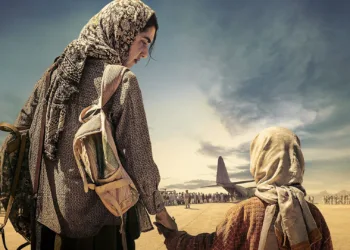



















Cinema likes to dress the passport in romance: a small booklet that opens airports, borders, and fantasies of cosmopolitan ease. In Congo Boy, the feature debut of director Rafiki Fariala, paperwork becomes a lock. The story takes shape in the dust and shadow of Bangui, capital of the Central African Republic, where seventeen-year-old Robert carries a family role that would strain an adult. He provides for four younger siblings and holds the household together while their parents sit in a local prison, trapped by a dense, absurd problem involving identity documents.
Survival becomes a cash economy of tiny urgencies. Robert dreams of building himself as a musician, writing lyrics inside a life consumed by food, rent, school fees, and the quiet dignity of buying sanitary products for his sisters. Fariala sets artistic hunger beside literal hunger, and the film refuses the soft narcotic of pity.
It studies what might be called paper-death: the civic condition in which missing documentation turns living people into administrative ghosts. A sheet of paper gains the authority of a judge, a landlord, and a border guard. Robert’s family exists under its verdict.
The Economics of Legal Alienation
Fariala builds a sharp anatomy of intra-continental African displacement, pulling attention away from the Western migration frame that so often dominates festival storytelling. The film insists that borders inside the continent carry their own machinery of exclusion.
The violence here arrives through petty, state-approved extraction, with bureaucracy acting like a pickpocket wearing a uniform. Robert must pay fifteen thousand francs to sit for his final exams, while citizens pay ten thousand. That five-thousand-franc gap becomes a tax on foreignness, a small number with a large moral stench.
To meet that premium, Robert enters a loop of exhausting micro-labor. He washes cars, sells water, and performs menial work under the military colonel who owns the residential compound where the children live. The compound offers a fragile kind of cover, yet its safety comes with a quiet bill. The children’s position begins to resemble indentured dependency, a survival bargain in which shelter and exploitation shake hands.
Also Read





The siblings’ private world supplies the film’s tender counterforce. Fariala constructs their bond through spare gestures: a glance over a shared bowl of food, a hand placed on a shoulder, a silent calculation over expenses. These exchanges form a household language, intimate and efficient.
It is also a language spoken under pressure. Civil war and armed militias remain part of the atmosphere. Gunfire interrupts ordinary activity from somewhere nearby. For the displaced, home becomes a temporary mental structure, assembled each day under the threat of local violence. A roof helps. It does not guarantee peace.
Tactical Optics and Kinetic Soundscapes
The film’s formal power comes from location authenticity. Cinematographer Adrien Lallau avoids the stiffness of planted observation and uses an active handheld approach that moves through Bangui with alert, nervous intelligence. His images create a dialogue between forms of light.
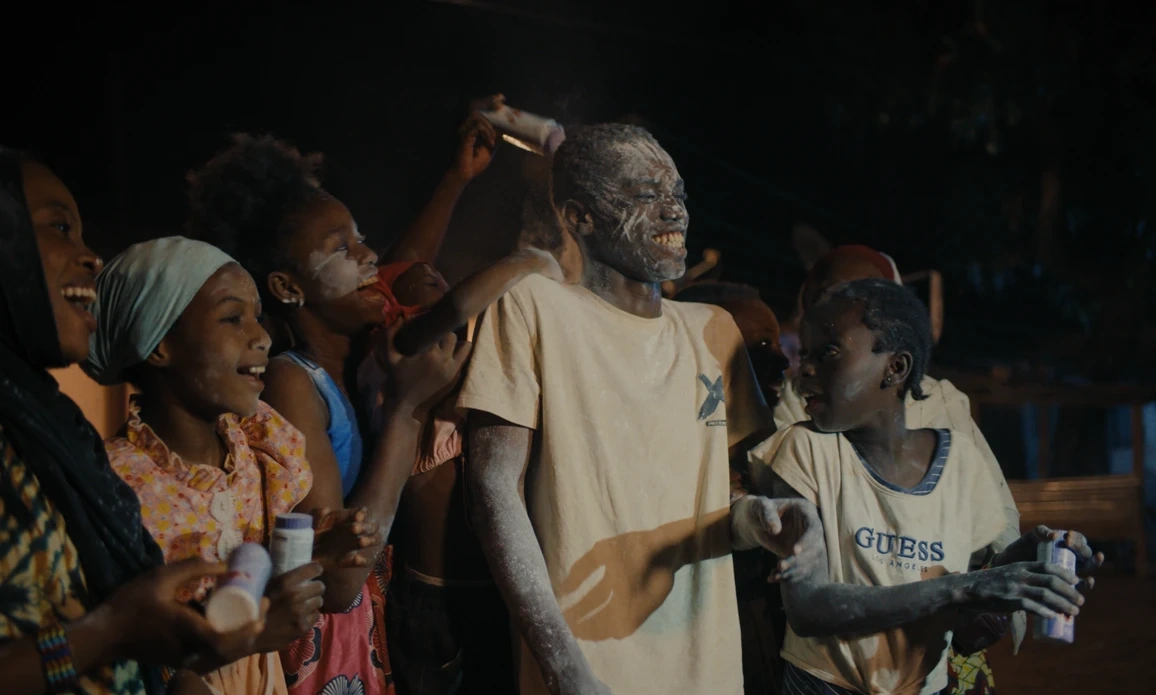
Daytime scenes carry a harsh exposure, as if the city itself has no shade left for mercy. Night sequences in backstreets emerge from thick darkness, shaped by sporadic natural sources. The result rejects postcard beauty and gives Bangui a volatile physical presence.
Editor César Simonot matches that visual motion with sharp rhythmic control. The cuts keep the narrative moving through urban spaces while preserving Robert’s bodily fatigue: the errands, the labor, the constant repositioning required by poverty. Movement becomes social analysis. Everyone is going somewhere because stillness has become unaffordable.
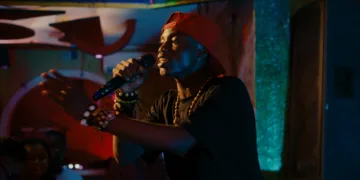
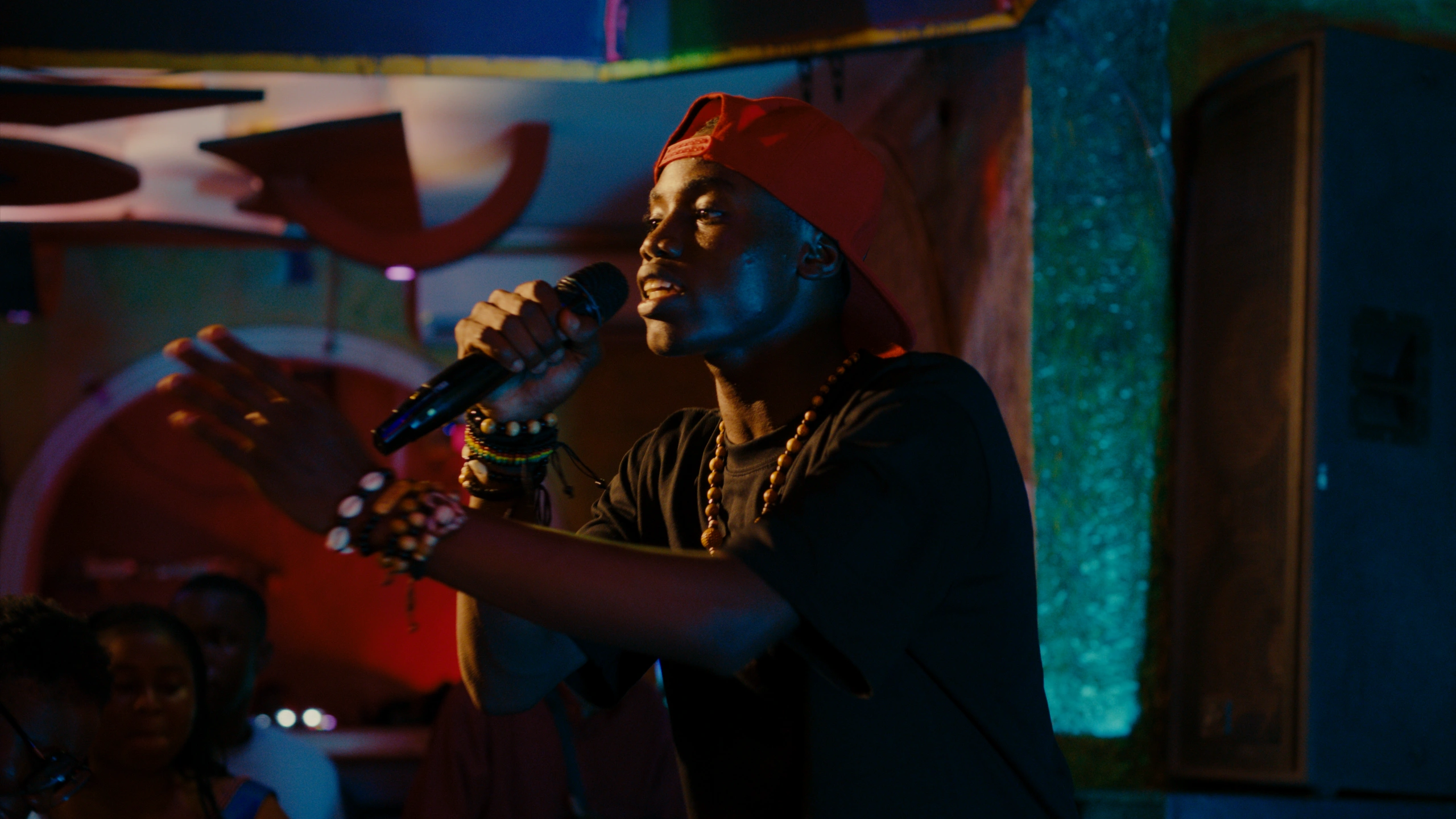
The sound design deepens that idea. Lillo Morealle’s drum-heavy score works like a structural pulse, giving the film a body beneath its social argument. The sonic field sets terror against release. Close-range gunfire cracks through the air; live club performances answer with joy, noise, and communal heat. This friction becomes acoustic self-defense, a way of flooding the ear before war can occupy the entire mind. The club is a shelter made of volume. That sounds almost ridiculous. It also feels true.
The aesthetic depends on the non-professional cast. Bradley Fiomona Dembeasset anchors the film as Robert with a performance rooted in behavioral truth. His body changes according to the room. Around authority figures, including his father behind bars, the exploitative colonel, and indifferent aid workers, his posture contracts. On a nightclub stage, he opens outward, carrying a natural charisma that makes the film’s musical thread credible. He performs confidence before life has granted him security, which may be the purest form of teenage audacity.
The Contradictions of Structured Hope
The screenplay, co-written by Fariala and Tommy Baron, works best while tracing the slow grind of survival. My response shifted during the final movement, when the story turns toward a youth talent competition backed by the UNHCR. The choice introduces a sense of visible engineering. The earlier sections breathe through observation, patience, and unforced realism. The competition arc pulls the film toward familiar musical uplift, with the machinery of triumph beginning to click into place.
Robert also undergoes a kind of moral polishing. He emerges as an idealized audience surrogate, almost spotless in virtue, which narrows the drama around his musical path. The conflict shifts toward winning a contest, while the harder internal pressure of his environment loses force.
I remain divided on this point, annoyingly so. The music gives the sequence an immediate emotional charge, and resisting that charge can feel like scolding a song for being catchy. Yet the film’s intellectual force weakens as the ending tidies displacement into institutional hope.
That turn matters because Congo Boy is strongest when it treats paperwork, hunger, labor, and sound as parts of the same political system. Its finest passages understand bureaucracy as historical violence in miniature, the kind that arrives through fees, forms, stamps, and waiting rooms.
The final stretch softens that severity into a cleaner coming-of-age shape. The film still leaves a mark, particularly in its portrait of children forced to become citizens of crisis before they are granted the documents of citizenship. Its cultural force lies there: in making legal invisibility feel physical, musical, and painfully ordinary.
The feature film premiered on May 15, 2026, screening within the Un Certain Regard section at the 79th Cannes Film Festival. Because this project recently had its initial festival debut, theatrical release schedules and global streaming options remain unconfirmed. Audiences can watch for distribution updates from the sales team at The Party Film Sales as the film continues its run through the international festival circuit before eventually expanding to regional cinemas or commercial home viewing options.
Where to Watch Congo Boy (2026) Online
Full Credits
Title: Congo Boy
Distributor: The Party Film Sales
Release date: May 15, 2026
Running time: 95 minutes
Director: Rafiki Fariala
Writers: Rafiki Fariala, Tommy Baron, Boris Lojkine
Producers and Executive Producers: Vicky Nelson Wackoro, Dieudo Hamadi, Caroline Nataf, Daniele Incalcaterra, Boris Lojkine
Cast: Bradley Fiomona Dembeasset, Christy Djomanda Louba, Pétruche Mbomba, Rosiana Kotozia, Gloria Ambacko, Dieufera Sana, Hubert Ngbolo
Director of Photography (Cinematographer): Adrien Lallau
Editors: César Simonot
Composer: Lillo Morealle, Rafiki Fariala
The Review
Congo Boy
Congo Boy excels when capturing the exhausting, paperless reality of urban survival, anchored by Bradley Fiomona Dembeasset’s unforced naturalism. The visual grit of Bangui paired with sharp sonic contrasts makes for an authentic cinematic space. However, the third-act shift toward a sanitized talent competition trades systemic critique for a conventional crowd-pleasing resolution. It compromises its early intellectual weight, yet the emotional pulse remains hard to resist.
PROS
- Tactile, on-location handheld cinematography capturing the immediate realities of Bangui.
- Exceptional behavioral truth delivered by a completely non-professional cast.
- Auditory friction pairing threatening gunfire with energetic nightclub music.
- Clear critique of the systemic micro-extortion faced by displaced populations.
CONS
- Sudden script alignment with a standard talent contest arc in the final movement.
- Sanitized protagonist construction lacking psychological flaws or internal friction.
- Resolution trades structural realism for formulaic satisfaction.