


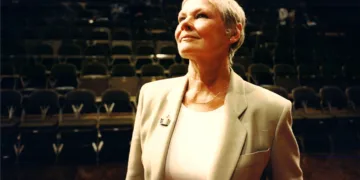
















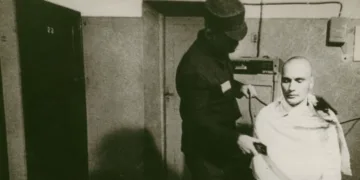










Jordan Firstman, known for his sharp online satirical personas, turns toward cinema with his first feature, Club Kid. He plays Peter Green, a thirtysomething New York night promoter drifting through narcotics, chemical pleasure, and the cruel illusion of endless youth. Peter lives inside a manufactured adolescence, where days dissolve into a permanent nighttime state and maturity feels like a rumor from another city.
That sealed world breaks when the past arrives at his door in human form. Arlo, a nine-year-old boy conceived during a brief heterosexual encounter Peter barely remembers from ten years earlier, appears with devastating news. His mother has died by suicide, leaving Peter as his legal guardian.
The event throws Peter into a crisis of selfhood. The comfort of nocturnal excess, already rotting from within, collides with the frightening weight of fatherhood. The film asks a severe question: can a person devoted to self-erasure preserve another life?
Chronological Ruptures and Structural Reckonings
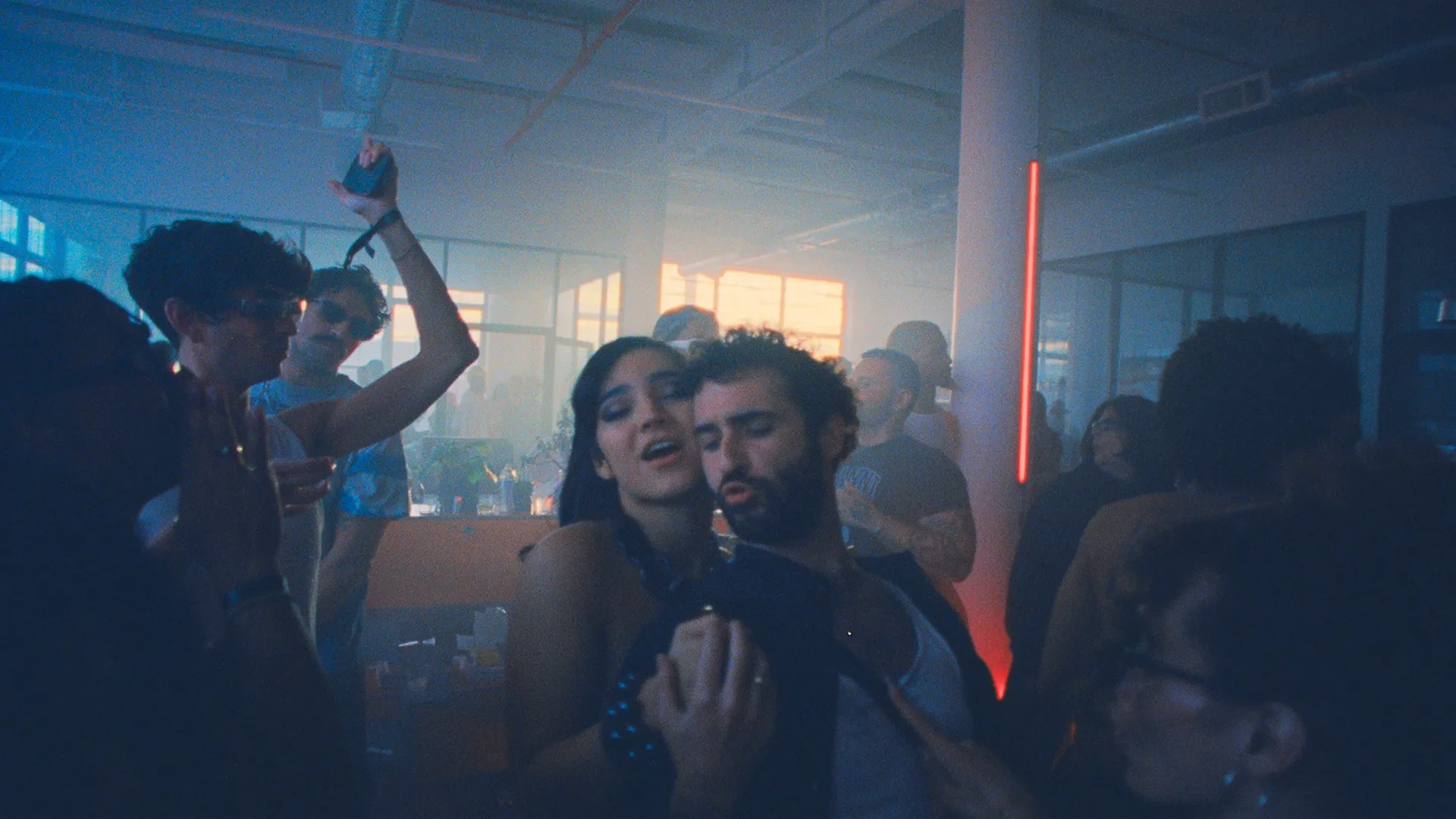
The screenplay builds itself around a violent displacement in time. It begins in 2016, inside a sweat-heavy Brooklyn nightclub sequence, then cuts across a ten-year void. That gap feels less like a narrative trick than a psychic wound. Addiction has its own philosophy of time: it consumes years while preserving the fantasy of a single extended evening. In Club Kid, a decade passes like smoke through a hand, visible for a second, gone before the body can register the loss.
The move from thunderous New York basements to domestic quiet gives the film room to trace behavioral change. Firstman avoids the usual sermon of personal redemption. Peter gains purpose, yet the script refuses to make salvation depend on rejecting his queer community or denying his history.
His past remains present, sticky, beloved, corrosive. His dependencies eat away at his professional life and strain his partnership with Sophie, making responsibility feel less like a sudden moral awakening than a daily negotiation with appetite.
Arlo’s characterization brings a gentler weakness. He adjusts to his new life with striking ease, hiding grief behind shared artistic taste and quick emotional alignment. Their bond gains warmth from that ease, yet the film loses some pressure during these domestic passages.
The child’s sorrow feels too neatly folded away for a while, and the drama drifts into a suspended calm before the legal machinery of the final movement arrives. In those quieter stretches, the film seems unsure how much danger still remains in the room.
Performance, Narcissism, and Transience
Firstman carries a difficult double burden here. He anchors the film through a performance that draws on his public comic ego while exposing something bruised beneath it. His Peter is vain, sharp, self-aware, and emotionally frightened. The self-deprecating irony lands because it never erases the sadness underneath. This is narcissism as a survival costume, glittering under nightclub light, threadbare by morning.
The film’s strongest emotional force comes from Firstman’s connection with newcomer Reggie Absolom. Their rapport feels natural and unforced, giving Peter and Arlo’s sudden paternal bond a lived-in credibility. The relationship could have seemed schematic, a wounded man saved by a child placed conveniently in his path. Instead, their scenes carry a strange tenderness, tentative and exposed, as if both characters are learning the grammar of attachment in real time.
The ensemble surrounds them with different forms of instability. Cara Delevingne gives Sophie a frantic, high-strung charge, presenting a woman who seems permanently close to psychic collapse. Her performance captures the brutal fatigue of stimulant-driven life, where energy starts to resemble punishment. Diego Calva brings a steadier presence as Oscar, a child psychologist who opens a path toward romantic maturity and structure inside Peter’s disorder.
Kirby Howell-Baptiste adds sharp, chaotic force as Edison, the blunt messenger from London. Eldar Isgandarov supplies eccentric relief as Nicky, the philosophical squatter. Together, these figures create a social map of endurance: lonely people carrying the wreckage of youth, still searching for meaning among the habits that once promised freedom.
Celluloid Shadows and the Comedown of Reality
Adam Newport-Berra’s tactile 35mm cinematography gives the film its sensory gravity. The grain places New York in the frame with a worn physical weight, away from polished digital cleanliness. The early club sequences are dizzying, damp, and disorienting, shaped by the primal pull of the dance floor. Later, the image settles into quieter, static compositions that respect the intimacy of domestic space. The camera seems to sober up with Peter, slowly, unevenly, with little faith in miracles.
Sound marks that same movement. Cristobal Tapia de Veer’s score works alongside melancholy needle drops from Elliott Smith, Björk, and Ethel Cain, bathing the characters’ isolation in melodic grief. The music gives their loneliness a texture, a kind of private weather.
The final act develops structural strain when bureaucratic legalities and courtroom drama enter the narrative. The shift stretches the film past two hours, and the pacing begins to swell. Yet that turn also has existential purpose. Peter’s crisis must pass from feeling into consequence, from private panic into institutional judgment.
The final frames deny him the comfort of a tidy Hollywood release. They leave him in a colder, clearer space, facing sobriety as an act of slow acceptance. Change arrives here as morning light: pale, unforgiving, and still somehow merciful.
Club Kid premiered on May 15, 2026, at the Cannes Film Festival in the Un Certain Regard category. Since the film recently debuted and generated a major studio bidding war, it lacks a public streaming service or theater release schedule. Audiences can look forward to watching it once a theatrical or streaming distributor secures the rights.
Where to Watch Club Kid (2026) Online
Full Credits
Title: Club Kid
Distributor: UTA Independent Film Group, Topic Studios
Release date: May 15, 2026
Running time: 126 minutes
Director: Jordan Firstman
Writers: Jordan Firstman
Producers and Executive Producers: Alex Coco, Galen Core, Ryan Heller, Jordan Firstman, Olmo Schnabel, Daniela Taplin Lundberg
Cast: Jordan Firstman, Cara Delevingne, Diego Calva, Reggie Absolom, Eldar Isgandarov, Miss Benny, Kirby Howell-Baptiste, Colleen Camp
Director of Photography (Cinematographer): Adam Newport-Berra
Editors: Taylor Levy, Sofía Subercaseaux
Composer: Cristobal Tapia de Veer
The Review
Club Kid
Club Kid offers a melancholic, visually striking examination of temporal decay and the painful awakening of the self. Jordan Firstman trades transient irony for an honest exposure of human fragility, creating an unsettling yet profoundly moving meditation on survival. The script stumbles over administrative mechanics during its final movements, yet the profound emotional authenticity of the central relationship remains unblemished. This is a quiet triumph born from the ashes of a decade lost to chemical shadows.
PROS
- Adam Newport-Berra’s tactile 35mm cinematography captures a grainy, evocative New York texture.
- Jordan Firstman delivers a vulnerable performance that balances vanity with genuine emotional exposure.
- The natural, unforced onscreen connection between the two leads anchors the emotional weight.
- Cristobal Tapia de Veer’s score coordinates beautifully with poetic needle drops.
CONS
- The final movement slows significantly under the weight of administrative courtroom mechanics.
- The script features an idealized depiction of the child, which occasionally drains necessary dramatic friction.
- Excess runtime past two hours results in a noticeable inflation of pacing.