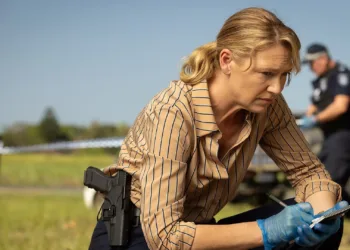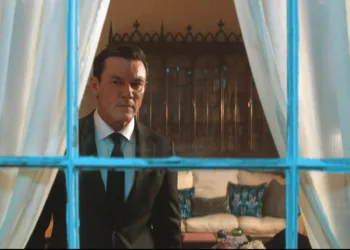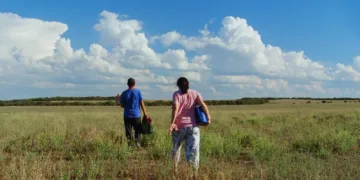




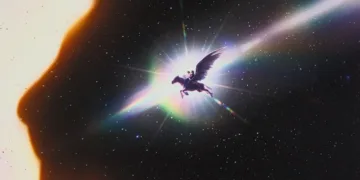

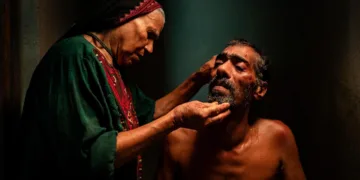

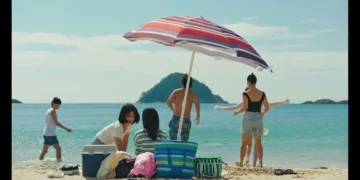
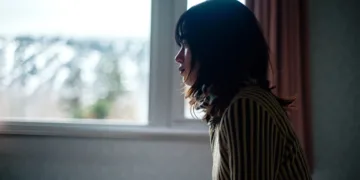








A lone silver-haired woodcutter swings his blade across the desolate Argentine Pampas, twenty-five years older and spiritually stuck in the same weathered posture. Lisandro Alonso’s La Libertad Doble begins as an uncanny cinematic repetition, a temporal haunting wearing the shape of a sequel.
The film brings back Misael Saavedra, the non-professional protagonist of Alonso’s 2001 landmark debut, and places him once again inside that exact geography of isolation. He lives in a rudimentary tin shack, locked into a routine of physical endurance that feels automatic, ancient, almost pre-verbal.
Alonso resists the modern impulse toward speed or conventional dramatic guidance. The frame asks viewers to sit with raw duration and watch an aging body perform the same primitive survival tactics in an empty field. Time becomes tactile here, measured through sawdust, shadow, fatigue, and the stubborn persistence of muscle memory. From its first images, the film works as a formalist threshold. Enter at its pace, or get left outside with the dust.
Austerity Shocks the Pastoral Idyll
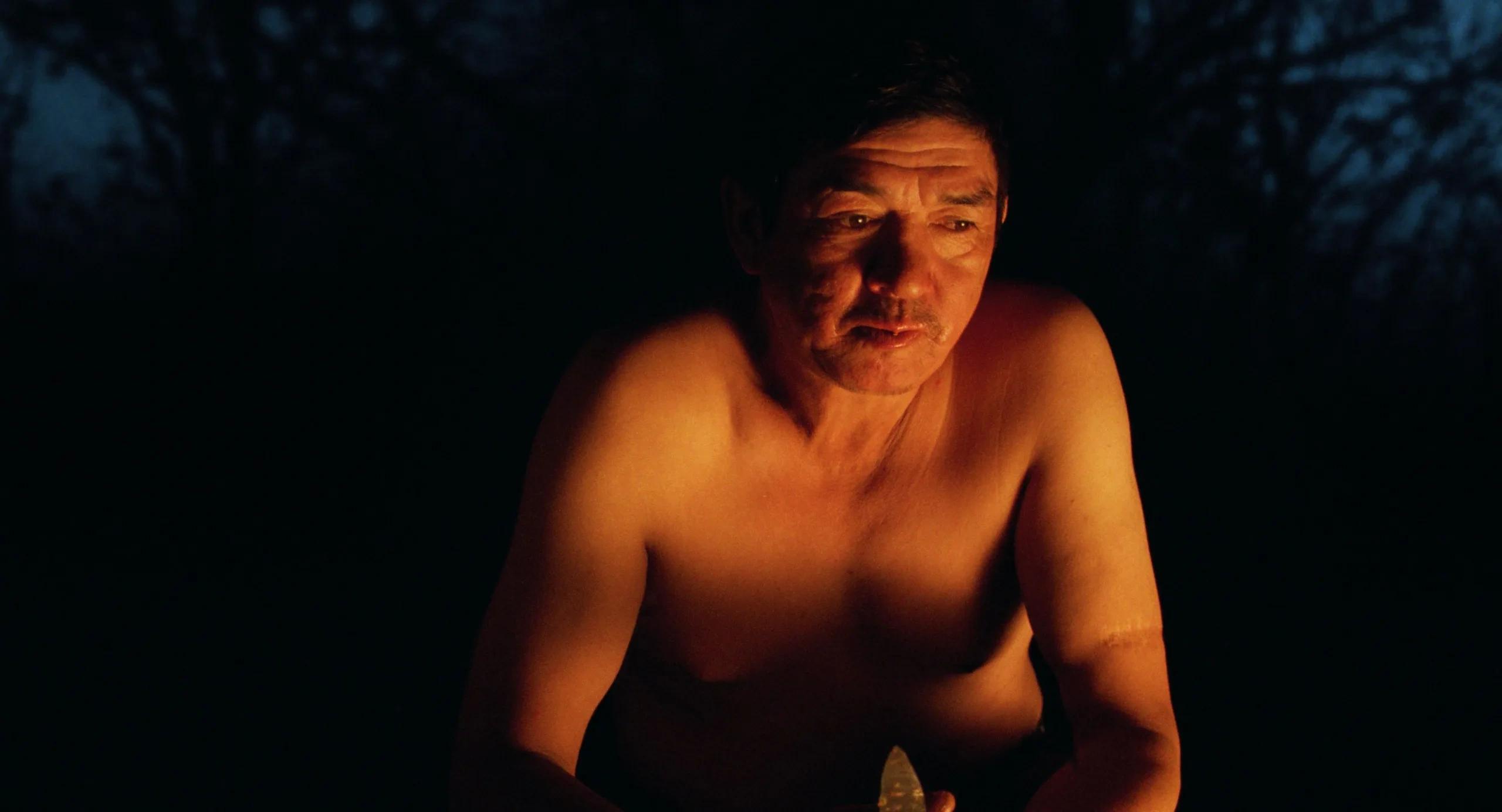
The opening stretch works as cinematic decompression. Misael moves through a sealed loop of survivalism: felling timber, roasting unidentifiable meat over an open campfire, and tossing scraps to a massive white dog named Sordo (a wonderfully indifferent creature, with the air of an actor who missed the memo and improved the scene anyway). These extended, static compositions reproduce the atmospheric density of the earlier film, suggesting that isolation can become a permanent sanctuary.
That illusion of pastoral autonomy collapses during a rare trip into a nearby town. A local physician, played with flat bureaucratic realism by Adrián Fondari, delivers an administrative eviction notice with the soft violence of paperwork. Misael must take immediate guardianship of his long-institutionalized sister, Catalina, because her psychiatric asylum faces immediate closure.
The shutdown reflects a brutal reality outside the frame: severe public-sector budget cuts and state austerity measures carried out by Argentina’s current right-wing administration. Alonso shifts the film’s moral temperature through this crisis. A quiet observational study becomes a portrait of structural vulnerability.
The state transfers its basic duties of care onto an impoverished laborer with zero support system. The hermit myth disintegrates. In its place stands state-enforced precarity, that cheerful little invention of modern governance: abandonment with a filing stamp.
Textures of Friction and Noise
Cinematographer Cobi Migliori captures this creeping domestic friction through a tactile visual language. The camera stays largely fixed, using long takes that stress the cramped dimensions of the tin shelter. The film retains a grainy, celluloid-adjacent texture, yet digital sharpness enters the frame at points, marking a move away from the looser aesthetics of Alonso’s early career.
The sound design presses on the same wound. Ambient pastoral noises, persistent wind, and distant birds mix with the acoustic violence of a chainsaw. This mechanical roar replaces the primitive axe from the first film, filling the wilderness with harsh industrial weight. Nature remains present, yet the machine now speaks louder.
Inside this dense sensory field, the performances create a striking imbalance. Misael has a hyper-literal presence; he occupies the space like a real-world laborer carrying out real-world labor. Catalina Saavedra, the professional Chilean actress playing his sister, uses a deliberate style built from erratic hand movements and unblinking stares. Their opposing registers create an aesthetic scrape.
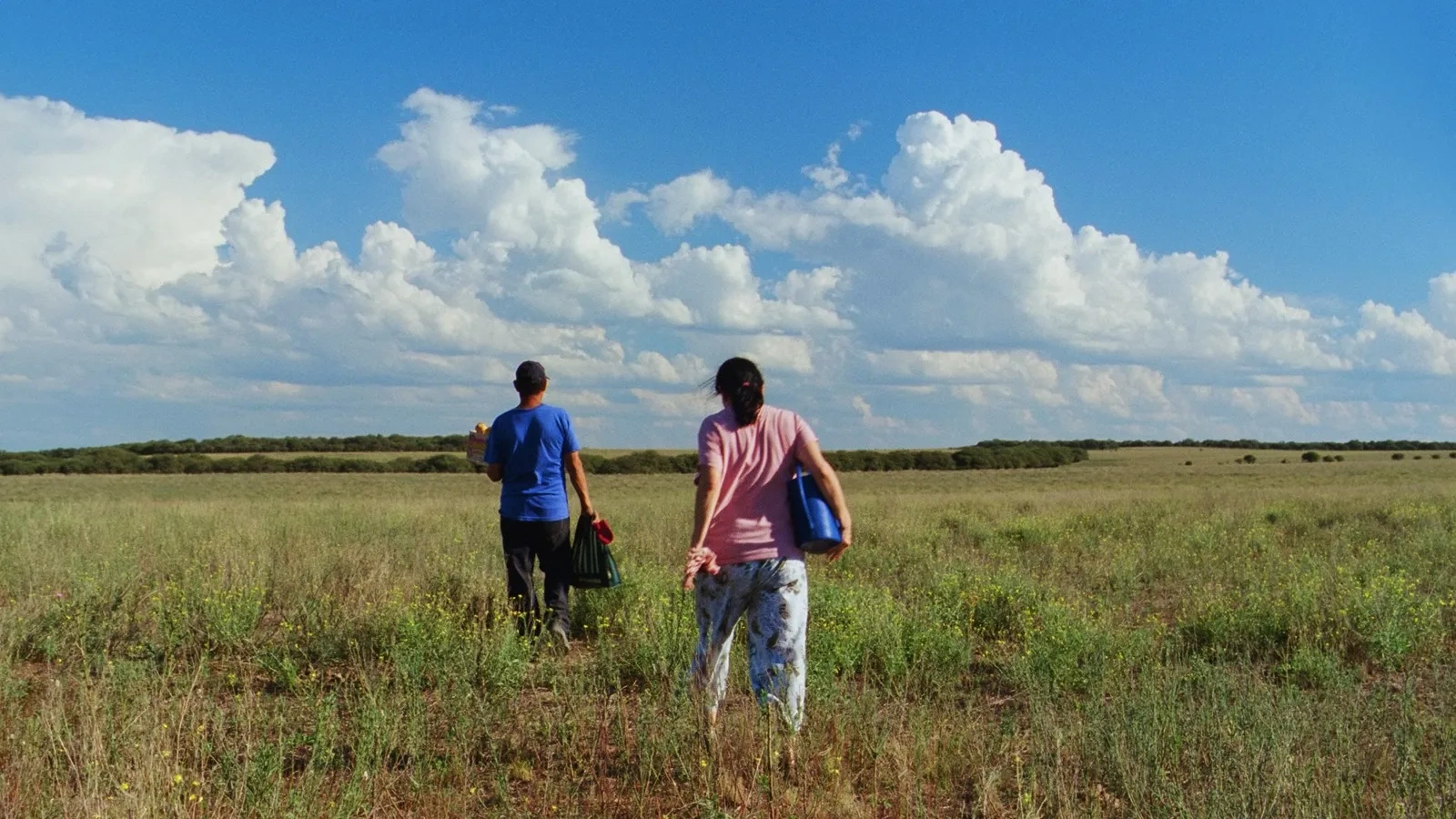
Their coexistence unfolds through silent, awkward standoffs. Misael remains bound to physical labor while Catalina drifts across the landscape, obsessively clutching a plastic watering can and following long-abandoned railway lines. Their closeness feels heavy. They share space without shared language, living inside separate psychological grammars. The pastoral landscape turns into a zone of cognitive dissonance, a home haunted by two different versions of reality.
Redefining the Autonomous Subject
This difficult coexistence places the title under philosophical pressure. Independence becomes unstable when the state withdraws institutional protection. Familial duty becomes a permanent brake on Misael’s autonomy, turning his isolated refuge into a crowded prison. For Catalina, mental isolation can be read as a radical form of sovereignty. Her inner world remains uncoopted by social expectation, a space of absolute non-compliance outside market logic.
I first read this arrangement as a bleak statement on human isolation. The film slowly reveals a quieter current of solidarity. No speech seals the bond. No warm reconciliation arrives to reassure the viewer. Kinship forms through proximity, repetition, endurance, and the mute fact of staying.
Alonso keeps this heavy material from hardening into a miserable sociological tract through deadpan absurdity. Awkward pauses, strange rhythms, and Sordo’s random movements create flashes of comedy that feel accidental and exact at once. The dog may be the film’s secret political theorist. He observes, refuses productivity, and survives.
The final meta-fictional gesture arrives after the credits, when Misael looks directly into the lens and breaks into a knowing laugh. That shot restores an ending that festival authorities forced Alonso to omit from the 2001 theatrical cut. It plays as a quiet act of creative reclamation. The national landscape deteriorates, care systems collapse, and autonomy becomes a wounded idea. Through this postscript, Alonso asserts his artistic self-determination with a laugh aimed straight through the apparatus.
The film celebrated its world premiere in May 2026 at the Cannes Film Festival inside the Directors’ Fortnight selection. Because the production is a newly unveiled festival entry, broad commercial streaming options and standard theatrical releases remain in development. Film enthusiasts can expect screening opportunities to appear via specialized independent theaters and boutique international film distribution platforms later this year.
Where to Watch Double Freedom (2026) Online
Full Credits
Title: Double Freedom
Distributor: Luxbox
Release date: May 2026
Running time: 100 minutes
Director: Lisandro Alonso
Writers: Lisandro Alonso
Producers and Executive Producers: Lisandro Alonso, Fernando Bascuñán, Ilse Hughan, Augusto Matte, Gilles Chanial, Michael Weber, Viola Fügen, Hernán Musaluppi, Santiago López, Diego Robino, Denise Ping Lee, Roberto Minervini, Kyle Stroud, Paloma Torras, Fernando Fuentes, Lilia Senna
Cast: Misael Saavedra, Catalina Saavedra, Adrián Fondari, Alcides Fink, Laura López Moyano, Alberto Villarroel, Hugo Fabián Sanchez, Iván Carra Ariel, Ali Quiroz
Director of Photography (Cinematographer): Cobi Migliora
Editors: Catalina Marín, Martín Mainoli, Manuel Ferrari
Composer: Peter Rosenthal
The Review
Double Freedom
La Libertad Doble transforms a severe formal exercise into a stark political reality. Lisandro Alonso rejects standard narrative satisfaction, challenging the viewer to experience the weight of state abandonment alongside his characters. The resulting friction between minimalist observation and heavy social precarity makes for an unsettling cinema experience. It is an unyielding piece of filmmaking that rewards patience, even when its deliberate performance clashes feel irritating.
PROS
- Tactile, gorgeous cinematography that captures the harsh textures of the Pampas.
- A fierce, uncompromising approach to current political critique using minimalist form.
- Wry meta-fictional humor that rewards patient viewers during the post-credits sequence.
CONS
- A jarring performance asymmetry between the two lead actors that breaks the illusion of reality.
- Severe, uncompromising pacing that will alienate audiences expecting standard plot progression.