


















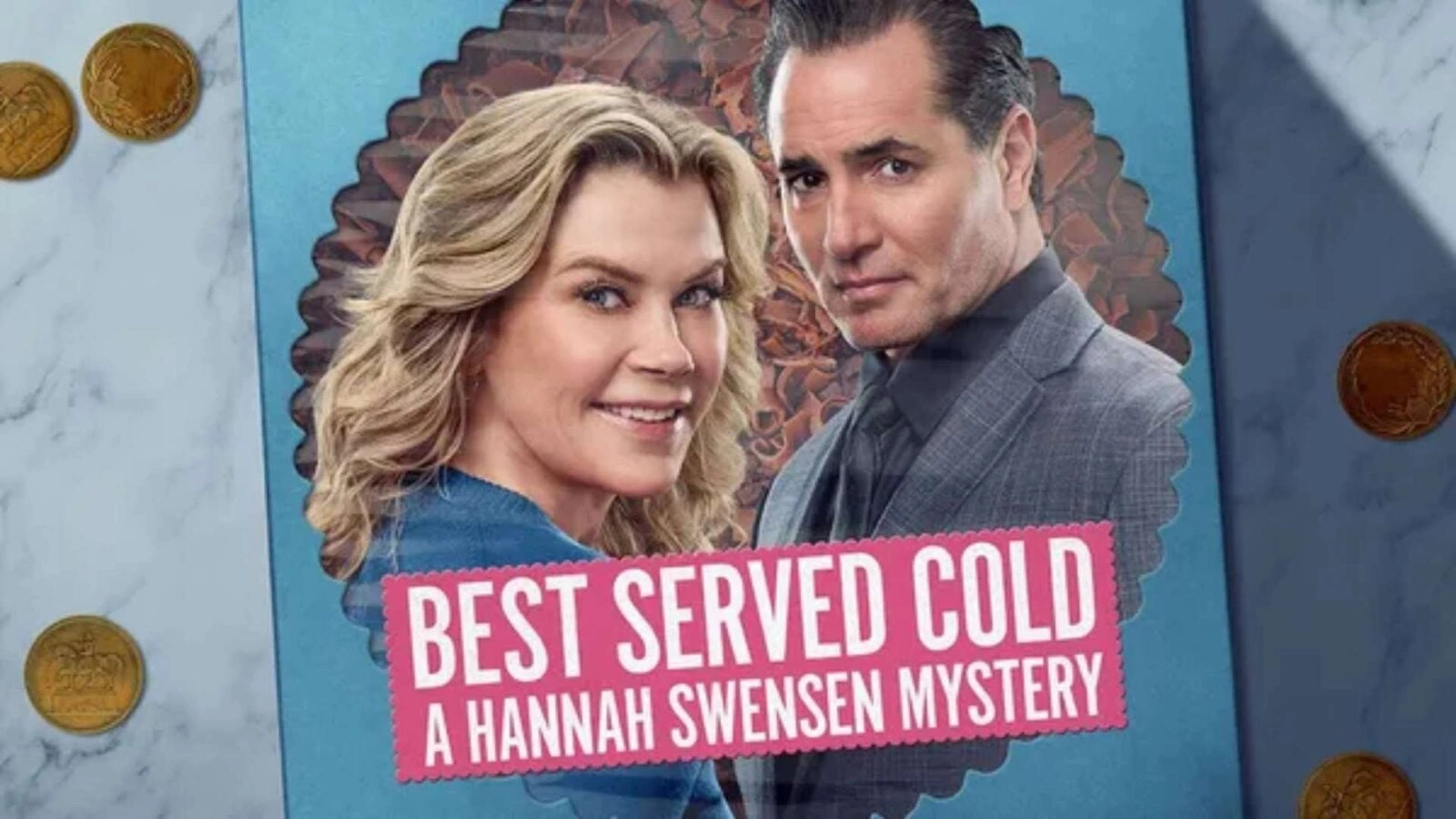

The cinematic order of Lake Eden, Minnesota, suffers a clean incision in Best Served Cold: A Hannah Swensen Mystery. This franchise entry, adapted from Joanna Fluke’s literary series, disturbs the pastry-scented calm of its domestic terrain with admirable efficiency.
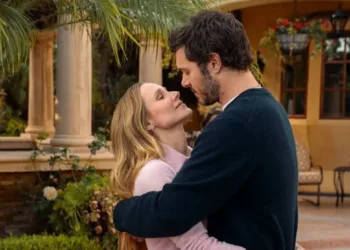
Prominent prosecutor Lucas Straub vanishes without a trace, and his absence drops a legal weight onto District Attorney Chad, romantic partner to baker and intuitive sleuth Hannah Swensen. The missing persons inquiry soon darkens. Hannah, whose deductive habits carry the measured discipline of a recipe card with teeth, follows Straub’s trail with her mother.
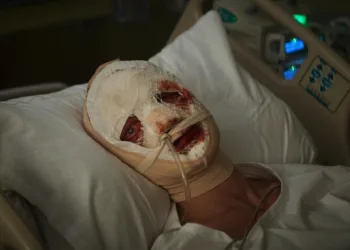
Their search reaches a local tobacco shop, where disappearance gives way to murder. They find the body of Paul Jacobson, a notorious con artist tied to one of Straub’s pending legal cases. Lake Eden’s cheerful surface cracks. A missing prosecutor and a dead fraudster now occupy the same frame, and Hannah has to read both mysteries through the same uneasy light.
The Architecture of the Procedural Shift
The franchise adopts a firmer procedural structure here, trading the loose cadence of small-town questioning for the hard geometry of legal drama. Much of the runtime takes place in a courtroom, a formal chamber where truth becomes a contested object, polished, priced, and rearranged under fluorescent scrutiny.
The trial concerns Mitzi Jacobson, accused of masterminding an elaborate forgery scheme built around counterfeit Civil War gold coins. The screenplay binds the missing prosecutor and the murdered con artist into one legal and moral mechanism.
Director Peter Benson uses the courtroom’s rigid lines for controlled claustrophobia. The composition narrows emotional space, and the trial’s ticking clock supplies the suspense engine. Each legal maneuver carries pressure, since the defense and prosecution seem locked in a ritual of ethical chess.
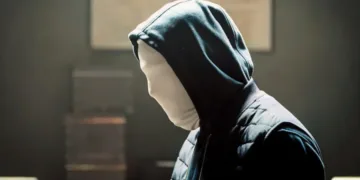
Charming game, if one enjoys subpoenas with existential seasoning. The threat field expands once Hannah receives anonymous death threats demanding that she leave the case. The puzzle gains bodily stakes. Her search for justice now competes with a direct danger to her life, turning civic duty into a question of free will under pressure.
Psychological Real Estate and Ensemble Dynamics
Alison Sweeney holds the film with practiced assurance, carrying a double function as protagonist and screenwriter. Her authorial presence is felt in the character rhythms, especially in the way Hannah approaches danger through pattern recognition and emotional restraint.

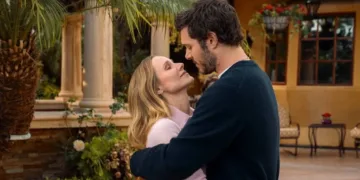
Victor Webster’s Chad receives greater psychological space, moving beyond the narrative edge and into the drama’s moral machinery. The film reveals the private reason behind his refusal to eat Hannah’s celebrated confections, giving their romance a softer, stranger vulnerability.
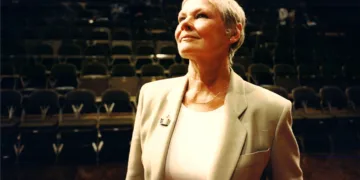
Barbara Niven gives Delores Swensen an eccentric charge that cuts through the gloom. Delores becomes an active investigator, conducting undercover surveillance to find the counterfeit minting plates, then shifting into theatrical witness-stand mode. Her scenes have the flicker of camp, plus a genuine maternal instinct that keeps the performance from floating away like powdered sugar in a crime scene breeze.
The ensemble serves the mystery in uneven measure. Sheriff Ron Ealing and Detective Lonnie ground the official investigation with stoic dependability. Other familiar faces receive thinner treatment. Sister Michelle and bakery assistant Lisa remain near the background, functioning as light decorative elements within this compressed psychological field.
Confectionary Aesthetics and Methodical Pacing
Peter Benson favors deliberate pacing over kinetic cutting, aligning the film with traditional detective fiction. The camera lingers on conversations, letting dialogue become the main instrument of suspense. The visual design uses pristine brightness in place of classic noir chiaroscuro, turning the usual shadow grammar of the thriller into a sanitized domestic glow. This is noir after a vigorous countertop wipe.
Shot composition often privileges the hyper-real beauty of baked goods. Blueberry lavender panna cotta, lemon whippersnappers, morning glory muffins, and butterscotch marshmallow cookies punctuate the criminal investigation like edible punctuation marks. These close-ups anchor the film’s comfort aesthetic, keeping the darker material inside a reassuring visual scheme.
Graphic violence stays absent. The body appears as a clinical fact, stripped of grotesque spectacle. Bright color palettes contain the dread, while the sound design and pacing guide audience perception through restraint. The film depends on deduction, witness interviews, and orderly inference. Benson builds a cleanly lit world where violence enters, gets cataloged, and is gradually subdued by logic, social observation, and baked goods. A bleak philosophy, perhaps. A tasty one, certainly.
The mystery movie recently premiered on May 16, 2026. Audiences can watch the film live on the Hallmark Channel. It became available for streaming the following day on the Hallmark+ platform. This production represents the fourteenth installment in the popular franchise centered on the small-town baker who solves homicides.
Where to Watch Best Served Cold: A Hannah Swensen Mystery (2026) Online




Full Credits
Title: Best Served Cold: A Hannah Swensen Mystery
Distributor: Hallmark Channel, Hallmark+
Release date: May 16, 2026
Rating: TV-PG
Running time: 90 minutes
Director: Peter Benson
Writers: Alison Sweeney, Joanne Fluke
Producers and Executive Producers: Alison Sweeney, Craig Baumgarten, Kevin Leslie, Jamie Goehring, Shawn Williamson
Cast: Alison Sweeney, Victor Webster, Barbara Niven, Rhonda Dent, Daylin Willis, Juliana Wimbles, Tess Atkins, Mike Dopud
Director of Photography (Cinematographer): David Pelletier
Editors: Kelly Herron, Daniel Krieger
Composer: Matthew Rogers
The Review
Best Served Cold: A Hannah Swensen Mystery
Best Served Cold successfully pivots into a legal procedural, sharpening its narrative focus while retaining its domestic charm. The courtroom geometry and expanded character background offer satisfying depth. It provides a methodical, comforting viewing experience for genre enthusiasts.
PROS
- An engaging shift toward a formal legal framework that alters the usual franchise formula.
- Expanded character backstory for Chad that introduces fresh domestic dynamics.
- A memorable, highly comedic performance by Barbara Niven.
- Visually striking, immaculate presentation of the culinary elements.
CONS
- Underutilized secondary characters who recede completely into the background.
- The deliberate, slower pacing might deter fans accustomed to high-velocity thrillers.