













Lila Pinell makes her solo feature debut with Shana (2026), stretching the narrative world first sketched in her short film Le Roi David into a sharper, dirtier Parisian fever dream. The film drops us into the abrasive undertow of modern Paris through a twenty-five-year-old woman whose life seems governed by impulse, panic, and bad arithmetic. Played by Eva Huault, she moves through the city in a state of permanent economic alarm. Survival, for her, is a daily hustle with cracked knuckles.
The pressure tightens because her boyfriend, Moses, sits in prison. From behind bars, he transfers the burden of his illegal drug business onto her with the casual tyranny of a man who cannot physically appear yet still manages to occupy every room. Pinell turns that setup into a crisis of power.
The protagonist is pinned between family judgment and the street logic of criminal obligation, facing a world with little interest in mercy. The social climate feels harsh, cramped, and structurally jammed. Individual willpower keeps colliding with a system that appears designed to exhaust it.
Character Study and Lead Performance
Eva Huault commands the film with jagged, volatile force. She has wrecking-ball charisma, that peculiar magnetism of a person who can ruin a room and still make everyone watch the damage. Her look is practically a manifesto of modern alienation.
She stalks Paris in a ratty pop-star shirt, pink Crocs, and a blazer that carries the scent of economic panic. Her augmented lips and long hair extensions point toward a deep fixation on cosmetic self-revision. The body becomes product, billboard, shield, and accusation. Very chic. Very doomed.
She is ferociously combative. In the opening scene, a friendly werewolf parlor game mutates into a screaming match because she refuses to accept her fictional death. The joke is funny until it curdles. She pushes people away with startling efficiency, turning ordinary social contact into trench warfare. Her prickliness functions as armor around a wound she has never learned to dress.
Huault lets the damage show beneath the noise. The rage comes from childhood abandonment and maternal neglect. Her biological mother left her at twelve, and she grew up in the care system. That rupture becomes the film’s secret grammar. Her adult volatility reads like trauma arriving late, furious at the delay. She attacks first because the world attacked through absence. Her defense mechanism has learned to masquerade as aggression, converting personal history into a blunt instrument against intimacy.
Plot Trajectory, Family Friction, and Cultural Identity
The story moves with frantic, episodic speed, pushed along by cash panic. Moses manages his narcotics supply through prison phone calls, dragging the protagonist into the ridiculous and dangerous role of amateur dealer. Her financial anxiety worsens after she collects fifteen hundred Euros in transit fines.
To escape that trap, she pawns an eighteen-carat emerald ring left by her late Moroccan grandmother. The act lands with symbolic cruelty. An ancestral object becomes quick liquidity. Family memory gets converted into emergency cash. Call it pawn-shop capitalism, a small economic apocalypse conducted across a counter.
Home gives her no refuge. The family scenes crackle with judgment, especially in her exchanges with Yolande, played with surgical sharpness by Noémie Lvovsky. Their conflict exposes cultural and religious hypocrisy with almost comic brutality. During a tense Passover Seder, the protagonist guzzles ceremonial wine while relatives criticize her appearance. Later, a Bat Mitzvah clothing boutique trip turns into ideological combat by fluorescent lighting.
Her identity remains splintered and politically charged. With French, Jewish, and Arabic heritage, she treats formal tradition with suspicion, irritation, and occasional theatrical contempt. Her pro-Palestinian political stance clashes with her family’s expectations, giving the film a live wire of contemporary generational conflict. Young people reject inherited ritual and build identity through chosen political alignment.
Or maybe that gives her too much ideological credit. Her rebellion may be powered by local spite, aimed less at doctrine than at Yolande, the person enforcing it. Pinell leaves room for that contradiction. Personal resentment and geopolitical conviction fuse into one unstable substance, a kind of domestic uranium.
Visual Language, Soundscapes, and Motifs
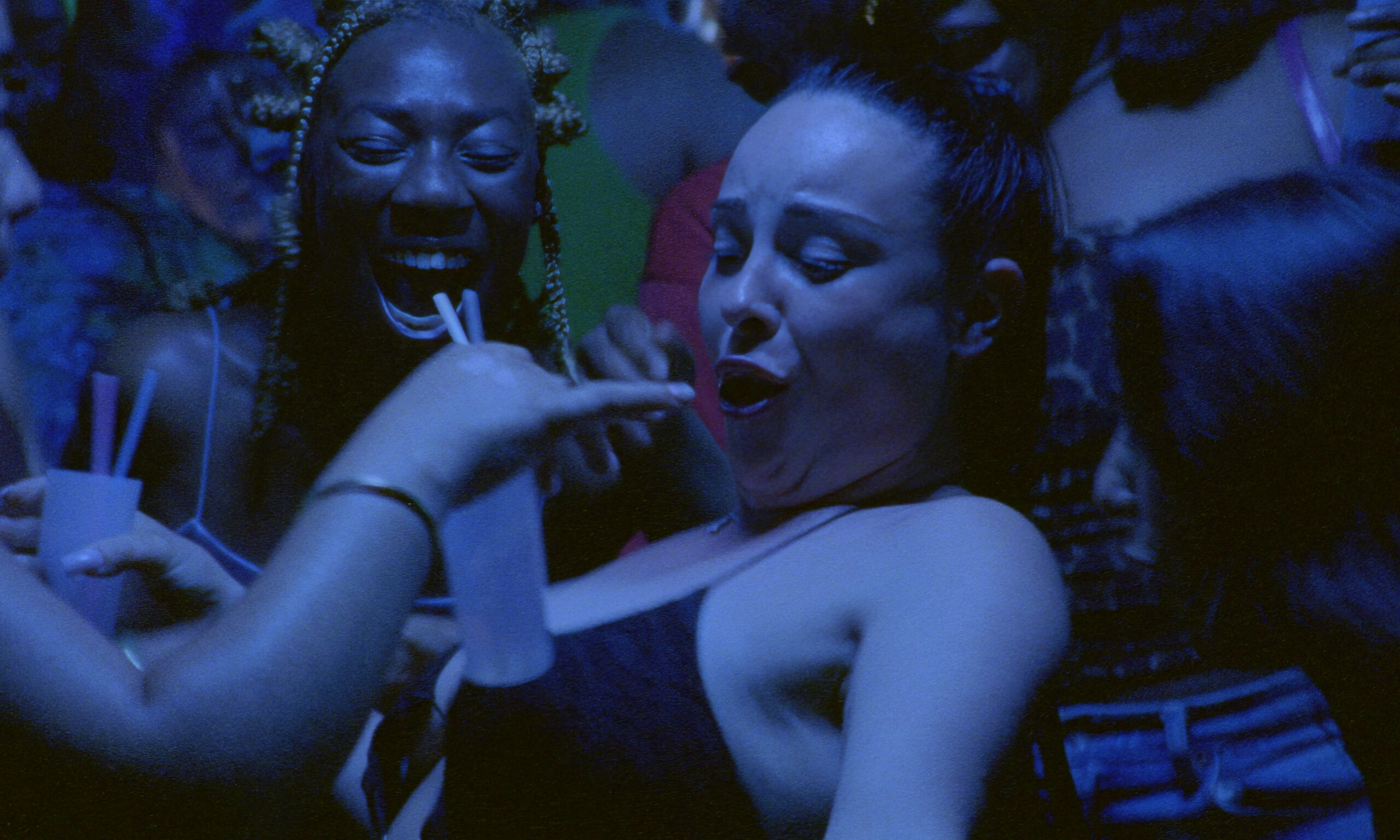
Director of photography Victor Zébo gives the film a restless, handheld texture through tactile, gritty 16mm stock. The image feels immediate, grainy, and exposed. Zébo pairs that roughness with soft tones and purplish-blue filters, creating a hyper-modern palette that echoes contemporary youth media. Existential dread gets translated into streamable melancholy, polished just enough to make despair look algorithm-friendly.
The soundscape tightens the psychological vise. Pinell uses Béla Bartók’s “Music for Strings, Percussion, and Celesta” as a recurring leitmotif. Its severe orchestration turns ordinary Parisian streets into zones of menace. The city begins to feel trapped inside the protagonist’s nervous system, every corner humming with horror and enclosure.
The motifs sharpen the film’s dark comic mythology. The opening werewolf game becomes a lasting metaphor for her social world. She experiences community as a gathering of hidden predators, each waiting for the first scent of weakness. The film also uses stylized storybook images of the biblical ten plagues, which return during moments of crisis.
These graphics frame her escalating failures, including a sock drawer full of maggots, as historic afflictions with absurdly intimate stakes. A messy modern life takes on the shape of myth, though the gods here seem petty, broke, and very French.
The French independent drama Shana premiered on May 16, 2026, during the Directors’ Fortnight selection at the Cannes Film Festival. Because the feature film freshly premiered at this international festival, wide theatrical distribution and digital streaming options remain unavailable at this moment. Audiences can expect to view the work in public cinemas later this year following its domestic roll-out by distributor Les Films du Losange.
Full Credits
Title: Shana
Distributor: Les Films du Losange
Release date: May 16, 2026
Running time: 83 Minutes
Director: Lila Pinell
Writers: Lila Pinell
Producers and Executive Producers: Emmanuel Chaumet, Charles Gillibert
Cast: Eva Huault, Noémie Lvovsky, Inès Gherib, Anaïs Monah, Bettina De Van, Geneviève Krief, Sékouba Doucouré, Sarah Benabdallah, Palachandiran Thyshaant, Solal Bouloudnine, Anthony Sonigo
Director of Photography (Cinematographer): Victor Zébo
Editors: Jean-Christophe Hym, Emma Augier
Composer: Béla Bartók
The Review
Shana
Shana offers a prickly, unforgiving look at modern alienation through an explosive lead performance. Lila Pinell crafts a gritty, low-key character study that trades traditional cinematic warmth for abrasive authenticity. While the repetitive musical choices and episodic pacing occasionally stall the narrative momentum, the film remains an unsettling slice of Parisian life. It avoids easy sentimentality, forcing the audience to confront a chaotic reality of self-inflicted wounds and structural traps. It stands as a confident, unvarnished piece of Euro-arthouse cinema.
PROS
- Eva Huault delivers a raw, uncompromising performance that anchors the entire film.
- Victor Zébo's gritty 16mm cinematography captures a lesser-seen, authentic side of Paris.
- The script handles generational and cultural friction with sharp, clear-eyed realism.
CONS
- The repetitive deployment of the Béla Bartók musical piece becomes tedious over time.
- The episodic, highly erratic plot structure occasionally lacks clear forward progression.
- The protagonist's highly combative nature might alienate audience empathy.