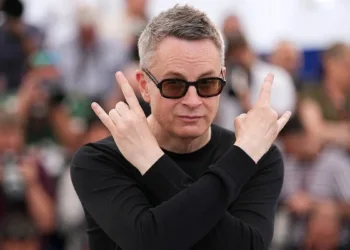

























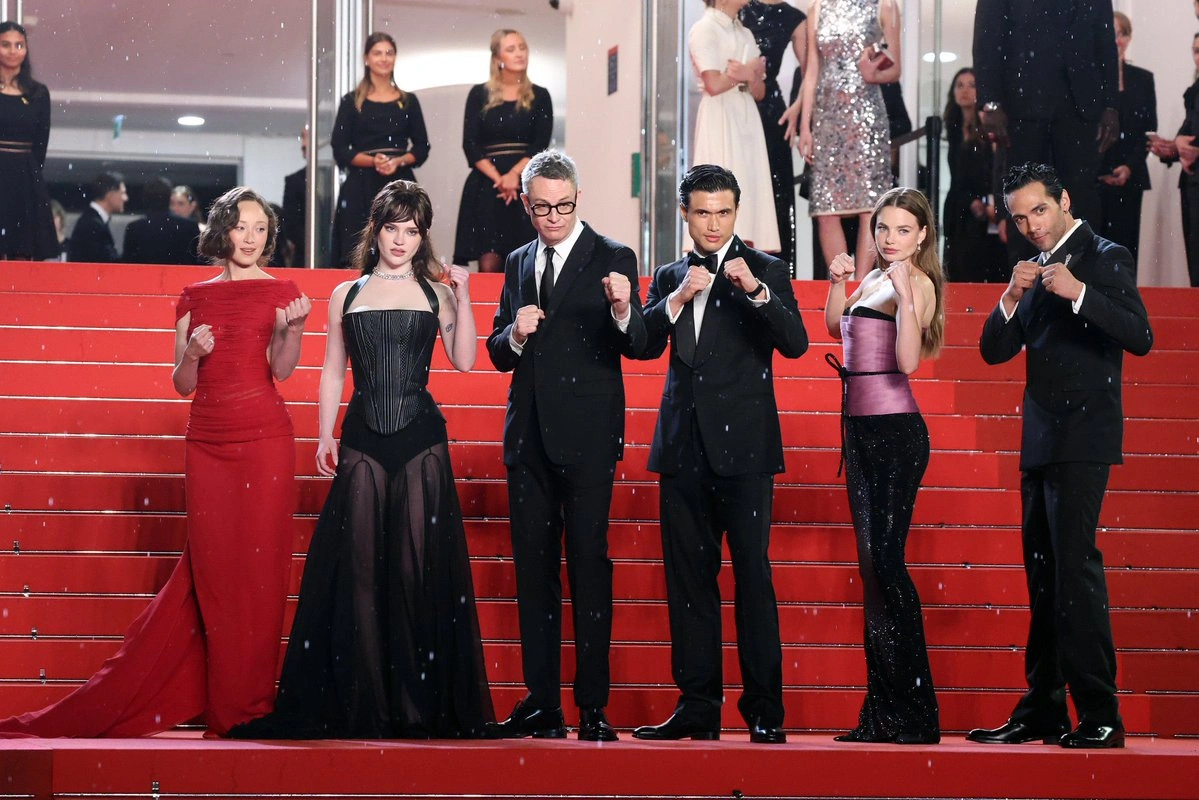

Nicolas Winding Refn returned to Cannes on Monday night with Her Private Hell, his first feature film in a decade, and the Grand Théâtre Lumière responded with a 12-minute standing ovation — the longest at the 79th festival so far — as lead actress Sophie Thatcher broke into tears and Refn paced the stage, whipping the crowd into sustained applause.
The film, a psychedelic sci-fi horror picture shot in Tokyo and Copenhagen, screens out of competition. It stars Thatcher as a troubled young woman searching for her father after a mysterious mist engulfs a futuristic metropolis, her fate crossing with that of an American soldier, played by Charles Melton, desperately trying to rescue his daughter from a deadly presence known as the Leather Man. Havana Rose Liu and Kristine Froseth round out the ensemble. Neon holds domestic rights and will release the film theatrically on July 24.
Refn’s last feature was The Neon Demon in 2016. The decade between was filled by two streaming series — Too Old to Die Young for Amazon and Copenhagen Cowboy for Netflix. His return to cinema carried personal weight far beyond the professional. In a nearly three-minute speech after the screening, Refn disclosed that he had been clinically dead for 25 minutes following a heart operation. “When I was brought back to life with electricity, that I’m alive again; I only have 25 years of my life to live. But I’m going to make damn use of that to live life to the fullest,” he told the crowd to laughter and cheers.
Refn used the platform to make a pointed argument for theatrical cinema. “When all the politicians f**ked up the world, and blown up all the countries and stole all our money, the only thing that’s left is art,” he said. “Cinema is about coming together as a collective experience which is what human beings do. So this year one, day one, cinema is the future, cinema is alive, it’s resurrected.”
Critical reactions divided, as they reliably do with Refn, though reviewers broadly praised Thatcher. One critic described the film as “captivating and uncompromising,” adding that Thatcher “goes from being more wounded and alone to vindictive and cruel in the blink of an eye.” Another singled out Pino Donaggio’s score as extraordinary, writing that the 90-year-old composer’s music “guides the film in a way music hasn’t since the early silents.” Refn gave Donaggio, who attended the screening, a public shoutout from the stage.
Refn previously electrified Cannes with Drive in 2011, winning the Best Director prize. Later entries Only God Forgives (2013) and The Neon Demon (2016) divided audiences sharply, with the latter drawing both boos and walkouts. Monday’s reception signals a warmer homecoming — though the festival’s ovation clock, which runs from the first credit applause, noted that Refn’s own crowd-stoking from the stage likely extended the count.