






















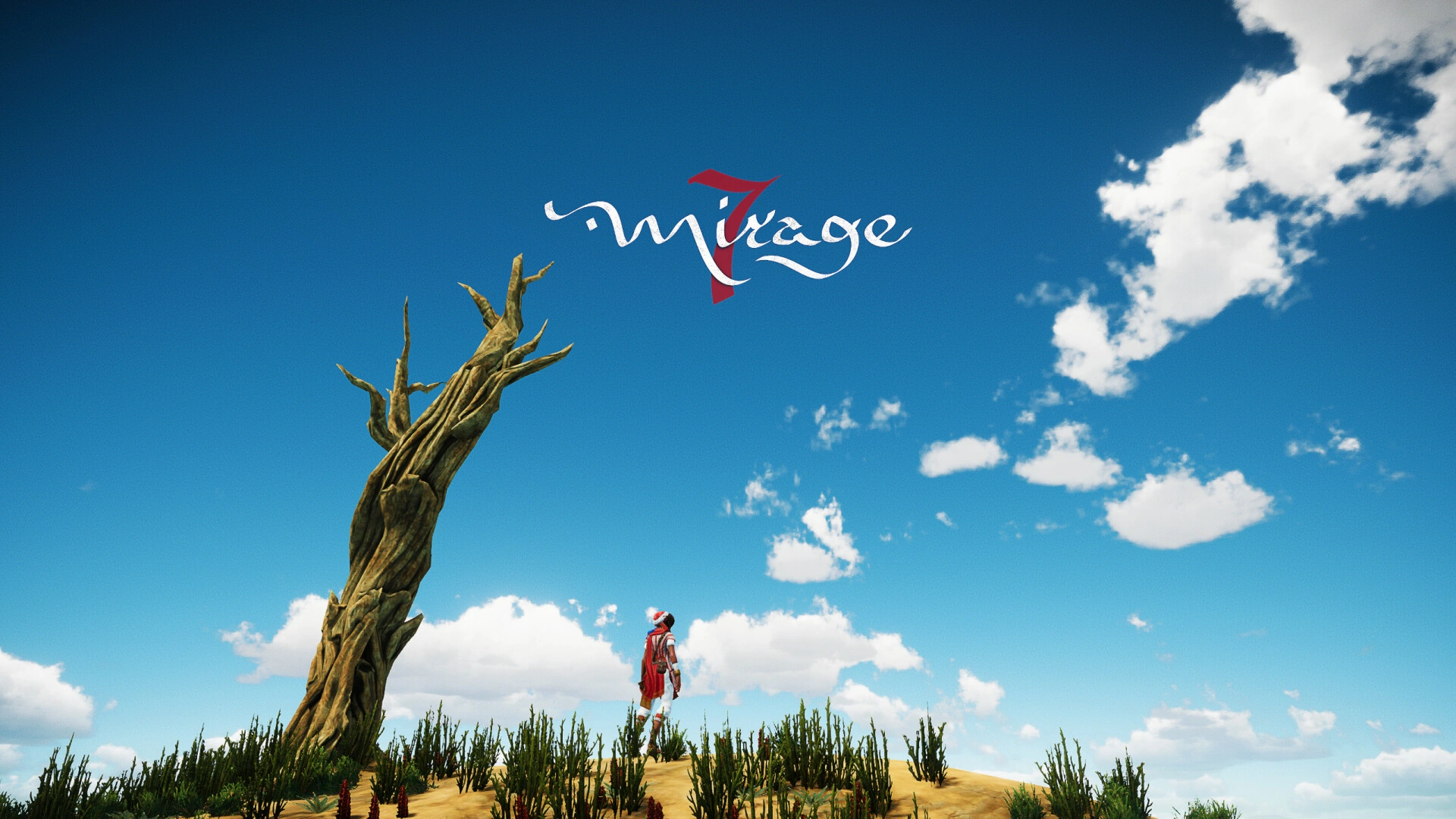

Mirage 7, a third-person adventure developed by Drakkar Dev and published by Blowfish Studios, arrived on March 6, 2026, with a dark fairy-tale premise rooted in Middle Eastern folklore and desert mythology. Its opening unsettles the player through a sharp collision of eras. A modern reconnaissance drone crashes into a remote desert and detonates above a subterranean military research facility, awakening a long-dormant hybrid entity.
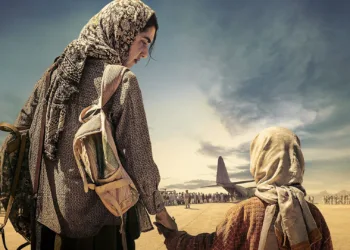
After that explosive setup, the contemporary frame fades, and the game moves into a vast landscape shaped by ancient folklore. Nadira, the explorer leading this tale, is driven by grief. Her younger sister’s sudden death sends her across the punishing sands in search of the legendary Oasis of Jala. Her final goal is the mythical Moon Palace, where Princess Taishma is rumored to hold the power to reverse death and return Nadira’s lost sibling.
The Convergence of Myth and Machinery
The game’s atmosphere develops through a cultural and genre shift, as folklore gradually exposes a science-fiction skeleton beneath its surface. Nadira begins among recognizable regional markers: crumbling stone structures, desert expanses, and mythic spaces that draw from Middle Eastern storytelling traditions.
As she enters subterranean cave networks and forgotten temples, the visual language changes. Glowing components, buried machinery, and the architecture of an advanced lost civilization begin to reshape the player’s understanding of the world.
This movement recalls classic speculative fiction, where ancient magic is reinterpreted as forgotten technology. Mirage 7 uses that genre pattern through a culturally specific lens, linking desert myth to a buried technological past. The effect gives the setting a layered identity, with folk memory and machinery occupying the same imaginative space.
Nadira’s encounters reinforce that ambiguity. The Witch of Jala appears as an erratic figure, speaking in cryptic fragments that keep her alignment uncertain. The Vizier provides historical material about the desert, and his dialogue keeps pointing toward deeper systems hidden beneath local mythology.
Also Read





The soundtrack strengthens this divide through traditional Middle Eastern instrumentation paired with cold electronic synth tones, creating an audible friction between antiquity and technology. The performances keep these large ideas emotionally readable. Blair Greene-Osako gives Nadira a balance of vulnerability and endurance, and Andy Mack gives the Vizier a detached, enigmatic cadence.
Symbiosis and Environmental Literacy
The game’s strongest mechanical idea is its cooperative companion system, which turns dependency into problem solving. Players divide practical tasks between Nadira and her small desert reptile, Jiji. Nadira has the strength needed to climb structures and cross vertical terrain. Jiji slips through tight spaces, moves through narrow drainage tunnels, and activates wall switches Nadira cannot reach.
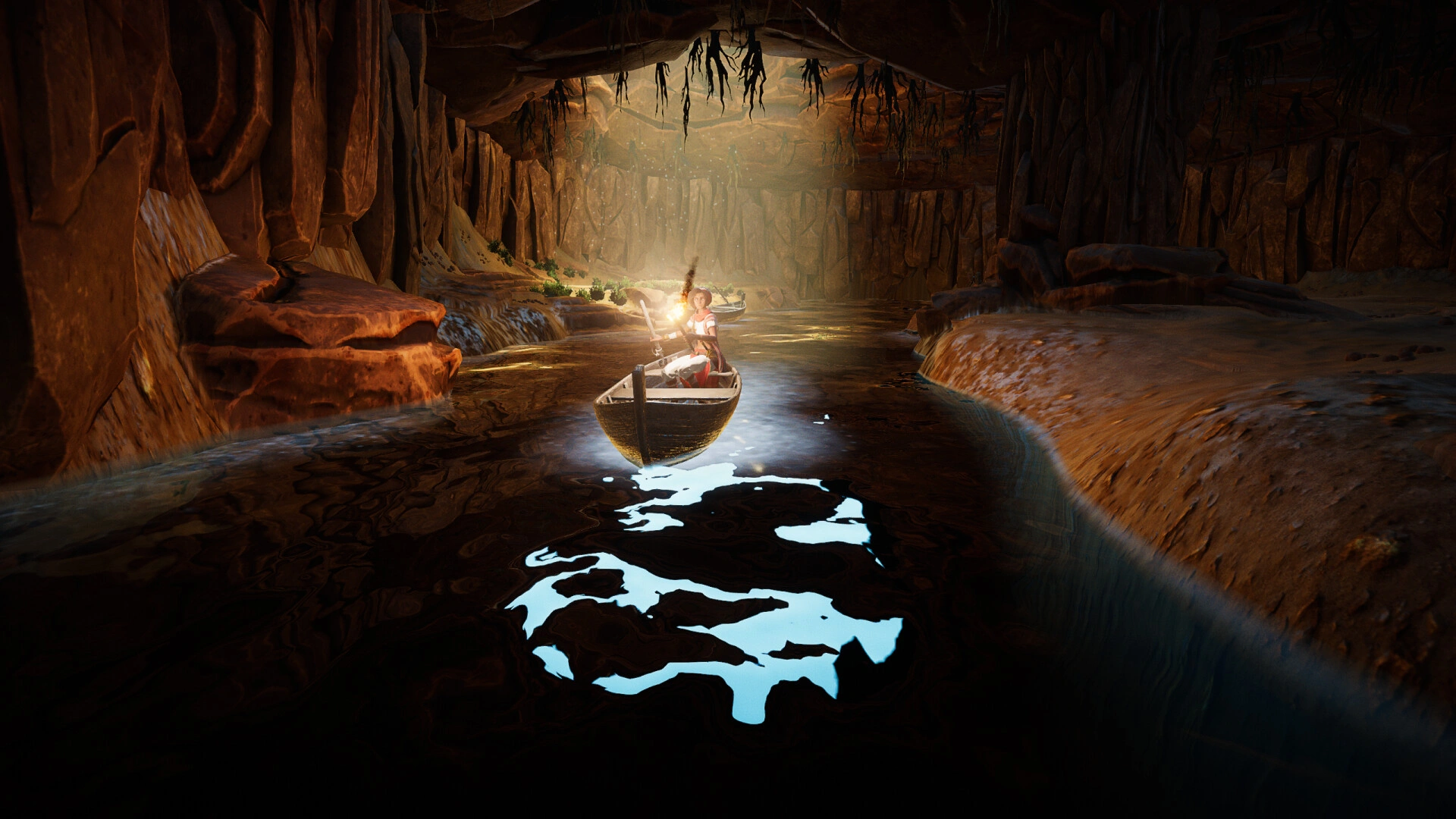
This partnership ties narrative meaning to mechanical action. Nadira’s grief gives the story its emotional pressure, and the gameplay asks her to survive through connection. Jiji’s Lizard Eye ability expands that partnership into investigation. The mechanic shifts the visual spectrum and reveals interactive objects hidden from human sight, making the environment feel culturally and materially encoded. Players then handle discoveries through a tactile inventory screen, rotating and inspecting objects for physical clues.
Early survival systems use the same logic. The player gathers native desert Waterleaf plants and manually extracts moisture to refill Nadira’s canteen for health recovery. The sequence grounds the fantasy in local ecology, making the desert a living system with rules the player must learn. Puzzles continue that design principle by asking players to press heavy switches, redirect light beams from reflective surfaces, and adjust wind currents inside cavernous halls.
The puzzle design works best when spatial observation leads to a clean solution. In those moments, Mirage 7 connects its mythic architecture to readable game logic. Several challenges lose that clarity through weak visual indicators, slowing progression as players repeat actions through trial and error. The result is a system with strong thematic intent and uneven moment-to-moment guidance.
The Friction of Material Constraints
The secondary systems reveal the limits of the game’s independent-development budget, especially through combat. Encounters occur in contained bursts, with Nadira defending herself through a basic dagger for close-range attacks and a craftable slingshot with multiple ammunition types for ranged utility. Enemies include native desert wildlife, massive cave spiders, and spectral soldiers from the ruins.
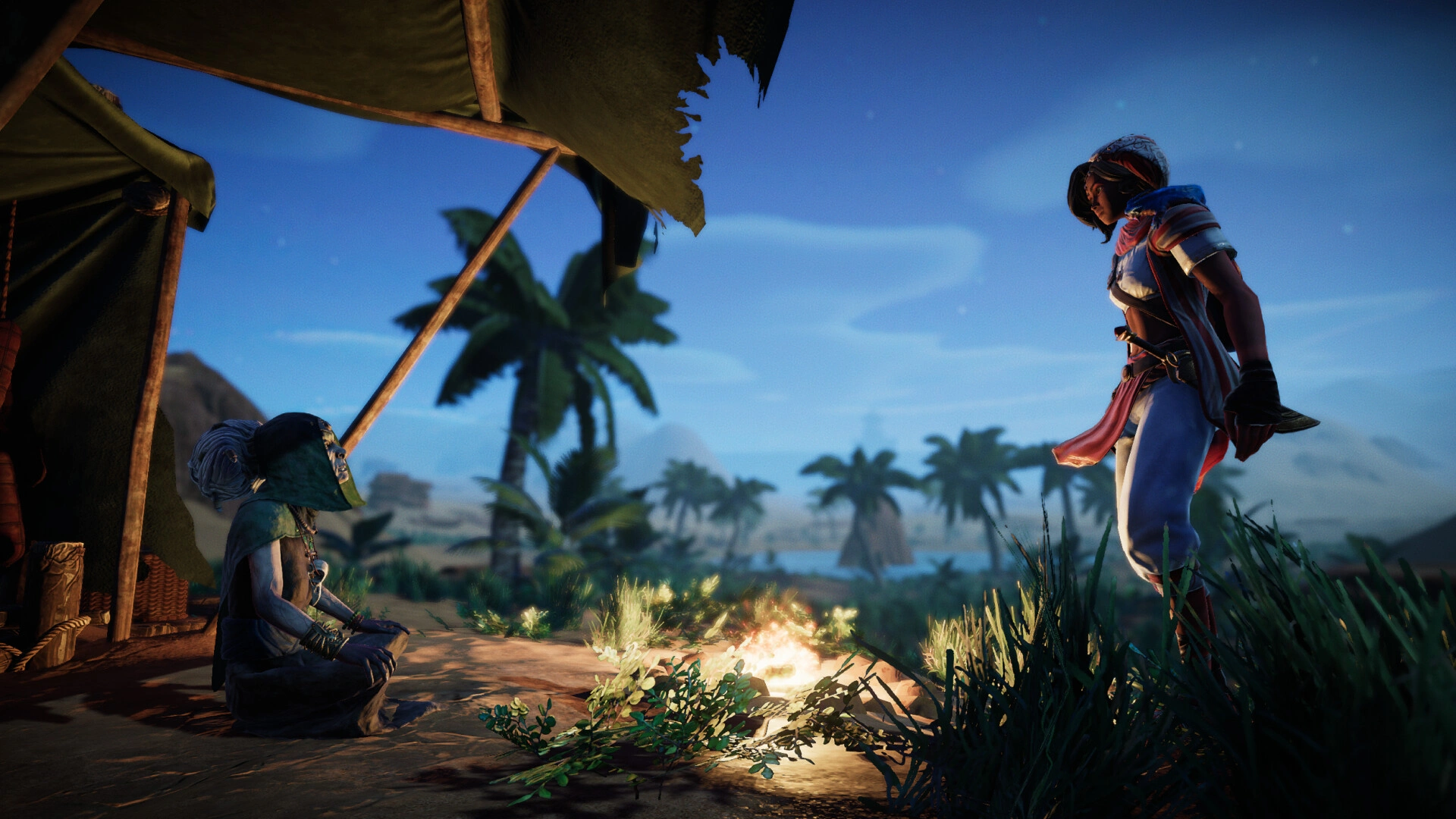
Combat feels stiff and poorly connected to the rest of the experience. The dodge sends Nadira too far from enemies to follow with immediate counterattacks, and the lock-on system shifts awkwardly between multiple threats. These issues turn combat into a repetitive interruption. Exploration carries the game’s cultural and mechanical identity with greater confidence.
Progression and economy are handled with useful restraint. The lightweight crafting framework turns gathered materials into ammunition or quest tools without heavy menu work. Upgrades are tied to milestone discoveries, keeping attention on exploration and environmental reading. The game’s visuals show similar unevenness.
Advanced lighting and wide desert horizons can look impressive on modern hardware, giving the exterior spaces a strong sense of scale. Temple interiors rely on generic assets, which makes several enclosed areas feel repetitive. Animation follows the same pattern: Nadira and Jiji move fluidly, and secondary characters remain stiff, with dialogue scenes often limited to facial motion.
The Review
Mirage 7
Mirage 7 is a thoughtful independent adventure that succeeds in atmosphere and narrative ambition, blending Middle Eastern folklore with science fiction in a compelling dark fairy tale. Its environmental puzzles and dual-character mechanics offer a rewarding old-school charm. However, the experience is noticeably held back by mechanical friction, particularly in its rigid, repetitive combat and unpolished animation. For players who prioritize rich world-building and cross-genre storytelling over fluid action, it remains a trip worth taking.
PROS
- Compelling fusion of folklore and science fiction themes
- Atmospheric soundtrack and strong voice performances
- Engaging, cooperative companion puzzles
CONS
- Clunky, shallow, and unnecessary combat mechanics
- Inconsistent puzzle pacing with occasional trial-and-error
- Repetitive interior assets and stiff character animations