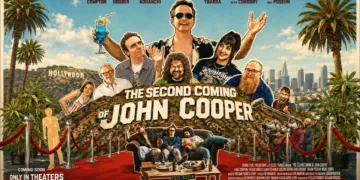

















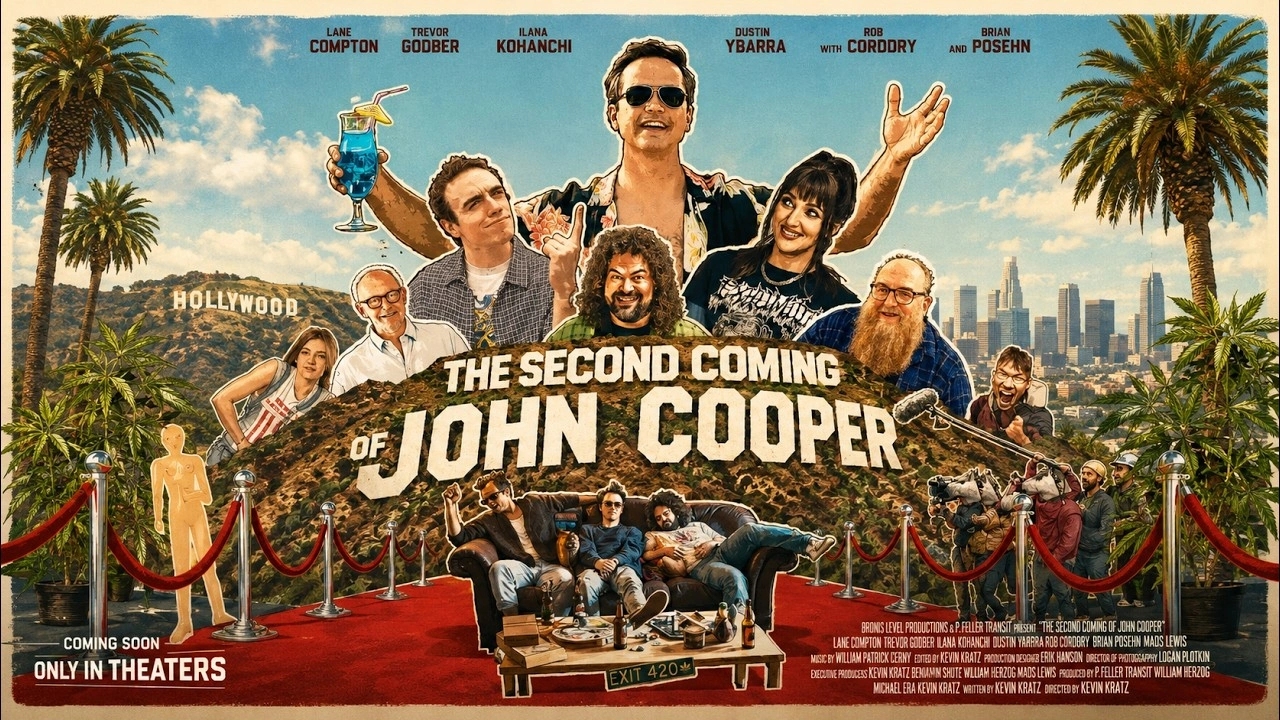

The Second Coming of John Cooper arrives with the energy of a late‑90s/early-2000s cult comedy, a mockumentary that traps viewers inside both its small apartment and its sprawling sense of chaos. The film follows John Cooper, once a Hollywood superstar, now reduced to a faded ego and questionable hygiene as he sprawls across the couch of his number one fan, Clint. Across 94 minutes, Cooper’s attempts at reclaiming relevance collide with the confined space of his temporary home, creating a claustrophobic tension that fuels both humour and discomfort.
The film thrives on awkward pauses, juvenile gags, and absurd visual details, from the running joke of Cooper’s old film Shart Car to moments of chaotic improvisation that refuse to adhere to polished comedic rhythm. Yet beneath this deliberate messiness, there is a thread of honesty: a faded star grapples with ego, failure, and the fear of becoming irrelevant.
The mockumentary format allows the humour to breathe naturally, capturing the minute, uncomfortable gestures of each character while layering the comedy with insight into human frailty. This is a film that welcomes absurdity without apology, yet continually reminds viewers that Cooper’s disasters are a lens on ambition, nostalgia, and the struggle to redefine oneself when the world has already moved on.
Plot and Narrative Structure
John Cooper’s trajectory is less a traditional comeback story than an exploration of self-inflicted stagnation. Once a household name, he now leeches off Clint’s generosity, clinging to past glory while failing to acknowledge the magnitude of his decline.
The narrative follows a series of misguided efforts: failed auditions, awkward interviews, and disastrously publicised appearances. Each event compounds his sense of delusion while highlighting the comedic friction of his immediate environment.
The apartment setting intensifies both humour and tension. Cooper’s gross habits, unchecked ego, and disregard for social norms collide with Clint’s awkward admiration and Jessa’s sharp, exasperated commentary. Clint represents fan obsession turned tragicomic; his reverence blinds him to Cooper’s flaws. Jessa operates as a narrative anchor, her reactions serving both comedic timing and a reality check for the audience.
The late introduction of Barfer punctuates the narrative with sudden unpredictability, a chaotic foil to Cooper’s self-absorption. Early absurdity, like the Shart Car gag, establishes tone, while sequences such as the radio interview escalate discomfort and laughter simultaneously.
The story avoids neatly resolved arcs. Cooper’s ego and inability to adapt remain central, creating humour that arises organically from character flaws. The mockumentary perspective ensures that every misstep is documented, making the audience complicit in observing both humiliation and fleeting moments of vulnerability.
Characterisation and Performances
Lane Compton embodies John Cooper with a mix of grotesque immaturity and strange charm. He balances arrogance with subtle vulnerability, making a deeply flawed character oddly engaging. Every failed audition or public embarrassment reinforces Cooper’s ego-driven delusion, yet Compton’s performance invites a grudging empathy for a man unable to escape his own mythology.

Trevor Goober’s Clint oscillates between hero worship and dawning awareness of Cooper’s shortcomings. His awkward glances at the documentary crew and tense interactions with Cooper amplify both humour and pathos. He embodies the fan experience turned intimate crisis, his performance allowing viewers to feel the consequences of idolisation in a tangible, human way.
Ilana Kohanchi as Jessa elevates what could have been a stock “practical girlfriend” into one of the film’s comedic linchpins. Her timing, grounded reactions, and subtle frustration inject both clarity and humour into otherwise chaotic scenes. Darren Lo’s Barfer arrives late but leaves a strong impression, a bizarre and unhinged presence that punctuates the narrative with unpredictability without overshadowing the core ensemble.
The interactions between Cooper, Clint, and Jessa generate both tension and comedy. Cooper’s self-regard contrasts sharply with Clint’s naivety and Jessa’s grounded sensibility, creating a dynamic where the smallest gestures carry narrative weight. The performances benefit from the mockumentary style, allowing improvisational beats and awkward silences to accentuate character traits and reinforce thematic exploration of ego, failure, and flawed ambition.
Style, Humour, and Thematic Depth
The film’s mockumentary style situates the audience in close quarters with the characters, emphasising awkward silences, strained glances, and micro-interactions that form the backbone of its humour. Camera work amplifies intimacy while permitting comedy to arise organically from small gestures rather than overt punchlines. The aesthetic resists polish, privileging authenticity over cinematic gloss.
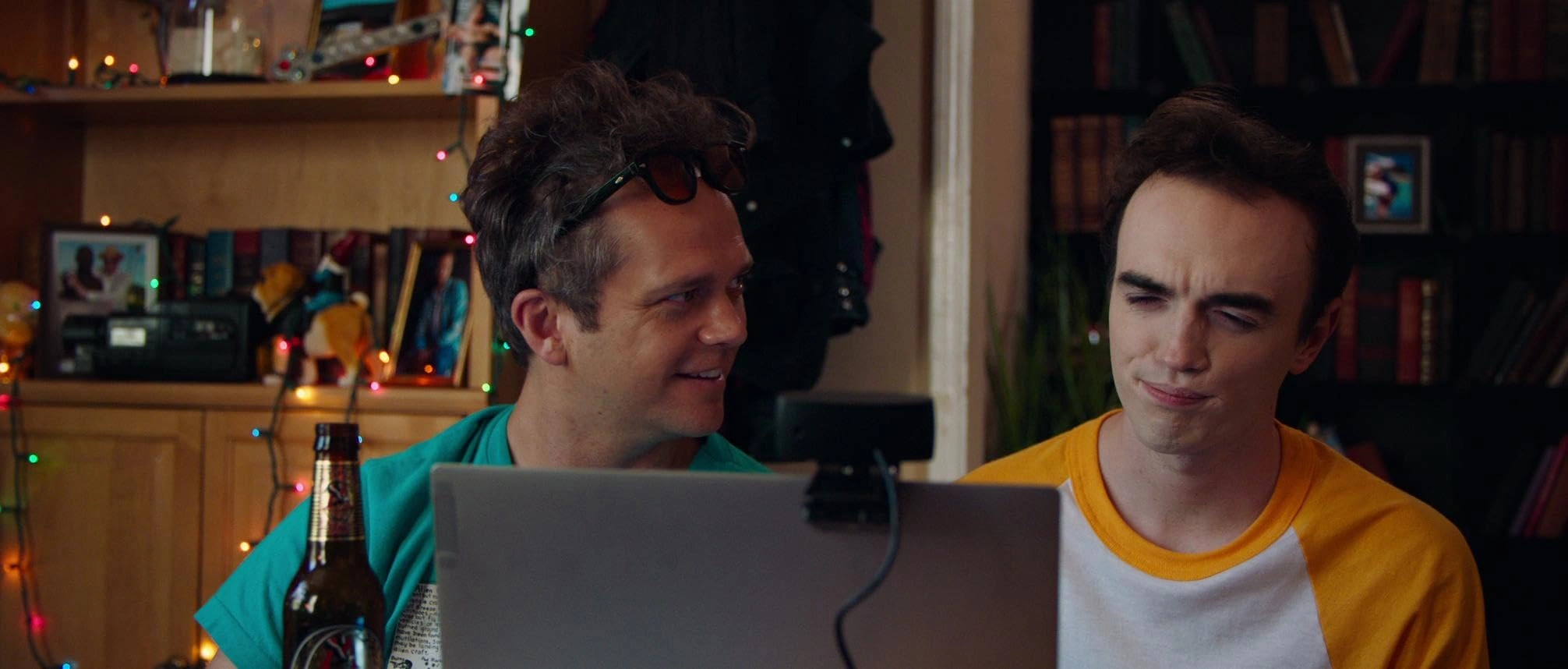
Comedic strategies span running gags, gross-out humour, absurd absurdity, and socially awkward exchanges. Silence, timing, and facial reactions punctuate jokes that linger beyond their initial moment. The juxtaposition of Cooper’s inflated self-image with the mundanity of his surroundings intensifies both humour and narrative irony.
Spatially, the apartment amplifies claustrophobia and tension, while occasional excursions—radio interviews, cameo appearances—expand narrative unpredictability without disrupting structural focus.
Beneath the chaos lies thematic layering. Faded fame, persistent ego, and resistance to change are threaded through every misstep. The humour frames Cooper’s struggle without excusing it, reflecting on the friction between self-perception and external reality.
The ending resists closure, suggesting tentative growth while acknowledging that Cooper remains largely trapped in his delusions. Tone oscillates between messy, fearless comedy and subtle insight into human flaws, a combination that rewards attention with both immediate laughter and lingering reflection.
The Second Coming of John Cooper is an American independent mockumentary comedy film that premiered commercially on digital platforms on June 9, 2026. Written and directed by Kevin Kraft, the narrative charts a delusional, washed-up Hollywood mega-star who surfaces years after disappearing from the public eye, only for a documentary crew to discover him living on his biggest fan’s couch while plotting a disastrous career comeback. Film fans can watch the cringe-comedy feature online by purchasing or renting it across various major premium video-on-demand networks, including Amazon Prime Video, Fandango at Home, and Google TV.
Where to Watch The Second Coming of John Cooper (2026) Online





Full Credits
Title: The Second Coming of John Cooper
Distributor: Bonus Level Productions, Public Transit
Release date: June 9, 2026
Running time: 94 minutes
Director: Kevin Kraft
Writers: Kevin Kraft
Producers and Executive Producers: Cody Chamberlain, Benjamin South, William Hedden, Kevin Kraft, Laura Hesse
Cast: Lane Compton, Trevor Goober, Ilana Kohanchi, Dustin Ybarra, Rob Corddry, Brian Posehn, Doug Benson, Mads Lewis
Director of Photography (Cinematographer): Logan Floyd
Editors: Marshall Granger
Composer: Adam Robl, Shawn Sutta, Nicholas Reinman
The Review
The Second Coming of John Cooper
The Second Coming of John Cooper is a fearless mockumentary that thrives on awkwardness, absurdity, and imperfect humanity. Lane Compton anchors a chaotic, character-driven comedy with a mix of ego, charm, and vulnerability, supported by a sharply reactive ensemble. The film refuses conventional polish, instead delivering sustained laughter through missteps, silent glances, and grotesque improvisation. Its humour is messy, sometimes crude, yet consistently earned, while underlying themes of fame, failure, and personal stagnation add depth beneath the chaos.
PROS
- Strong performances, especially Lane Compton and Ilana Kohanchi
- Mockumentary format enhances intimacy and humour
- Unpredictable, layered comedic sequences
- Effective character-driven narrative
- Balances absurdity with subtle thematic insight
CONS
- Humour may be too crude or niche for some viewers
- Limited settings may feel claustrophobic
- Narrative ambiguity may frustrate those seeking traditional arcs