





















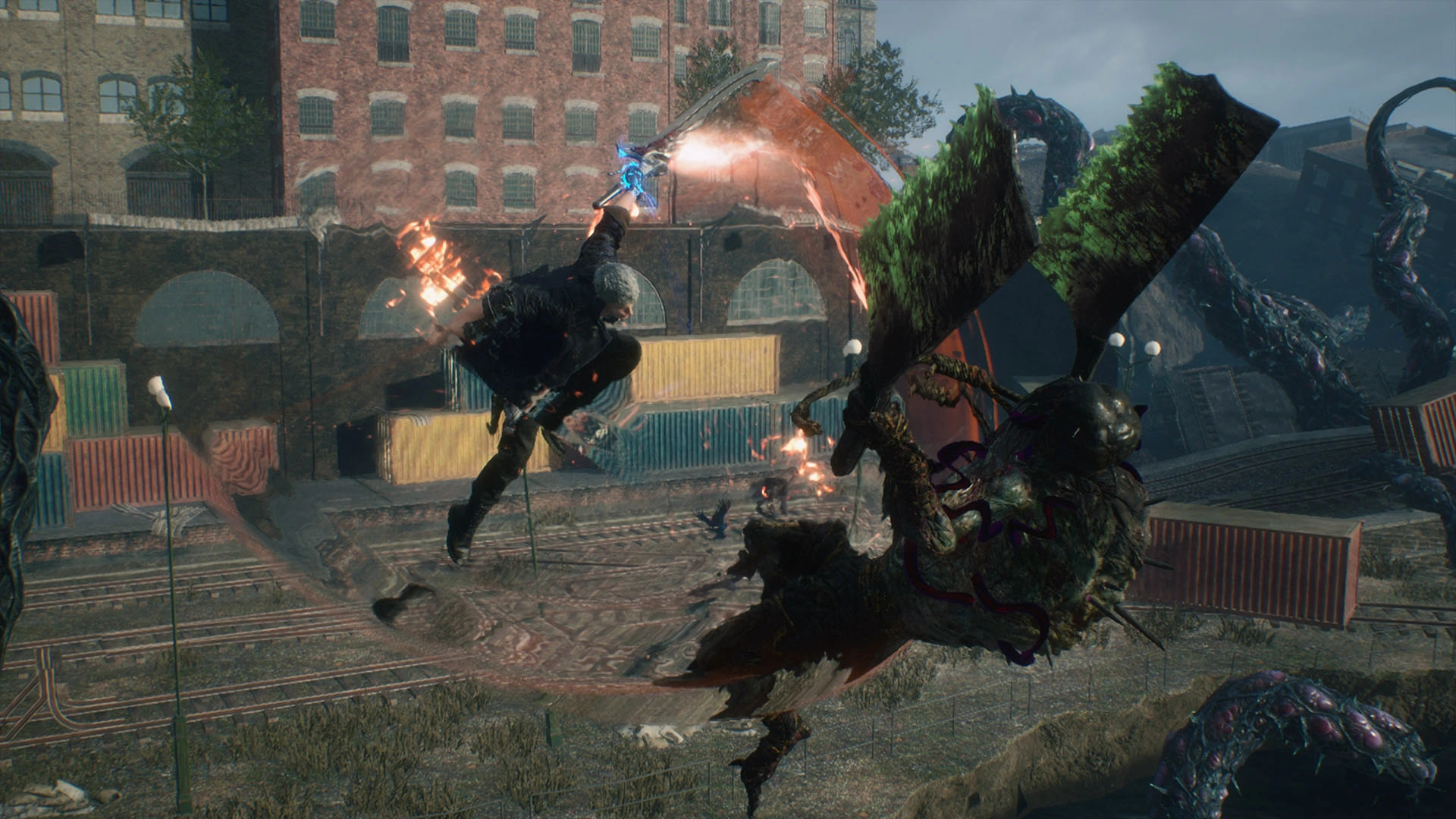
A good Devil May Cry fight turns button presses into choreography, then grades the player for having taste. The Style Rank is the series’ cleanest design joke: it asks you to kill demons efficiently, then quietly frowns if you do it in a boring way. Repeating one safe combo may keep Nero alive, but the game wants launchers, gunshots, air juggles, dodges, taunts, weapon swaps, and a little arrogance. The score climbs when the player treats combat like a performance.
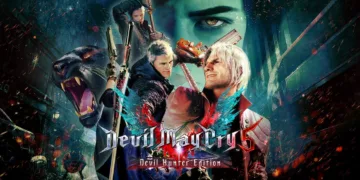
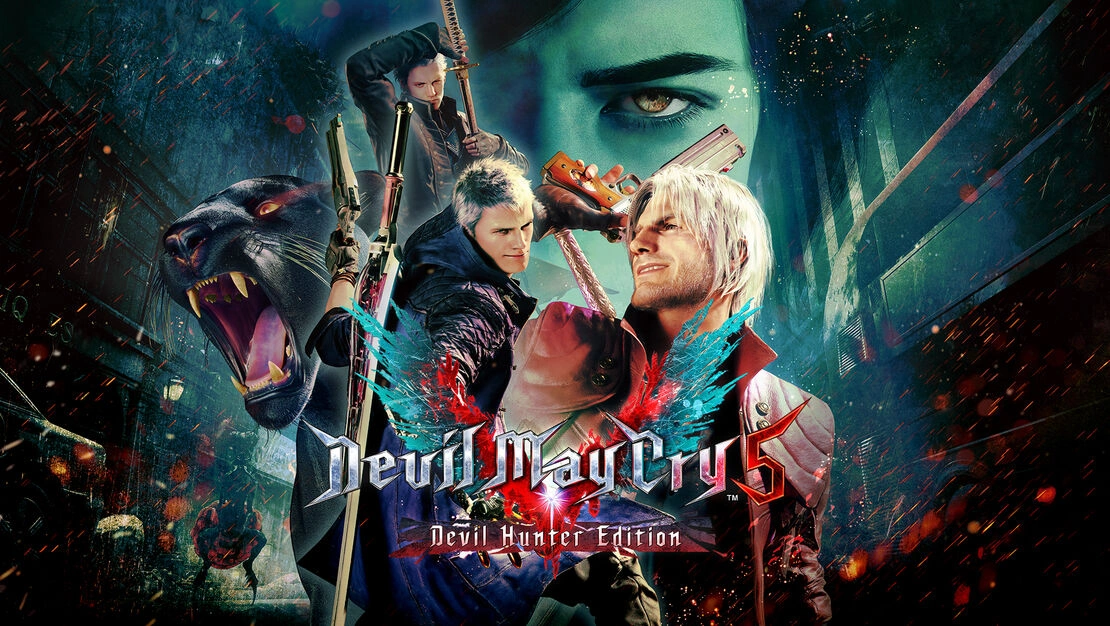
Devil May Cry 5: Devil Hunter Edition keeps that loop intact on Nintendo Switch 2, which matters far beyond the technical bragging rights. A character-action game lives or dies by input trust. If a dodge arrives late, if a launcher misses because the frame rate coughs, if a weapon swap feels gummy, the whole fantasy collapses. Here, the 60 fps target gives Nero’s Red Queen swings and Dante’s style changes the snap they need. The port does not feel like a compromise in the hands, and for this genre, hands are the first review category.
Nero Teaches the Language
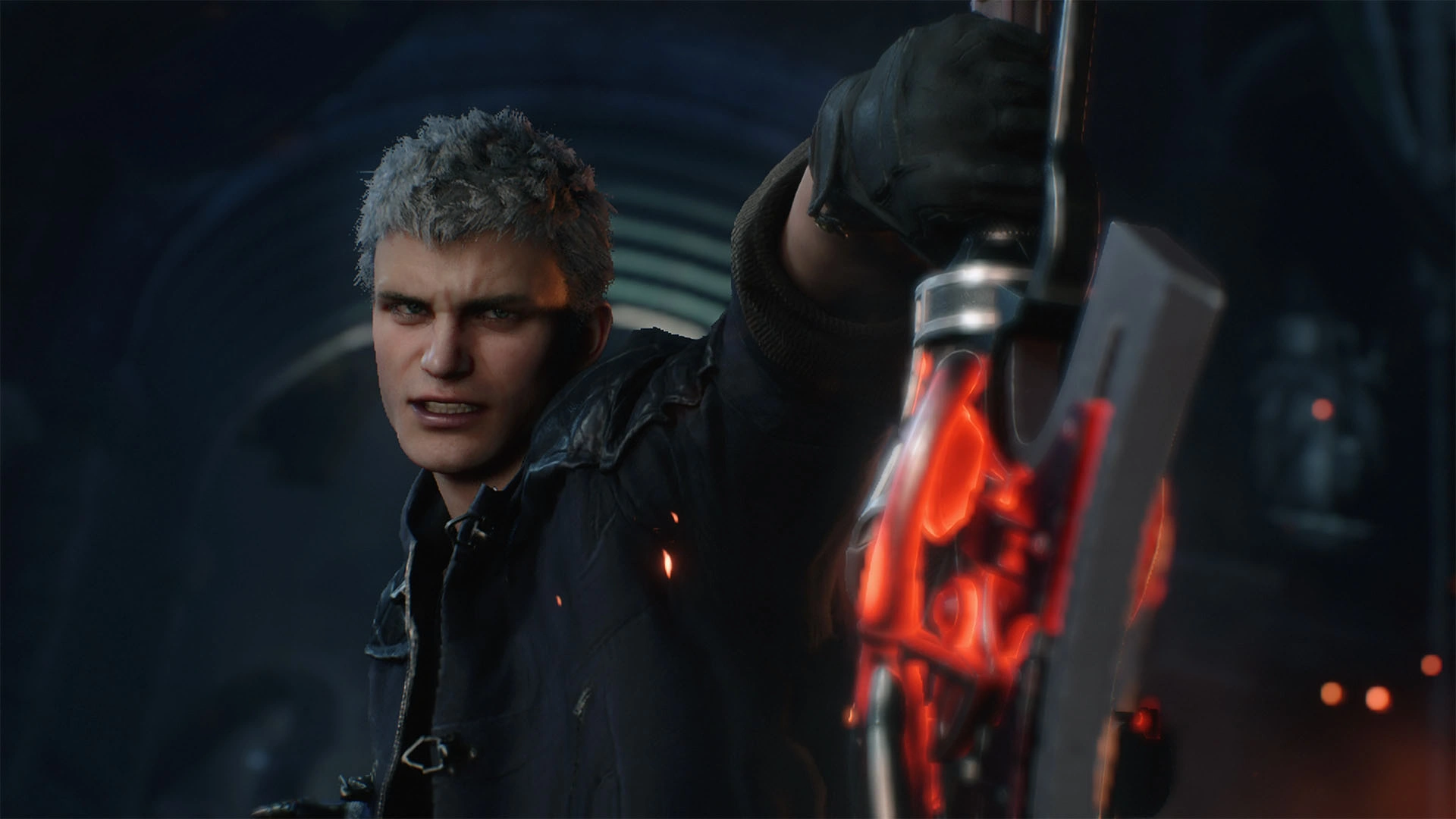
Nero remains the best doorway into Devil May Cry 5’s design because his systems are layered rather than dumped. The Red Queen sword gives him a clear melee spine, the Blue Rose revolver lets him pressure airborne or distant enemies, and the Devil Breaker arms add tactical verbs without turning him into a menu. A grappling arm closes distance. A rocket-punch arm turns spacing into comedy. A crowd-control arm can rescue a messy encounter before it becomes a red-orb funeral.
The smartest piece is how Devil Breakers are expendable. Since heavy use can shatter them, each arm carries a small risk calculation. Do you cash out damage now, or save that tool for the next room? That single limitation keeps Nero from becoming a simple power fantasy. His kit teaches aggression, but it also teaches budgeting.
Dante is the opposite design lesson. He arrives like a controller test disguised as a person. Four styles, multiple melee weapons, ranged options, cancels, juggles, guard timing, evasion chains: Dante is a system built for players who have stopped asking what button does what and started asking what buttons can say together.
Trickster makes movement feel slippery and theatrical. Royalguard turns defense into a dare. Swordmaster and Gunslinger reward players who can change rhythm mid-combo without staring at the HUD. Nero teaches vocabulary. Dante asks for grammar.
Also Read





V Breaks the Rhythm, Vergil Refines It
V is the one character whose design still lands unevenly. The idea is strong: a fragile summoner who stands apart while Griffon, Shadow, and Nightmare do the violence for him. The problem is the small distance between command and impact. When Nero swings, the player feels the hit travel from thumb to blade.
When V orders Shadow into a melee strike or Griffon into a lightning attack, combat gains a layer of delay. That can be tactically interesting, especially when V has to step in with his cane to finish weakened enemies, but it also drains some of the clean momentum that makes Nero and Dante so satisfying.
Vergil, included from the start, is the better experiment. His design takes the series’ obsession with stylish efficiency and gives it a stricter posture. Yamato slashes reward precision. Beowulf gives him heavy blunt force. Mirage Edge adds another range and combo texture. Teleport movement makes space feel temporary. His Concentration Gauge is the key: play cleanly, avoid panic movement, keep pressure on, and his damage and reach grow nastier. Get sloppy and the fantasy cracks.
That gauge changes the emotional temperature of combat. Nero feels scrappy. Dante feels improvisational. Vergil feels judgmental. He punishes the player for nervous movement, which fits him perfectly. The drawback is his campaign structure. Replaying the same stages with thin new story material gives him great mechanics inside a recycled frame. The character is built like a blade. The mode around him is closer to a sheath Capcom already had lying around.
Family Drama Under the Noise
The story is still louder, sillier, and better than it has any right to be. Red Grave City’s demonic tree gives the campaign its monster-movie shape, but the real structure is family damage. Nero fights with a missing arm and wounded pride.
Dante carries the exhausted familiarity of someone who has been cleaning up the same bloodline mess for years. Vergil’s split identity turns the old human-versus-demon theme into a playable argument: power without wholeness becomes ruin.
The cutscenes understand this tone. They mix swagger, slapstick, and melodrama without sanding off the absurdity. Dante can act like a smug uncle at a monster funeral, then walk into a scene heavy with sibling history. Nero’s anger works because the combat already makes him feel like someone swinging through insecurity. Nico’s exaggerated voice and grease-monkey theatrics may test patience, especially during early banter, but her van upgrades give the campaign a funny practical rhythm. She is the shop menu with a steering wheel and opinions.
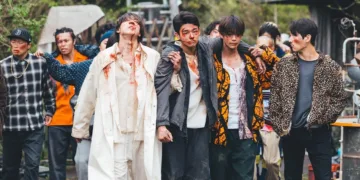
The live-action cutscene extras are a small gift because they reveal how physical the game’s silliness is. Seeing performers block out scenes in cheap costumes and rough effects makes the final animation feel less like digital spectacle and closer to stunt comedy translated into demon opera.
The Switch 2 Trade
The port looks sharp where it counts. Character faces still hold detail, boss designs retain their gross theatricality, and the RE Engine gives metal, leather, skin, and demonic pulp a polished texture. Handheld play is the real trick. The idea of taking this combat loop away from a TV would have sounded like a novelty in 2019. Here it feels natural.
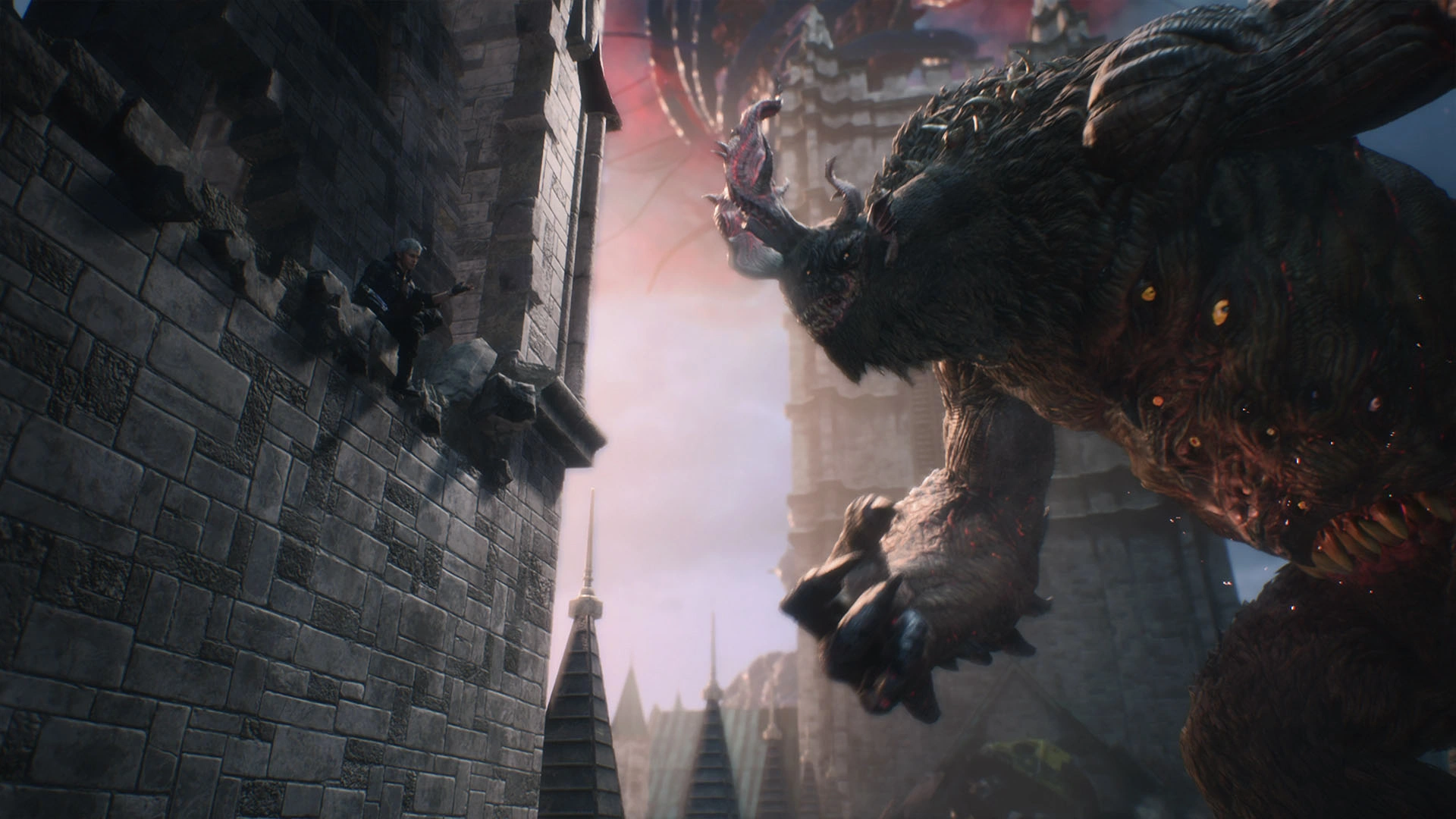
There are visible seams. Nico’s curly hair can lose definition in heavier cutscenes, and larger boss encounters can show small performance dips. The cuts from the Special Edition are also meaningful: no 120 fps, no 4K, no ray tracing, no Turbo mode, and no Legendary Dark Knight mode. Losing Legendary Dark Knight hurts most because higher enemy counts changed the economy of chaos and made orb farming easier, especially for Vergil’s huge move list.
Still, the campaign has plenty of teeth. A first run with secret missions can sit around 15 hours, then the real climb begins through Son of Sparda, Dante Must Die, Bloody Palace, Heaven or Hell, and Hell and Hell. Those modes change enemy pressure, placements, and survival math enough to make mastery feel earned rather than padded.
Devil Hunter Edition is not the fullest possible version of Devil May Cry 5, but it protects the thing that matters most: the combat still sings under pressure. Nero teaches the beat, Dante complicates it, V interrupts it, and Vergil sharpens it until one mistake sounds like metal on bone.
The Review
Devil May Cry 5: Devil Hunter Edition
Devil May Cry 5: Devil Hunter Edition preserves the part that cannot be faked: the combat feel. Nero’s breakable arms, Dante’s layered style system, and Vergil’s precision loop still make each fight feel like a performance test with teeth. The Switch 2 port loses valuable Special Edition features, and V remains the weakest rhythm shift, but the game’s action design survives beautifully in portable form. This is a leaner package than it could be, yet still an excellent way to play one of Capcom’s sharpest modern action games.
PROS
- Excellent 60 fps combat feel
- Nero, Dante, and Vergil play distinctly
- Strong portable performance
- Deep replay value
- Great Vergil mechanics
CONS
- No Legendary Dark Knight mode
- V sections slow the pace
- Vergil campaign reuses stages
- Some visual seams in cutscenes