





























A father who cannot stop smoking in the wrong room tells you almost everything before he says anything useful. In Lionel, the outburst arrives inside a French bar, where Lionel Sr. is told he cannot light up and reacts as if the rule has been invented to humiliate him personally. It is funny for a second. Then it becomes embarrassing. Then, very quietly, it becomes sad, because his son is watching.
Carlos Saiz Espín’s feature debut is built around that kind of emotional whiplash. The film follows Lionel Corral Bernal, a young man in his mid-20s whose orphan’s pension is about to end years after his mother’s death. He is broke, restless, and unsure what his life is supposed to become.
His long-absent father, also named Lionel, asks him to get in a car and travel from Murcia toward France, where Lionel’s sister Alicia works as a Spanish teacher. The setup sounds plain, almost fragile. That is the point. The film does not need a dramatic incident waiting down the highway. The danger is already sitting in the driver’s seat.
Two Men in a Car
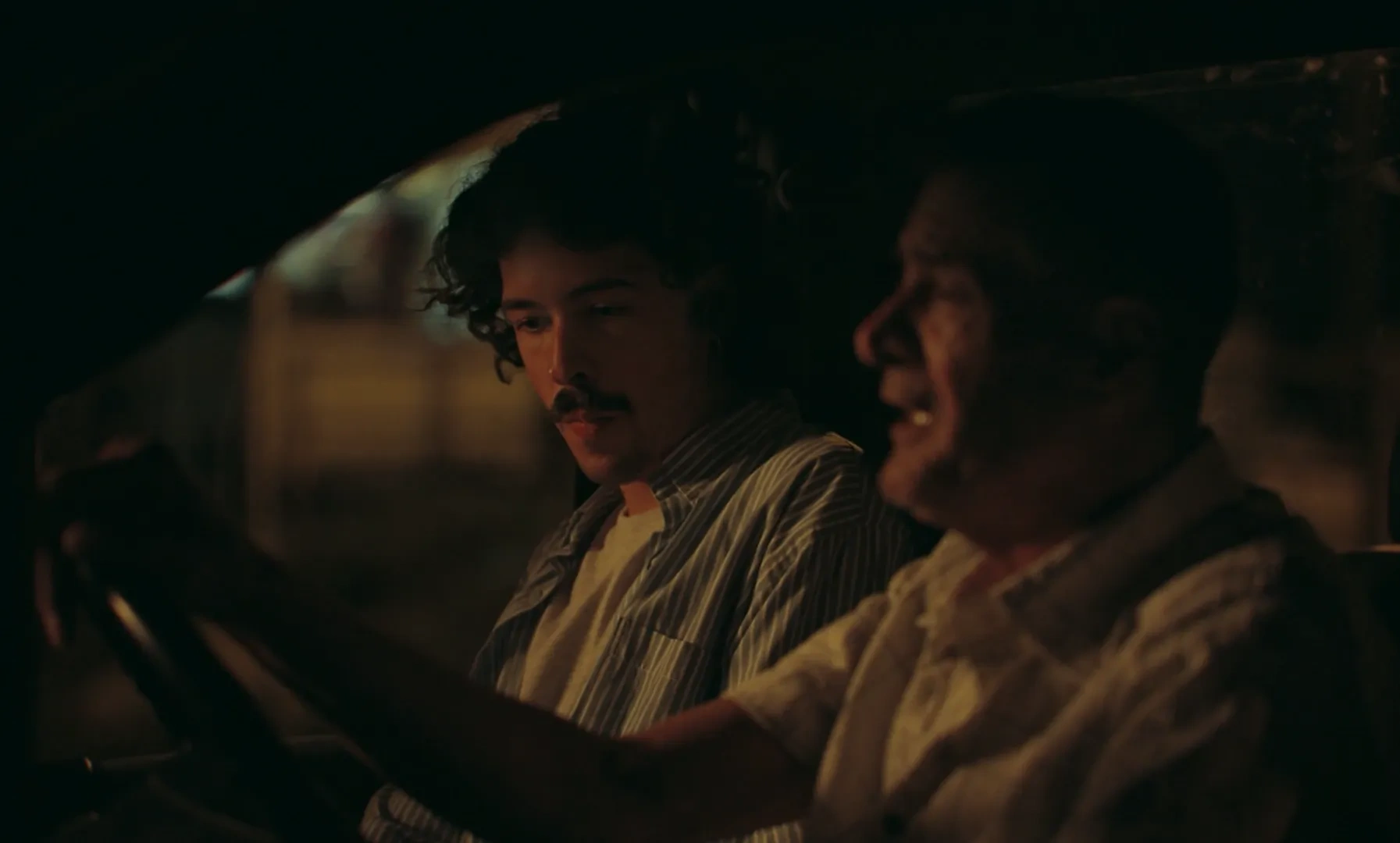
The car scenes work because Saiz understands how family pressure changes the shape of silence. Lionel Jr. does not need to explain every old hurt for us to feel it. His body does that work. He stiffens when his father gets loud. He withdraws when the conversation nears the mother who raised him. He looks at the older Lionel with anger, pity, shame, and a need he would probably hate to name.
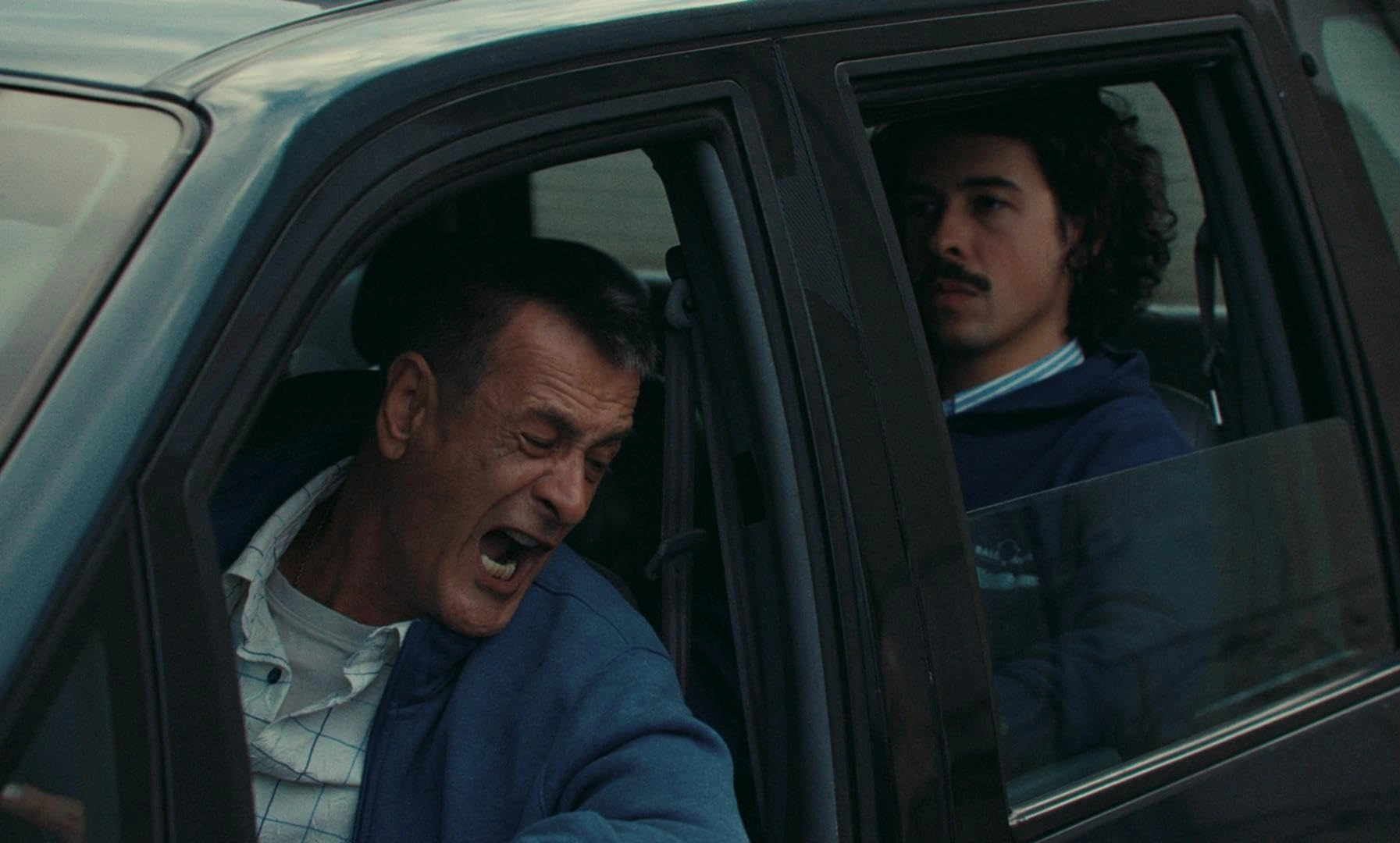
Lionel Sr. is harder to sit with, which makes him harder to dismiss. He drives too fast, smokes too much, and treats ordinary disagreement as provocation. He left when his son was four, then arrives years later carrying the confidence of someone who has not fully measured the damage.
Also Read






The film could have flattened him into the bad father. Instead, it lets his charm and cruelty occupy the same cramped space. When he becomes animated about places from the children’s summers before the divorce, the memory does not redeem him. It does reveal what has been buried under all that noise.
That is where Lionel finds its strongest feeling. The trip does not repair the family. It gives the son a few new images of the father, and sometimes that is already a lot.
Real People, Raw Edges
The casting gives the film its strange charge. Lionel Corral Bernal, Lionel Corral, and Alicia Corral Bernal play lightly fictionalized versions of themselves, and Saiz frames them with the patience of someone trying not to crush the moment by overdirecting it. The performances have a looseness that can feel almost dangerous, as if a scene might stop being fiction without warning.
Lionel Jr. has a softness the camera catches before he verbalizes it. His tattoos and mustache suggest someone trying to look assembled, but his eyes keep giving him away. He looks wounded, then bored, then briefly hopeful, often inside the same exchange. That emotional movement is small, but it gives the film its pulse.
The father is the louder presence. Corral has the kind of screen force that can hijack a scene by leaning into it. In the bar, in the car, or in a casual conversation that turns sharp without warning, he makes volatility feel lived-in rather than performed. He is not polished. Good. Polish would ruin him.
Alicia shifts the temperature when she enters. She is not written as the magical mediator who fixes the men. She has simply learned a different way to survive them. Her calm does not erase the family’s history, but it gives Lionel Jr. someone who can stand near the conflict without being swallowed by it.
Music for People Who Cannot Talk
Saiz’s direction is deliberately modest: long takes, direct framing, pauses that are allowed to sit there until they get uncomfortable. The film often feels like it is waiting for the characters to decide how honest they can afford to be. That restraint matters. A louder style would turn their pain into a display.
The soundtrack becomes one of the film’s cleanest emotional tools. Older songs attach themselves to the father’s closed-off world, full of fixed habits and old masculinity. Younger, sharper tracks from groups like Él Mató a un Policía Motorizado and Carolina Durante carry Lionel Jr.’s restlessness. The music does not explain him. It catches the feeling of being young, broke, grieving, and stuck beside the person who helped make you that way.
The road movie shape is familiar, but Lionel keeps sanding it down until only the useful parts remain. Murcia to France gives the film motion, yet the real movement is internal: a look held longer than expected, a shared memory that does not curdle into accusation, a sentence that almost becomes affection.
“It was a good trip,” one Lionel says. “If you liked it, I liked it,” the other answers. The exchange is tiny, almost nothing on the page. On screen, it lands because the whole film has been teaching us how much these men hide inside plain words.
The Spanish drama film Lionel premiered at the Valladolid International Film Festival (Seminci) in October 2025 and subsequently circulated through international film festivals, winning the top prize at the Transilvania International Film Festival. The movie tells the story of a young man from Murcia who discovers he is losing his orphan’s pension at age 26, prompting him to embark on a tension-filled road trip to France with his estranged father. It can be watched via specialized festival platforms and limited regional distribution networks.
Full Credits
Title: Lionel
Distributor: Sideral Cinema, Promenades Films
Release date: October 2025
Running time: 95 minutes
Director: Carlos Saiz
Writers: Raúl Liarte, Carlos Saiz
Producers and Executive Producers: Mario Forniés, José Nolla, Nabil Ejey, Samuel Chauvin
Cast: Lionel Corral Bernal, Lionel Corral, Alicia Corral Bernal
Director of Photography (Cinematographer): Artur-Pol Camprubí
Editors: Estel Román
Composer: Alex Aller, Inur Ategi
The Review
Lionel
Lionel turns a simple road trip into a quiet study of inherited hurt, emotional blockage, and the tiny openings families sometimes leave for each other. Carlos Saiz Espín keeps the film modest, which suits its real wound: a son watching a father who can still embarrass him, anger him, and unexpectedly reach him. Its looseness occasionally softens the dramatic shape, but the raw performances, long silences, and carefully placed music give the film a rare emotional charge.
PROS
- Raw father-son chemistry
- Strong non-professional performances
- Patient long-take direction
- Alicia’s calming presence
- Music tied to character mood
CONS
- Familiar road movie frame
- Loose dramatic shape
- Some scenes feel slight
- Limited visual ambition