



























Toad venom, cash, and a borrowed motorbike make a sharper noir hook than any suitcase full of diamonds. Wetiko, written and directed by Kerry Mondragon, takes that strange setup and rides it straight into the jungle, where enlightenment looks suspiciously like a business model with better lighting.
Aapo (Juan Daniel García Treviño) works in his family’s pet store, surrounded by bright fish tanks, frogs, and the practical rules his mother has built around selling hallucinogenic bufo toads. Luz (Dalia Xiuhcoatl) walks in asking for them on behalf of the Empire of Love, a spiritual community deep in the Mayan jungle.
Aapo’s mother knows the warning signs. The toads are meant to be handled through local authority and ritual knowledge, not handed to outsiders with a wad of cash and a seductive pitch. Aapo hears the warning, sees Luz, and makes the wrong choice anyway. That wrong choice gives the film its shape. What sounds like a simple delivery becomes a trap built from sex, spiritual language, colonial appetite, and teenage vanity.
The Road Away From Home
Mondragon understands the value of distance. Aapo’s trip from the city to the jungle is filmed less like travel than separation. The city’s bustle gives way to trees, then denser trees, then a green mass that makes escape feel mathematically unlikely. At one point, he passes traditional dancers blocking the road, and the moment carries a smart ambiguity. Is he giving money out of respect, pressure, habit, fear? The film never stops to explain it, which is exactly why the beat works.
Once Aapo reaches the Empire of Love compound, the movie starts shifting its texture. The place is part retreat, part cave system, part eroticized sales brochure, part crime scene waiting for paperwork. Women bathe in pools like mythological figures arranged for a painter. A strung-out blond man radiates the kind of danger that does not require dialogue. The caves glow with colored light, sometimes natural, sometimes theatrical enough to suggest an exploitation film print rescued from a moldy basement.
The repeated presence of women named Maria is one of the film’s creepiest details. They move through the camp doing the work that keeps the fantasy alive, dressed in matching white outfits marked with toads. Luz frames the arrangement in spiritual terms, but the image says something colder. Liberation here has a uniform. Someone still has to cook, clean, obey, and lower her eyes while visitors chase transcendence.
Aapo’s tenderness toward the toads matters because it gives him a moral line before he has the language for one. He is naïve, horny, and dazzled by being treated like a man, yet he handles the animals with real care. In a community where bodies, belief, and heritage are treated as resources, that care feels almost radical.
The Guru as Predator
Neil Sandilands plays Zake like a man who has studied charisma as a weapon. He is the white shaman at the head of the Empire of Love, claiming legitimacy through Mayan teaching while ignoring the boundaries that give that teaching meaning. The performance has the right kind of theatrical rot. Zake can sound welcoming one second and predatory the next, and Sandilands makes those shifts feel practiced rather than impulsive.
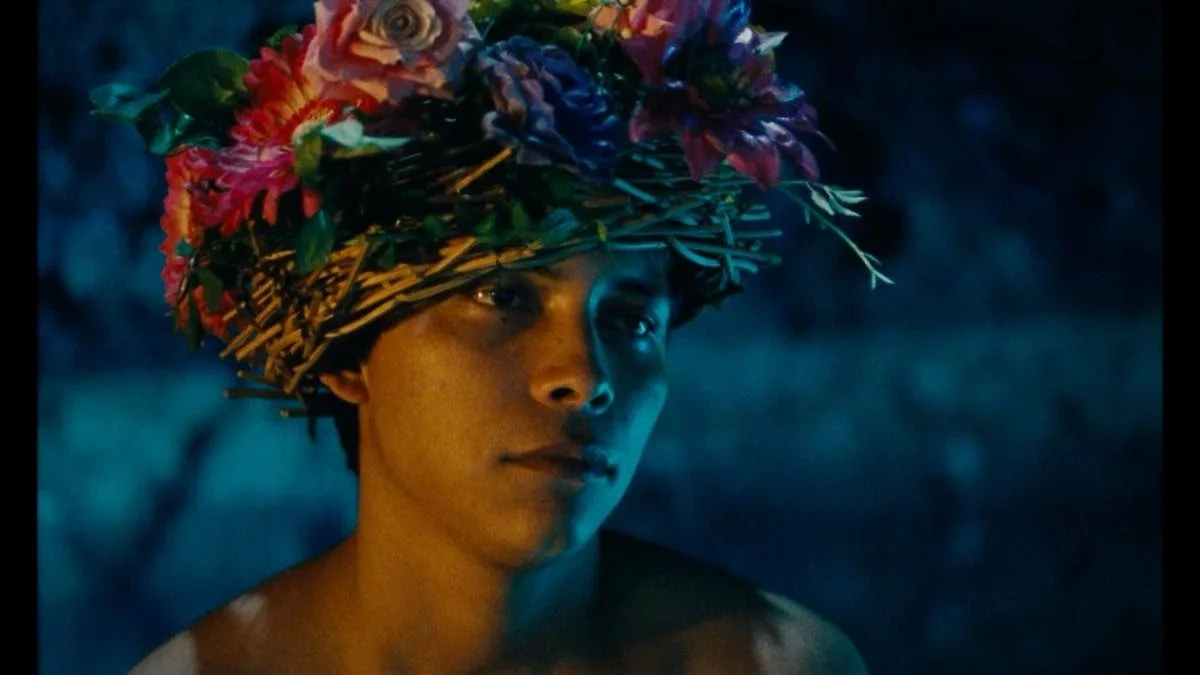
This is where Wetiko gets its cleanest cultural bite. The film is not attacking ritual. It is attacking the market version of ritual, where Western seekers buy sacredness by the dose and call consumption healing. Zake wants the toads for their venom, wants Aapo for his Maya identity, and wants the jungle for its image. He turns everything into proof of his own authority.
The title concept works because the film treats Wetiko as a sickness of appetite. Greed spreads through the compound in spiritual costume. The ceremony promises release, but every exchange around it is transactional. Luz’s first visit to the pet shop already carries that sickness: the cash, the flattery, the slippery explanation about Zake’s training. By the time Aapo understands what he has entered, the drug has taken hold, and the audience has been pulled close enough to share his confusion.
That confusion is not always neat. Some plotting grows hazy around the compound’s exact plans and shifting alliances. Still, the haze mostly fits the point of view. Being young inside an adult cult space can feel like arriving halfway through a conversation where every smile hides a contract.
A Fever Dream on 16mm
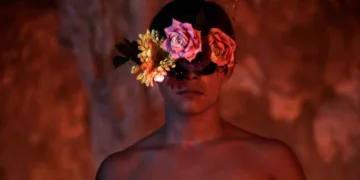
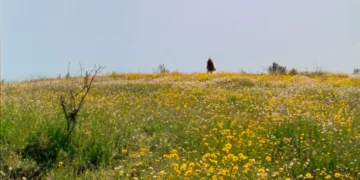
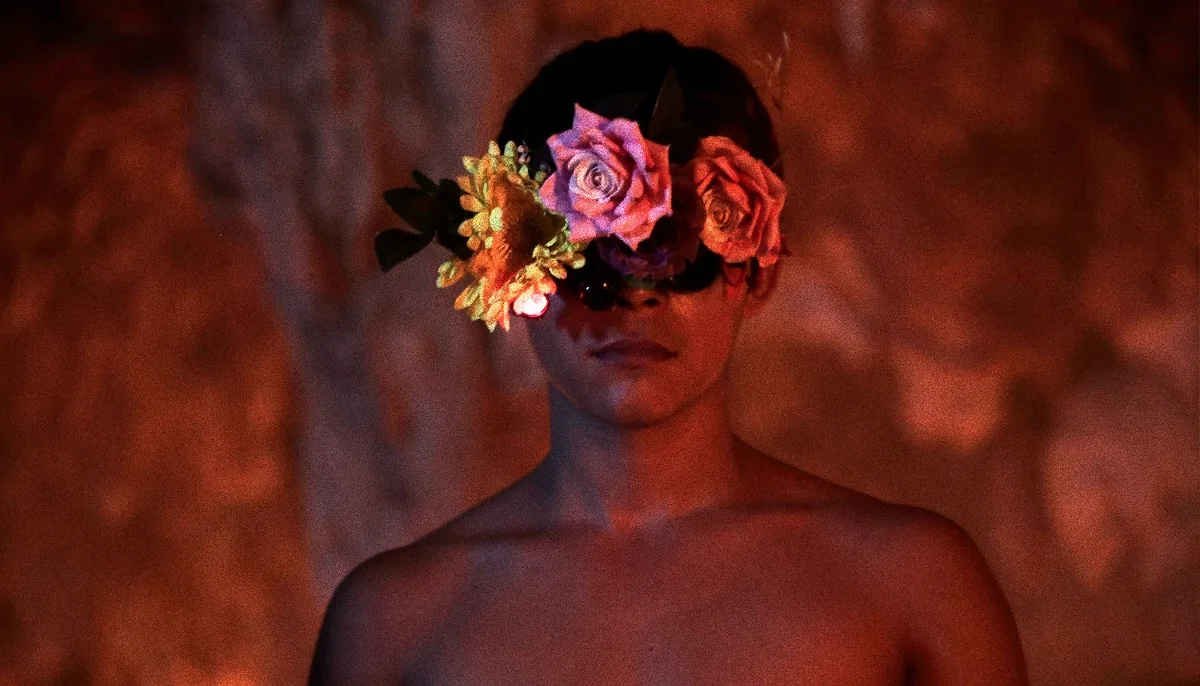
Carlos Gerardo García’s 16mm cinematography is one of the film’s strongest tools. The grain gives the image a living surface, so sunlight, scratches, sweat, and jungle shadow all feel physically present. Early colors are almost sugary: yellow, red, orange, blue. Later, the image roughens. The film seems to decay as Aapo loses control.
For viewers less familiar with film stock, 16mm often gives an image heavier grain and less polished smoothness than modern digital photography. Here, that roughness is not nostalgia for its own sake. It makes the movie feel found, damaged, and dangerous, like a lost 1970s jungle picture that somehow knows what the 2020s did to spirituality.
Mondragon has fun with the lineage. There are abrupt zooms, lurid cave lights, infrared touches, and ritual scenes that brush against Italian horror and American exploitation. I kept thinking about how carefully the film uses trash-cinema grammar to critique trashy exploitation. The style is excessive because the world is excessive. A tasteful version of this story would probably be dishonest.
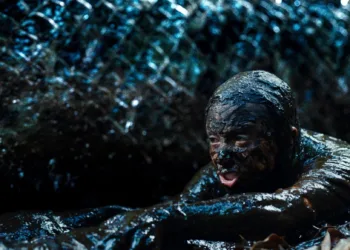
The moth-in-the-ear sequence is the film’s high point as pure sensation. The screen breaks into swirling light and vortex imagery, suggesting that Aapo’s hallucination is about to become fully physical. The slight frustration is that Wetiko rarely pushes that far again. For a movie built around toad venom and spiritual collapse, it sometimes keeps one foot closer to narrative safety than its wildest images promise.
The actors keep the trip from floating away. García Treviño gives Aapo a frightened sweetness that never feels weak. Xiuhcoatl makes Luz both alluring and tactical, especially in the pet shop scene where desire and negotiation become the same gesture.
Bárbara de Regil brings a midnight-movie charge as Goddess Sasha, the kind of presence that makes the compound feel ridiculous and dangerous in the same breath. Sandilands, though, is the anchor of the nightmare. Watch how Zake’s smile disappears when control slips. The guru mask drops, and the predator underneath has been waiting the whole time.
The psychotropic indie horror-thriller Wetiko arrived on home entertainment networks for premium digital streaming via Dekanalog on June 9, 2026. Directed and written by Kerry Mondragon, the project is available to rent or purchase across major video-on-demand services, including Amazon Prime Video and Apple TV. The hallucinatory narrative centers on a young Mayan teenager working at his mother’s pet boutique who accepts an under-the-table delivery assignment, bringing toxic bufo toads to an isolated, cult-like spiritual commune where a predatory European shaman initiates a descent into greed and paranoia.
Where to Watch Wetiko (2025) Online


Full Credits
Title: Wetiko
Distributor: Dekanalog
Release date: June 9, 2026 (Global Digital Streaming Release)
Running time: 89 minutes
Director: Kerry Mondragon
Writers: Kerry Mondragon
Producers and Executive Producers: Michael Hoff, Kerry Mondragon
Cast: Juan Daniel García Treviño, Neil Sandilands, Dalia Xiuhcoatl, Bárbara de Regil, Jordan Barrett, Carlos Emilio Báez, Claire Kniaz, Fernando Casablancas
Director of Photography (Cinematographer): Wetiko Production Crew
Editors: Sofie Steenberger
Composer: Chris Payne
The Review
Wetiko
Wetiko is messy in the way a good midnight movie can be messy: alive, strange, and buzzing with danger. Kerry Mondragon turns a toad delivery into a psychedelic critique of spiritual tourism, using 16mm grain, lurid color, and cult-cinema swagger to make the jungle feel seductive before it turns predatory. The film could push its hallucinations further, especially after the moth sequence, but Aapo’s frightened sweetness and Zake’s guru-from-hell menace keep the trip grounded.
PROS
- Feverish 16mm texture
- Strong anti-colonial bite
- Neil Sandilands’ sinister Zake
- Memorable jungle atmosphere
- Aapo’s vulnerable perspective
CONS
- Hazy plotting in places
- Hallucinations could go further
- Some stylization clashes
- Not for clean-narrative viewers