

















Gordy’s worst design problem is that every meter in her life is already flashing red. She is broke, hungover, emotionally bruised, trying to keep a punk band alive, and still expected to show up for shifts, friends, parents, rent, and whatever fresh humiliations adulthood has scheduled for the day. Dead Pets: A Punk Rock Slice of Life Sim, developed by Triple Topping and published by Akupara Games, understands that this kind of spiral works better as a system than as a speech.
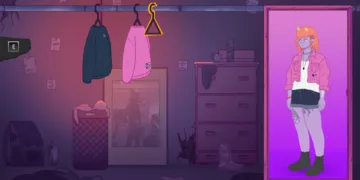
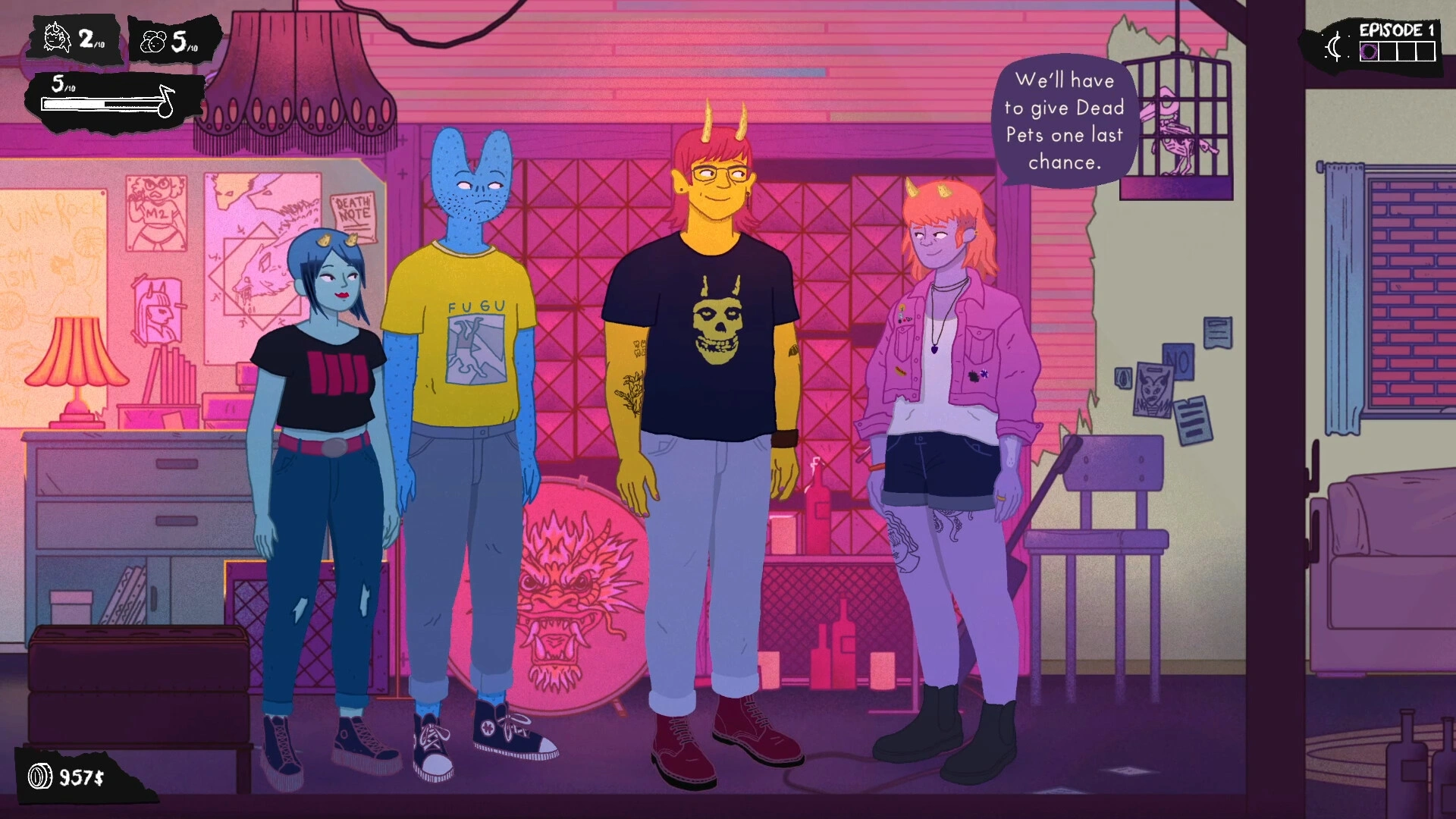
You play as Gordy, a 30-year-old demon and the leader of Dead Pets, a feminist punk band made up of Val, Jay, Brian, and herself. The game moves through episodic stretches of Gordy’s life in New Void City, mixing dialogue choices, rhythm sections, work shifts, small domestic tasks, and sudden surreal mini-games.
The structure is tighter than the “life sim” label may suggest. Gordy has some room to choose what to do, who to answer, and how to spend her limited cash, yet the big pressures arrive on schedule. Rent does not care about player agency. Very realistic, rude as that may be.
Choices With a Cost
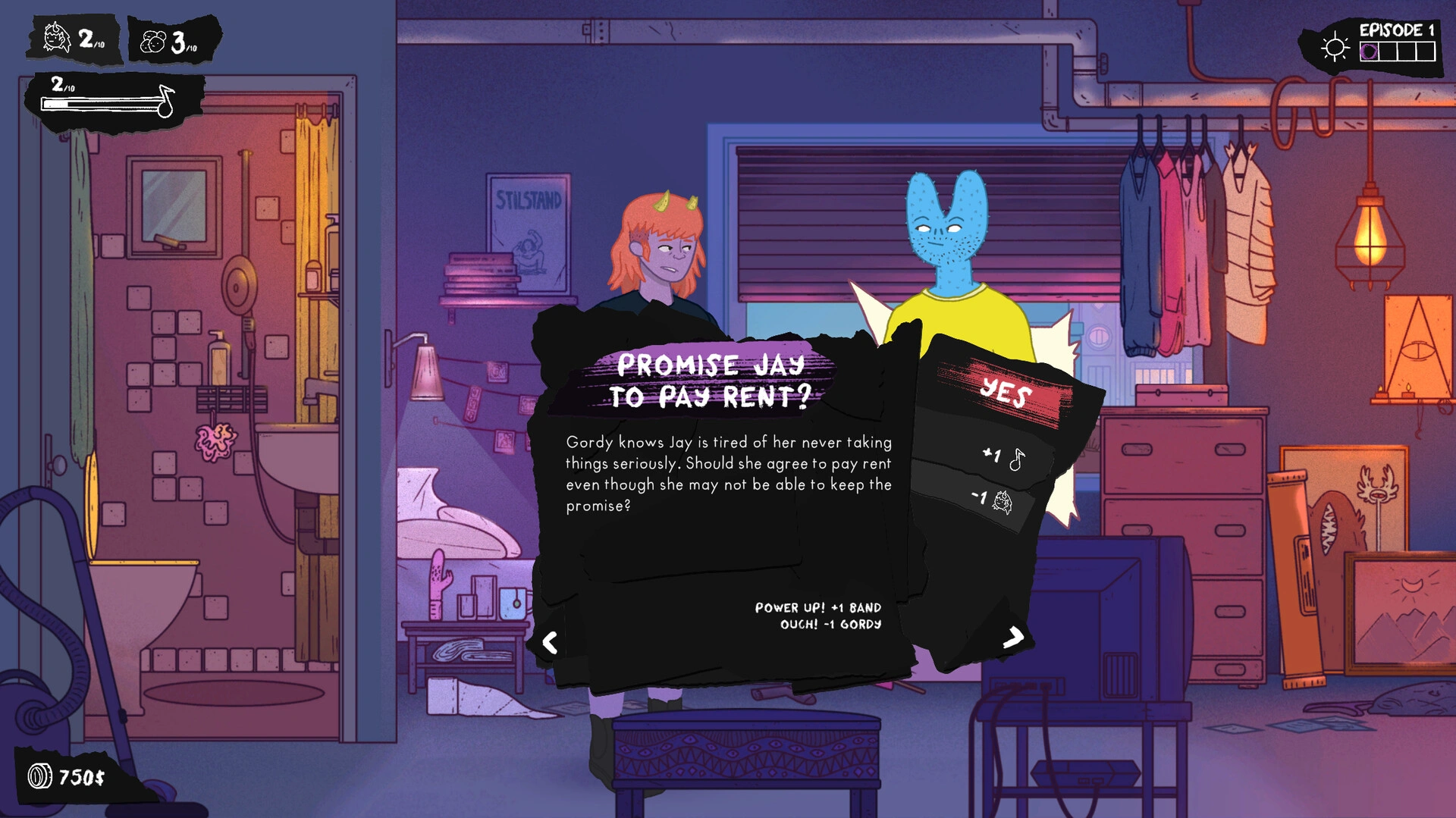
The smartest part of Dead Pets is how it treats choice as a drain on stamina, identity, and money. Dialogue options are tied to personal, social, punk, and financial values, so a response is never free. Choosing to be honest, abrasive, kind, evasive, or irresponsible can cost Gordy something, and options disappear when she lacks the right resource.
This is not a branching RPG where one conversation sends the plot into a new continent. The story keeps a fairly fixed shape, and that limits the impact of some decisions. Yet the system fits Gordy because it makes exhaustion mechanical. Running out of points does not create a grand failure state; it leaves the player with fewer ways to act like the person Gordy wants to be. That matters in a game about a woman whose life keeps shrinking around debt, shame, work, and avoidance.
Money has the clearest bite. Gordy can take diner shifts for tips, watch her allowance vanish, fall into debt, or feel the pressure of small expenses piling up. The game does not become a hard management sim, but the financial layer gives her mess a practical edge.
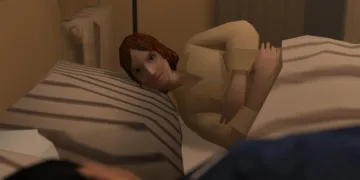
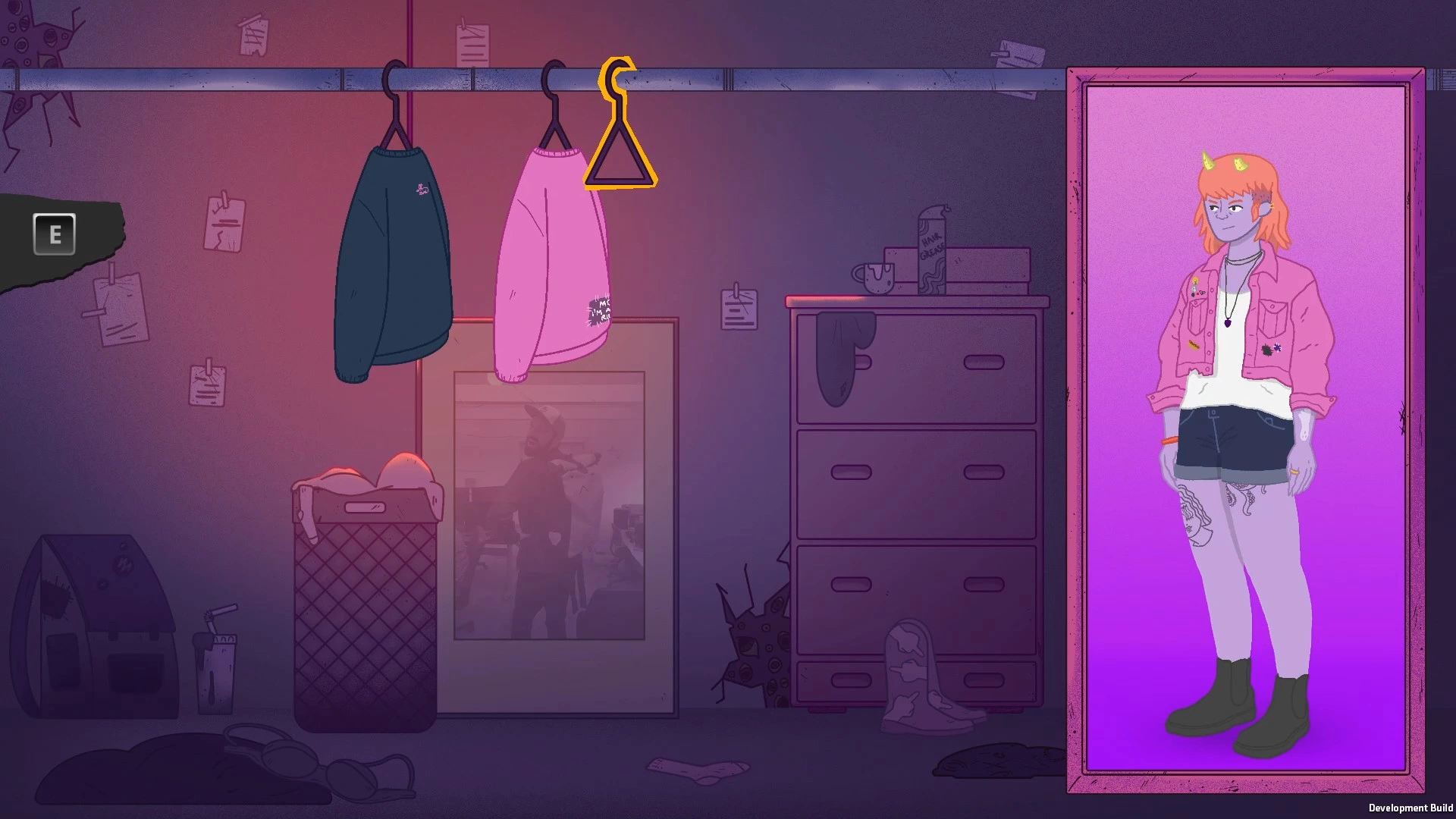
Her apartment reflects that same design tension. It has a guitar, clothes, Satan the plant, and enough personality to feel lived in, yet there are fewer meaningful interactions there than the space invites. For a game so good at making routines playable, Gordy’s home could have carried a little more weight.
Mini-Games as Mental Weather
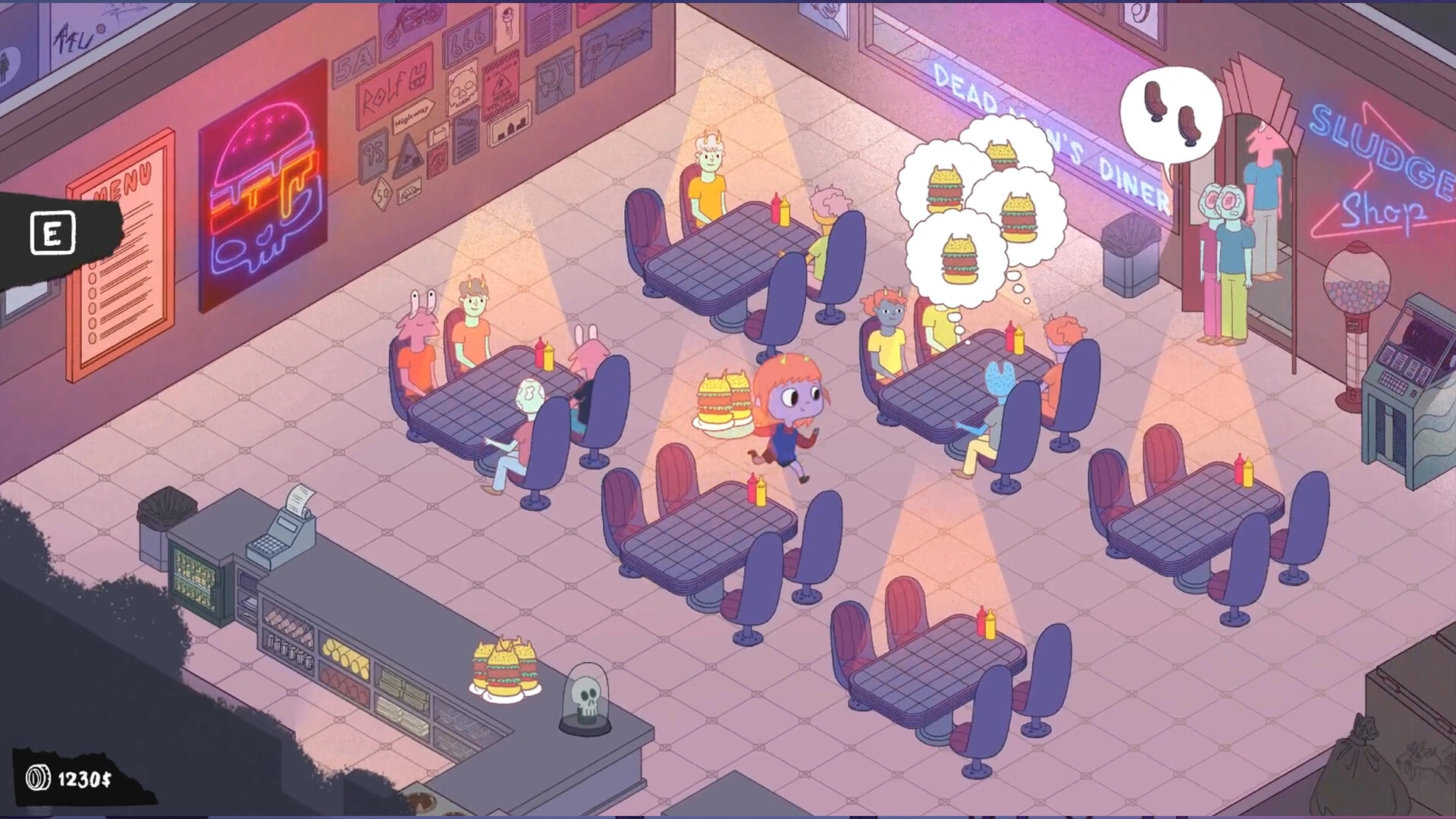
The mini-games are not filler when Dead Pets is working at its best. They are Gordy’s emotional state made interactive. The diner shift is the strongest recurring example. Gordy has to greet customers, seat them, take orders, send those orders to the kitchen, deliver food, and collect payment. As customers stack up, the sequence becomes a small time-management panic attack with tips attached.
Then Gordy’s worries start leaking into the job. Dental anxiety turns customers into tooth-obsessed figures. Anxiety about children twists the shift into a parade of crying babies. The game is making a clean design argument: work does not pause because your mind is elsewhere, and your mind does not stay neatly outside the workplace. The same loop plays differently because the narrative has changed what the loop means.
Other mini-games are stranger and more pointed. A uterus-like egg-hatching sequence turns social pressure around motherhood into a playable image without reducing it to a lecture. Office number processing makes wage work feel dead-eyed and mechanical.
Brushing teeth, building food, and stealing a vinyl record add little bursts of texture. Some optional tasks feel looser than others, especially when they function as a joke first and a system second, yet the variety keeps the game from sliding into passive visual novel pacing.
The rhythm game has a simpler job and mostly does it well. Performances ask the player to hit notes at two screen positions, with easy, medium, and hard settings adjusting speed and density. It is not trying to compete with the precision of full rhythm games, but it captures the feeling of barely holding a band together through muscle memory and noise. The early lack of clear input guidance creates needless friction, and some timing can feel slightly off, yet the songs carry enough attitude to push through those rough edges.
A Band Held Together With Tape
Dead Pets, the band, gives the game its pulse. Jay works because he has history with Gordy. Their scenes about writing music and keeping the dream alive land because he feels like someone who has watched her fail before and still showed up. Val brings energy and clarity, often cutting through Gordy’s fog with the confidence of someone younger but not naïve.
Brian is funny, odd, and occasionally useful as a pressure valve, but his emotional material feels less integrated into the main design. The game knows how Jay and Val affect Gordy’s choices. It seems less certain what Brian is meant to change.
The soundtrack does heavy lifting here. Punk rock and riot grrrl influence are not decorative references; they shape the game’s posture. Tracks like “Don’t Let the Fire Die” and “My Healing Potion” give the rhythm sections a charge that the mechanics alone would not supply.
New Void City benefits from that same care, with clubs, family spaces, and everyday routes carrying distinct musical textures. A few scene transitions can let music overlap awkwardly, but the soundscape usually keeps Gordy’s world loud in the right way.
Cartoon Demons, Adult Damage
The hand-drawn demon world gives Dead Pets permission to be absurd without softening what hurts. Characters range from almost human horned figures to stranger creature designs, and the game treats that variety as ordinary. That visual looseness matters because Gordy’s inner life often arrives through cutaways: talk-show fantasies, gag frames, grotesque exaggerations, and quick mental detours that say what she cannot.
Those cutaways are funny until they are not. The game folds menstruation, dental pain, parental pressure, job anxiety, debt, motherhood expectations, trauma, and sexual harassment into Gordy’s week without making each subject feel like a separate issue card. A harassment scene is preceded by a warning and handled with care, with Gordy’s silence afterward becoming part of the player’s understanding of her later choices.
Dead Pets is messy in the way Gordy is messy: sometimes underexplained, sometimes too crowded, often smarter than its rough edges. Its best systems do not decorate the story. They pressure it, interrupt it, and make the player feel how little room Gordy has left before the next song starts.
The Review
Dead Pets: A Punk Rock Slice of Life Sim
Dead Pets: A Punk Rock Slice of Life Sim works because its systems understand Gordy’s life before the player fully does. The diner shifts, rhythm sections, point-gated choices, debt pressure, and surreal mini-games turn burnout into something playable rather than decorative. Some mechanics feel underexplained or thinner than they should, and Brian never gets the same design support as Jay or Val. Still, the game links story and play with rare sincerity. Messy by design, smart by execution.
PROS
- Strong Gordy-centered systems
- Excellent punk soundtrack
- Mini-games with narrative purpose
- Sharp feminist perspective
- Expressive demon art style
CONS
- Rhythm tutorial lacks clarity
- Some mini-games feel loose
- Brian feels underwritten
- Apartment interactions feel limited