





















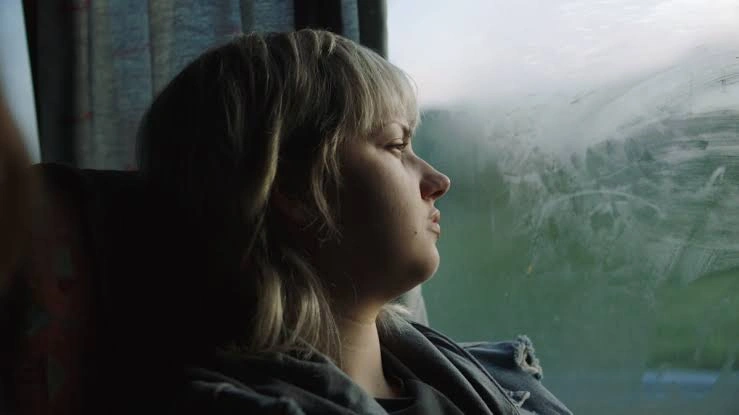

The camera opens tight on two teenage boys and a girl tangled together, a scene that could pass for ordinary teenage fumbling until one boy mutters “be still” and the moment curdles into something else entirely. That single cut, from tenderness to violation, tells you everything about how Kosara Mitić intends to handle her subject in 17, her first feature as director, co-written with Ognjen Sviličić. The girl is Sara, played by Eva Kostić, and months after that opening assault she boards a school bus with her North Macedonian classmates for a trip to Greece.
Two of the boys responsible for what happened to her are on that bus too. The film premiered in the Perspectives section at Berlin and later screened in competition at Sarajevo, and it earns its festival pedigree honestly. This is a film that refuses comfort at every turn, but it never confuses discomfort with cruelty toward its audience. Mitić handles brutal material with a steady hand, and the result feels less like spectacle and more like testimony.
Trapped on the Road: Plot and Pacing
Structurally, 17 keeps things simple on paper. Sara packs for the trip while dodging her parents’ questions, boards the bus, and spends most of the film’s runtime confined to that vehicle and the hotel where the group stops overnight. Filip, the loudest and most entitled of the boys, dominates the social order. Nina, a popular classmate, drifts in and out of Sara’s peripheral attention.
Then there’s Lina, an overlooked girl who ends up seated next to Sara and slowly, gently, wears down her guard. At the hotel, a party spins out of control, and a second act of violence unfolds in a room just steps from classmates who are drinking, laughing, and playing video games, oblivious to what’s happening nearby. That night forges an unbreakable bond between Sara and Lina, and it’s here that Sara finally shares the secret she’s been carrying alone: a pregnancy that resulted from the earlier assault.
The teachers chaperoning this trip are too distracted by schedules and national pride to notice any of it. Mitić lets these events breathe rather than rushing through them, and the tension she builds never announces itself with a musical cue or a dramatic reveal. It simply accumulates.
Silence Rendered on Screen: Performance and Craft
Kostić carries the film on her shoulders, and she does it with remarkable economy for a first-time performer. Sara hides inside oversized clothes, holds her posture guarded and closed off, and lets pain surface through small physical details rather than outward drama, a clenched jaw here, a held breath there.
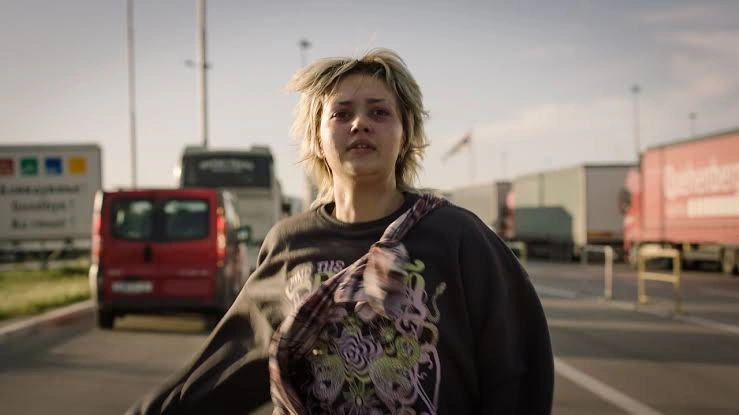
Martina Danilovska brings real warmth to Lina, giving the film its one source of genuine tenderness, while Dame Joveski and Eva Stojchevska round out the group as Filip and Nina, both convincing in how casually they inhabit their roles within the pack.
Mitić’s direction matches her cast’s restraint. She refuses to look away from the violence her characters endure, yet she never lingers on it for shock value either. Cinematographer Naum Doksevski shoots handheld and close, staying near Sara almost constantly, so the audience feels her confinement physically, not just emotionally.
The dialogue has a loose, naturalistic rhythm that gives the bus scenes a documentary texture, and that grounding makes the film’s harder moments land with more weight. What impresses me most is how Mitić holds two registers at once, the noisy chaos of a teenage class trip and the quiet, internal collapse happening inside one girl within it, without ever letting one drown out the other.
Silence as Survival, Silence as Trap
The real subject of 17 is silence itself, how it functions as both shield and prison for its protagonist. The teenagers around Sara operate under unwritten rules that punish anyone who speaks up, a dynamic that shields the boys responsible for her assault and deepens her isolation with every mile the bus covers.
The adults supervising this trip fail her too, more concerned with itineraries and appearances than with the wellbeing of the kids in their care. Small touches, a stuffed teddy bear tucked into a bag, a board game pulled out at a rest stop, remind us these are still children, no matter how adult their cruelty can look.
The friendship between Sara and Lina gives the film its emotional center, a fragile counterweight to everyone else’s indifference, though Mitić wisely avoids turning it into a clean fix for Sara’s trauma. There’s something quietly poetic in setting this story on a trip across a border, a liminal space that mirrors Sara’s own state, caught between the life she had and whatever comes next.
What lingers after the credits roll isn’t the specifics of North Macedonia or this particular class trip. It’s the recognition that these patterns of peer complicity and institutional blindness show up everywhere, and that recognition is what gives 17 its staying power long after the bus reaches its destination.
17 is a 2026 drama film that held its world premiere at the Berlin International Film Festival on February 18, 2026. The film follows seventeen-year-old Sara, who attempts to hide a secret during a chaotic school trip until she and a classmate bond over a shared traumatic experience involving sexual assault.
Full Credits
Title: 17
Distributor: Black Cat Production, Art&Popcorn, Totem Films
Release date: February 18, 2026
Running time: 105 minutes
Director: Kosara Mitic
Writers: Kosara Mitic, Ognjen Svilicic
Producers and Executive Producers: Tomi Salkovski
Cast: Eva Kostic, Martina Danilovska, Dame Joveski, Eva Stojchevska, Petar Manic, Ana Stojanovska
Director of Photography (Cinematographer): Naum Doksevski
Editors: Vladimir Pavlovski
The Review
17
17 is a difficult watch that earns every bit of its discomfort. Mitić announces herself as a filmmaker willing to sit with pain rather than dress it up, and Kostić's performance gives that pain a face you won't forget. The film asks something real of its audience and rewards that effort with a portrait of trauma that feels lived-in rather than staged.
PROS
- Eva Kostić delivers a controlled, physically precise performance
- Naturalistic camera work builds genuine tension
- Handles brutal subject matter without exploitation
- Sara and Lina's bond gives the film real emotional weight
- Confident, assured direction for a debut feature
CONS
- Pacing may feel slow for some viewers
- Emotionally exhausting, tough to revisit
- Some side characters remain thinly drawn
- Ending may feel abrupt to certain audiences