








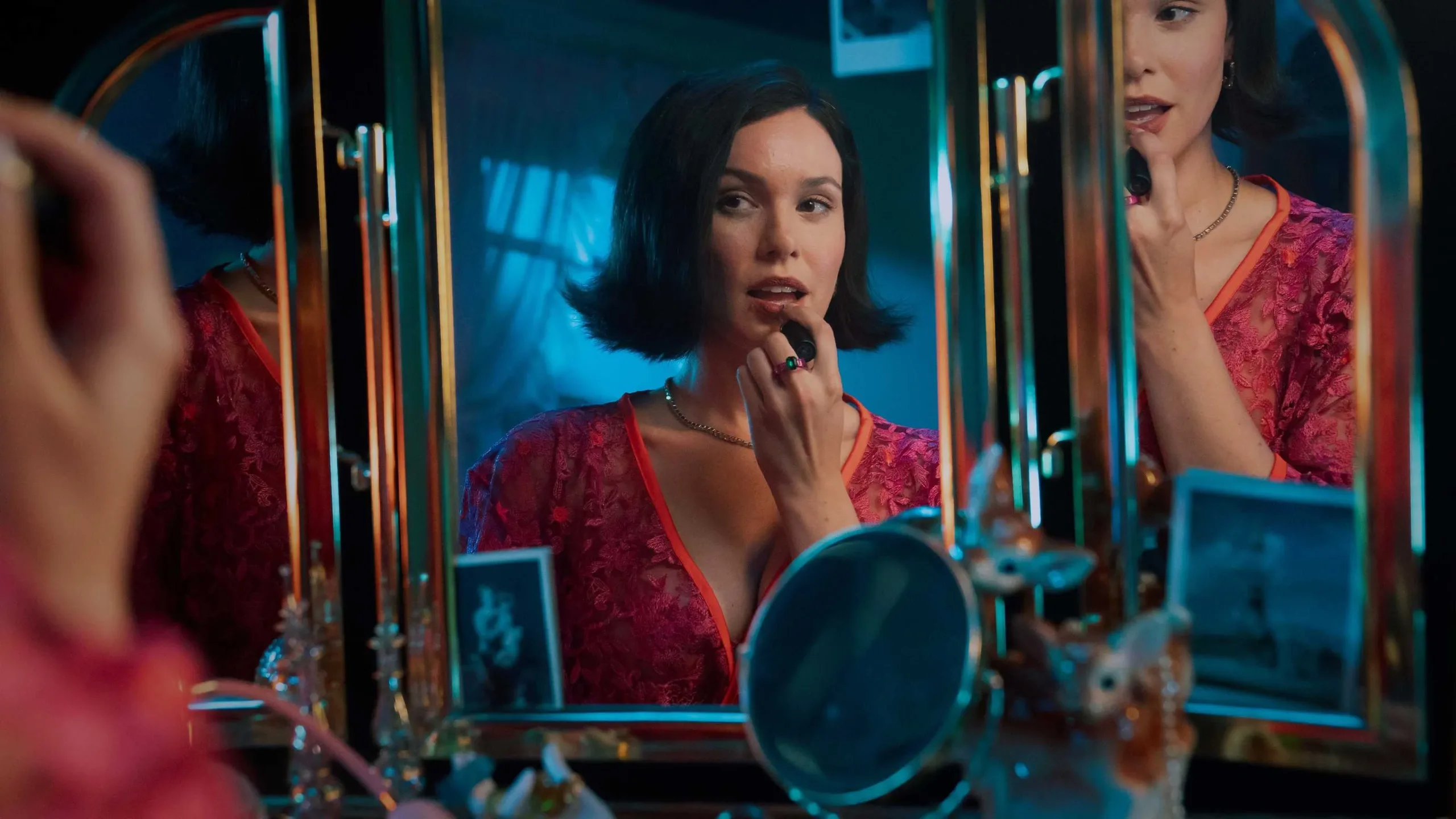

Sex work documentaries often face a difficult structural problem: the subject arrives carrying decades of assumptions before the filmmaker has a chance to introduce the person. Modern Whore solves that challenge by placing Andrea Werhun’s voice at the center and allowing her story to define the terms of the discussion.
Nicole Bazuin’s adaptation of Werhun’s memoir avoids turning her life into a simple cautionary tale or a celebration without complications. The film builds its argument through contradictions, showing a profession shaped by financial freedom, personal connection, danger, and social judgment.
Werhun’s path into sex work forms the backbone of the documentary. The film traces her time as an English major at the University of Toronto, her early ambitions as a writer and performer, and the financial pressure that pushed her toward escorting.
Her introduction to the industry is presented with a mixture of curiosity and practicality. The reenactment of her choosing an agency based partly on its website captures the strange reality of entering a business where presentation and branding can influence decisions.
The narrative structure works best when it stays close to Werhun’s own experiences. Her early years as escort Mary Ann are presented through dramatizations of clients and encounters that challenge familiar stereotypes. The men she describes are not presented as a single type. Some are lonely, some are polite, and some create difficult situations. That range gives the film room to examine the complicated relationships formed inside the industry.
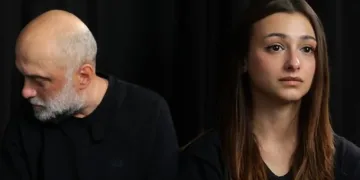
Werhun’s transition into stripping as Sophia expands the story rather than simply repeating it. The film explores how changing jobs did not remove the stigma attached to sex work. Her interviews with friends, her mother, and her longtime partner add perspective to her personal journey. These conversations provide important emotional grounding, especially when the documentary examines how people close to her reacted to her choices.
Also Read





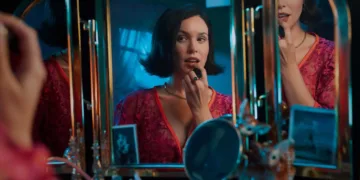
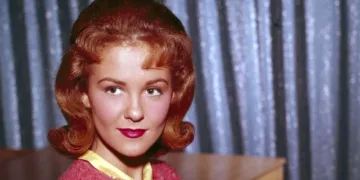
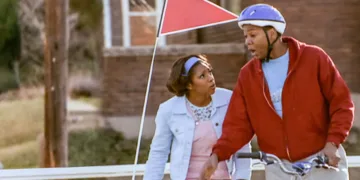
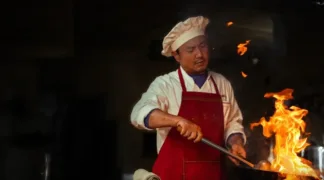
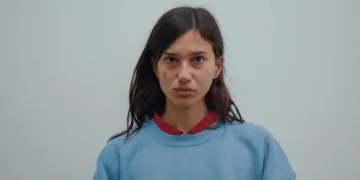
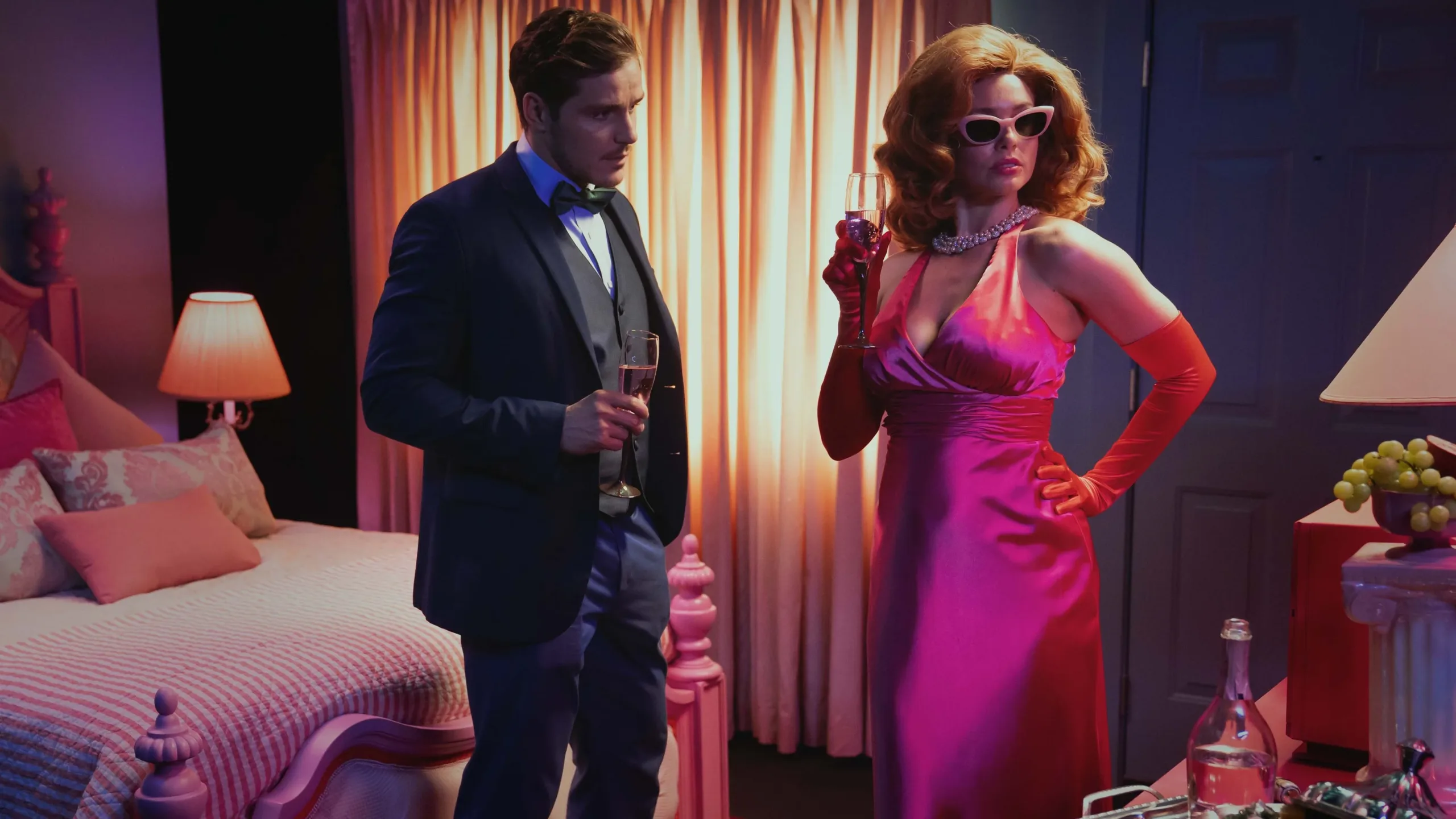
Bazuin’s direction gives the film a distinctive identity. The documentary frequently moves away from traditional interview-driven filmmaking and into theatrical recreations filled with bold costumes, colorful sets, and exaggerated performances. Werhun plays versions of her younger self, transforming memories into staged sequences that reflect her background as a performer. The approach gives the film energy, though some reenactments occasionally lean so heavily into camp that they weaken the seriousness of the moment.
The visual design does a great deal of storytelling work. The film borrows from film noir, satire, and theatrical comedy, creating different visual worlds for different chapters of Werhun’s life. Animation is used to explore emotions and ideas that are harder to express through direct conversation. These choices help the documentary feel connected to Werhun’s personality rather than simply documenting events from a distance.
The strongest section of the film comes when personal history expands into a discussion about workplace safety. Werhun’s experiences with assault and unsafe environments reveal the risks created by stigma and a lack of protection. The documentary argues that the people most affected by these conditions need support rather than further shame. Interviews with other sex workers broaden the discussion by exploring issues such as discrimination, expectations around appearance, and the unequal treatment experienced by different communities.
The film’s structure does have some weaknesses. The first half spends significant time building Werhun’s escorting story, which leaves the later sections about stripping and the wider industry with less room to develop. Some of the supporting voices introduce important ideas, yet the documentary often returns quickly to Werhun before fully exploring their perspectives. The storytelling remains focused, but the balance between personal memoir and wider social discussion shifts unevenly.
Still, Modern Whore succeeds because its central subject controls the narrative. The documentary understands that a person’s identity cannot be reduced to the work they perform or the judgments attached to that work. Bazuin and Werhun create a film where humor, visual invention, and difficult conversations exist together. The result is a carefully constructed portrait that examines how stories are shaped, who gets to tell them, and what happens when familiar assumptions are challenged.
Modern Whore premiered at the Toronto International Film Festival on September 5, 2025, before expanding to broader releases. Adapted from Andrea Werhun’s memoir, the hybrid documentary reimagines popular depictions of sex work through Werhun’s lived experiences as an escort and performer.
Where to Watch Modern Whore (2025) Online




Full Credits
Title: Modern Whore
Distributor: Quiver Distribution
Release date: September 5, 2025 (TIFF), May 1, 2026 (US)
Running time: 1 hour 20 minutes
Director: Nicole Bazuin
Writers: Nicole Bazuin, Andrea Werhun
Producers and Executive Producers: Lauren Grant, Nicole Bazuin, Andrea Werhun, Sean Baker
Cast: Andrea Werhun, Patrick Groe, Paul Thomas Forrest
Director of Photography (Cinematographer): Nina Djacic
Editors: Nicole Bazuin
Composer: Tom Third
The Review
Modern Whore
Modern Whore succeeds because it gives Andrea Werhun complete control over a story that cinema often simplifies. The documentary structure occasionally loses balance, especially when expanding beyond its central subject, but Nicole Bazuin’s inventive direction and Werhun’s sharp presence keep the film engaging. Its blend of performance, interviews, and social commentary creates a clear argument without losing sight of the person at its center.
PROS
- Andrea Werhun’s candid performance
- Creative documentary structure
- Strong visual identity
- Thoughtful social commentary
CONS
- Uneven narrative balance
- Supporting voices underdeveloped
- Some exaggerated reenactments distract