
















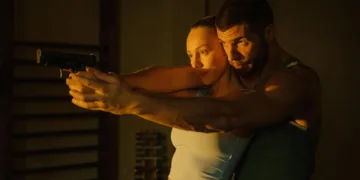










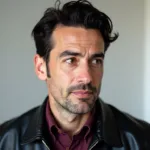
For Mariano Guerra, Italy has become the place where emergencies belong to other people. He works in Turin saving lives, moving through the practical routines of medicine, while Buenos Aires survives mostly as a voice on an answering machine asking him to return. Marco Bechis builds Back to Buenos Aires around that geographical split. Argentina contains the life Mariano escaped. Italy contains the life he assembled afterward. The film begins testing him the moment those two countries can no longer remain psychologically separate.
The year is 2008, and Mariano has been summoned to testify against men connected to Garage Olimpo, the clandestine detention center where he was imprisoned during Argentina’s military dictatorship. His reluctance initially resembles fear of confronting former torturers, but Bechis steadily reveals something harder to contain. Mariano survived partly because his medical knowledge made him useful.
Under the control of Doctor K, he treated prisoners, helped revive bodies after torture, and became entangled in the machinery destroying other detainees. His return is therefore a homecoming stripped of nostalgia. Argentina does not welcome him back as a lost son. It asks him to account for the conditions under which he managed to leave alive.
Once Mariano joins other survivors in Buenos Aires, shared suffering does not produce fellowship. Conversations stall. Suspicion circulates. Some witnesses have testified before, while Mariano moves through the government accommodation and courthouse as if each corridor might suddenly become a cell. Decades in Italy have placed physical distance between him and the dictatorship, yet his return exposes how little distance has settled.
Adriano Giannini makes that contradiction visible without requiring much dialogue. Mariano sweats, hesitates, stiffens around familiar faces and seems constantly occupied with keeping his body under control. The performance becomes especially effective when Doctor K reappears.
Their confrontation in a courthouse bathroom collapses three decades in seconds. Mariano does not respond like the medical professional, expatriate or father he became afterward. He responds like the captive Doctor K trained into obedience. His terror becomes involuntary and humiliating, and Giannini shows how exile can relocate a person without dislodging the authority buried inside him.
Bechis repeatedly gives architecture the same function. The courthouse, government accommodation and former detention spaces are filled with narrow passages, institutional light and uncomfortable silence. At times the imagery leans toward noir through blinds, shadow and cigarettes; elsewhere the empty hallways feel closer to horror. The mixture suits Mariano because the threat is historical and immediate at once.
Some of the strongest transitions make memory less like a flashback than a breach. The disappearance of Muñeca, Mariano’s former comrade and Evelyn’s mother, gains force as past and present contaminate each other, while Evelyn’s arrival turns an old memory into a living demand for information.
Here the film joins an international tradition of political cinema concerned with testimony after dictatorship, though Bechis approaches that tradition from the uneasy position of the compromised survivor. Ariel Dorfman’s Death and the Maiden places recognition and revenge inside an intimate confrontation with a suspected torturer.
Argentina, 1985 looks toward the machinery of prosecution. Bechis stays with the witness whose memory has become evidence against several people, including himself. That difference matters because Mariano cannot approach the courtroom as a simple representative of innocence wronged by power.
His actions inside Garage Olimpo had consequences. The film does not erase them, yet it refuses the easy fiction that decisions made under torture carry the same freedom as decisions made outside it. Doctor K understood coercion well enough to turn Mariano’s medical knowledge into another instrument of captivity. Mariano’s guilt comes partly from having participated and partly from knowing that participation helped keep him alive. Survival itself becomes morally contaminated.
The film is less assured when it tries to visualize every part of that contamination. A shattered reflection pushes the divided-self idea too hard, and a strange late dance sequence turns interior damage into a metaphor that feels conspicuously arranged.

Some scenes among the survivors drift toward theatrical stillness, while the subdued rhythm occasionally drains pressure from Mariano’s approach to testimony. Bechis is strongest when he trusts behavior, space and memory. He becomes less persuasive when an image explains what Giannini has already made visible.
Mariano’s present life suffers from similar narrowness. We receive fragments of his strained relationship with his daughter and little sense of the person he became in Turin beyond his medical work and solitude. The choice keeps the dictatorship pressing against nearly every scene, but it weakens the contrast between the life Mariano built in Europe and the prisoner who resurfaces in Buenos Aires. Giannini supplies some of that missing continuity through posture and restraint.
Amalia’s courtroom account of sexual violence offers another model of what returning can mean. She speaks with an authority Mariano cannot yet claim, while Evelyn represents a younger generation still living with the absences left by the dictatorship. Their presence keeps Mariano’s silence from remaining private. Doctor K raises the stakes further because Mariano may be one of the few witnesses able to identify a man who has escaped accountability.
Distance can preserve life. It cannot settle history. Mariano crossed an ocean, built a profession and spent decades in another country, but Buenos Aires remained inside the part of his life he refused to narrate. His testimony cannot restore Muñeca or turn coercion into innocence. It can end one form of silence, which is a smaller promise than redemption and a far more credible one.
Back to Buenos Aires had its world premiere in the main competition at the 83rd Venice International Film Festival on September 11, 2026. The historical thriller follows an Italian doctor who returns to Buenos Aires decades after surviving a military dictatorship to testify against his former torturers.
Full Credits
Title: Back to Buenos Aires
Distributor: Fandango
Release date: September 11, 2026 (Venice International Film Festival) / September 17, 2026 (Italy)
Running time: 1 hour 45 minutes (105 minutes)
Director: Marco Bechis
Writers: Marco Bechis, Vijaya Bechis Boll
Producers and Executive Producers: Cibele Amaral, Patrick de Jongh, Alfredo Federico, Domenico Procacci, André Ristum
Cast: Adriano Giannini, Ana Celentano, Verónica Gerez, Olivia Nuss, Adrián Fondari, Paula Cohen, Desideria Losada, Marcelo Chaparro
Director of Photography (Cinematographer): Fabrizio La Palombara
The Review
Back to Buenos Aires
Back to Buenos Aires is strongest when it treats exile as distance without release. Marco Bechis turns Mariano’s return into a confrontation with coercion, memory, and the compromised ethics of survival, while Adriano Giannini gives that conflict a bruising physical presence. Some visual metaphors push too hard, and Mariano’s Italian life remains thinner than the cross-border premise deserves, but the film’s refusal to separate victimhood neatly from complicity gives its courtroom drama real moral weight.
PROS
- Giannini’s controlled, physical performance
- Strong moral ambiguity around coerced collaboration
- Effective use of institutional space and memory
- Cross-border identity deepens the exile theme
CONS
- Some visual metaphors feel overly explicit
- Mariano’s Turin life lacks development
- A few late choices feel conspicuously arranged
- Ensemble passages occasionally lose tension