






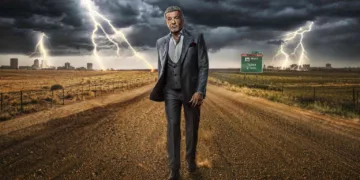


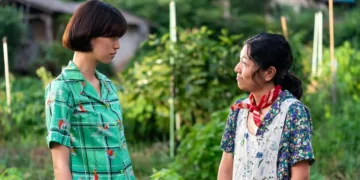
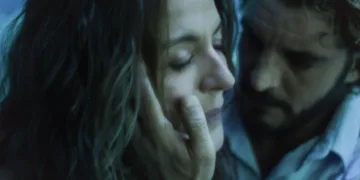
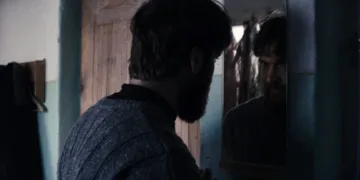











Traveling through remote parts of Russia, a father and daughter navigate a life on the open road in Ilya Povolotsky’s debut film, Grace. Little is known about the lives of these unnamed protagonists as they journey across vast landscapes in their rusty old van.
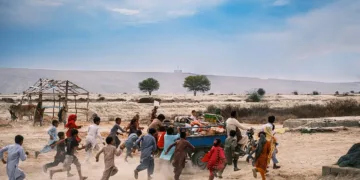
Along the way, they earn a meager living by setting up impromptu outdoor screenings in forgotten villages and showing films to small gatherings of local viewers. More than just a way to make money, their traveling cinema brings people together, providing a rare communal experience.
However, life remains a struggle for the two drifters. The father seems stuck in the habits of their nomadic routine, while his teenage daughter’s inquisitive nature leaves her desiring more. Economic hardships and interpersonal strain add to the loneliness they face daily.
Yet surrounded by the beauty of nature, their journey also reveals intimate moments of human connection, however fleeting, that help sustain their journey. Through it all, the powerful bond between father and daughter keeps them tied together on the road.
Povolotsky’s directorial debut tells a quietly profound story of perseverance, using the open spaces of Russia as a backdrop for his modest tale of survival. With minimal dialogue and elegant camerawork, Grace enlightens us about the quiet strength of the human spirit to find meaning even in life’s solitary paths.
Life on the Open Road
We meet a father and daughter traveling across the vast landscapes of Russia with little more than the rundown van they call home. With no other family and no fixed abode, these two drifters earn a meager living by setting up impromptu outdoor film screenings in remote villages along their route. But beneath the surface of their nomadic cinema business, money seems tight and times are tough.
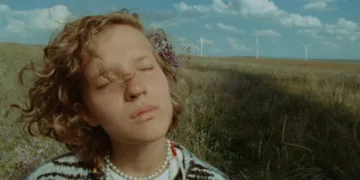
The daughter, played with quiet intensity by Maria Lukyanova, seems to be coming of age on this journey. As their travels continue, she can’t help but realize their rootless lifestyle isn’t much of a life at all. Her inquisitive nature leaves her wanting more stability. Yet her father, portrayed in a downcast manner by Gela Chitava, remains stuck in the habits of their wandering ways. Unable to envision any alternative, a wedge is growing between parent and child.
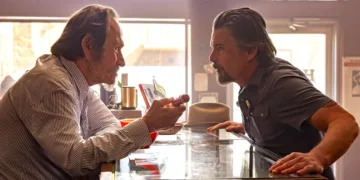
Very little backstory is given to explain their circumstances. Named only as “Father” and “Daughter” in the credits, some past sadness clearly still weighs heavily on them both. Their relationship appears strained, communication is sparse, and each seems lost in their own solitary thoughts much of the time. However, their bond and need to stick together on the open road keep them tied.
Through the rough roads and remote outskirts of this vast country, director Ilya Povolotsky takes us along for the ride. With stark yet poetic visuals, he reveals touching glimpses of human compassion amid the loneliness. But it also hints at deeper troubles simmering beneath the surface of this family drifting through the Russian wilderness in search of their next destination.
Life Through a Gritty Lens
The photography of Nikolay Zheludovich plays just as crucial a role in Grace as the performances at its heart. With rich, textured cinematography, Zheludovich immerses us in the rugged landscapes and isolation of the characters. Through extensive long takes and sweeping pans across vast terrain, the viewer feels fully transported. We experience each location as if on this arduous journey alongside the unnamed father and daughter.

Zheludovich reveals both the grandeur and grittiness of Russia’s wide-open spaces. Towering mountain vistas stretch to the horizon, yet an ever-present sense of bleakness lingers. His wide shots communicate the loneliness of traveling these empty steppes. But the camera also penetrates tightly enclosed settings, like the rundown van the pair call home. In cramped quarters, tension subtly simmers between the two.
Perhaps most striking is how Zheludovich frames the characters within their surroundings. Grainy, high-contrast images place their lonely figures in a landscape just as weathered. Shadows and minimal lighting add to the shot’s moody feel. Details like the daughter’s bright red sweater pop against dreary color palettes, mimicking the characters’ inner turmoil against a despairing backdrop.
Through his elegant visual style, Zheludovich brings the psychological state of Povolotsky’s isolated protagonists to the surface. His gritty, textured cinematography perfectly mirrors their downtrodden moods and the impoverished regions they cross. Like the wandering heroes, viewers feel every bump in the road amid this striking yet somber Russian odyssey unfolding just outside the van windows. Overall, it’s Zheludovich’s evocative photography that gives Grace its absorbing atmosphere and leaves memories long after the final frames.
Exploring Russia’s Soul
Grace delves into some deeply resonant themes about life in Russia. At its core lies a focus on female empowerment as the daughter seeks her own path. But the film suggests how little power truly exists in their depressed surroundings. We see the routines of two loners barely scraping by, living a nomadic life out of necessity rather than choice.

Through their travels across vast, desolate regions, the hopelessness of life becomes clear. Economic stagnation leaves communities disconnected and spiritless. Even natural landscapes feel tinged with bleakness. Their makeshift cinema provides a rare connection yet remains an unstable livelihood. Povolotsky immerses us in the grit and decay, communicating the despair pervading everyday life.
What’s most striking is how the film highlights Russia’s diversity within these isolated settings. The father interacts with locals in their native tongues, from Balkar to Dagestani. His conversations subtly underline the richness of ethnic cultures across this sprawling territory. It’s a reminder that beneath geopolitics lies tremendous variety interacting to form Russia’s identity.
At its heart, Grace feels like a portrait of the country’s soul. Povolotsky’s visual storytelling reflects the essence of obstinate survival against tough odds. Like the resilient characters, Russia perseveres through conflicts both historical and current. Perhaps it’s this ability to persist that gives its cinema such penetrating power. In selecting this film, festivals recognize a voice that eloquently expresses what lies beneath political climates. Ultimately, Grace leaves us with lasting impressions of a vast land and its indomitable spirit.
Striking a Balance
Povolotsky’s directional debut introduces his talents for visual storytelling. Grace relies far more on imagery than dialogue to convey its intimate drama unfolding across Russia’s vast spaces. This lends the film a mesmerizing quality through its minimalism.

We see this right from the start, as landscapes become like additional characters. Their sweeping vistas and tangible textures immerse us in the atmosphere. Minor gestures and exchanges between the father and daughter speak volumes, thanks to Povolotsky’s expert pacing. He finds poetry in the mundane and amplifies the emotional undercurrents through subtle observations.
This restraint is part of what makes the performances so powerful. With little said outwardly, Maria Lukyanova internalizes her character’s struggle. Her piercing eyes and steadfast determination suggest a strength developing under difficult conditions. Lukyanova brings an intensity that holds the focus, even during passages of stillness.
Gela Chitava matches her intensity through weary resignation as the father. Faced with his daughter’s growing independence, his eyes reflect resignation to changes beyond his control. Both actors breathe authentic life into their roles in a way that feels deeply felt, not acted.
By balancing lavish visuals with such understated acting, Povolotsky strikes a profound chord. Grace lingers in the mind through its ability to convey emotion silently. The film shows that less can truly be more when every element serves to amplify the human story at its heart. In doing so, the director announces himself as an insightful new voice in Russian cinema.
Finding Home on the Open Road
While paying homage to road movie traditions, Grace carves its path with Povolotsky’s singular vision. Kinship exists with Wim Wender’s wandering sentiments and Alain Tanner’s social critiques captured on journeys. However, this film explores one family’s journey with an intimacy all its own.
Parallels emerge to Kantemir Balagov’s harrowing drama Closeness as well, transporting audiences to overlooked regions of Russia. Both young directors shine light on hidden communities speaking varied tongues. Yet Povolotsky paints a portrait defined less by its subject than by the artist’s observations of things unsaid.
Comparisons to Bartas’s survey of post-Soviet malaise also ring true in certain imagery. But Grace locates humanity in small, devoted connections, not vast, depressed landscapes. Its achingly honest father-daughter dynamic feels ultimate and real, embodying change’s challenges for all people.
While touching on universal family tensions, the film resonates deepest as one writer’s catharsis. Povolotsky seems to discover himself alongside his characters. They drift without final destinations, held by cinema’s power to foster belonging wherever gatherings form around images shared.
In this liminal father figure and curious daughter whose bond outlives current hardships, the director finds optimism for art, sparking understanding across borders. Grace is a home on wheels wherever life’s journey leads, and in portraying this, Povolotsky comes into his own unique artistic home.
From Festivals to the World
This review has highlighted Grace as a truly impressive debut work. Povolotsky’s talent is clear: he tells a powerful story through brilliant imagery and minimal dialogue.
While festivals have appreciated its artistry, more movie lovers deserve to experience this film. Grace transports you to its stark yet beautiful Russian settings. You feel for the struggle of the father and daughter even as their relationship remains undefined.
Povolotsky proves himself to be a masterful guide. His roaming camera drinks in sweeping landscapes and tighter spaces with equal intimacy. Throughout, it’s the small human details that linger—a father’s strained smile, a daughter’s far-away gaze.
This director illuminates life on society’s edges in a way that feels profoundly relatable. His debut announces him as an important new voice from Russia, a country where cinema continues to reflect souls so well.
Grace unlocked a dazzling talent, and its praise is deserved. But a film of this quality deserves further recognition beyond festivals. It has so much to offer all who appreciate emotionally piercing drama and masterful visual storytelling.
One can only hope this stunning piece of work reaches more global audiences. When it does, many new admirers will be glad for the experience of journeying into Povolotsky’s unknown. Cinema is all the richer for new talents like his.
The Review
Grace
Grace offers a poetic cinematic reflection on perseverance through family and art in the face of harsh realities. Povolotsky crafts a luminous debut through evocative imagery and understated performances that linger with viewers. While depicting bleak truths, the film celebrates humanity's resilience and cinema's power to foster connection. Grace deserves worldwide recognition for introducing an important new directorial voice with insights into both his homeland and shared threads of the human experience.
PROS
- Stunning cinematography that immerses viewers in the landscapes and characters.
- Deeply affecting glimpse into the father-daughter relationship and perseverance through hardship.
- Understated yet powerful performances that leave a lasting impression.
- Poetic reflection on cinema's ability to foster community and find purpose.
CONS
- The minimal plot details provided could distance some viewers.
- Sparse dialogue may not appeal to those preferring exposition.