
























![Kingdom Hearts Collection [I-III] Review](https://gazettely.com/wp-content/uploads/2026/10/Kingdom-Hearts-Collection-I-III-1-360x180.webp "Kingdom Hearts Collection [I-III] Review: KHII Holds Steady as Newer Entries Fluctuate 40")
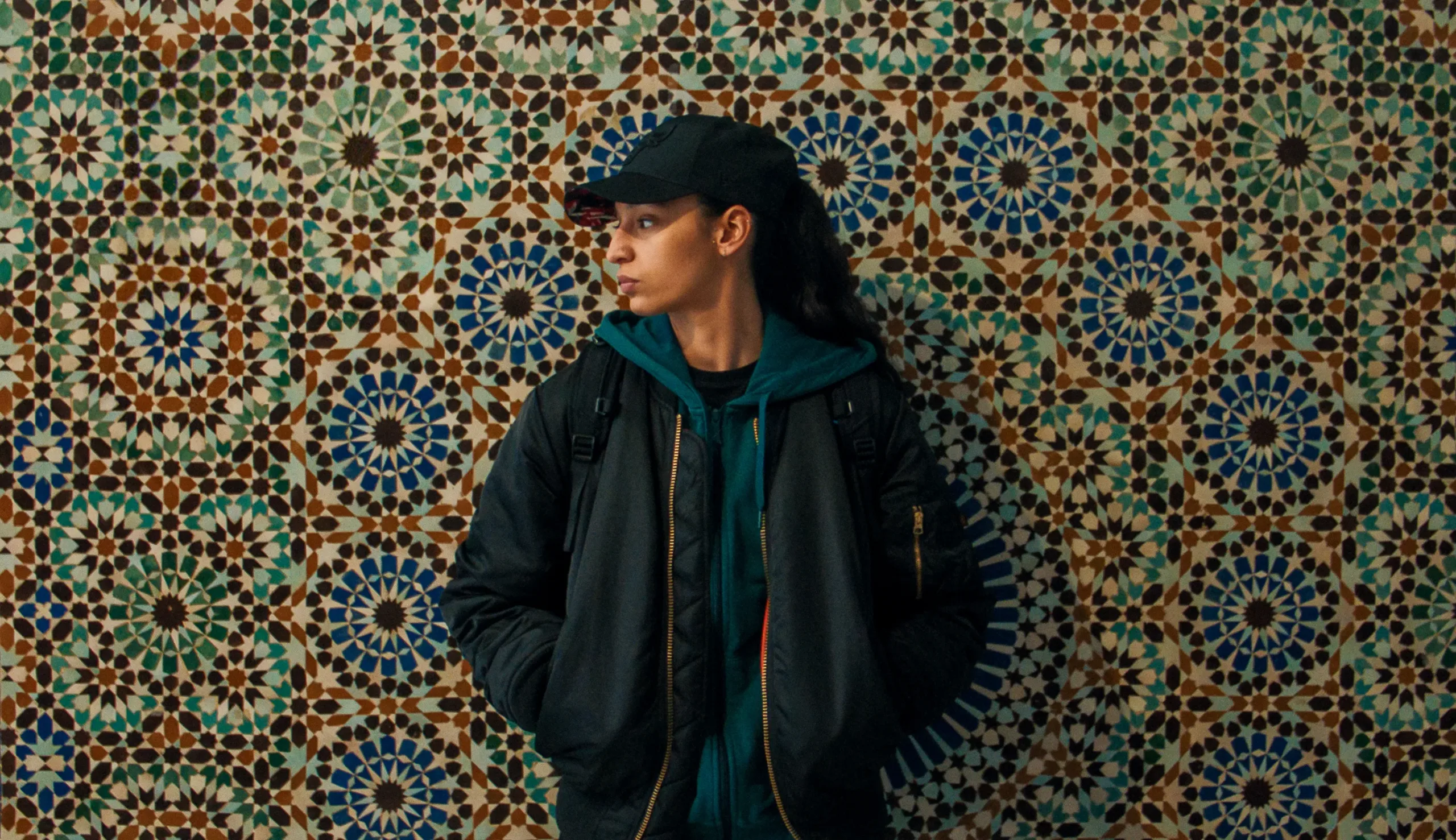

The Little Sister unfolds as a delicate adaptation of Fatima Daas’s autofictional novel, guided by actress-turned-director Hafsia Herzi. Set in the working-class suburbs of Paris, the film follows Fatima (a striking debut from Nadia Melliti), the youngest daughter in a French-Algerian household, whose quiet devotion to Islam collides with the stirrings of a hidden love for women. Herzi divides this journey into seasonal chapters, each marking shifts in Fatima’s academic life—from the crowded hallways of lycée to the philosophical halls of university—and in her personal world.
Central to the drama is the tension between faith and self-discovery: Fatima navigates family rituals at home while experimenting with lesbian dating apps, all under the watchful lens of DP Jérémie Attard. Moments of whispered confession in a moonlit bedroom contrast with the cello-led score by Amine Bouhafa, whose restrained themes echo Fatima’s guarded heart. Ji-Na (Ji-Min Park) emerges as both mirror and catalyst, drawing our heroine into Paris Pride’s pulsating crowd. Through lean dialogue and vivid imagery, The Little Sister invites us to witness an intimate collision of traditions, desires and a young woman’s resolve to weave them into a single life.
Narrative and Structure
Herzi frames Fatima’s odyssey through four distinct seasons, each serving as a quiet signpost of her evolving identity. In autumn, the crisp air mirrors Fatima’s tentative steps toward independence as she navigates family prayers and classroom banter. Winter’s muted palette underscores her internal freeze—caught between devotion and desire—while spring’s thaw coincides with the spark of first love. By summer, the sunlit streets of Paris Pride illuminate a heroine both emboldened and unsettled, reminding us that growth rarely follows a straight line.
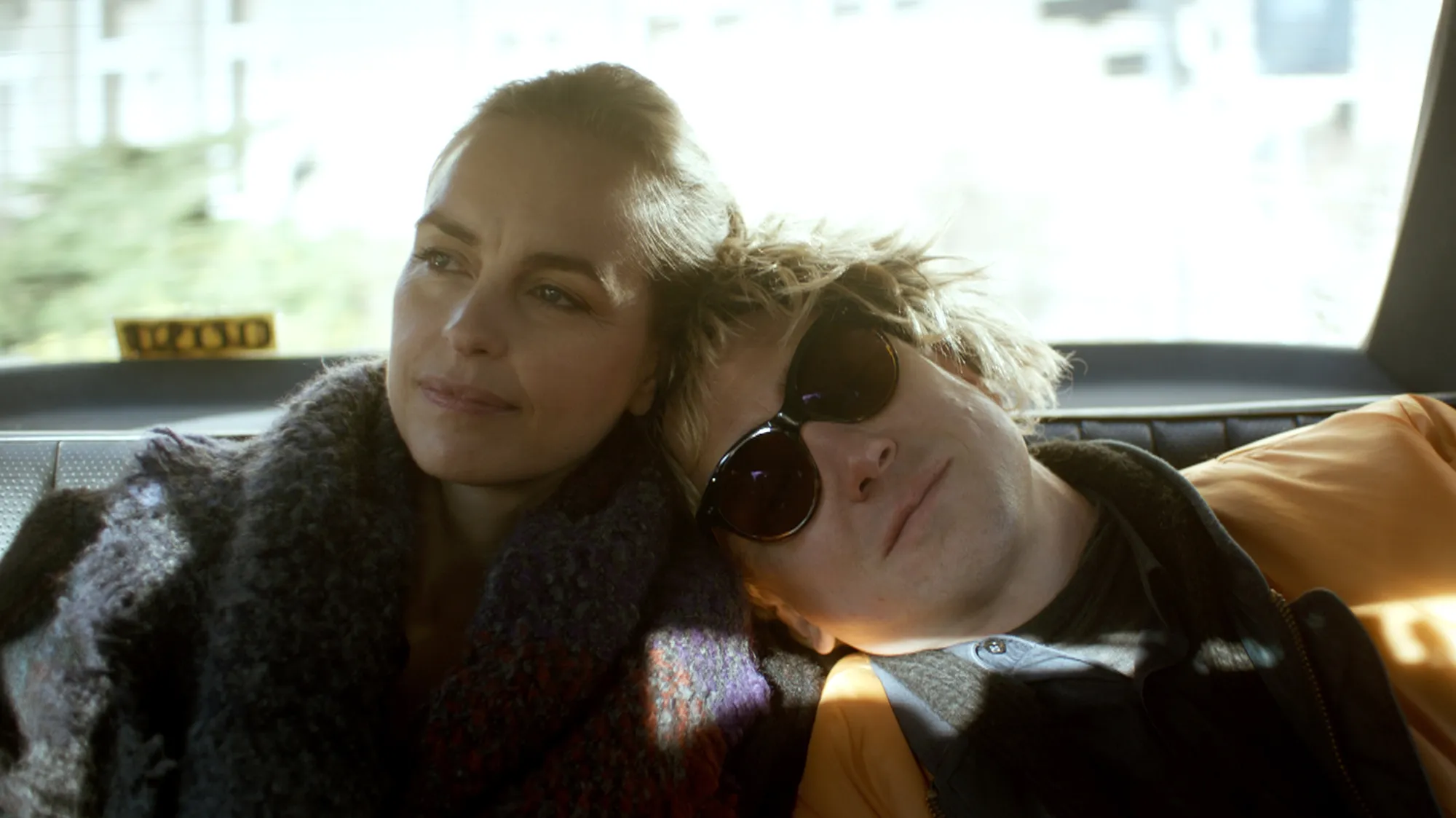
The film opens with Fatima kneeling in ritual devotion, a gesture that stakes her ties to faith before any question of self emerges. A sudden classroom confrontation—her lashing out at a homophobic peer—shifts the narrative into urgent territory, revealing suppressed turmoil in a single jolting moment. A later encounter at an asthma clinic introduces Ji-Na in a casual workspace, where a shared glance launches the film’s first real spark of intimacy.
The Pride parade arrives as a visual crescendo, affirming collective visibility even as Fatima remains partly hidden. When Ji-Na retreats into depression, the story pivots to quieter scenes of clandestine meet-ups and a hushed consultation with an imam, each beat probing the costs of authenticity. The film ends on an unresolved note: Fatima pauses at her mother’s kitchen door, choice unspoken—a deliberate cliffhanger that invites reflection rather than closure.
Herzi’s screenplay favors precision over excess. Dialogue is pared back to everyday rhythms, so silences carry as much weight as words. Scenes of exuberant celebration—like the Pride sequence—are granted full, lingering takes, while other moments—agitated family dinnertime, furtive app-driven encounters—are compressed into swift montages. This balance allows viewers to inhabit Fatima’s world without feeling rushed, even as the narrative skips through months with cinematic agility. In treating each frame as both vessel and canvas, The Little Sister demonstrates how deliberate economy can deepen emotional resonance.
Characters and Performances
At the heart of The Little Sister is Fatima, portrayed with remarkable restraint by newcomer Nadia Melliti. Herzi’s choice to cast a non-professional actor lends Fatima an authentic stillness: her stony exterior functions as a shield against both familial expectations and the pangs of self-doubt. Yet in close-ups—eyes flickering at a whispered insult, lips trembling during a tentative confession—we sense vulnerability surfacing beneath the facade.
Watching Melliti, I’m reminded of the spare intensity of Leila Hatami in A Separation, where every micro-expression carries emotional freight. Over the course of the seasons, Fatima shifts from passive observer—sidelined at her sisters’ bickering, silent amidst boisterous classmates—to a tentative explorer of desire, her body language evolving from closed posture to the relaxed curves of someone reclaiming her own shape.
Opposite her, Ji-Na (Ji-Min Park) brings a luminous warmth. Where Fatima tightens like a fist, Ji-Na unfolds, her openness both invitation and mirror. Park navigates clinical depression with subtle shifts—a distant gaze here, a tremor in her smile there—that deepen the relationship’s stakes. When Ji-Na withdraws, their chemistry fractures, leaving Fatima stranded between solace and loss.
Supporting performances enrich this tapestry. Fatima’s older sisters chatter over the dinner table with affectionate teasing, grounding the story in everyday sibling dynamics. Her mother (Amina Ben Mohamed) offers quiet support, her presence a soft counterpoint to the mosque’s formal rituals, while her father’s gruff humor reminds us that love need not be high drama. In school, crass homophobic banter from teenage boys underscores how cultural norms can be weaponized, until Fatima finds kinship among queer university friends whose candid camaraderie contrasts sharply with her high-school shell.
Mentor figures round out Fatima’s journey: Ingrid’s off-camera seduction doubles as practical sex education, delivering frank advice that lingers longer than any steamy scene, while a local imam’s conflicted counsel grounds the film’s faith questions in real-world ambivalence.
What stands out is the ensemble’s cohesion—a blend of seasoned performers and raw newcomers that mirrors the film’s own blend of tradition and experimentation. Each interaction feels lived-in, each face a testament to the film’s celebration of identity in all its nuanced shades.
Direction and Cinematic Style
Hafsia Herzi steps behind the camera with the assured ease of someone steeped in performance. Best known for her acting in Kechiche’s Couscous, Herzi’s transition to directing recalls the leaps made by directors like Kelly Reichardt, whose actress-turned-filmmaker journey informs a keen empathy for character. In The Little Sister, Herzi honors Fatima Daas’s novel by retaining its quiet introspection, yet she makes selective cuts—trimming interior monologue in favor of visual shorthand—to keep the film lean and immediate.
DP Jérémie Attard collaborates closely with Herzi to render Fatima’s world in tight, intimate close-ups that never feel intrusive. A lingering shot of eyelids fluttering against windowlight captures more than any line of dialogue, reminiscent of the unhurried gaze in Céline Sciamma’s Portrait of a Lady on Fire. Attard’s palette shifts subtly: dusky golds in autumn scenes, cool blues in winter’s hush, and warmer hues as spring breathes life into Fatima’s blooming identity.
Montages punctuate the film’s rhythm—family breakfasts condensed into a sequence of passing dishes, then cutting to Paris Pride’s riot of color and movement—mirroring how life often leaps from the mundane to the transcendent. Editor Géraldine Mangenot times these transitions so that quiet moments—Fatima’s solitary prayers or journal scribblings—linger just long enough to resonate, before giving way to brisker sequences of phone-screen flirtations or subway rides.
This interplay of stillness and motion anchors the viewer in Fatima’s emotional tempo, much as a well-crafted sonata balances pauses and crescendos. In marrying visual restraint with rhythmic daring, Herzi signals a confident voice in independent cinema—one attuned to the subtleties of both heart and frame.
Themes and Cultural Context
At its heart, The Little Sister charts the delicate tension between faith and desire. Fatima’s nightly prayers and ritual ablutions sit in quiet contrast to her secret late-night swipes on a dating app. Herzi resists easy binaries: when Fatima turns to her imam, she hears that female homosexuality is “less serious” than in men—an answer steeped in cultural tradition yet tinged with reluctant empathy. It’s a moment that feels lifted from real conversation, reminding me of debates I’ve witnessed in community centers where doctrine and compassion collide.
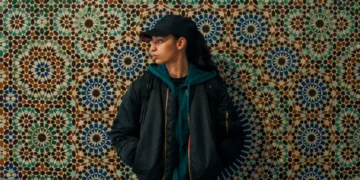
Her Franco-Algerian heritage infuses every frame with coded markers: Fatima’s baseball cap functions as secular camouflage much like her sisters’ hijabs do as religious emblems. In a subtle touch, overheard Arabic phrases at home give way to clipped French in the lycée, underscoring how she straddles two worlds. Ji-Na’s Korean-French background echoes this outsider sensibility—a parallel I find compelling, as it recalls the diasporic narratives of Lynne Ramsay’s We Need to Talk About Kevin, where identity is both anchor and rupture.
This is distinctly a modern coming-of-age tale: technology isn’t window dressing but narrative engine. Fatima’s phone screen becomes a confidante, its blue glow mirroring both excitement and loneliness. Scenes of anonymous hookups distilled into quick montages speak to a generation that negotiates intimacy via clicks and profiles.
Yet even in this digitally mediated world, silence carries weight. Fatima never admits everything to her mother, and the film’s refusal to stage a grand confession feels truthful rather than evasive. As someone who once hesitated to tell my own family about moving abroad, I recognize that withholding can be its own form of revelation—a pause pregnant with possibility. By ending on ambiguity, Herzi honors the reality that some journeys don’t resolve neatly, and that identity often lives in the unspoken spaces between seasons.
Cinematography, Soundtrack and Production Design
Jérémie Attard’s cinematography balances intimate interiors with the expansiveness of Parisian streets. In tight family scenes, the camera lingers in close quarters—the cramped kitchen, the dimly lit apartment—inviting the viewer into Fatima’s private world. When the film transitions to open-air moments along the Seine or the riotous energy of a Pride march, Attard switches to handheld shots that capture spontaneity and movement, much like the vérité style of The 400 Blows, a favorite of mine for its kinetic honesty.
Amine Bouhafa’s score leans on prim, cello-led motifs that mirror Fatima’s emotional restraint. Each slow arco line punctuates moments of doubt or longing, providing an undercurrent of warmth beneath her composed exterior. At Pride, the diegetic thump of music and crowd chatter overtakes the score, reminding us that Fatima’s journey unfolds in a living, breathing community rather than a solitary score.
Production design and costuming further ground the film in lived reality. The family apartment features modest décor—worn sofa cushions, unadorned walls—that evokes working-class life without artifice. Fatima’s wardrobe evolves alongside her inner shift: early scenes in muted tomboy hoodies and caps gradually give way to subtle splashes of color—scarves, patterned tops—that signal her tentative embrace of self-expression. Together, these elements create a tactile world where every frame feels both specific and universally resonant.
Emotional Impact and Audience Engagement
Fatima’s journey unfolds in moments of quiet revelation, her understated performance anchoring the film’s emotional core. Nadia Melliti’s minimalism—an almost imperceptible inhale before a tender touch—invites us into Fatima’s inner world, much as Tilda Swinton’s restrained power once drew me into We Need to Talk About Kevin. This empathy through restraint transforms every glance into an intimate confession.
Catharsis arrives in two contrasting forms. The sex-ed scene with Ingrid blends frank instruction and gentle humor, offering Fatima—and the audience—a space to demystify desire. Here, laughter and guidance intertwine, dissolving shame in a way that feels both playful and profound. Then there’s the Pride march: handheld cameras swirl amid buoyant crowds, the beat of drums and cheers weaving into Bouhafa’s muted cello, creating a euphoria that pulses beneath Fatima’s calm surface. In that tidal wave of color and sound, we sense her tentative claim to freedom.
Between these highs lie quiet familial exchanges—her mother’s silent nod, a sister’s affectionate tease—that carry unspoken understanding. These scenes feel like secret phone calls to our own memories of home, where love often speaks in gestures rather than declarations.
The film’s ambiguous ending—Fatima lingering at the threshold of confession—leaves questions suspended like notes in a jazz improvisation. It prompts reflection on how we balance multiple selves: the private, the public, the sacred and the forbidden. That lingering melody resonates long after the credits roll, reminding us that identity is a continuing composition.
Full Credits
Director: Hafsia Herzi
Writers: Hafsia Herzi (screenplay), based on the novel by Fatima Daas
Producers: Julie Billy, Naomi Denamur
Cast: Nadia Melliti, Park Ji-min, Louis Memmi, Mouna Soualem, Aloïse Sauvage, Mélissa Guers, Nemo Schiffman
Director of Photography (Cinematographer): Jérémie Attard
Editor: Géraldine Mangenot
Composer: Amine Bouhafa
The Review
The Little Sister
Herzi’s assured direction and Melliti’s nuanced debut craft an intimate portrait of faith, identity and desire. Through lean storytelling and vivid seasonal shifts, the film illuminates the tension between devotion and self-discovery. Moments of quiet introspection balance vibrant communal scenes, making the journey both personal and universal. A subtle, emotionally resonant coming-of-age that lingers long after it ends.
PROS
- Nadia Melliti’s reserved performance conveys deep emotion with minimalism
- Seasonal structure provides clear emotional signposts
- Jérémie Attard’s close-up cinematography fosters intimacy
- Amine Bouhafa’s cello-led score underscores restraint and longing
- Honest portrayal of intersecting faith and sexuality
CONS
- Emotional peaks feel muted for viewers seeking overt drama
- Family dynamics receive only surface exploration
- Cliffhanger ending may leave some craving more resolution