
























![Kingdom Hearts Collection [I-III] Review](https://gazettely.com/wp-content/uploads/2026/10/Kingdom-Hearts-Collection-I-III-1-360x180.webp "Kingdom Hearts Collection [I-III] Review: KHII Holds Steady as Newer Entries Fluctuate 37")




Art history has its ghosts: figures whose work feels impossibly modern, yet their names are lost to the archives. George Platt Lynes is one such artist. Sam Shahid’s documentary, Hidden Master, positions him as a pivotal, if spectral, force in 20th-century photography.
To the public of his day, Lynes was a successful commercial photographer, his lens defining the look of fashion magazines and capturing portraits of cultural giants like Gertrude Stein. This public career, however, financed a secret, more radical one.
In private, he created a monumental portfolio of male nudes, images of startling beauty and classical form. The film presents itself as an act of reclamation. It seeks to correct a historical record shaped by prejudice and return a forgotten creator to his proper place within the artistic canon.
Forging a Life Against the Grain
The film constructs a portrait of a man who built a world for himself in defiance of the larger American culture. Lynes appears as a figure of immense charm and audacity, living as an out gay man decades before Stonewall. His life story reads like a rejection of the American puritanical script.
The documentary follows his escape from a conventional path, leaving Yale for the expatriate artist circles of 1920s Paris, a setting that offered a social and creative liberty unavailable back home. This European exposure seems to have cemented his resolve to live without apology.
Upon returning to America, he presided over bohemian salons in New York that were not just parties but vital subcultural incubators where artistic reputations were forged outside of mainstream validation. Here, he entered a three-decade polyamorous relationship with museum founder Monroe Wheeler and writer Glenway Wescott, a domestic arrangement that was itself a form of radical expression.
The film gives this history a potent immediacy, using personal letters and direct testimony from surviving friends like the artist Bernard Perlin. Their anecdotes, which hint at a man who could be both generous and manipulative, strip away the historical distance, presenting a complex person who sculpted his life with the same deliberation he applied to his art.
A Dual Artistic Practice
Lynes’s photography existed in a state of duality, a division the film explores with great effect. His commercial assignments for Vogue or his work as the official photographer for George Balanchine’s nascent American Ballet show technical mastery and a distinct polish. His elegant portraits of luminaries from Jean Cocteau to Tennessee Williams separated his work from simple documentation.
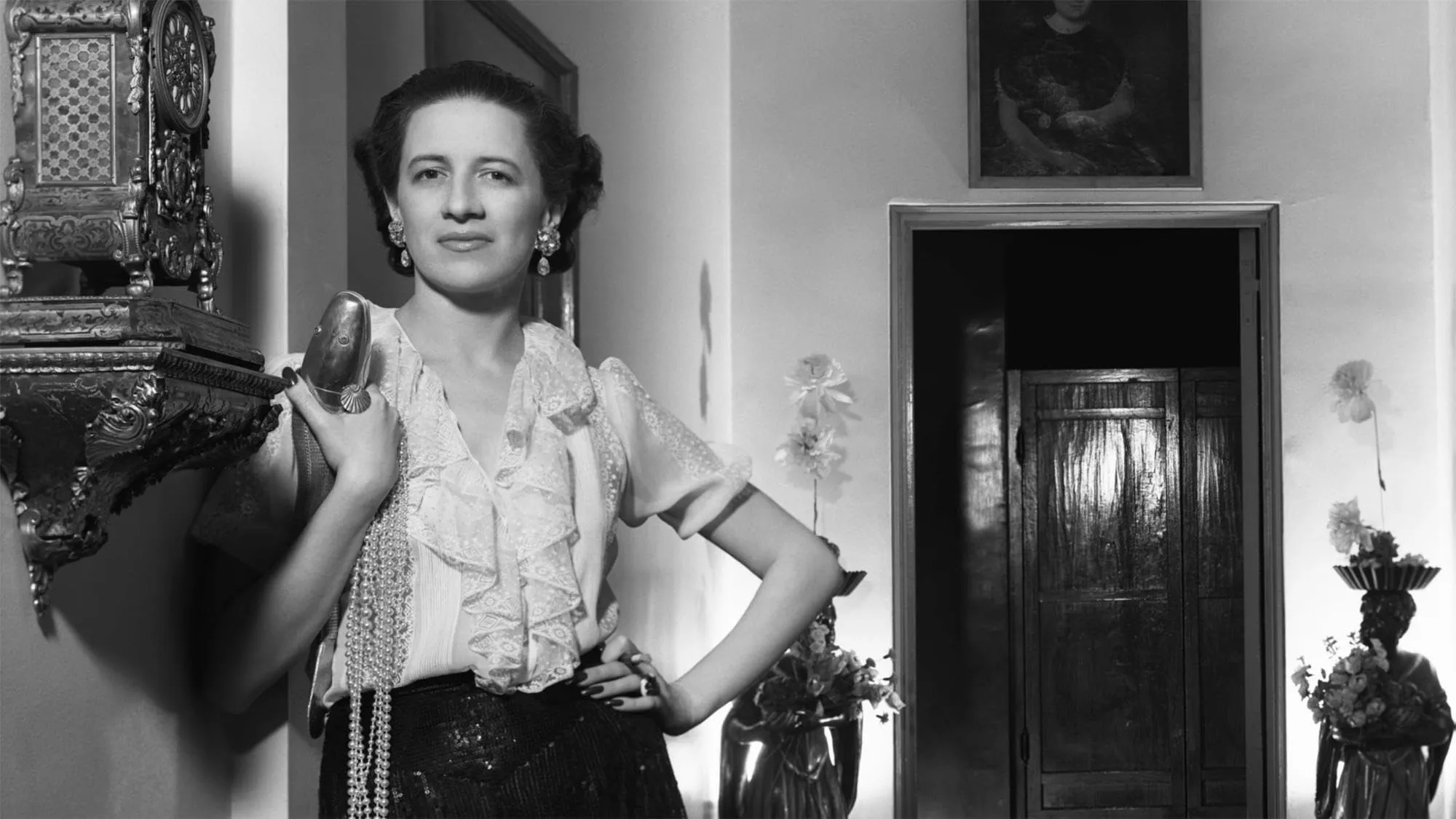
This commercial practice was not entirely divorced from his private art; his ballet photography, with its focus on the athletic body in motion, clearly informed his approach to the nude. His private work is where his true vision is located. His nudes are treated not as erotica but as exercises in form, their aesthetic rooted in Renaissance sculpture.
The bodies are architectural, with high-contrast light carving out musculature like a frieze and the careful arrangement of limbs creating serene, geometric compositions. Shahid’s documentary makes a powerful choice in its visual storytelling: it floods the screen with these images.
This deluge of photographs functions as a direct counterpoint to the decades of censorship that kept them hidden. The viewer sees what the 1940s art world refused to. His approach feels foundational when compared to the more confrontational gaze of Robert Mapplethorpe decades later.
Lynes’s classicism represents an earlier stage of queer art, one focused on aesthetic beauty rather than political provocation. Even his interracial portraits, groundbreaking for their time, reveal this complexity, appearing both revolutionary and tangled in the racial assumptions of their era.
An Archive Against Oblivion
The documentary makes it clear why Lynes was erased. His obscurity was a product of active suppression by a gallery system and a national culture that policed both sexuality and art. The film explains the art world’s double standard: the female nude was a celebrated tradition, while the male nude, seen through a homoerotic lens, was deemed obscene.

This institutional homophobia, combined with a broader American puritanism, left no space for Lynes’s most important work. We see his final years marked by financial ruin after a failed move to Hollywood and an early death from cancer. Fearing posthumous scandal, he burned a portion of his archive, nearly completing the work of cultural suppression himself.
His legacy was saved by an unlikely alliance. His friendship with sexologist Alfred Kinsey resulted in his collection finding a home at the Kinsey Institute. A scientific institution, dedicated to cataloging human behavior, became the accidental guardian of a revolutionary artistic vision.
The story of a special box of his work, sent to Kinsey with instructions that it never be opened, adds a layer of myth to his biography, a final, private secret. Hidden Master succeeds in its effort of recuperation.
It demonstrates that the history of art is not a settled narrative but a contested space, a reminder of how many other stories have been written out of our official cultural memory, waiting for their own acts of recovery.
Hidden Master: The Legacy of George Platt Lynes had a limited theatrical release starting on May 31, 2024, and is available for streaming on platforms such as Amazon Prime Video, Apple TV, and Fandango at Home.
Full Credits
Director: Sam Shahid
Writers: Sam Shahid, Matthew Kraus, John MacConnell
Producers and Executive Producers: Sam Shahid, Matthew Kraus, John MacConnell, Nando de Carvalho (Producers); O’Brien Kelley, Raja Sethuraman, Magnus Andersson, Jayne Baron Sherman (Executive Producers); Charles W. Leslie, Rocco Lofaro Buonpane (Co-Executive Producers)
Cast: Vince Aletti, Don Bachardy, Vincent Cianni, John Connelly, James Crump, Jarrett Earnest, Allen Ellenzweig, Rebecca Fasman, Philip Gefter, Steven Haas, Peter H Halpert, Robin Lawrence, Matt Leifheit, Charles Leslie, Dimitri Levas, George Platt Lynes II, Nick Mauss, Duane Michals, Sarah Morthland, Billy O’Connor, John Olsen, Mary Panzer, Bernard Perlin, Jerry Rosco, Stewart Shining, James Smalls, Michael Schreiber, Charles L. Venable, Anne Young, John Stevenson, Jensen Yow, Bruce Weber
Director of Photography (Cinematographer): Matthew Kraus
Editors: Conor McBride
Composer: Sarah Lynch
The Review
Hidden Master: The Legacy of George Platt Lynes
Hidden Master is a vital work of cultural archaeology. It successfully resurrects George Platt Lynes from unjust obscurity, presenting his stunning photography with the historical context needed to appreciate its radical nature. The film makes a powerful case for his inclusion in the art historical canon, not just as a talented photographer, but as a quiet revolutionary whose life and work challenged the core of America’s cultural pieties. It is an essential portrait of an artist and the forces that sought to erase him.
PROS
- Effectively restores the legacy of a significant, forgotten artist.
- Presents a vast and beautifully curated selection of Lynes's photography.
- Richly details the historical and cultural context of mid-century America.
- Uses personal archives and interviews to create an intimate portrait.
CONS
- Follows a conventional biographical documentary structure.
- Avoids a deeper examination of the subject's more difficult personality traits.
- The rapid pace of images shown can prevent thoughtful observation of individual works.







