




























The new science fiction film Long Distance opens not with a bang, but with the silent, cold hum of deep space. Inside the starship Borealis, asteroid miner Andy is in a long cryogenic sleep, dreaming of a life four years and countless lightyears away.
This peace is shattered when the ship careens through an unexpected asteroid field. The sequence is a jolt of visceral filmmaking; alarms blare, metal groans, and Andy is violently awakened just in time to be ejected in an escape pod. He crash-lands on the surface of a desolate, unknown planet. The immediate challenges are stark and severe.
He is utterly alone, his suit is leaking precious air, and his oxygen supply is a rapidly draining clock. Hope arrives as a faint signal in his helmet: another survivor, Naomi, is alive but trapped miles away. With the planet’s hostile creatures stirring in the shadows, Andy’s desperate trek to reach her begins.
The One-Man Show: Anchoring the Film with a Singular Performance
For much of its runtime, Long Distance is a solo act, and the film’s success rests almost entirely on the shoulders of Anthony Ramos. He is the constant, the anchor in a sea of alien mist and jagged rocks. What makes his portrayal of Andy so effective is that he is not a stoic space hero; he is a musician from Brooklyn, a regular person thrown into an impossible situation.
His fear feels real, his frustration is palpable, and his flashes of humor are a necessary defense against crushing despair. This grounds the high-concept story in a relatable humanity. The structure reminds me of listening to old radio dramas from my childhood, where performance is everything and a voice must paint a universe. Andy’s only companions are voices in his ear. One is his suit’s pedantic AI, LEONARD, voiced with dry wit by Zachary Quinto.
Their arguments provide moments of levity and highlight Andy’s powerlessness against his own equipment. The other is Naomi, played by Naomi Scott, whose voice becomes his lifeline. She builds a complete character through inflection and timing alone. The film asks us to believe in a connection forged purely through vocal intimacy and shared terror, and the chemistry the two actors generate makes that bond feel authentic and vital.
Designing a Desperate World: Sci-Fi Aesthetics and Familiar Tropes
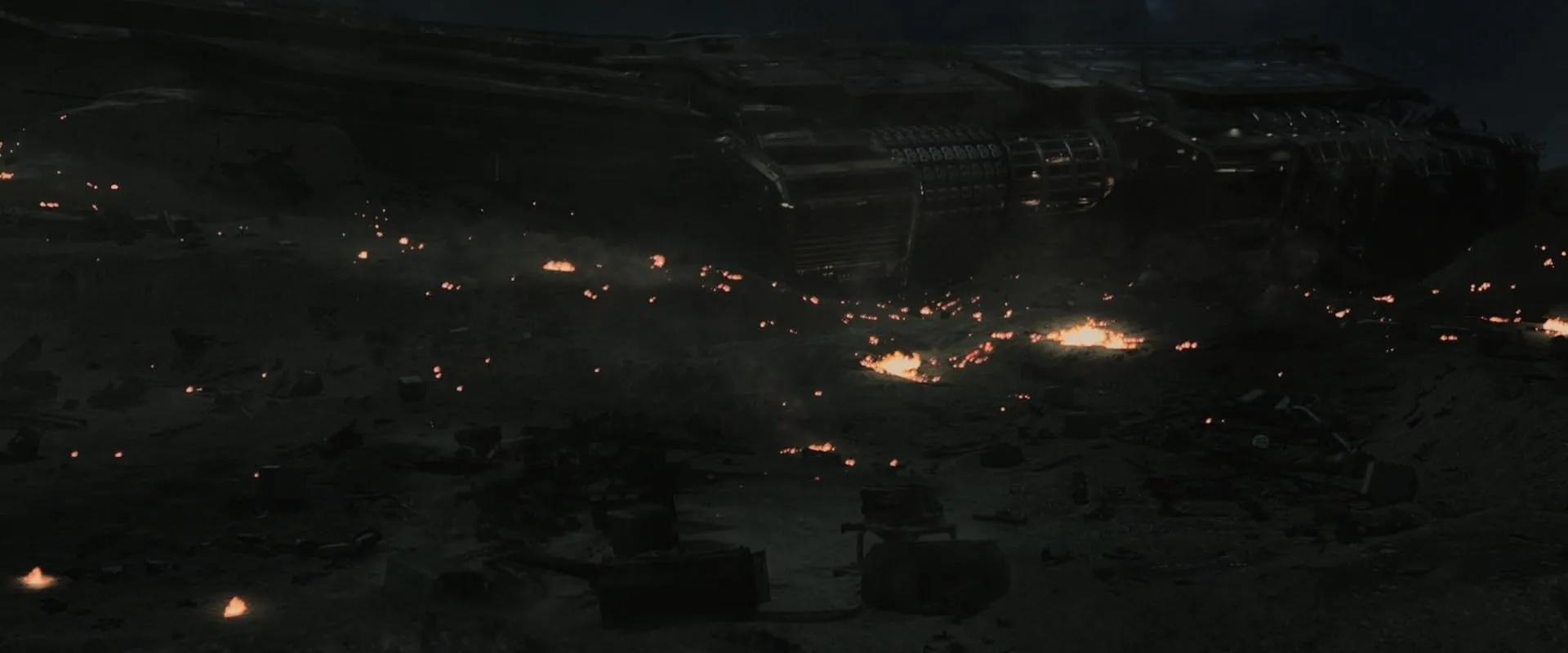
The world of Long Distance is a carefully crafted portrait of hostility. The planet is a wash of greys and deep shadows, its geography defined by sharp, threatening rock formations shrouded in a perpetual mist. The sound design is crucial here, filled with the constant whip of an alien wind and the unsettling scuttling of unseen things just beyond the fog.
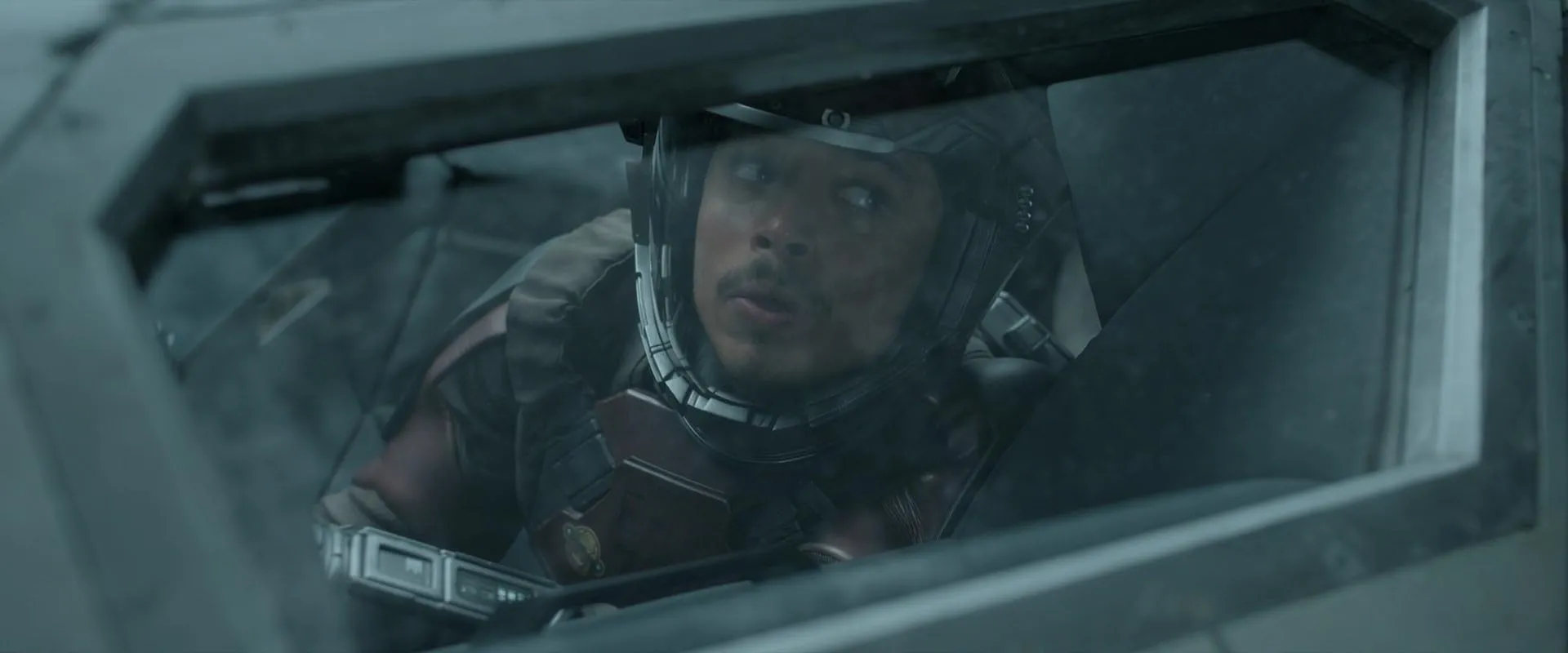
This audiovisual palette creates a potent sense of isolation. The production design shines brightest in its moments of technological chaos; the opening destruction of the Borealis is a sequence of slick, destructive grandeur that looks impressive on any screen. When it comes to the planet’s native inhabitants, however, the design feels more indebted to genre history.
The creatures are gooey, multi-limbed arachnids, a sight familiar to anyone who has spent time with classic creature features. This familiarity could be seen as a weakness, but it also functions as a type of cinematic shorthand.
The film’s technology also offers a look at sci-fi’s function as social commentary. Andy’s L.E.O.N.A.R.D. suit is a marvel, yet it is clearly a standard-issue model, a piece of corporate equipment whose flaws reflect his expendable status. This detail cleverly builds a world where survival is not just about wit and strength, but also about the quality of the gear your employer provides.
Tonal Navigation: Juggling Horror, Humor, and Heart
The film makes a bold choice to shift its tone frequently, moving between suspense, comedy, and romance. One moment, Andy is desperately patching a hole in his suit with alien goo; the next, he is bickering with Naomi about their favorite foods. This blend is a signature of directors Josh Gordon and Will Speck, who have a background in mainstream comedy.
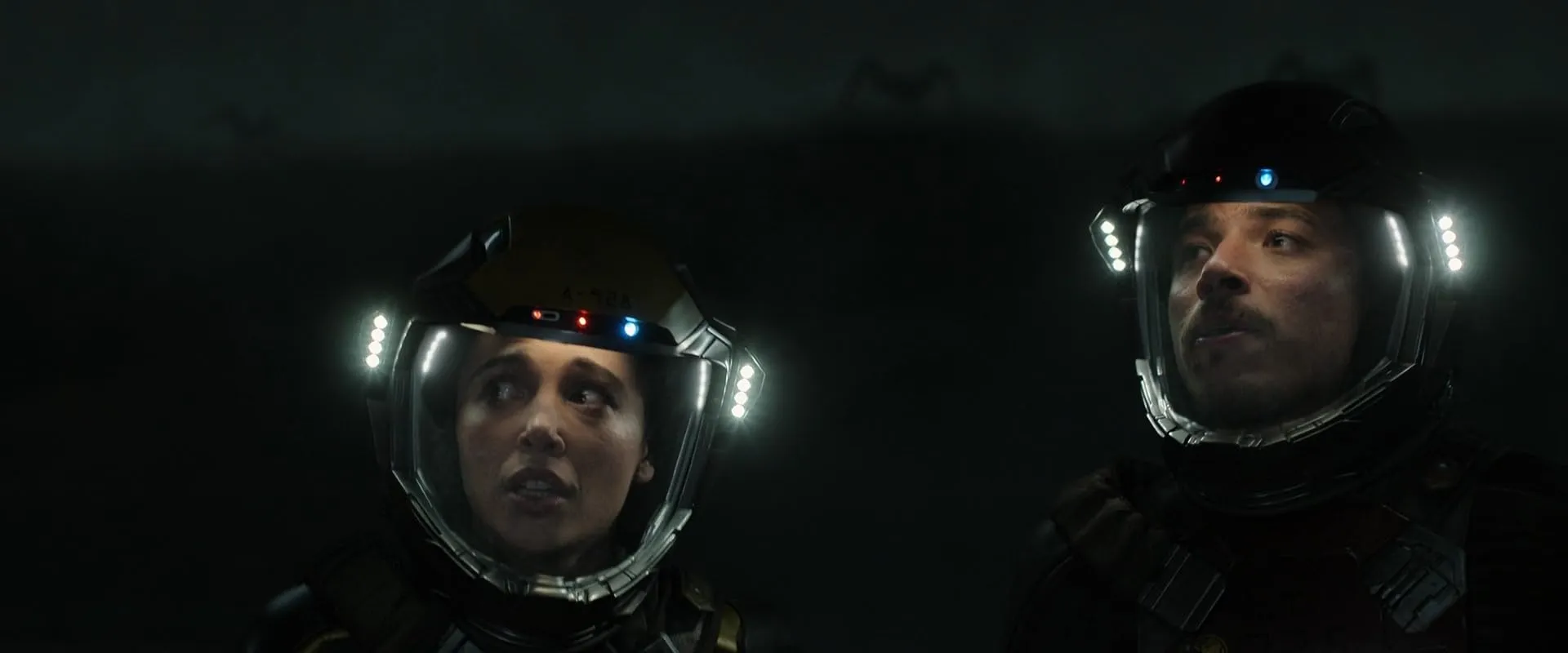
Their sensibility is felt throughout the film, as they often use humor to break the tension of the survival-horror premise. For instance, Andy’s arguments with the relentlessly literal LEONARD AI are genuinely funny, offering a brief respite from the constant threat of death. This tonal mix is a gamble that speaks to the difficulty of classifying many modern films.
At times, the lighthearted dialogue makes the dire situation feel less severe, pulling the viewer out of the moment. The film’s structure doesn’t always integrate these moods seamlessly, creating an experience that can feel slightly disjointed.
This stylistic choice positions the film in an interesting middle ground, too sincere for pure satire but too light for grimdark science fiction, making it a unique artifact of directors applying their specific comedic timing to a genre that typically avoids it.
Thematic Undercurrents: Expendability and Connection
Beneath the surface of this survival story, Long Distance explores some very current anxieties. The most pointed piece of social commentary comes from the hardware itself. We learn that Naomi, a manager, has a superior suit that can patch its own holes, while Andy’s miner-grade suit leaves him vulnerable. This is a simple, brilliant illustration of corporate hierarchy.
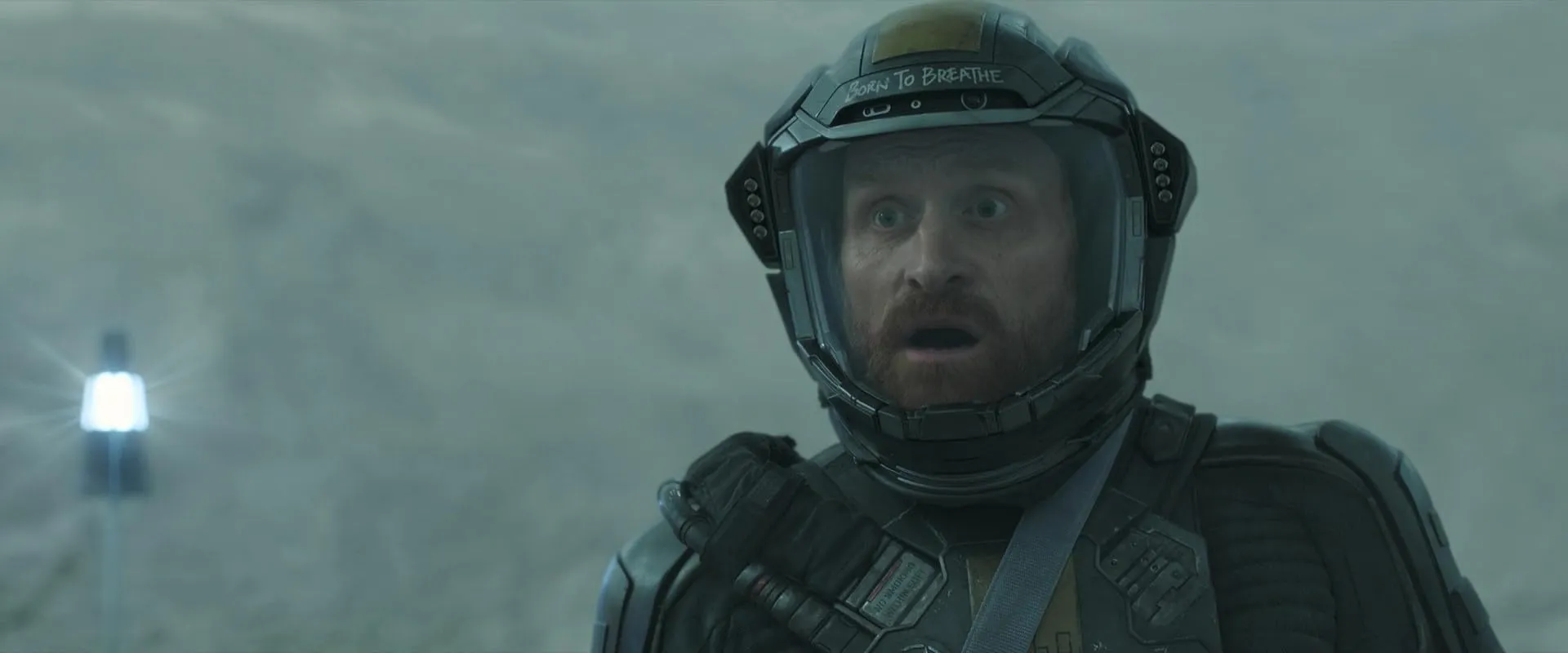
In this world, your job title directly determines your odds of survival, a chilling reflection of modern labor discussions about the gig economy. His entire journey is a powerful expression of the human need for contact, a theme that resonates deeply in an era defined by digital screens and physical distance. He isn’t just seeking another person for physical safety; he is fighting for the psychological necessity of not being alone.
The story also hints that Andy took this job to escape a personal trauma back on Earth, adding another dimension to his struggle. The hostile alien world becomes a physical manifestation of his internal turmoil. He is a man who ran to the farthest corners of space to escape his life, only to find himself fighting desperately to hang onto it against a new, external chaos.
Production and Narrative Momentum
With a runtime of just under ninety minutes, Long Distance is a refreshingly brisk piece of storytelling. This tight pacing works in its favor, mirroring the urgency of Andy’s depleting oxygen supply and keeping the narrative focused and propulsive. This deliberate brevity is a welcome counterpoint to the often-bloated blockbusters that dominate the box office.
The story moves from one crisis to the next without much downtime, a structural choice that suits the survival genre well and makes for an excellent viewing experience at home. The film’s own production story makes it an interesting artifact of our current media landscape. It is a polished, solid picture with respectable visual effects that quietly appeared on a streaming service with little fanfare.
This journey from a planned theatrical release to a quiet streaming drop speaks volumes about the shifting priorities of modern film distribution. For years, films like this might have been lost entirely. Now, streaming offers a second life, turning a studio’s forgotten project into a viewer’s unexpected discovery. The quality of the production proves that the line between a “cinema film” and a “streaming film” is now almost entirely a matter of marketing.
“Long Distance,” originally titled “Distant”, is a science fiction adventure survival film that was first released theatrically in Vietnam on July 12, 2024. After a series of delays, it became available on the streaming service Hulu in the United States on July 3, 2025.
Full Credits
Directors: Josh Gordon, Will Speck
Writers: Spenser Cohen
Producers and Executive Producers: Brian Kavanaugh-Jones, Fred Berger, Anna Halberg, Josh Gordon, Jonathan Rothbart, Matthew Hirsch, Will Speck
Cast: Anthony Ramos, Naomi Scott, Kristofer Hivju, Zachary Quinto, Izzy Jones, Leon Nurse-Joseph, Milan Walls-Smith, Paisley Roemer
Director of Photography (Cinematographer): Jeff Cutter
Editors: Gregory Plotkin
Composer: Steven Price
The Review
Long Distance
Long Distance is a solid and surprisingly charming sci-fi thriller that rises above its familiar survival-story framework. Anchored by a charismatic lead performance from Anthony Ramos and layered with clever thematic depth about corporate indifference, the film is a brisk and engaging watch. While its blend of humor and horror can feel tonally uneven and its creature design is uninspired, it remains a well-crafted streaming discovery that proves a bumpy release journey doesn't define a movie's quality.
PROS
- A compelling and charismatic lead performance from Anthony Ramos.
- Clever thematic undertones exploring corporate hierarchy and human connection.
- A brisk, focused pace that keeps the narrative engaging.
- Solid production values and visual effects for a streaming release.
CONS
- An uneven tone that sometimes struggles to balance humor and horror.
- Familiar and unoriginal creature design.
- The plot follows some conventional beats of the survival genre.