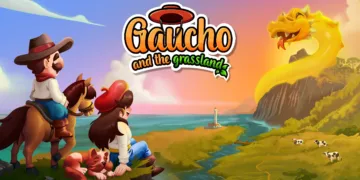























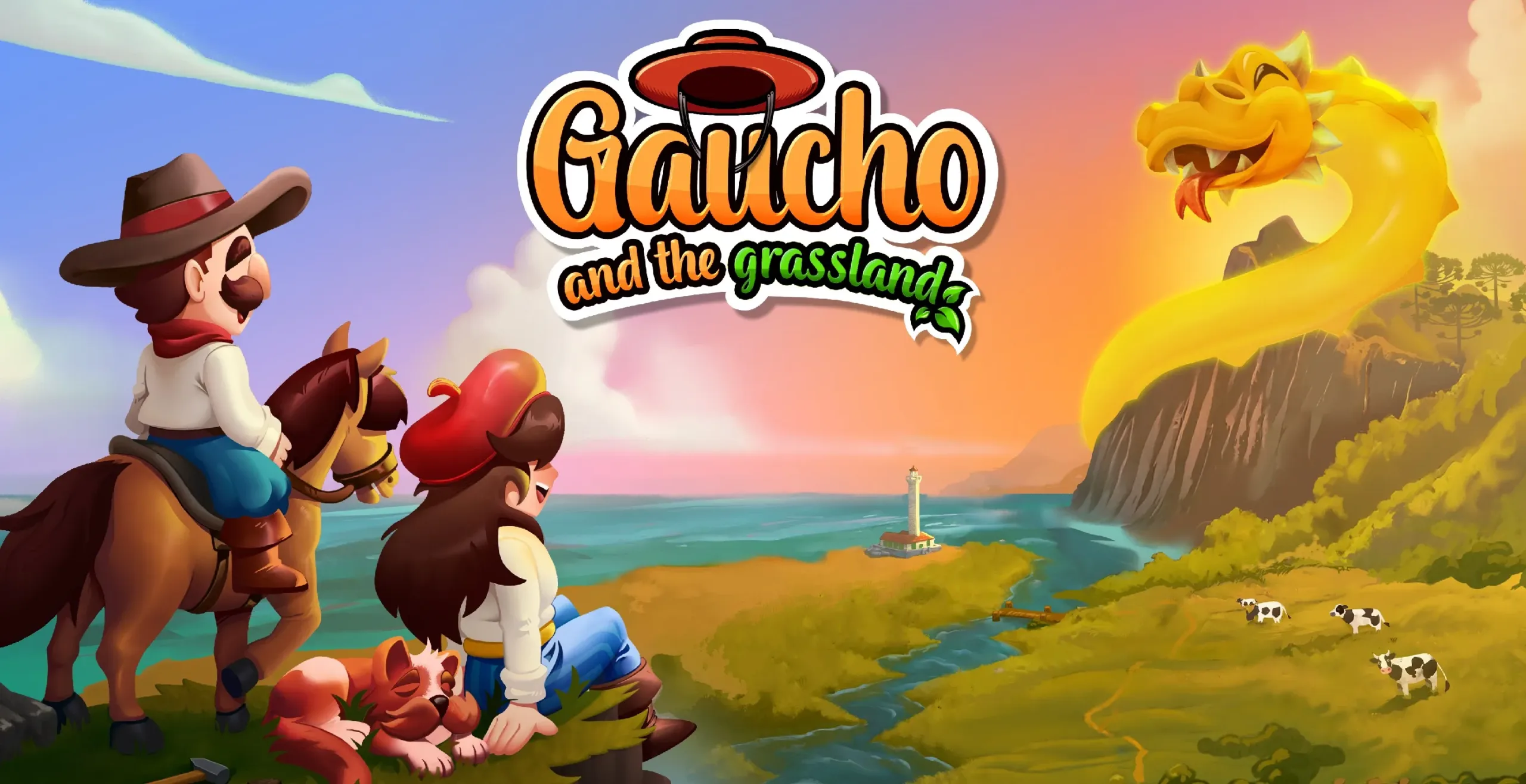

Life simulation games often send us to a familiar, forgotten farm on the outskirts of a town that could be anywhere. Gaucho and the Grassland trades this trope for a specific sense of place, rooting its adventure in the temperate grasslands of the South American pampas.
This choice of setting is the foundation for everything the game does. Players take on the role of a Gaucho, a figure of regional folklore, who inherits not a deed to a property but a cultural responsibility. Guided by the spirit of your late father, your purpose is to restore balance to the lands.
The game immediately separates itself from its peers by removing the profit motive. There is no currency to grind, no crops to sell for maximum gold. Progress is measured in goodwill. You advance by helping people, trading favors, and showing kindness. This design choice establishes a gentle, storybook tone where the goal is not wealth accumulation but the weaving of a stronger community. It asks the player to find satisfaction in harmony and connection, a theme that informs every system from crafting to exploration.
The Rhythm of Restoration
The structure of Gaucho and the Grassland is built upon a distinct and methodical loop. This rhythm of restoration forms the spine of the entire experience, guiding the player through a predictable yet satisfying process of healing the land. Your work is spread across three large regions, each a variation of the pampas environment, and each suffering from a spiritual sickness.
This sickness manifests physically as a thick, oppressive fog and mystically as the presence of a great, fiery serpent, the Boitatá, that circles the sky. The game tasks you with banishing this creature and restoring the region’s true, benevolent guardian. The cycle to achieve this is unwavering. First, you must act as a servant to the community, exploring the foggy landscape to find at least seven citizens in need of aid. Their requests become your primary objectives.
Completing these tasks earns you their trust, which mechanically unlocks the region’s central labyrinth. These are not combat-heavy dungeons but puzzle spaces where you must repair a series of mystical totems. Doing so weakens the Boitatá’s hold until it is finally driven away. This victory opens a portal to the Mystical World, a separate plane of existence where you find the land’s true guardian in some form of distress.
Rescuing them is the final step, and their return is what truly cleanses the land, causing the fog to dissipate permanently. This loop is the game’s core. Its repetition across three regions gives the experience a ritualistic quality. You are not just completing checklists; you are re-enacting a process of healing, with each step feeling deliberate and necessary for the land’s recovery.
The quests themselves are reflections of the game’s core theme of humble service. They are rarely grand or heroic. You will spend a significant amount of time mending broken fences, herding animals that have wandered off, or gathering specific plants like Yerba Mate.
While some might find these tasks mundane, they ground your role as a Gaucho in the reality of agricultural life. These simple acts of labor are the building blocks of community. The game’s main failing in this system is a lack of variety, but the intent is clear: harmony is achieved through small, consistent efforts, not singular, epic deeds.
This focus on narrative progression leaves the game’s farming and building systems feeling secondary, almost like an afterthought. Players accustomed to the deep customization and economic engines of titles like Stardew Valley may be disappointed. You can raise animals and construct new buildings on your homestead, but these systems are not central to your progress.
They exist largely to provide you with the resources needed for specific quests. There is no real incentive to breed the perfect sheep or design an elaborate ranch, because the game’s economy does not reward it. This creates a strange dissonance. The game presents itself with the aesthetic of a farming sim but removes the mechanical depth that defines that genre. It is a design choice that firmly prioritizes story and exploration over sandbox creativity.
A Living Storybook
The most successful aspect of Gaucho and the Grassland is its presentation. The game world is rendered in a beautiful and distinct art style that makes it feel like a playable folktale. Characters and environments are built with soft, rounded edges, eschewing sharp corners for a gentle, approachable look.
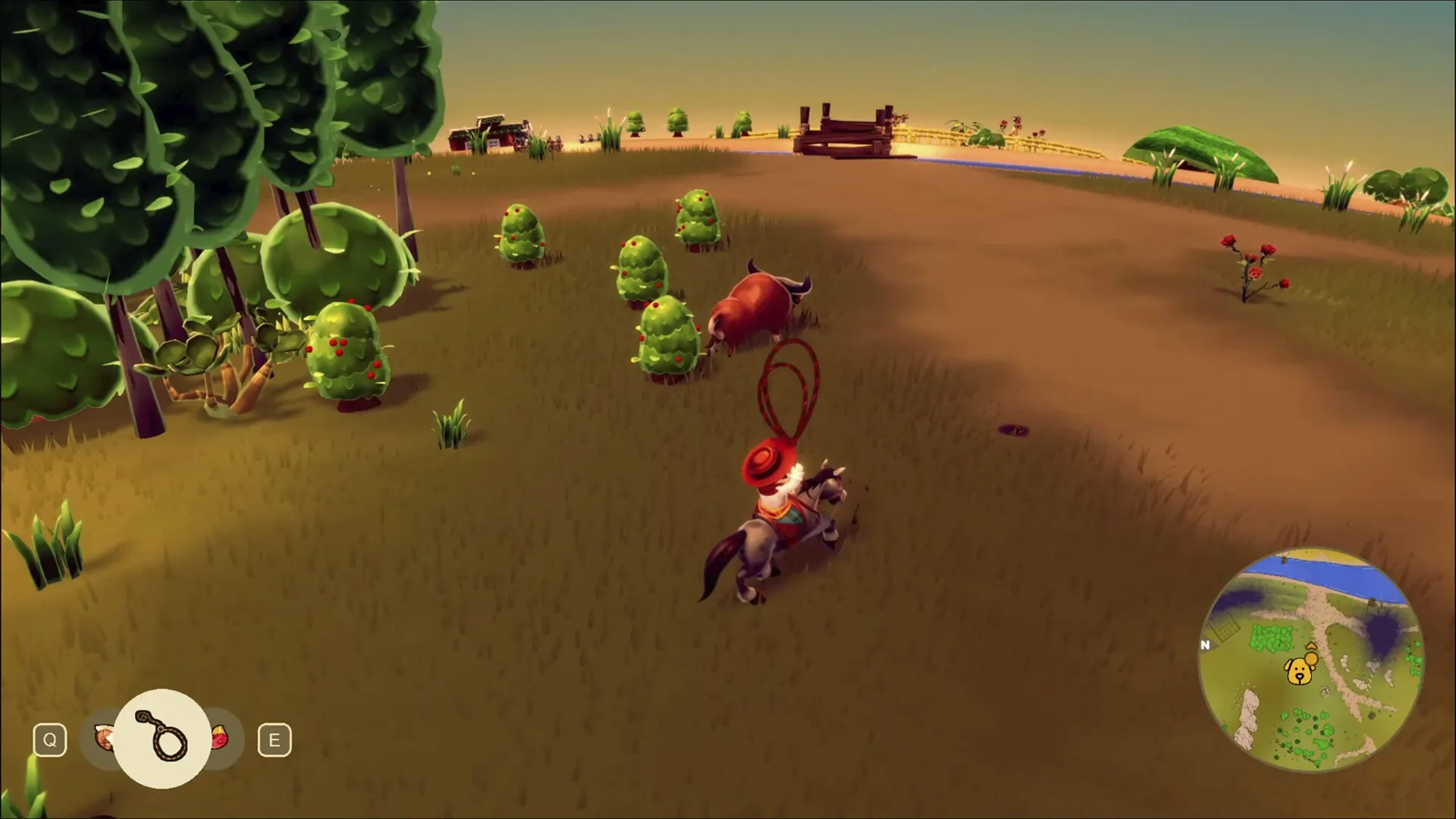
The aesthetic brings to mind hand-carved wooden toys or sculpted clay figures, giving everything a tangible, crafted quality. This “nesting doll” appearance is not just for show; it reinforces the game’s warm and wholesome tone, making the world feel safe and inviting even when shrouded in mystical fog.
The character design for the playable Gaucho is particularly noteworthy, offering a stout, capable figure for both male and female options that respectfully updates the sometimes hyper-masculine image of the historical figure.
This strong art direction is a key vehicle for the game’s environmental storytelling. The transformation of each region is a powerful, non-verbal reward for your efforts. You begin in a landscape that is visually unsettling. The colors are muted, the fog is thick, and the eerie presence of the Boitatá creates a constant sense of unease. When you succeed in your final quest and restore the guardian, the change is immediate and dramatic.
The fog vanishes, sunlight breaks through, and the color palette becomes bright and celebratory. This shift is a direct reflection of your agency, a far more satisfying reward than a simple “quest complete” message. The Mystical World where the guardians are found offers another layer of visual design. These realms are psychedelic and abstract, providing a stunning contrast to the natural beauty of the pampas and hinting at the deep, strange magic that underpins the world.
The soundtrack is another pillar of the experience, working in perfect concert with the visuals to establish a profound sense of place. The score is deeply influenced by the musical traditions of South America, utilizing instrumentation that feels both authentic and emotionally resonant. Music is not mere background dressing here; it is a dynamic participant in the story. In the fog-draped lands, the score is low, tense, and mysterious. It communicates a world that is out of balance.
After a region is healed, the music swells into bright, joyful anthems that celebrate your achievement and the return of life. This dynamic quality makes the score an essential part of the emotional arc of the game. Combined with the respectful depiction of Gaucho culture, visible in details from clothing to daily chores, the game’s presentation comes together to create a cohesive and heartfelt tribute to its chosen setting.
Cracks in the Clay
While the game’s artistic vision is clear and compelling, its technical execution is unfortunately inconsistent. Several problems create a layer of friction that works directly against the intended relaxing experience. The most immediate of these is the control scheme for riding your horse, Alazão. Traversal on horseback is a constant activity, yet it feels unreliable.

Some players may find it acceptably smooth, but many will encounter a system that feels stiff and unresponsive. The horse’s movement can feel tank-like, with a wide turning radius and a frustrating tendency to get caught on small pieces of scenery. For a game that is not mechanically demanding in other areas, the high level of skill required to navigate smoothly on horseback feels entirely out of place and points to a lack of polish in a core system.
This lack of polish extends to a host of bugs, which range from minor irritations to critical, progress-halting flaws. Your canine companion, Cusco, is a charming addition who is mechanically necessary for quests that involve digging.
His utility is severely hampered by poor pathfinding AI. He will frequently get stuck on or near his objective, walking in circles without performing the action until the game is saved and reloaded. This is a disruptive flaw that breaks the flow of gameplay. Far more serious is the potential for game-breaking bugs. It is possible to get your character permanently stuck inside your horse’s model, with no “unstuck” command to fix it.
The most egregious issue is the possibility of soft-locking your progress. The game gives you the freedom to choose which of the three regions to tackle after the tutorial, but it fails to communicate that there is a correct order. Starting in a more difficult zone without the necessary crafting recipes earned from an easier one can make certain quests impossible to complete, forcing a complete restart of the game. This is a fundamental design failure that punishes a player for exploration.
This problem is made worse by a general lack of guidance. Quest descriptions can be vague, and the map does not mark the locations of NPCs. This combination of technical glitches and unhelpful design choices introduces a level of frustration that the game’s gentle aesthetic cannot overcome. It creates a constant friction that undermines the very sense of peaceful harmony the game works so hard to build elsewhere.
The Review
Gaucho and the Grassland
Gaucho and the Grassland is a game with immense heart, presenting a beautiful world steeped in South American culture. Its art and music are exceptional, creating a special atmosphere. This charm is constantly undermined by significant technical problems. Severe bugs, frustrating controls, and poor player guidance make it a difficult game to recommend without reservation. It’s a beautiful idea let down by flawed execution.
PROS
- A unique and culturally rich South American pampas setting.
- Beautiful, storybook art style and character design.
- Excellent dynamic soundtrack that enhances the atmosphere.
- Refreshing theme of community and harmony over profit.
CONS
- Severe bugs that can break progression or halt the game.
- Clumsy and often frustrating horseback riding controls.
- Farming and homesteading mechanics are surprisingly shallow.
- Lack of guidance creates unnecessary friction and can lead to soft-locking.