
















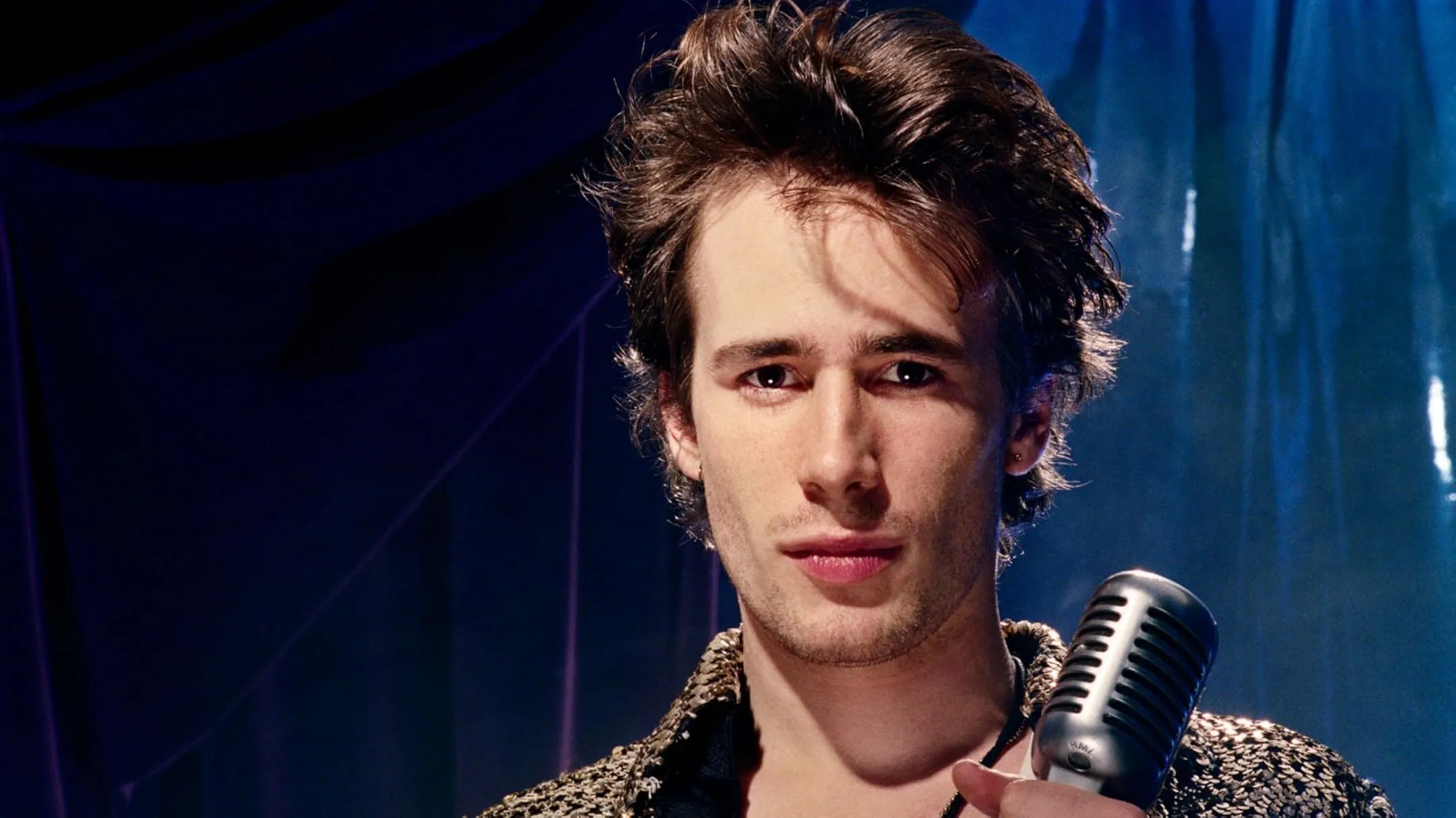

Some voices are musical instruments. Jeff Buckley’s was a crime scene. A thing of such impossible beauty, its four-octave climb toward the celestial seemed to violate some natural law, and you listen to it now with a sense of foreboding. It is the sound of a man flying too close to the sun.
Amy Berg’s documentary, It’s Never Over, Jeff Buckley, functions less as a tribute and more as a psychological inquest, an attempt to map the fault lines that ran beneath that seraphic voice.
The film pieces together the evidence of a brief, incandescent life, using his single studio album, Grace, as the cornerstone of a tragedy. It seeks the man inside the myth, but in doing so, it only deepens the sense of a fate foretold, a life lived under the shadow of its final act. The beauty was the warning.
The Anatomy of a Voice
Berg presents Buckley’s musical identity as a study in profound, almost pathological, contradiction. The archival footage from his early Sin-é performances is rendered with a grainy intimacy, the camera a quiet parishioner as he spins Leonard Cohen’s “Hallelujah” into a private prayer, each word weighed and burnished.
The lighting is pure chiaroscuro, a single, soft spot carving him from the enveloping darkness of the tiny East Village café. Then, the film cuts, jolting the viewer to a stadium stage where he is transformed—a rock god possessed by the ghost of Robert Plant, caught in the harsh, interrogative glare of stage lights. This duality wasn’t mere performance; it was a schism in his artistic soul.
His influences were a map of this internal conflict: the sanctified vulnerability and feminine majesty of Nina Simone and Édith Piaf set against the raw, masculine power of Zeppelin. The documentary presents his astonishing mimicry of the Qawwali master Nusrat Fateh Ali Khan not as a charming party trick, but as evidence of an unnerving, almost Zelig-like ability to shed his own skin.
Was there a core identity, or was he a composite of his idols? He claimed his music was about “love, anger, depression, joy.” What the film suggests is that it was also about the anxiety of a man searching for a self amidst the echoes of others.
The Original Sin
Every good noir has a ghost, a figure from the past whose actions dictate the protagonist’s doomed trajectory. For Jeff Buckley, that ghost was his father, a man he barely knew yet could never escape. The film frames Tim Buckley not as a person but as a narrative device—the source code for Jeff’s talent and his tragedy.
Berg constructs this paternal haunting with chilling precision, recounting the story of their one week together, which ends with a young Jeff being put on a bus alone, a matchbook with a phone number his only inheritance. It’s a classic setup, the primal wound that festers. One almost expects a cynical private eye to mutter something about Oedipus.
His public resistance to the legacy, the sharp “Next question” to an unfortunate interviewer, feels like a man protesting his destiny too much. The camera captures the pivotal 1991 tribute concert at St. Ann’s with the weight of inevitability.
As his voice fills the cavernous church, he isn’t just launching a career; he is stepping into his father’s shadow, a space from which he will never emerge. The film doesn’t have to state the parallel between their premature deaths; it simply presents the evidence of their entangled lives and lets the unsettling symmetry hang in the air, a karmic rhyme across generations.
The Gilded Cage
Fame, in the noir tradition, is often the trap—a labyrinth of mirrors reflecting a distorted image back at the hero until he no longer recognizes himself. In Buckley’s case, it was a particularly cruel one. Berg chronicles his ascent from the Lower East Side to a Columbia Records contract with a sense of escalating claustrophobia.

The intimate, hand-held shots of his early days give way to the slick, impersonal gaze of professional music videos, artifacts the film treats as evidence of his commodification. The debate over the Grace album cover—which he felt made him look like a “lounge singer”—is presented as an early skirmish in the war for his own identity.
His masterpiece became his prison, its success spawning years of relentless touring that ground him down. The talking heads—former partners Rebecca Moore and Joan Wasser—act as key witnesses, their recollections painting a picture of a man whose charisma was inseparable from his instability. Wasser’s description of his “worshiping-a-goddess” vibe as feeling “way too try-hard” is a wry puncture of the romantic myth.
The archival interviews reveal a man increasingly agitated by the machinery of celebrity. One gets the sense that the industry demanded a simple icon, and the strain of flattening his complicated, “tidal wave-y” self into that consumable image began a process of psychological erosion. It is, one supposes, the price of doing business.
The River
The film’s final act moves the setting to Memphis, a city steeped in its own mythology of blues and decay, a fittingly liminal backdrop for a ghost story’s end. This is Buckley’s flight into the wilderness, an attempt to hide from the industry and write his way out of the corner he was in. Instead, he finds the script was already written. The documentary lays out the evidence of his final days with the grim, methodical pacing of a thriller building to its inevitable conclusion.
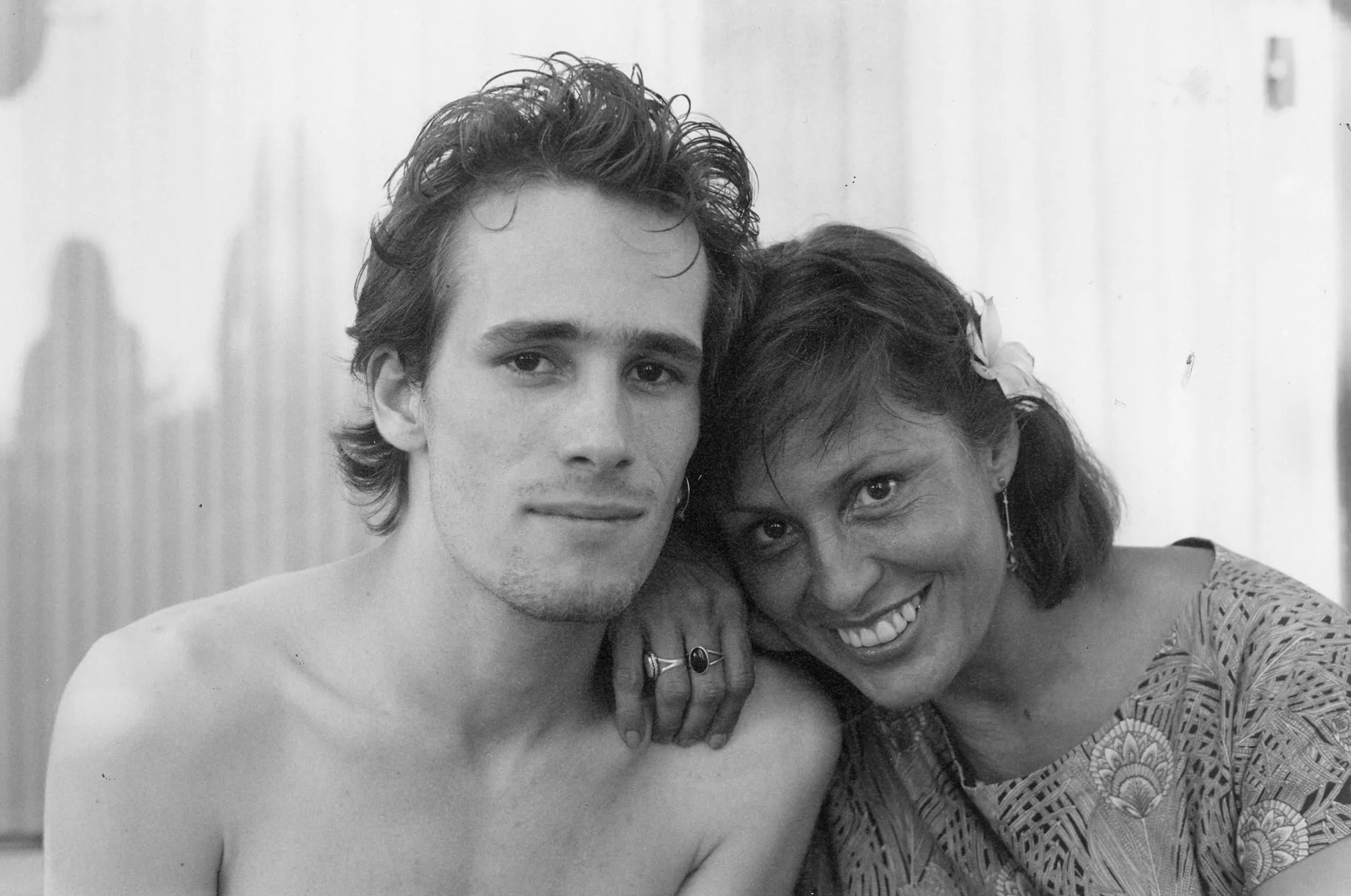
Friends recount his erratic behavior, a potential psychotic break, and a series of unsettlingly final phone calls that sound, in retrospect, like a man methodically closing all his accounts. His last voicemail to his mother is presented without comment, a chilling piece of audio evidence left for the jury to interpret.
Berg handles the death itself with clinical restraint, framing the drowning in the Wolf River—a notoriously dangerous body of water no local would swim in—not as a clear-cut suicide but as an act of profound, almost existential recklessness.
The toxicology report is noted—no drugs, one beer—which only deepens the mystery and dismisses the simpler narrative of a rock-and-roll casualty. It wasn’t an overdose. It was something murkier, an ambiguous final scene that leaves the audience grappling with questions of agency, mental illness, and the self-destructive impulse that so often shadows great talent.
The Case File
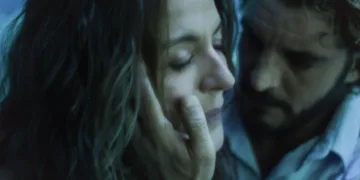
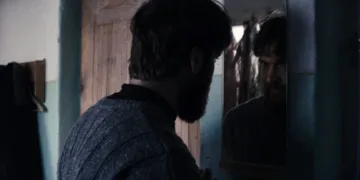
Amy Berg’s direction is that of a meticulous archivist reconstructing a cold case. The film is built from the fragments Jeff Buckley left behind: home movies, scrawled notebook pages, and raw audio become clues to his interior state, presented as if laid out on an investigator’s table.

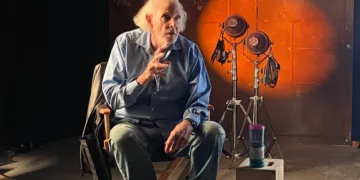
This found-footage approach gives the audience a sense of discovering the evidence alongside the filmmaker, weighing each piece for its significance. The primary interviews with his mother, bandmates, and former lovers are shot like depositions; each person offers a piece of the puzzle, their memories colored by love and loss, making them inherently partial narrators in the story of his life.
The most expressionistic flourishes are the animated sequences, which visualize his psychological state with a fluid, dreamlike quality. These moments depart from the evidentiary style, offering a glimpse into a mind fracturing under its own weight.
They function much like the disorienting dream sequences in classic noir films, from The Big Sleep to Vertigo, which reveal the protagonist’s subconscious turmoil and hint at truths he cannot articulate. They render his inner world with a visual language that echoes the distorted perspectives of German Expressionism, a fitting choice for a story about a beautiful surface barely containing the chaos beneath.
It’s Never Over, Jeff Buckley is a documentary film directed by Amy Berg exploring the life and career of musician Jeff Buckley. It premiered at the Sundance Film Festival on January 24, 2025. The film is scheduled for a theatrical release on August 8, 2025, distributed by Magnolia Pictures. It will later be available to stream on HBO and HBO Max in the winter of 2025 as part of Bill Simmons’ Music Box series.
Full Credits
Director: Amy Berg
Writers: Amy Berg
Producers: Amy Berg, Ryan Heller, Christine Connor, Mandy Chang, Jennie Bedusa, Matthew Roozen.
Executive Producers: Mary Guibert, Alison Raykovich, Brian A. Kates, Michael Bloom, Jennifer Westin, Maria Zuckerman, Brad Pitt, Ian Stratford
Cast: Rebecca Moore, Joan Wasser, Mary Guibert, Michael Tighe, Parker Kindred, Ben Harper, Aimee Mann, Jeff Buckley
Director of Photography (Cinematographer): Wolfgang Held, Jenna Rosher, Curren Sheldon, Alex Takats
Editors: Brian A. Kates, Stacy Goldate
Composer: Jeff Buckley
The Review
It's Never Over, Jeff Buckley
Amy Berg’s film is less a music documentary and more a psychological noir, meticulously assembling the case file of a man haunted by his own talent and a paternal ghost. It brilliantly uses its archival access to construct a portrait of tragic inevitability, trading simple celebration for a far more unsettling and memorable inquest into the shadows behind the legend. It’s a beautifully crafted, atmospheric, and deeply intelligent piece of filmmaking that lingers long after the music fades.
PROS
- Utilizes a wealth of previously unseen footage, audio, and notebooks to create an intimate portrait.
- Avoids standard biopic tropes to explore the complex, often contradictory, nature of its subject.
- Frames Buckley's life as a fated tragedy, building a powerful sense of suspense and inevitability.
- Features candid and moving recollections from those who knew him best, particularly his mother and former partners.
CONS
- As an estate-supported project, it hints at darker aspects of Buckley's psyche without fully plumbing their depths.
- The focus on the tragic trajectory may, for some, overshadow a pure celebration of his musical genius.
- The film’s refusal to offer simple answers regarding his final days might feel inconclusive to some viewers.