



















There’s a certain charm to stories about leaving home to find yourself among the stars. EDENS ZERO taps directly into that classic sci-fi trope. We meet Shiki, a boy whose only family has been the robots on a forgotten theme park planet. His world is small until it collides with Rebecca, a charismatic B-Cuber—this galaxy’s version of a streamer—and her cat-like android, Happy.
A dramatic, pre-staged robot betrayal pushes Shiki off-world and into a grand adventure. His quest is pure-hearted and simple: explore the cosmos, make a hundred friends, and seek out the legendary being known as Mother. It’s a premise that feels both earnest and familiar, inviting you into its world without demanding any prior knowledge of the manga. It sets a perfect stage for an epic journey, posing the question of whether the game can live up to its own adventurous spirit.
An Echo, Not a Voice
A story’s power often lies in how it is told, and this is where EDENS ZERO begins to stumble. The entire experience is built on a fractured foundation, splitting its time between two distinct and poorly integrated modes of play. The first is a rigid, chapter-based Story Mode that propels you through the main narrative.
The second is an open-ended Exploration Mode set on the sprawling planet of Blue Garden. In theory, this structure should offer the best of both worlds: a focused narrative and the freedom to explore. In practice, it creates a jarring dissonance that constantly undermines the story’s urgency.
One moment, the plot demands you rush to a new planet to save a friend; the next, the game encourages you to pause that pressing quest to spend hours running errands and collecting trinkets in Blue Garden. This structural indecision prevents the narrative from building any sustained momentum. The emotional stakes established in a linear mission immediately dissipate the moment you are returned to the open world’s checklist of chores.
This problem is compounded by the game’s method of storytelling, which feels less like an adaptation and more like a recitation. Most of the plot is delivered through static character portraits conversing via text boxes. This is a technique that can work when executed with style and energy, as seen in games like the Persona series, where dynamic UI and expressive character art turn dialogue into a kinetic experience.
Here, the presentation is flat and utilitarian. It strips the conversations of their life, turning moments of high drama or heartfelt connection into dry exposition. Fully animated cutscenes are so infrequent that they feel like a luxury, reserved only for the most pivotal plot points. The result is a narrative that feels rushed and emotionally distant. It’s like reading a summary of a book instead of the book itself; you get the sequence of events, but you miss all the nuance, character-building, and quiet moments that give a story its soul.
The charming back-and-forth between Shiki and Rebecca becomes the sole narrative life raft in a sea of underdeveloped plot points. Their dynamic feels genuine, but it’s not enough to carry the weight of a story that seems so uninterested in its own telling.
Rhythm without Flow
The combat in EDENS ZERO is a deeply paradoxical affair, a system at war with itself. Your first few hours are spent in a state of mild frustration. Movement is stiff, attack animations are stilted, and combos lack a sense of weight or impact. It has the feel of an action-RPG from two console generations ago, where the simple act of connecting a hit lacks the visceral feedback that makes combat satisfying.
Yet, just as you’re about to write the entire system off, the game introduces its one truly brilliant idea: on-the-fly character swapping. With a single button press, you can instantly switch between any of the four members of your active party, and this mechanic single-handedly saves the combat from mediocrity. It transforms encounters from clumsy brawls into engaging tactical puzzles. You might start a fight as Rebecca, using her pistols to pick off ranged enemies from afar.
As a hulking robot charges your position, you can instantly swap to Shiki to meet it head-on with a flurry of close-range attacks. Seeing an opening, you might then switch to Witch to freeze the enemy in place with a spell, before swapping back to your strongest attacker to deal massive damage. When it works, it’s a beautiful dance of positioning and ability synergy.
This strategic layer is further developed through the Ether Gear progression tree, where you spend points to unlock new abilities and passive buffs. This system is essential for making the combat feel less repetitive, slowly granting you more tools to work with. But even here, the game’s design feels hesitant. Many upgrades are simple stat increases, and the new skills you unlock often feel like disconnected appendages rather than natural extensions of your moveset.
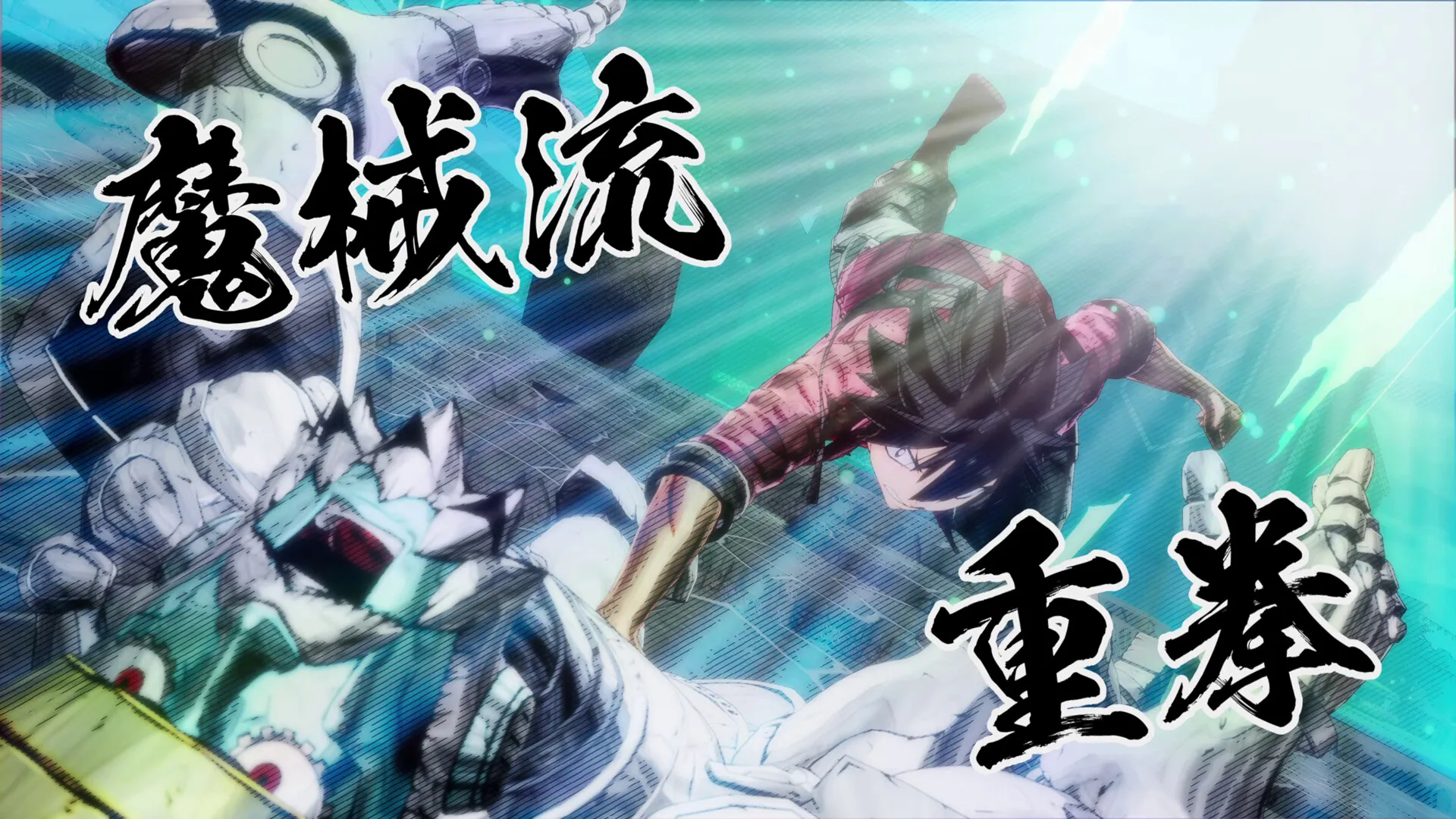
The game’s most glaring mechanical flaws actively work against its strengths. The “Signature Actions” are flashy special moves that look great but bring the gameplay to a screeching halt, wresting control from the player for a non-interactive cutscene. This constant interruption breaks any combat rhythm you manage to build.
Even more baffling is the enemy “break” system. In better games, like Final Fantasy VII Remake, staggering an enemy is a climactic moment that rewards smart play with a massive damage window. Here, depleting an enemy’s break gauge results in a pitifully short stun window with no discernible damage bonus. It’s a hollow imitation of a proven mechanic, a feature included without any understanding of its purpose. These issues, combined with enemies that have inexplicably large health pools, turn many fights into tedious wars of attrition, sucking the energy out of the game’s best idea.
A Universe in Miniature
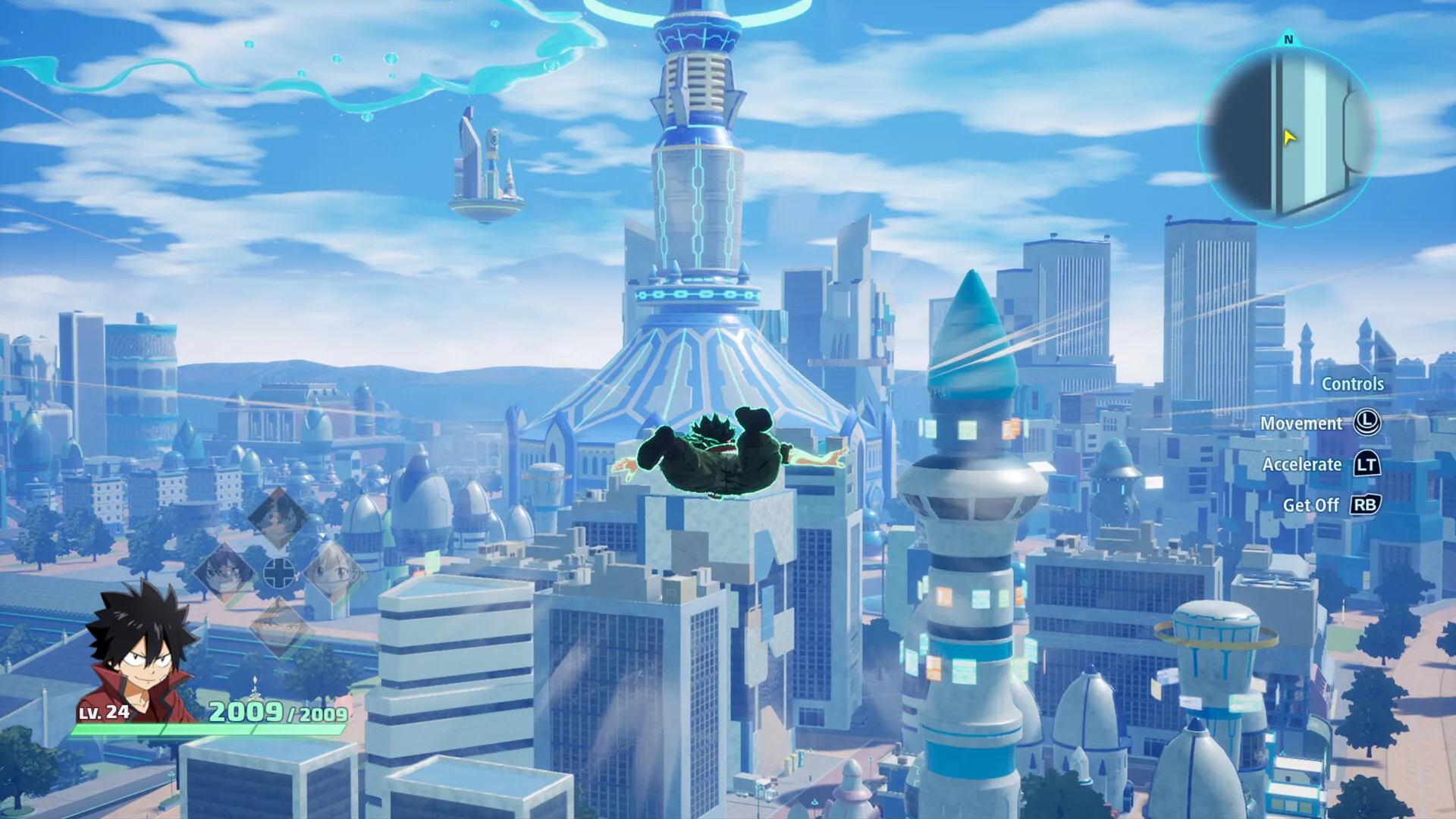
A well-crafted game world can become a character in its own right, telling stories through its architecture, its people, and its hidden secrets. The world of EDENS ZERO, however, is little more than a beautiful but empty container. The two main hubs—the spaceship Edens Zero and the city-planet of Blue Garden—are vast in scale but feel desolate and artificial.
Flying over the futuristic cityscape of Blue Garden should be awe-inspiring, but the illusion quickly shatters. The streets are mostly empty. The citizens you do see are static models, immune to interaction, serving only as set dressing. There is no sense of history, culture, or daily life. The city doesn’t feel lived-in; it feels like an enormous, unpainted movie set waiting for the actors to arrive.
This sense of emptiness is a profound missed opportunity for environmental storytelling. A good hub world, like the Normandy in Mass Effect or the Abbey in Midnight Suns, should feel like a home, a place where you can connect with your crew and see your relationships evolve. The Edens Zero ship is just a series of rooms that house menus for crafting and minigames, devoid of the life and camaraderie that the story insists is forming.
This lack of depth permeates the side content. The quests available in Blue Garden are the definition of busywork. They are transactional, artless tasks: collect ten of this, defeat five of that, talk to this person. They fail to do what good side quests should: enrich the world and your connection to it.
Completing them doesn’t reveal a local drama or flesh out a character’s backstory; it simply checks a box and gives you a reward. The game’s presentation further highlights this strange disconnect between ambition and execution. The character models are fantastic, perfectly capturing the expressive and energetic style of the source material.
But they are placed within bland, technically dated environments. The result is a jarring visual dissonance, like watching a beautifully animated character walk through a low-budget tech demo. This is made worse by persistent technical issues. The frame rate frequently stutters in the open world, and textures and objects pop into view with distracting regularity. These problems constantly break your immersion, serving as a persistent reminder that you are playing a flawed artifice, not exploring a living cosmos.
The Review
EDENS ZERO
EDENS ZERO is a game of frustrating contradictions. At its center are a few bright stars: a clever character-swapping combat system and a charming pair of leads whose chemistry is undeniable. Yet, these sparks are lost in a hollow cosmos. The game is undone by its stiff combat mechanics, a vast yet lifeless world, and a story told with such rushed, disjointed pacing that it fails to make an emotional impact. It is a faithful adaptation on the surface that misses the heart of the adventure.
PROS
- The character-swapping mechanic introduces welcome strategic variety to fights.
- Character models are faithful to the source material, and the leads have great chemistry.
- Each party member offers a distinct playstyle, from melee brawling to ranged shooting.
CONS
- Core combat feels stiff, and movement is clunky.
- The game world is large but feels empty, static, and lifeless.
- Narrative pacing is rushed, and the storytelling method feels basic.
- Side quests are repetitive and uninspired.
- Technical issues like frame drops and pop-in are frequent.