


























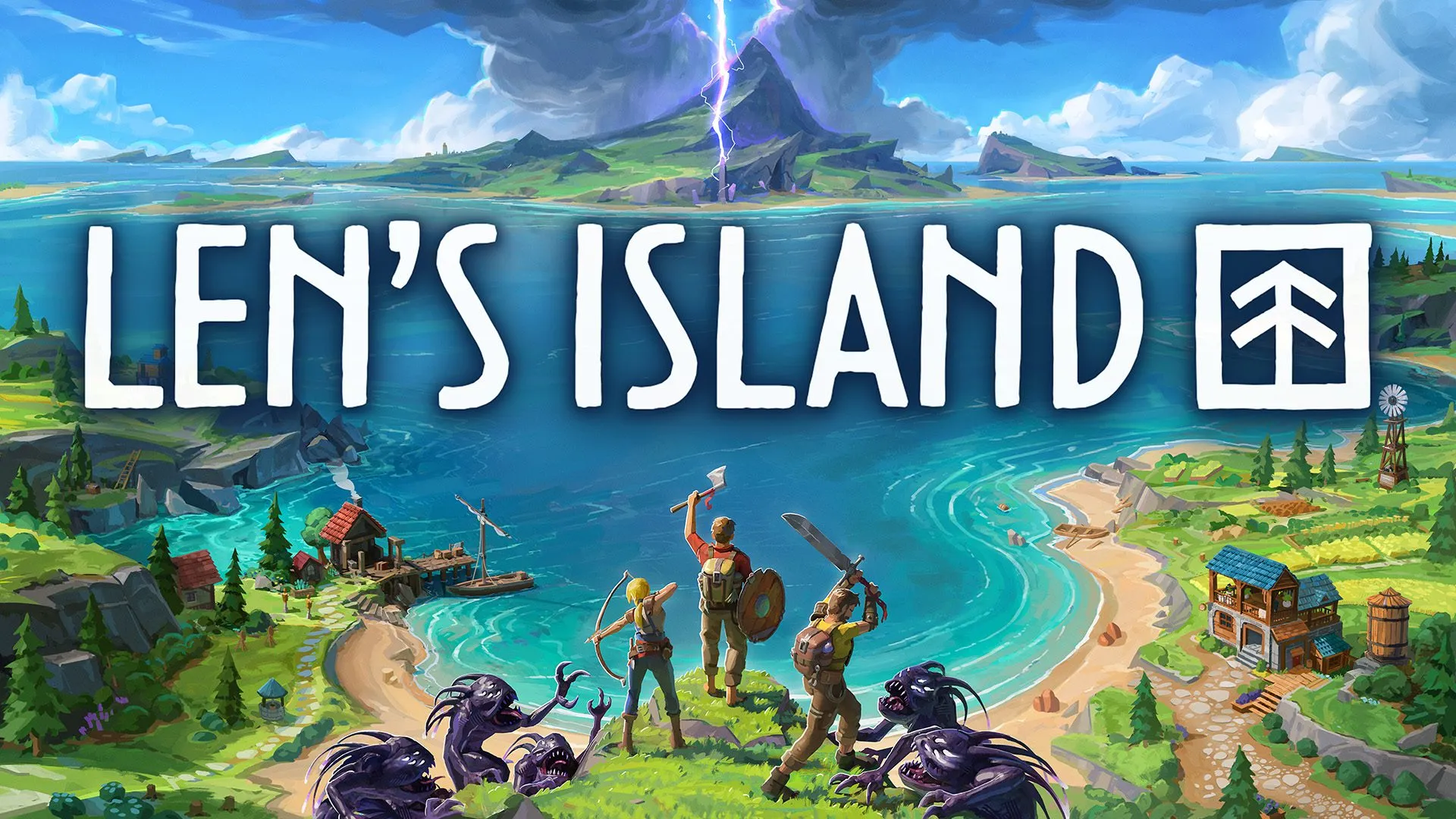

You arrive with little more than a backpack and a few basic tools, a lone figure standing before a sprawling archipelago ripe for exploration. The initial moments of Len’s Island establish a familiar, yet potent, starting point common to the survival genre. The game hands you an axe and a pickaxe, points you toward a forest, and sets you on a path to carve out an existence from scratch. Your first tasks are simple: gather wood, find stone, and build a rudimentary shelter to survive the first night.
The experience quickly reveals its dual nature, a design that juxtaposes peaceful homesteading with perilous adventure. One part of the game is a relaxing farming and building simulator, reminiscent of Stardew Valley, where you can design an elaborate seaside home or cultivate a thriving garden.
The other part is an action RPG that sends you deep into monster-infested dungeons and shadowy caves. You will spend your days tending to crops and expanding your base, and your nights fighting back corrupted creatures that threaten to destroy everything you have built.
This conflict is rooted in the world’s history. A fallen meteor introduced a powerful resource called Lightstone, which an ancient civilization used to achieve greatness before its mysterious collapse. Now, this same substance corrupts the land and its inhabitants, turning them into hostile monsters. As Len, a barefoot newcomer, you are tasked with pushing back this darkness, rebuilding what was lost, and uncovering the secrets of the islands.
The Cycle of Survival: Gather, Craft, Build
The core gameplay loop in Len’s Island is immediately recognizable to any veteran of the survival genre. You begin by gathering the most basic resources: wood from trees, stone from rocks, and fiber from plants. These initial actions are satisfyingly tactile.
Chopping down a tree can trigger a physics-based chain reaction, toppling a line of timber like dominoes, which adds a small but enjoyable touch to the routine. The game then tasks you with refining these raw materials into usable components. While some of these processes are logical, others require a degree of experimentation that can feel obtuse. For instance, discovering that you must toss raw leather into a simple campfire to tan it is a solution born from accidental discovery rather than intuitive design.
Once you have a stock of materials, you move on to the crafting stations. The workbench and anvil become central to your progress, allowing you to turn blueprints into tangible upgrades. You will steadily advance from a flimsy stone axe to more durable and efficient tools, a classic progression that provides a clear sense of advancement.
However, the system is hampered by an early-game quality-of-life oversight: you cannot craft using materials stored in nearby chests. This forces tedious inventory management, a friction point that games like Valheim have elegantly solved. Thankfully, Len’s Island eventually mitigates this with late-game items like the Void Chest, which links your storage, but the initial hours can feel unnecessarily cumbersome.
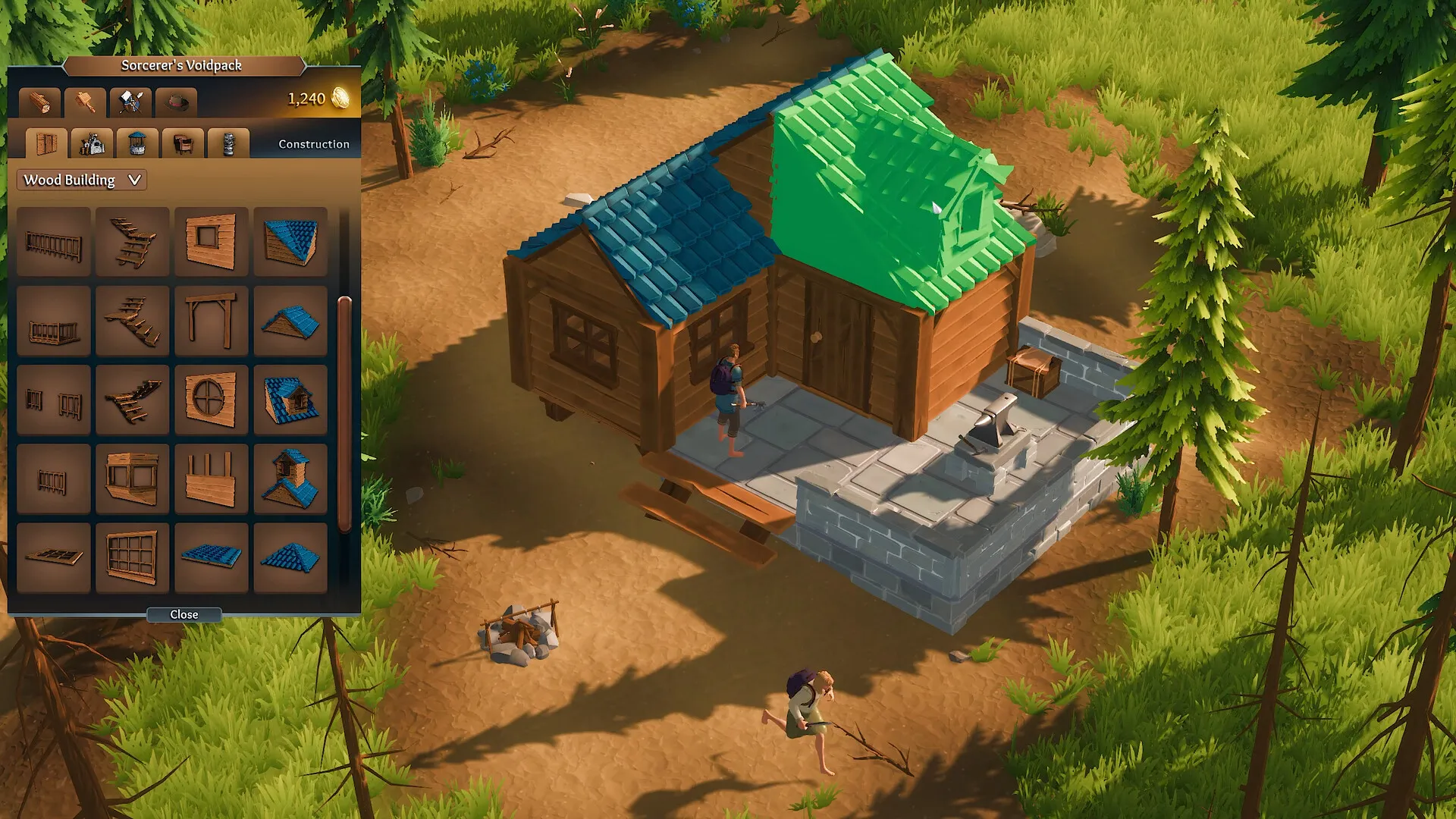
Where the game truly excels is in its building system. It offers a remarkable degree of freedom, allowing for the construction of almost anything you can imagine, from a simple lakeside cabin to a sprawling fortified castle built out over the water. The placement of structural pieces is intuitive, making it easy to bring your architectural visions to life.
A significant and welcome feature is that deconstructing any object refunds 100% of its material cost. This simple mechanic completely removes the penalty for mistakes or redesigns, actively encouraging players to experiment with their creations and build elaborate, personalized bases without fear of wasting precious resources.
Forays into the Dark: Combat and Dungeons
The combat in Len’s Island is a straightforward affair, built on a foundation familiar to anyone who has played an isometric action RPG. The system consists of a standard attack, a vital dodge roll for repositioning, and weapon-specific special moves like a powerful overhead smash or a wide spinning slash.
What prevents these mechanics from feeling rudimentary is the inclusion of a timed critical hit system. During an attack swing or a gathering action, a circular visual cue appears; striking again at the precise moment results in a critical hit for extra damage or resources.
This single feature adds a welcome layer of skill, rewarding player timing and transforming otherwise mindless clicking into a more engaging rhythm-based exercise. While the weapon variety—encompassing swords, hammers, and spears—offers different speeds and abilities, mastery of this critical hit timing is what truly defines combat effectiveness.
When you take these skills into the world, you will find that the game’s dungeons are a clear highlight. Unlike the procedurally generated mazes common to the genre, each dungeon in Len’s Island is a handcrafted, deliberate experience. This design choice results in more thoughtful encounters that mix strategic combat with light platforming challenges and environmental puzzles.
These subterranean crawls are not endless; they are concise, focused challenges that typically culminate in a boss fight requiring specific tactics and preparation. Clearing these areas is essential for progression, as they yield rare crafting materials and blueprints for superior equipment that cannot be found elsewhere.
Beyond the dungeons, the threat of combat periodically comes directly to your doorstep. On certain nights, an event similar to V Rising’s “Blood Moon” occurs, unleashing waves of monsters that descend upon your base. This system introduces a light tower defense element to the game, compelling you to think about your home’s architecture in tactical terms.
You must construct defensive walls, chokepoints, and automated defenses such as ballistas and cannons to protect your infrastructure. The intensity and number of enemies in these raids scale as you become more established, ensuring that base defense remains a recurring and meaningful challenge that forces you to continuously improve your fortifications.
The Wide Open World: Exploration and Discovery
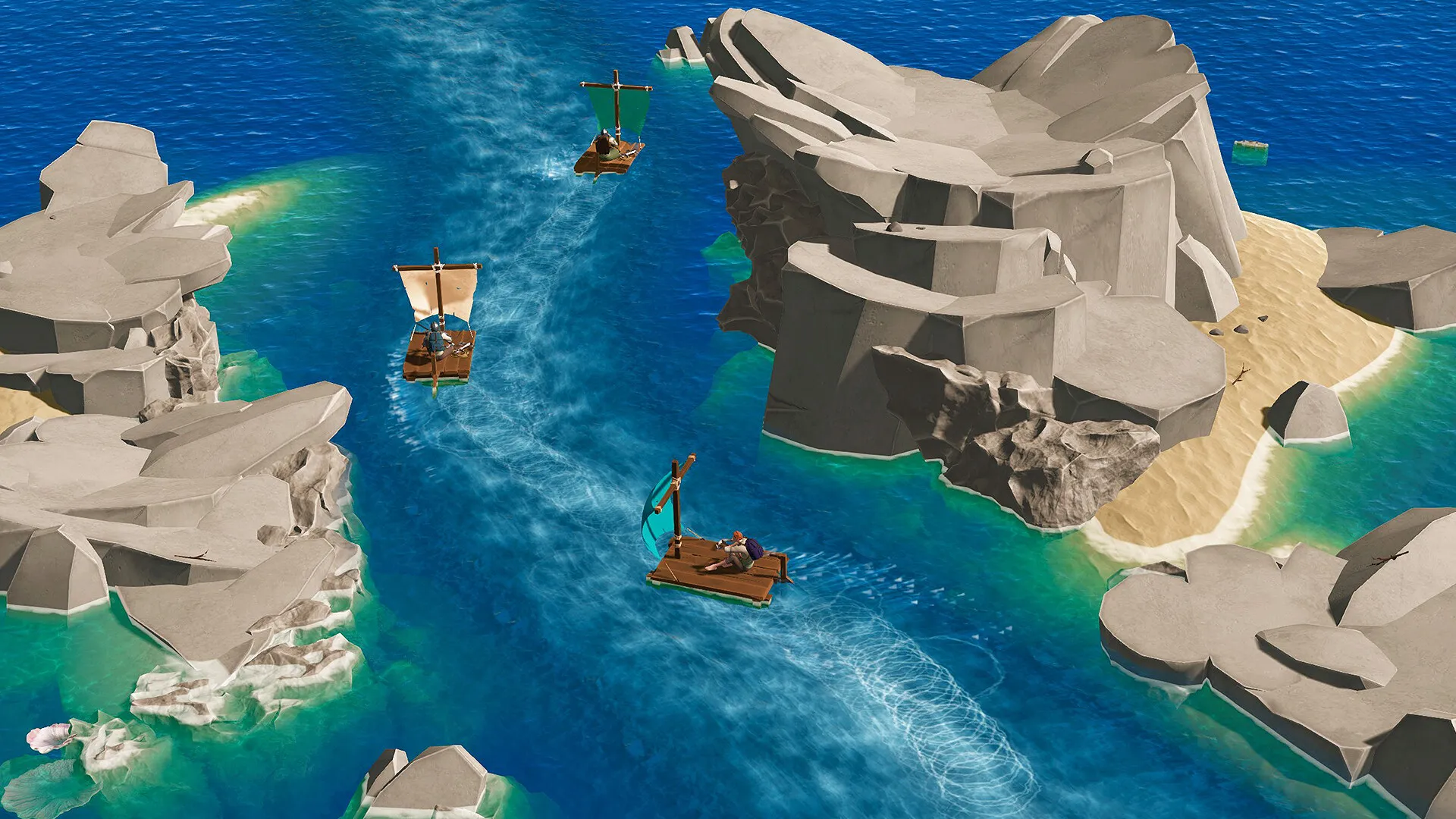
Exploration in Len’s Island begins in earnest the moment you build your first raft. Confined initially to a single landmass, the act of setting sail opens up the entire archipelago, transforming the game into a true adventure. There is a palpable sense of discovery in navigating the open waters, spotting a new island on the horizon, and wondering what secrets it holds. Each new shore can reveal distinct biomes, hidden coves, or even small towns with merchants who trade valuable blueprints and resources, making every voyage feel meaningful.
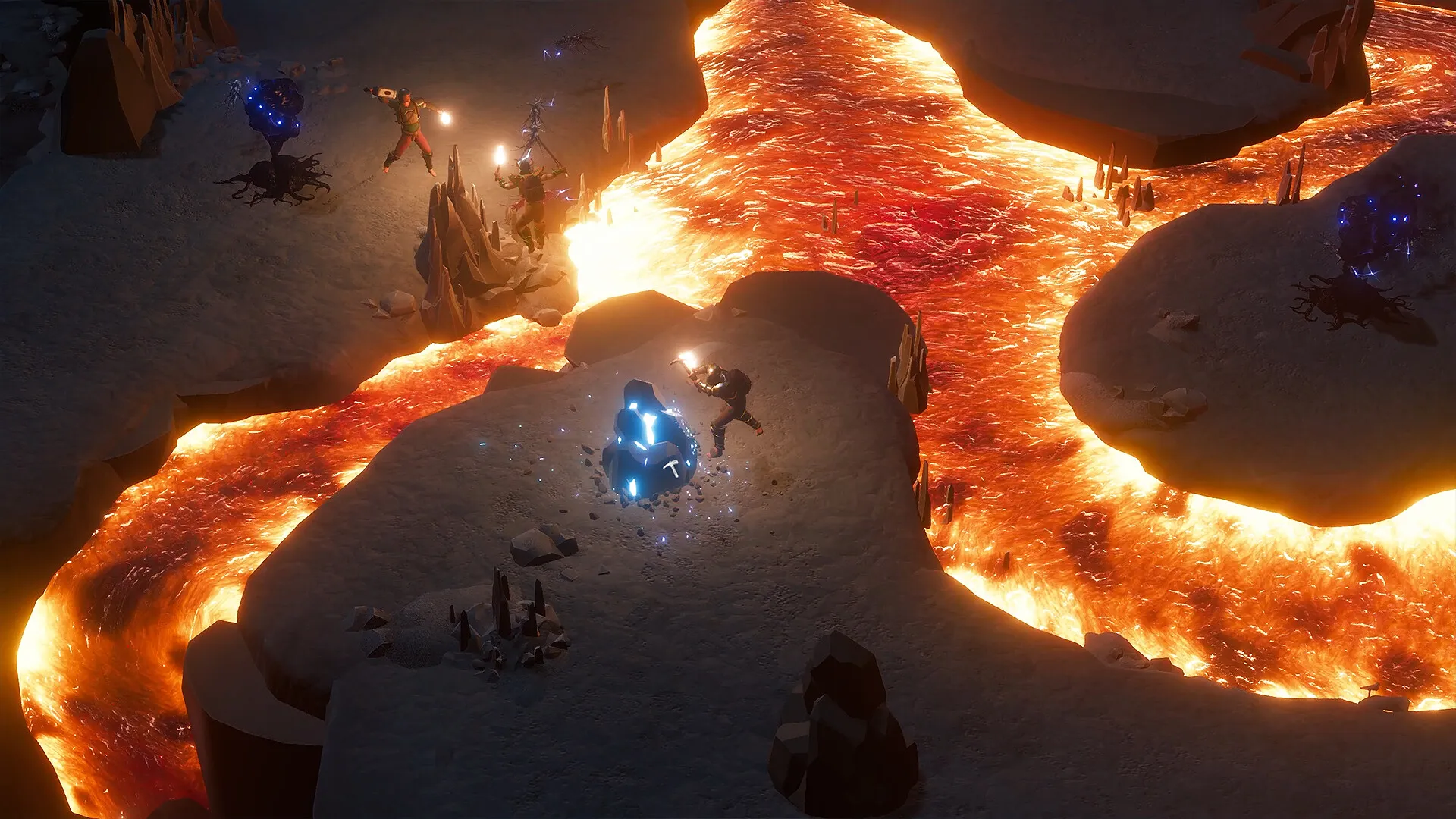
Beneath the sunny surface lies a sprawling, interconnected network of caves. This underground realm serves as the primary source for essential minerals like iron and coal, and it houses a different bestiary of foes, from simple slimes to more dangerous void monsters.
This subterranean world is not just a static map; players can actively shape it by constructing bridges across deep chasms to create new pathways. A particularly nice touch is that once you light a lantern in the darkness, it stays lit permanently, allowing you to slowly and satisfyingly reclaim the underground from the shadows.
This emphasis on player-driven discovery is reinforced by the game’s minimalist approach to navigation. The world map lacks detailed markers, and you cannot label locations with custom text. Furthermore, the entrances to the underground do not align directly with the surface map, making it easy to become disoriented after a long mining expedition.
While this might frustrate some, it feels like a deliberate choice that encourages spatial awareness. Much like early survival games that eschewed modern conveniences, Len’s Island forces you to pay attention to your surroundings and create your own landmarks, often by placing signposts, to find your way. This makes learning the layout of the world a more personal and rewarding achievement.
The Lone Survivor vs. The Team Effort
Playing Len’s Island solo offers a distinct, contemplative experience. The resource grind is noticeably slower, and progression can feel like a laborious undertaking for a single person. There is a peaceful, meditative quality to quietly building a base or tending a farm alone, but this tranquility is punctuated by moments of high tension when you must face a difficult dungeon or a nighttime raid without any support. The game is perfectly playable alone, but the weight of every task, from gathering materials to fending off attackers, rests solely on your shoulders.
The game is clearly designed with cooperative play in mind, supporting up to eight players. Bringing friends into your world fundamentally changes the dynamic for the better. The grind is alleviated as tasks are divided, large-scale building projects become collaborative efforts, and difficult boss fights turn into coordinated assaults.
The experience does not become trivial, however, as the game scales the challenge accordingly. With more players, enemy hordes during base raids become larger and more formidable, ensuring that the threat level remains consistent and teamwork stays essential.
Unfortunately, this cooperative vision is severely undermined by a baffling design choice in its progression system. Quest progress is tied directly to your character, not the world you are playing in. This creates a critical flaw for groups of friends with different schedules. F
or example, if a new player joins a friend’s established world, their character’s quest log will instantly sync up, marking many early-game quests as complete. If that player then tries to start their own solo game, those quests remain unavailable, effectively breaking their progression and forcing them to create a new character from scratch. This system penalizes players for not starting together and playing in lockstep, a major issue for a game that otherwise champions cooperative play.
Presentation and Polish
Visually, Len’s Island employs a colorful, impressionistic art style that gives its world a vibrant and handcrafted feel. The lighting is a particular strength, casting pleasant shadows and creating a warm atmosphere, while smooth animations provide satisfying feedback for actions.
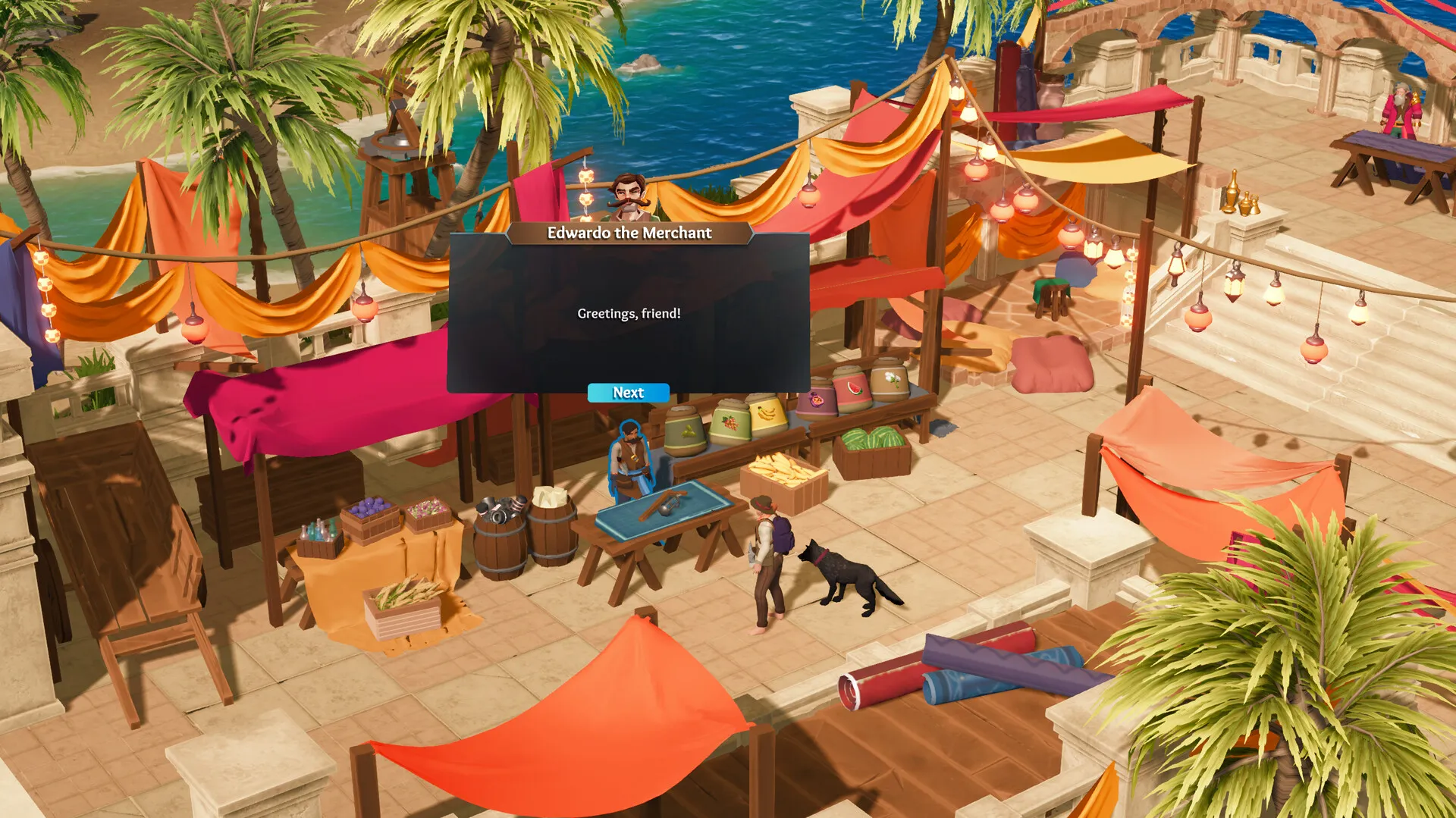
However, this stylized presentation is sometimes at odds with the game’s technical performance. Reports of significant performance issues on capable hardware suggest a lack of optimization. A game with this aesthetic should not be as demanding as it can sometimes be, and the discrepancy points to underlying problems that can detract from the visual charm.
The audio design is functional but fails to make a lasting impression. The musical score is atmospheric, providing a suitable backdrop for exploration and building, but it lacks memorable themes or standout tracks. Sound effects for combat and gathering are clear and serve their purpose, but they do little to elevate the experience.
With no voice acting, the soundscape feels adequate rather than essential. The fact that the game can be played with the sound off with no significant loss of vital information or immersion indicates that its audio is a missed opportunity.
Several lingering quality-of-life issues mar the overall polish. The most glaring is the lack of full controller support. While a controller can be used for basic movement and combat, a mouse and keyboard are required for many menus and are strongly recommended for the building system.
For a game that would feel at home on a console or a handheld device, this is a major oversight. This, combined with minor frustrations like the obscure crafting recipes that can halt early-game progress, leaves the impression of a game that is largely complete but still has some rough edges that need to be smoothed over.
The Review
Len's Island
Len's Island offers a fantastic foundation for a survival-crafting adventure, anchored by an exceptionally creative and forgiving building system. Its blend of peaceful farming and satisfying, timing-based combat is initially charming. This charm, however, is chipped away by a significant solo grind, a non-existent narrative, and a critically flawed co-op progression system that can ruin a friend's save file. It’s a beautiful island getaway that is unfortunately hampered by a lack of polish and some baffling design choices, leaving a feature-rich game that feels strangely incomplete.
PROS
- An intuitive, flexible, and highly creative building system.
- Satisfying combat loop elevated by a skill-based critical hit mechanic.
- A charming, stylized world that is enjoyable to explore.
- Peaceful farming and homesteading elements are relaxing.
CONS
- A game-breaking co-op progression bug punishes group play.
- The gameplay is very grind-heavy, especially for solo players.
- The story is effectively absent beyond the opening cinematic.
- Lacks polish, with poor controller support and some performance issues.