


























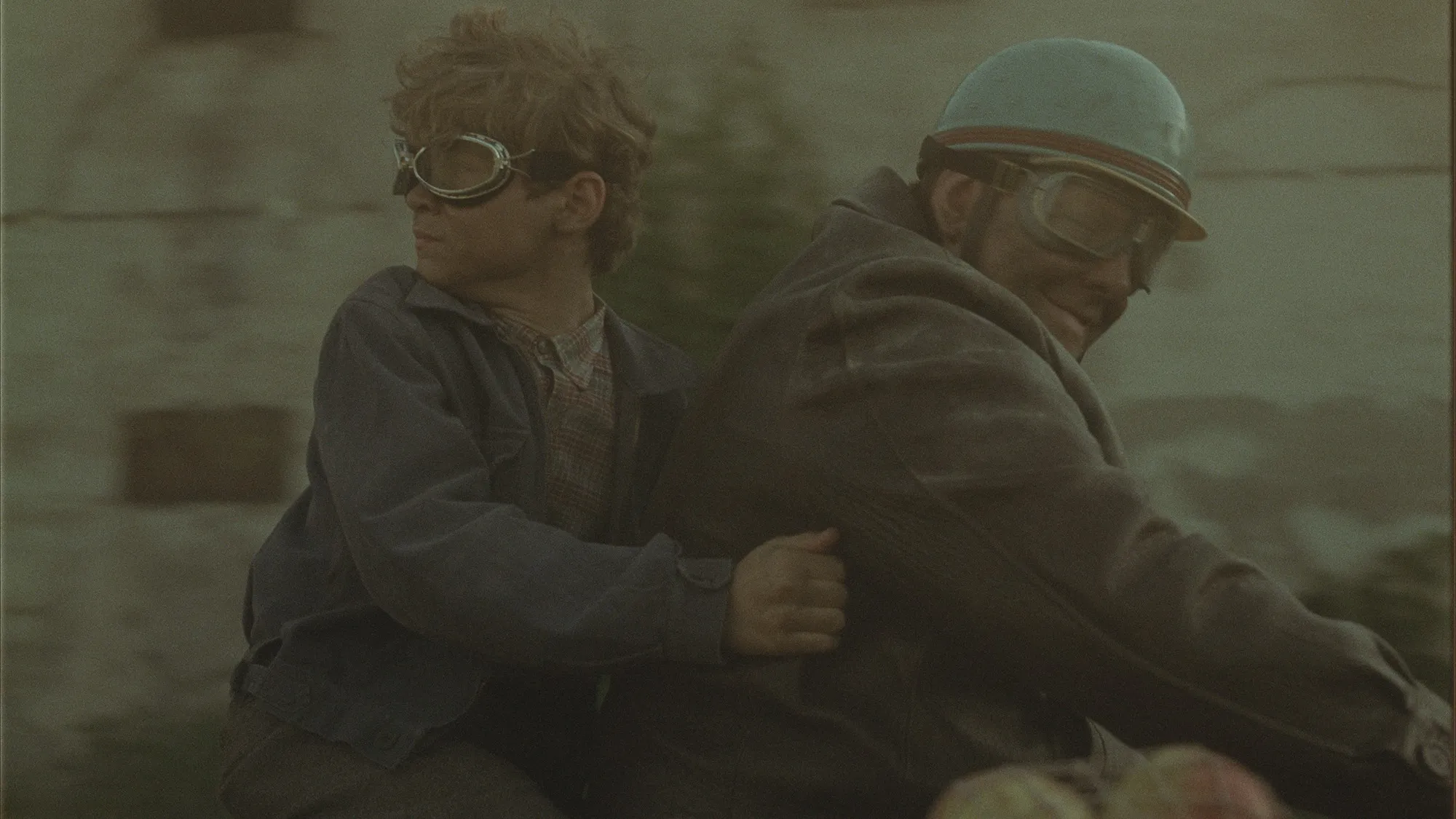

Director László Nemes returns to the troubled history of his native Hungary with Orphan. The film places us in Budapest during the late 1950s, a city still bearing the psychic and physical scars of World War II and the freshly crushed 1956 uprising. In this landscape of political paranoia and material scarcity, we meet Andor, a young boy whose own life is a reflection of the national condition.
Reunited with his mother, Klara, after years in an orphanage, he is adrift, clinging to the idealized memory of a father lost to the war. Nemes establishes a somber, weighty atmosphere from the outset. This is a severe coming-of-age story, one where a boy’s search for identity collides with the unforgiving realities of history and survival in a state of quiet occupation. The air itself seems thick with suspicion and unresolved grief.
The Personal Allegory
The fragile peace of Andor’s life is shattered by the arrival of Berend, a brutish butcher who enters the small apartment with a startling sense of ownership. He is a coarse, menacing figure, the antithesis of the cultured Jewish father, Hirsch, whom Andor worships in absentia. The film presents these two men as competing definitions of fatherhood and nationhood.
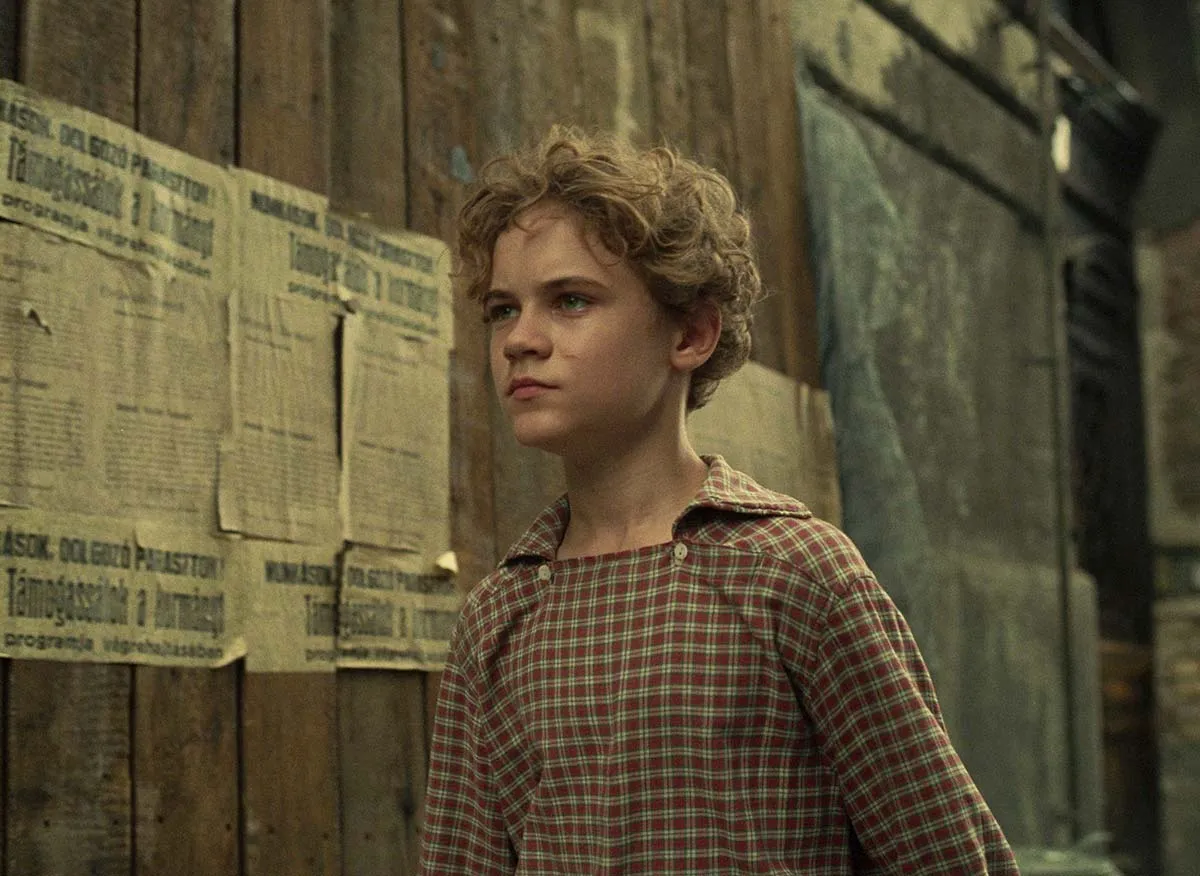
Hirsch represents a lost, intellectual, pre-war Hungarian-Jewish identity, a memory that is now ghost-like and perhaps untenable. Berend is the new reality: a man of flesh and blood, of primal appetites and ethically murky actions. Andor’s immediate hatred for this intruder sets up the film’s central conflict, which is a profound crisis of identity. His struggle to understand Berend’s place forces him to question the very foundation of his being.
This intimate domestic drama functions as a sharp political allegory. The imposition of a powerful, unwelcome father figure mirrors Hungary’s own subjugation by an outside force. Berend’s attempts to forge a new family through sheer will feel like a microcosm of the Communist state’s efforts to build a new society on a foundation of rewritten histories. Klara’s strained acceptance of him is a portrait of pragmatic survival, a choice made by many in post-war Europe who had to make difficult compromises. It is a quiet depiction of a generation’s choice to endure an unbearable present.
A Palette of Decay
The film’s oppressive mood is a technical achievement, a world built from specific aesthetic choices. The decision to shoot on 35mm film gives the image a tangible grain and texture, grounding the historical subject in an older cinematic language that feels authentic to the period. Collaborating again with cinematographer Mátyás Erdély, Nemes washes Budapest in a palette of sepia and grime, draining the world of vitality.
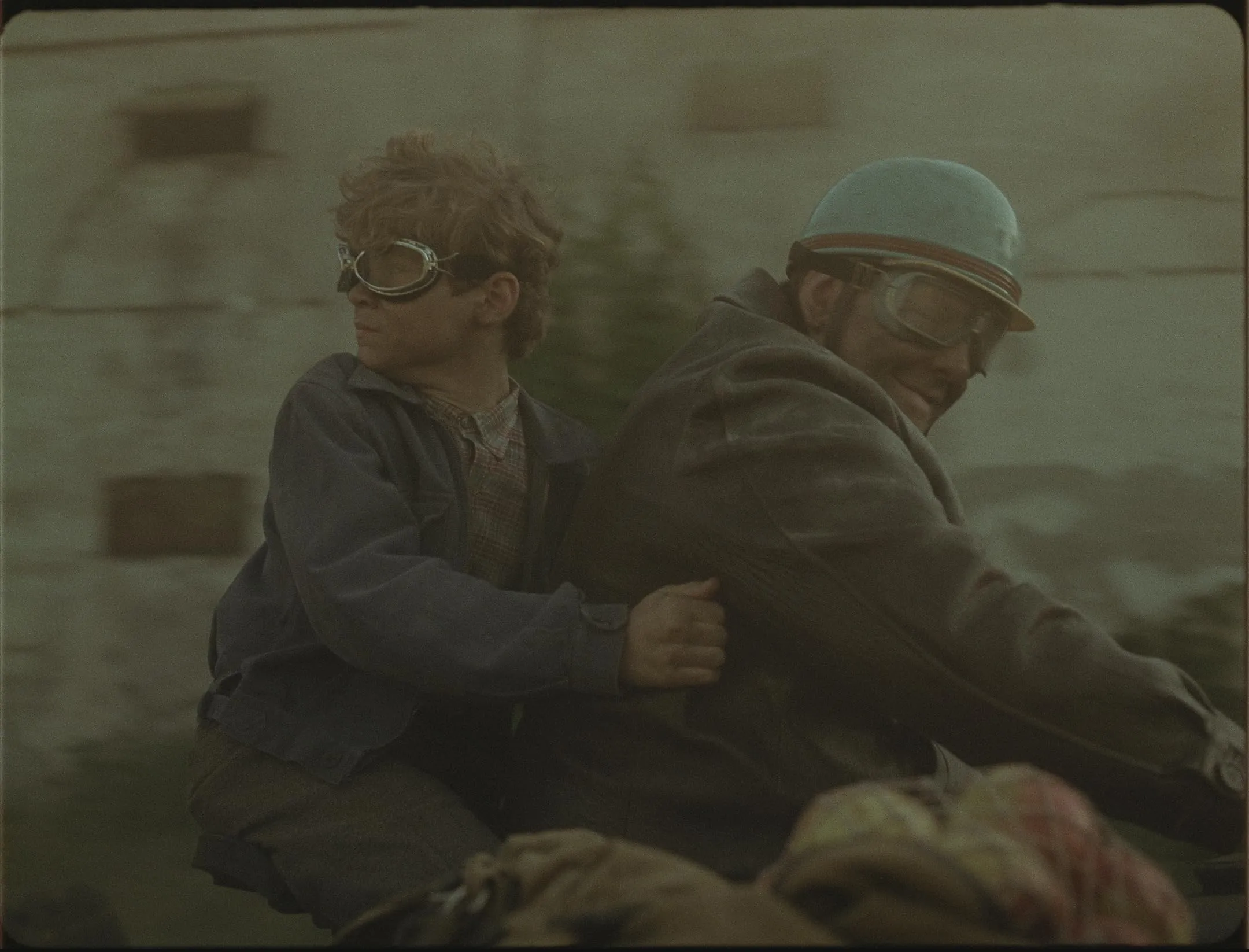
This visual approach is a stylistic shift from the frantic, first-person subjectivity of Son of Saul; here, the camera is more observational, yet it maintains a severe discipline. The frequent use of a low-angle perspective, positioned at Andor’s height, makes the adult world appear imposing and dangerous. This viewpoint, combined with a tight, almost square aspect ratio, creates a potent sense of claustrophobia. The characters are visually trapped by their surroundings.
This feeling is intensified by Márton Ágh’s meticulous production design. The city is a tangible space of dilapidated buildings, where peeling paint and water-stained walls tell their own stories of neglect. The soundscape also adds to the unease; the distant wail of a police siren often bleeds into quiet domestic moments, a constant reminder of the authoritarian presence just outside the door.
Light itself is a scarce resource, often struggling to get through dirt-caked windows or creating stark, cavernous shadows that offer no comfort. Every technical element works to build a concrete sense of a world where hope is in short supply.
Embodying History’s Weight
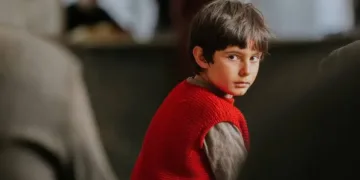
The film rests on the shoulders of its three central actors, whose performances give emotional weight to the historical allegory. Bojtorján Barabas offers a tense, physical performance as Andor. His defiance is not just in his words but in his tightened jaw and his refusal to meet the gaze of the adults who control his life. It is a remarkable depiction of adolescent rage filtered through a child’s helplessness.
As the butcher Berend, French actor Grégory Gadebois is a formidable presence. He projects a raw menace that can shift unpredictably toward a flicker of paternal tenderness, making him a complicated and disturbing antagonist. The ambiguity in his performance is key; the audience is never certain if his affection is genuine or a tool of manipulation.
Andrea Waskovics portrays the mother, Klara, as a woman hollowed out by trauma. Her character’s quietness feels deliberate, a portrait of a person who has erased parts of her own identity to survive. Waskovics communicates a deep well of unspoken pain through her weary posture and guarded expressions. Together, their tense interactions form the movie’s unstable emotional foundation, creating a family dynamic charged with resentment.
Orphan, the 2025 Hungarian historical drama film from director László Nemes, had its world premiere on August 28, 2025, at the 82nd Venice International Film Festival, where it was nominated for the Golden Lion.
Full Credits
Director: László Nemes
Writers: László Nemes, Clara Royer
Producers and Executive Producers: Ildiko Kemeny, Ferenc Szale, Mike Goodridge, Alexander Rodnyansky, Gregory Jankilevitsch, Ori Eisen, Michael Kupisk, Yoav Rosenberg, Gábor Sipos, Klaudia Śmieja-Rostworowska, Judit Stalter, J.D. Zacharias
Cast: Bojtorján Barábas, Andrea Waskovics, Grégory Gadebois, Elíz Szabó, Soma Sándor, Marcin Czarnik
Director of Photography (Cinematographer): Mátyás Erdély
Editors: Péter Politzer
The Review
Orphan
László Nemes has created a technically superb and intellectually rigorous film. Orphan succeeds as a powerful allegory, using one boy's painful identity crisis to explore the trauma of a nation under occupation. Its meticulous craft creates an unforgettable atmosphere of decay and dread, though its severe, somber tone may hold some viewers at an emotional distance.
PROS
- Masterful cinematography and production design that create a tangible, oppressive world.
- An intelligent script that functions as a sharp political allegory.
- Strong, physically committed performances from the central actors.
- A disciplined and distinct directorial vision.
CONS
- The relentlessly somber tone can be emotionally taxing.
- Supporting characters can feel underdeveloped, serving the central theme more than their own arcs.
- A narrative that is sometimes slow and repetitive.
- The focus on technical precision may create an emotional distance for some viewers.