















![Kingdom Hearts Collection [I-III] Review](https://gazettely.com/wp-content/uploads/2026/10/Kingdom-Hearts-Collection-I-III-1-360x180.webp "Kingdom Hearts Collection [I-III] Review: KHII Holds Steady as Newer Entries Fluctuate 40")
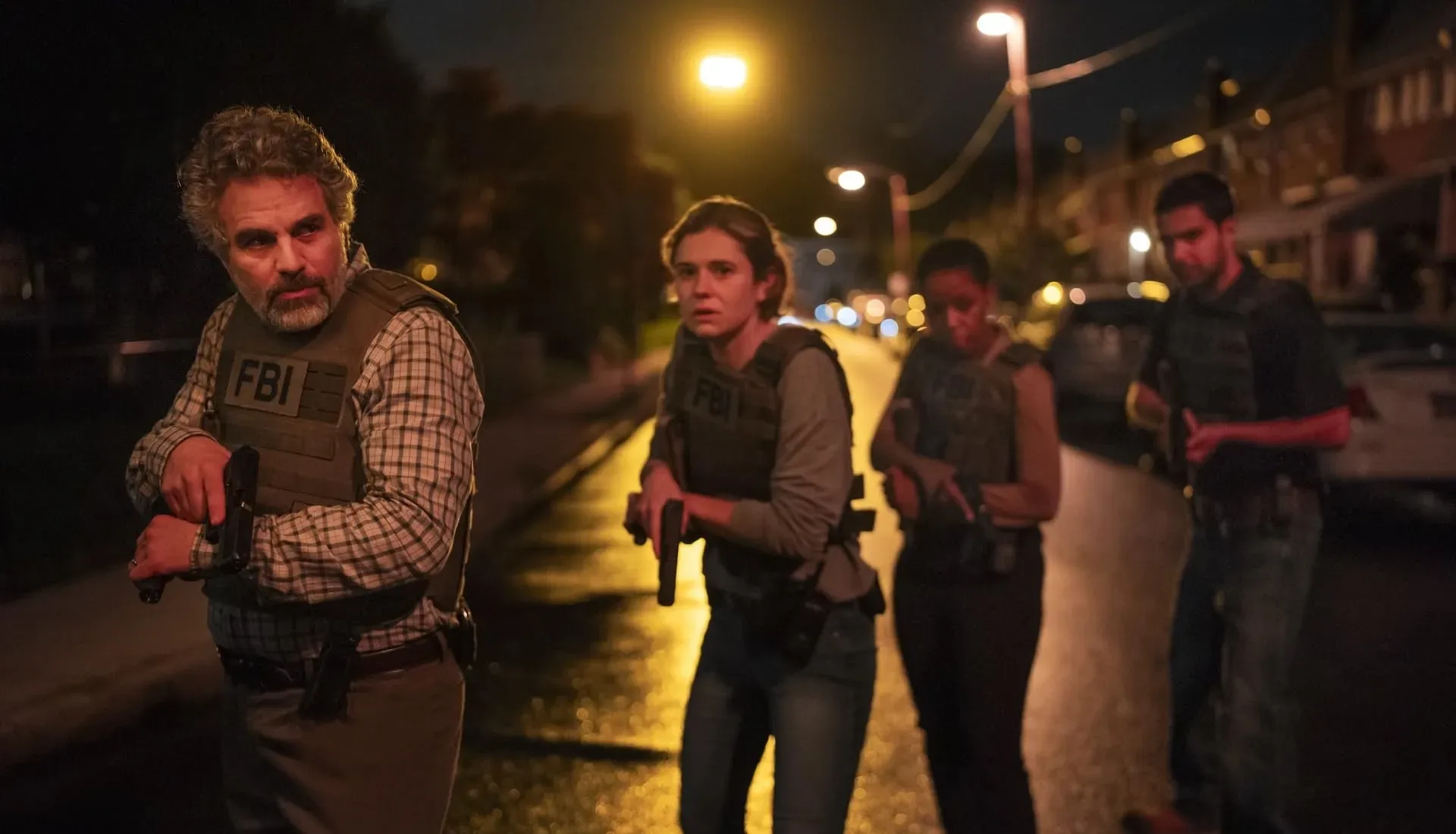

Two men in the Philadelphia suburbs are drowning. One drowns in vodka, the other in bad decisions. Both are submerged in a private grief so deep it has reshaped their lives. This is the starting point for Task, a show less interested in crime than in the wreckage it leaves behind.
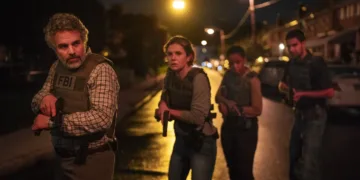
On one side is Tom Brandis, a veteran FBI agent pulled from the quiet misery of a desk job to hunt a gang of thieves. Mark Ruffalo plays him as a man whose shoulders seem to carry the physical weight of his past. On the other side is Robbie Prendergrast, a garbage collector leading that same gang. He is a family man whose motivations are a tangled mess of desperation and revenge.
The series sets them on a collision course from the opening minutes. The story is not about solving a mystery. It is about watching an inevitable crash in slow motion and wondering if anyone will be able to walk away.
The Sad Man and the Frantic Man
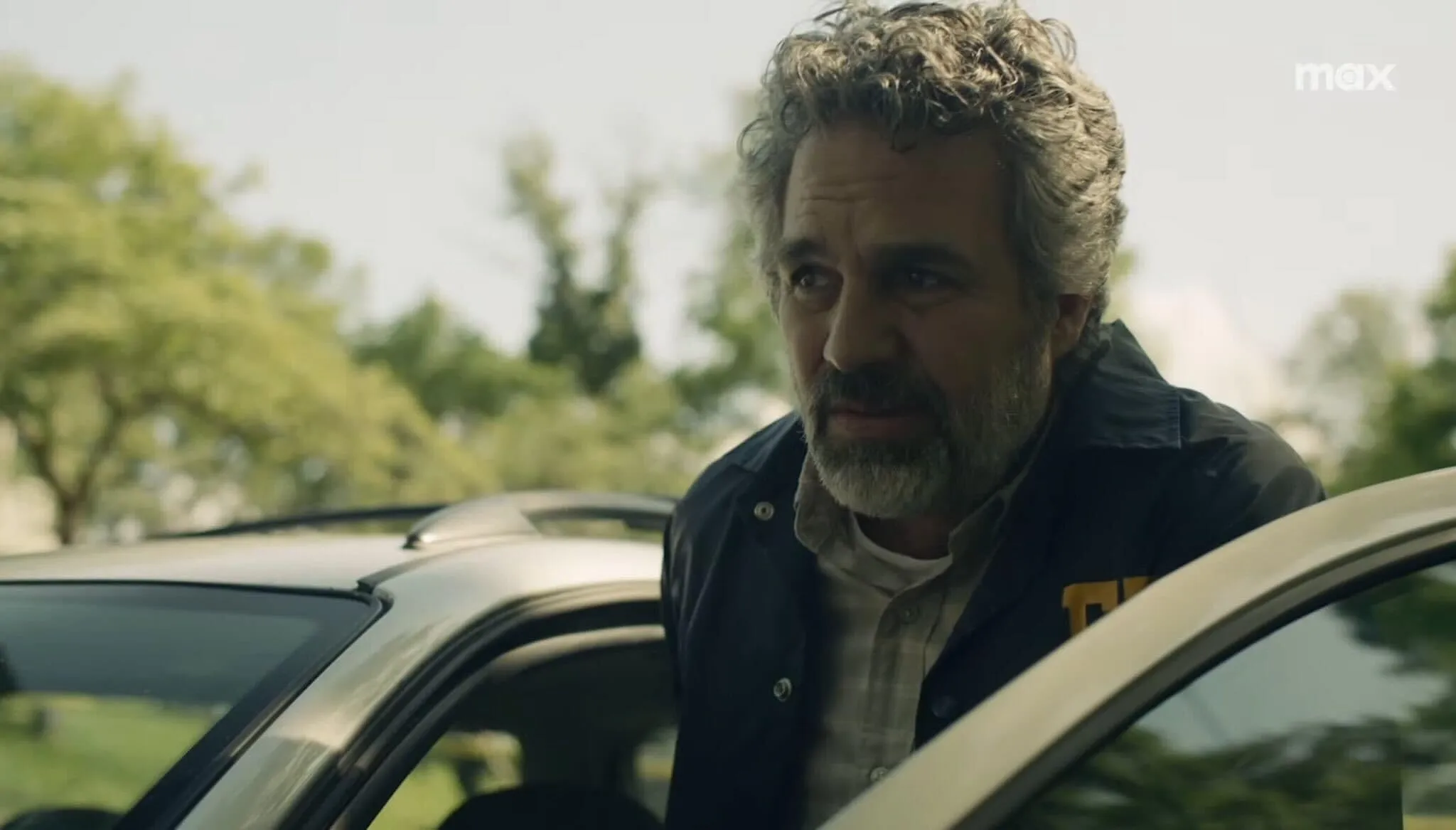
The series rests on the performances of its two leads, presenting a diptych of distressed fatherhood that serves as the show’s entire structural and emotional foundation. Tom Brandis is a walking bruise, a man hollowed out by loss. His past life as a Catholic priest hangs over him like a shroud, making his current state of faithless despair all the more acute.
He spends his nights with a large plastic cup of vodka, a ritual designed to numb a family catastrophe involving his institutionalized son and deceased wife. Mark Ruffalo gives a masterclass in quiet suffering, internalizing a world of pain. His performance avoids melodrama entirely. The agony is not in grand speeches but in the exhausted slump of his posture, the perpetual weariness in his eyes, and the way he fumbles for his keys. He conveys a history of sorrow in small, precise gestures.
He is an instrument of the law who has lost all sense of cosmic justice or divine order. Being dragged back into fieldwork is a kind of penance for him. He resists the assignment not out of laziness, but from a deep-seated knowledge that immersing himself in the violence of others will only amplify his own internal chaos. Every step he takes back into his old life is a step toward a confrontation he has spent years avoiding.
In the other corner is Robbie Prendergrast, played by a live-wire Tom Pelphrey. If Ruffalo’s Tom is a study in implosion, Pelphrey’s Robbie is a man exploding in slow motion. A sanitation worker whose life has been upended by abandonment and death, he turns to robbing drug houses with a plan that seems half-baked at best, driven by a personal vendetta against the bikers who wronged his family.
Pelphrey portrays him as a man acutely aware that he is sinking in quicksand, yet his every panicked movement only pulls him deeper. He is all nervous energy and frantic hope, a stark contrast to Tom’s stillness. Pelphrey makes Robbie’s terrible choices feel understandable, born from a recognizable human place of wanting to provide for and protect his children.
He channels a desperate optimism that is almost painful to watch, especially as his plans begin to unravel with deadly speed. When these two men finally share a scene, the screen crackles with unspoken understanding.
Their shared experience as grieving fathers creates an immediate, difficult bond that complicates any simple notion of good versus evil. The direction in these moments wisely steps back, allowing the actors to find the complex, contradictory humanity in a situation that is otherwise a standard cop-and-crook standoff.
A Crowded County with Empty Arcs
Beyond its two central pillars, the world of Task is populated by a sprawling cast of the damaged and the dutiful, though many feel more like sketches than fully rendered portraits. Tom’s FBI team is a collection of familiar types who seem to exist primarily to fill out the squad room. There is the rookie who freezes under pressure, state trooper Lizzie, played with anxious energy by Alison Oliver.
Her arc of battlefield incompetence feels less like an exploration of trauma and more like a convenient plot device to generate tension at inopportune times. Then there is the slick county detective Anthony and the stoic city cop Aleah. They are given brief, trauma-heavy monologues to establish their bona fides as serious characters, but they rarely develop beyond these initial introductions.
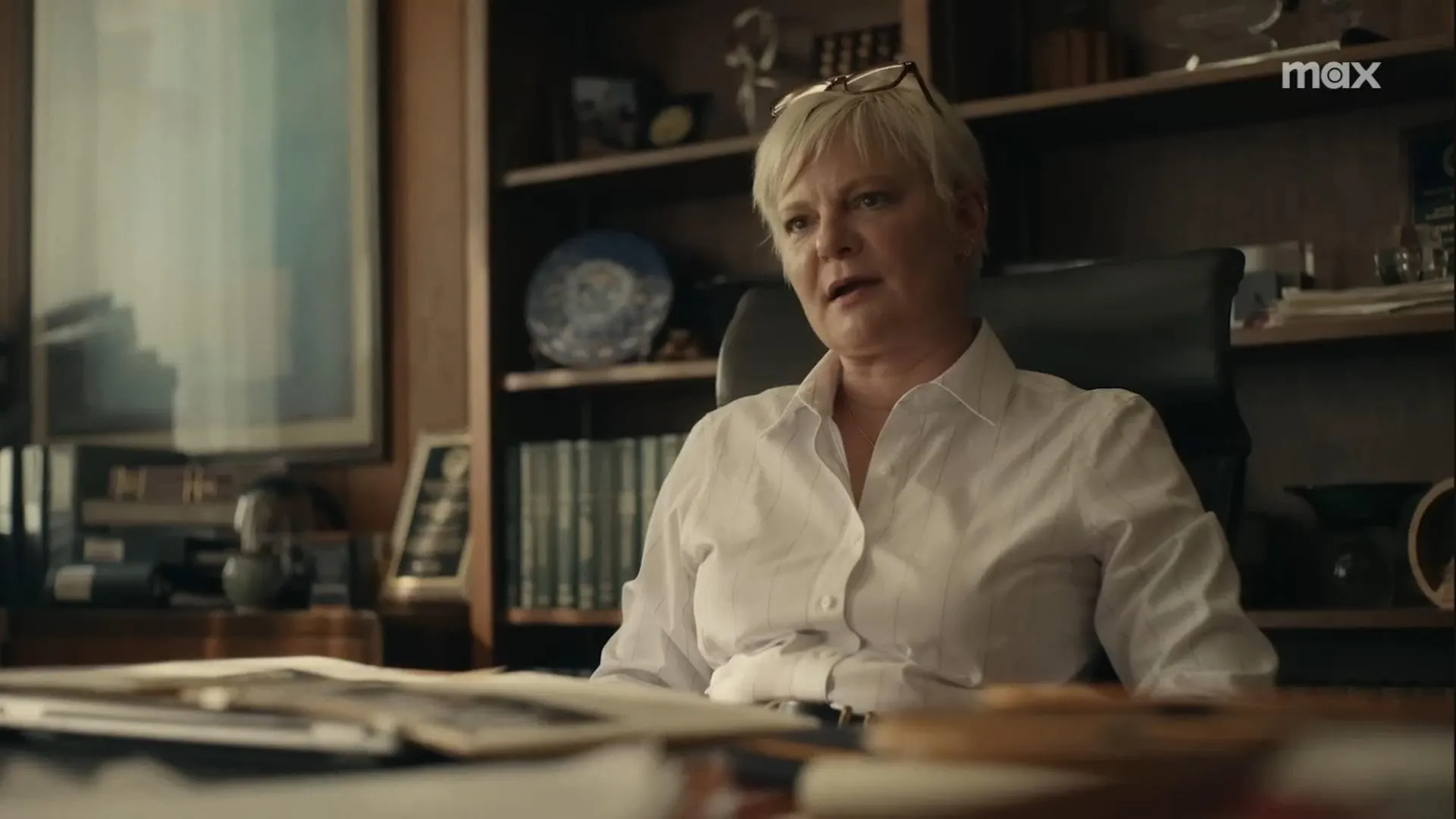
They feel less like people and more like file folders with legs, their potential wasted. Martha Plimpton offers a bright spot as Tom’s boss, Kathleen. She clearly relishes her role, delivering her lines with a pragmatic snap that cuts through the show’s pervasive gloom and reminds Tom of the bureaucratic realities that wait for no man’s personal crisis.
The criminal world is similarly sketched, with one notable exception. Robbie’s crew are serviceable partners in crime, loyal but clearly out of their depth. The real threat comes from the Dark Hearts motorcycle gang. As their leader Perry, Jamie McShane is terrifyingly still. He operates with a quiet, managerial menace that is far more frightening than any loud outburst.
He generates more threat from a silent stare than a page of dialogue could ever achieve, providing a necessary pole of genuine evil in a story full of moral compromise. The families caught in the middle, particularly the young women like Robbie’s niece Maeve, function as the primary emotional stakes. Maeve, played by Emilia Jones, carries the heavy burden of co-parenting Robbie’s kids.
Her exhaustion and resentment are palpable, but her storyline often pauses when the plot needs to shift back to the men with guns. She, like the other children, becomes a distressed witness rather than an active participant, a common trope in crime sagas that this show does little to subvert.
All Grit, No Glamour
The show excels at creating a thick, lived-in atmosphere, grounding its high-stakes drama in a tangible reality. This is a gray, working-class Delaware County, where trees are overgrown and bars are dimly lit with the promise of temporary escape. The cinematography captures the damp chill of the environment, favoring a palette of muted greens and browns that makes the setting a character in its own right.
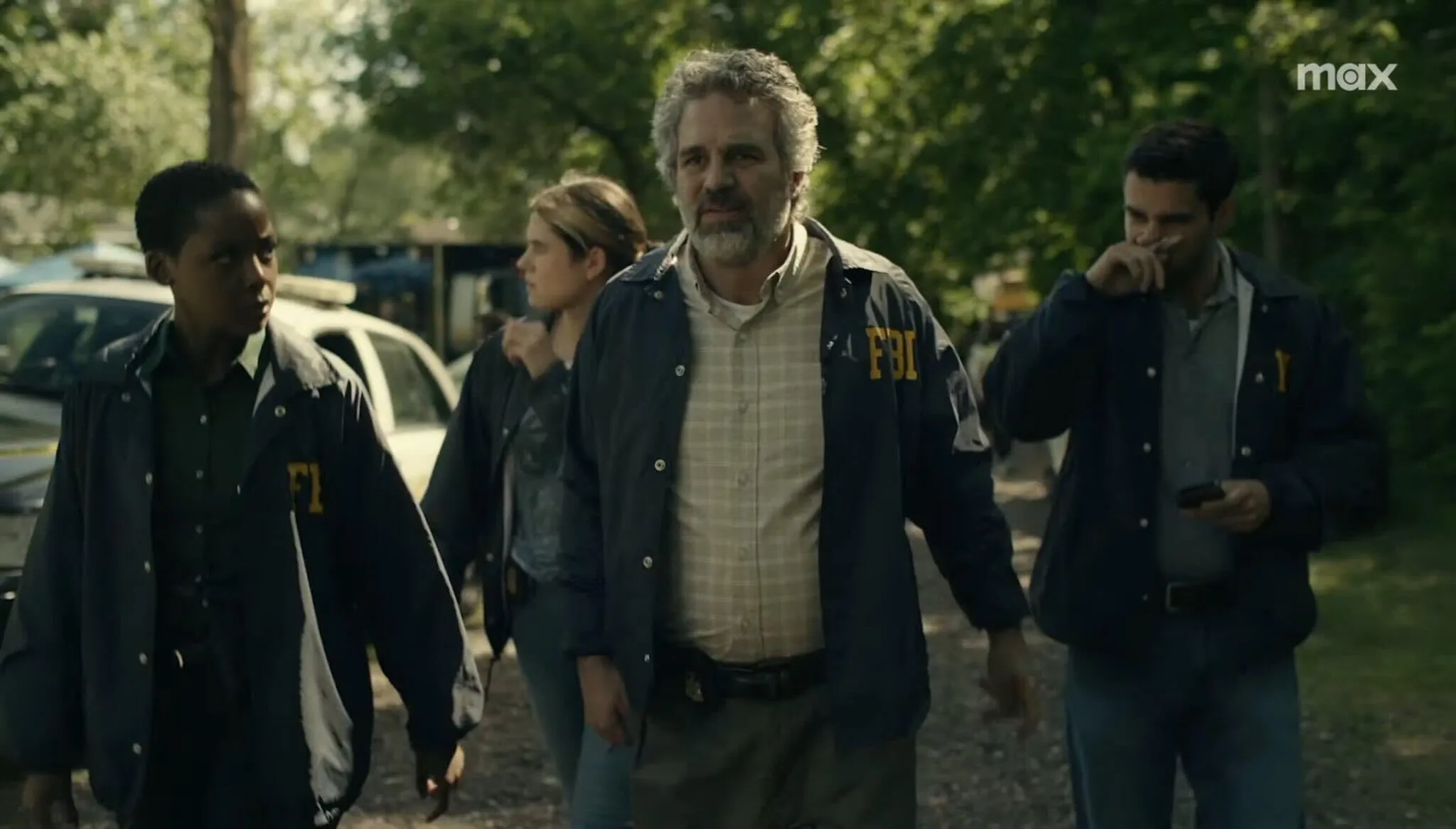
Everything looks worn down, from the peeling paint on the houses to the deep lines on the faces of the people. This specific aesthetic connects Task to a long lineage of East Coast HBO dramas, where place is inseparable from psychology. The mournful musical score completes the somber mood, ensuring no one mistakes this for a feel-good procedural.
The sound design is equally effective, filling scenes with the ambient hum of cicadas or the distant rumble of traffic, small details that enhance the gritty realism. The action sequences, when they arrive, are executed with a chaotic, handheld style. A botched robbery or a frantic chase through the woods feels messy and desperate, reflecting the characters’ panicked states of mind rather than a desire for slick choreography.
The show’s pacing is less consistent. It can lurch from long, contemplative stretches of brooding character work to sudden, explosive bursts of violence. The middle episodes, heavy with exposition and flashbacks meant to deepen the characters’ pasts, slow the narrative momentum considerably. It is here that the seven-hour runtime feels most indulgent.
By revealing its criminals in the first episode, the show places all its bets on character investment. This is a hallmark of modern television, moving away from the weekly puzzle box toward sustained character studies. Yet the narrative sometimes hedges this bet with late-game twists that feel more like plot mechanics than organic developments.
A story this committed to realism should not need such artificial jolts to maintain interest. The structural choice to follow both sides is ambitious, but the execution sometimes falters, leaving the audience to wonder if a more focused perspective might have resulted in a tighter story.
Misery Loves Company, and This Show is a Party
Task is a deep dive into a pool of sorrow. Every significant person in this story is defined by a past loss, and their messy, often self-destructive attempts to cope drive the entire narrative. The show explores trauma’s fallout through violence, addiction, and emotional retreat, presenting a world where nearly everyone is carrying a heavy weight. Fatherhood is the central preoccupation.
Tom and Robbie are parallel studies in paternal failure, men who love their children deeply but are fundamentally unable to shield them from the consequences of their own actions. The series raises hard questions about what a good parent even looks like in a broken world. Tom’s history as a priest puts faith and forgiveness on the table, though the show seems to argue that both are in short supply when confronted with senseless tragedy.
The series is at its strongest when it allows its two lead actors to explore these heavy ideas. The performances from Ruffalo and Pelphrey are superb, layered, and deeply felt. The authentic sense of place is undeniable. Yet the story often falls back on familiar crime tropes, and its supporting cast is too often left behind in service of the central male tragedy.
It is a well-acted, handsomely made piece of television that feels like something you have seen before. Can two stellar portrayals of broken men make a conventional story feel new, or does it say something about our current moment in television that so much talent is being used to tell such a familiar tale?
Task is an upcoming HBO crime drama miniseries created by Brad Ingelsby, the Emmy-winning creator of Mare of Easttown. The series is scheduled to premiere on HBO and stream on Max on Sunday, September 7, 2025.
Full Credits
Director: Jeremiah Zagar, Salli Richardson-Whitfield
Writers: Brad Ingelsby, David Obzud
Producers and Executive Producers: Brad Inglesby, Jeremiah Zagar, Salli Richardson-Whitfield, Mark Ruffalo, Paul Lee, Mark Roybal, David Crockett, Ron Schmidt
Cast: Mark Ruffalo, Tom Pelphrey, Emilia Jones, Thuso Mbedu, Raúl Castillo, Jamie McShane, Sam Keeley, Fabien Frankel, Alison Oliver, Silvia Dionicio, Phoebe Fox, Martha Plimpton, Mireille Enos, Owen Teague, Dominic Colón, Margarita Levieva
Director of Photography (Cinematographer): Alex Disenhof, Elie Smolkin
Editors: Not specified.
Composer: Dan Deacon
The Review
Task
Task is a somber, atmospheric crime drama elevated by two exceptional lead performances from Mark Ruffalo and Tom Pelphrey. Their portrayals of grieving fathers on opposite sides of the law are deeply moving. The show is often powerful as a character study, but its familiar plot, uneven pacing, and underdeveloped supporting cast keep it from reaching the top tier of television. It is a well-crafted, respectable series that feels just a bit too familiar.
PROS
- Powerful, nuanced lead performances by Mark Ruffalo and Tom Pelphrey.
- A strong, authentic sense of place and a gritty, lived-in atmosphere.
- Thoughtful exploration of heavy themes like grief, fatherhood, and moral compromise.
- Effectively tense and realistic action sequences.
CONS
- Many supporting characters are underdeveloped and thinly sketched.
- The plot relies on familiar crime genre conventions and tropes.
- Pacing is inconsistent, with a sagging, exposition-heavy middle section.
- Some plot twists feel more convenient than organic to the story.