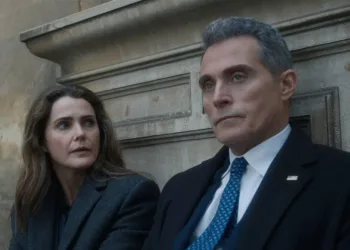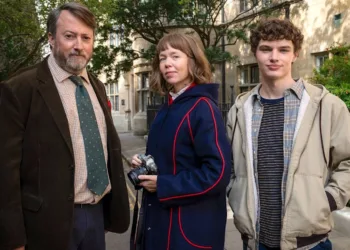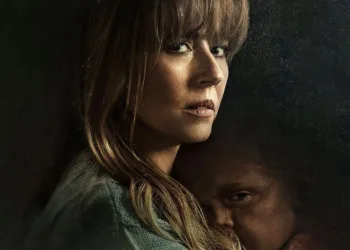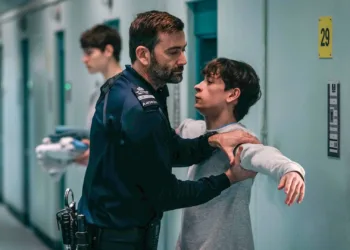














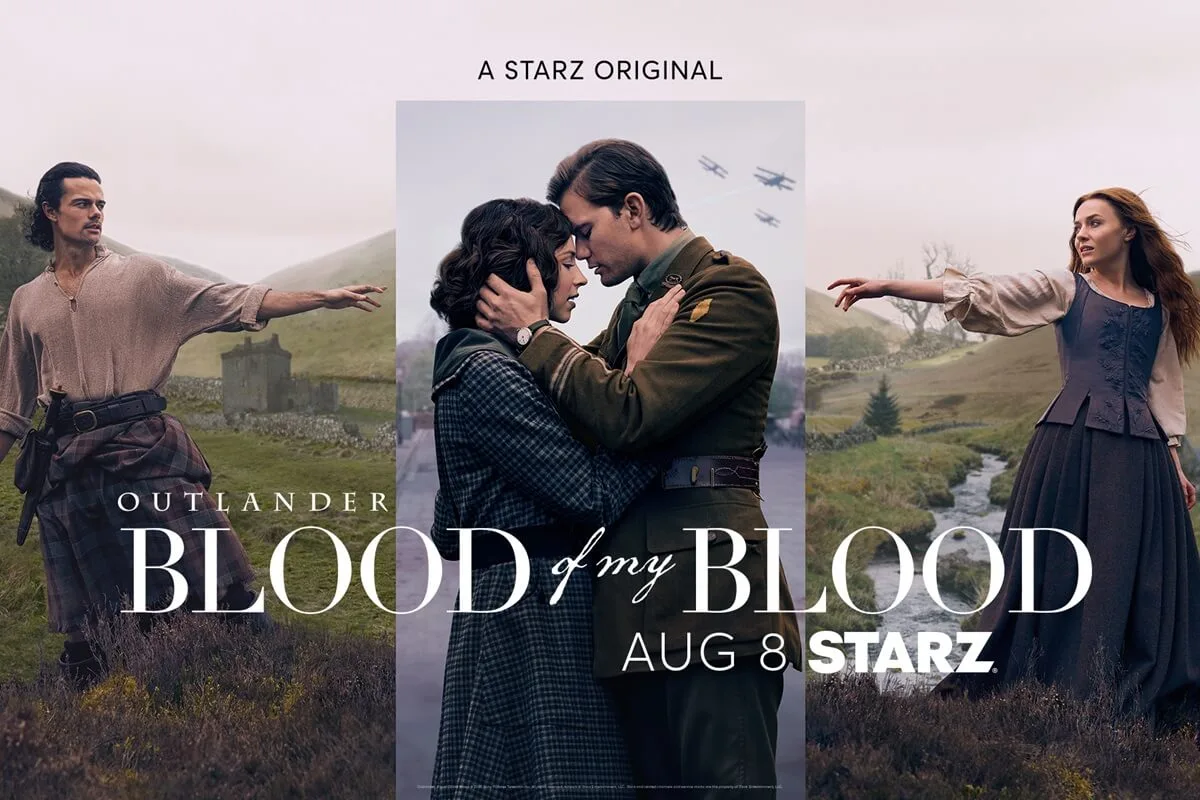

The architects of the Outlander universe seem to operate on a principle of narrative determinism, a belief that a story’s present is irrevocably shaped by the ghosts of its past. With Outlander: Blood of My Blood, the franchise turns this belief into its central thesis, traveling back not just in time but in lineage.
This prequel abandons the familiar comfort of its central couple to excavate their very foundations. The series presents two distinct origin stories running in parallel. One is a tale of clan politics and forbidden passion in the damp, unforgiving Scottish Highlands of the early 18th century.
The other begins with the mechanized horror of World War I before taking a sharp turn into the unexpected. We meet the progenitors: Ellen MacKenzie and Brian Fraser, Jamie’s parents, and Julia Moriston and Henry Beauchamp, Claire’s. Their lives are presented as the crucial first dominoes in a causal chain that would one day unite a Highland warrior and a 20th-century healer.
A Tale of Two Timelines: Weaving Love and Conflict
The 18th-century Scottish plotline is a familiar, almost archetypal power struggle, a kind of feudal Succession played out with dirks instead of board meetings. The death of laird Red Jacob MacKenzie unbalances the delicate ecosystem of Castle Leoch, leaving his sons to circle each other. There is the calculating Colum, hobbled by his body but sharp of mind, and the brash Dougal, a man of action and impulse.
Caught between them is their sister, Ellen MacKenzie. She is not merely a character; she is a form of currency, a valuable asset whose marriage can secure power. Her sudden, intense connection with Brian Fraser, the bastard son of a rival clan’s disgraced lord, is therefore not just romance. It is a radical act of economic and political defiance. The ever-present, pining Murtagh Fraser serves as a mournful chorus, a reminder of the orderly, sanctioned paths not taken.
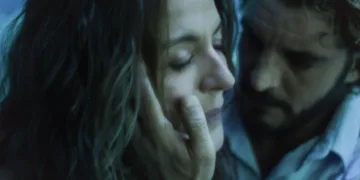
Centuries later, a different kind of story emerges from the mud and disillusionment of the Great War. This is a romance born of modernity’s first great trauma. Henry Beauchamp, a soldier witnessing industrial-scale death, writes letters into a void. They are found by Julia Moriston, a woman tasked with redacting the truth from such correspondence.
Their love, built on prose, is an intimate rebellion against the impersonal brutality of their time. Henry’s return brings the psychic wounds of the war home with him. The narrative then makes its boldest move. A car accident in Scotland—a violent intrusion of modern technology—propels them through the ancient stones. They land in the 18th century, catastrophically separated.
This is the story’s key intervention: a collision of sensibilities. Julia, pregnant and alone, is a 20th-century mind suddenly governed by the harsh, patriarchal logic of the past. Henry is adrift. Their separate desperate journeys become entangled in the MacKenzie power games, forcing a confrontation between two vastly different understandings of the world.
Casting and Character Embodiment
A prequel of this nature lives or dies on the plausibility of its casting, a challenge this series meets with an almost unsettling success. One might call it an exercise in hereditary verisimilitude. The four leads do not just play their parts; they inhabit the genetic potential of characters we already know. Harriet Slater gives Ellen MacKenzie a defiant fire that makes her legendary status within the family feel earned.
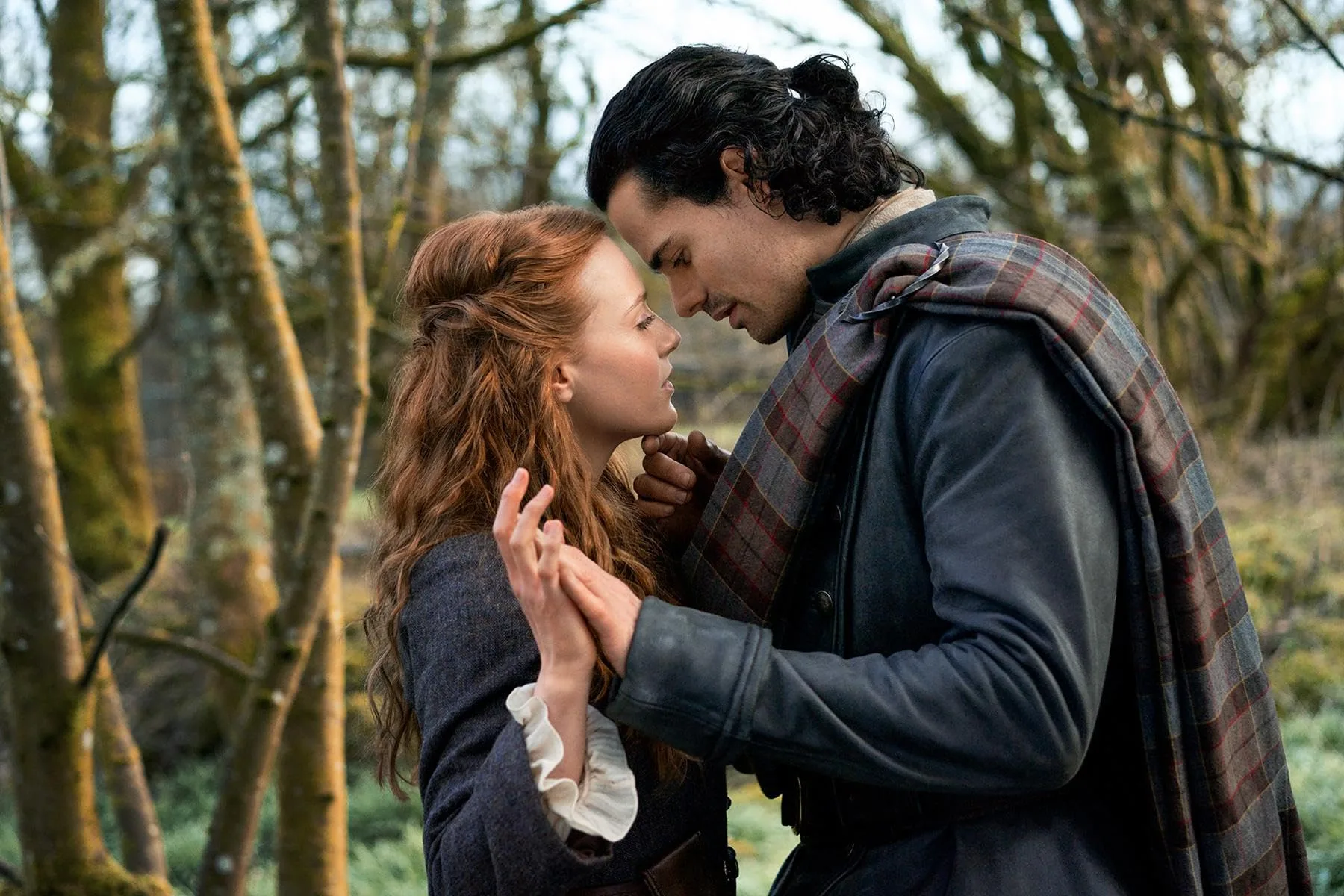
Opposite her, Jamie Roy’s Brian Fraser has a softer, gentler presence than his future son, grounding the Fraser lineage with a dose of quiet integrity. The resemblance to Sam Heughan is remarkable, a casting choice that feels less like a coincidence and more like a prophecy fulfilled.
Hermione Corfield and Jeremy Irvine have the more difficult task of building characters from a near-blank slate who must justify the formidable person their daughter becomes. Corfield’s Julia is sharp and resilient, and you can see Claire’s pragmatism in her eyes. Irvine gives Henry a haunted, intellectual quality, making him a man broken by a history that has not yet happened for those around him. The supporting cast, meanwhile, performs a kind of character archaeology.
Sam Retford and Séamus McLean Ross expertly excavate the younger selves of Dougal and Colum, revealing the seeds of the men they will become. Rory Alexander’s young Murtagh is a study in devoted melancholy. Even performers in smaller roles, like Conor MacNeill as the lawyer Ned Gowan, avoid caricature, instead presenting complex figures at an earlier stage of their development. Tony Curran’s Lord Lovat is a portrait of pure, unadulterated villainy, a necessary poison in this intricate world.
Production Values and Aesthetic Choices
The show’s production acts as a form of visual argument. It presents two distinct historical realities, each rendered with meticulous care. The 18th-century Highlands are lush, romantic, and wild—the stuff of myth and tourism brochures. This is the aesthetic that has long defined the franchise, a world that feels both beautiful and dangerous.
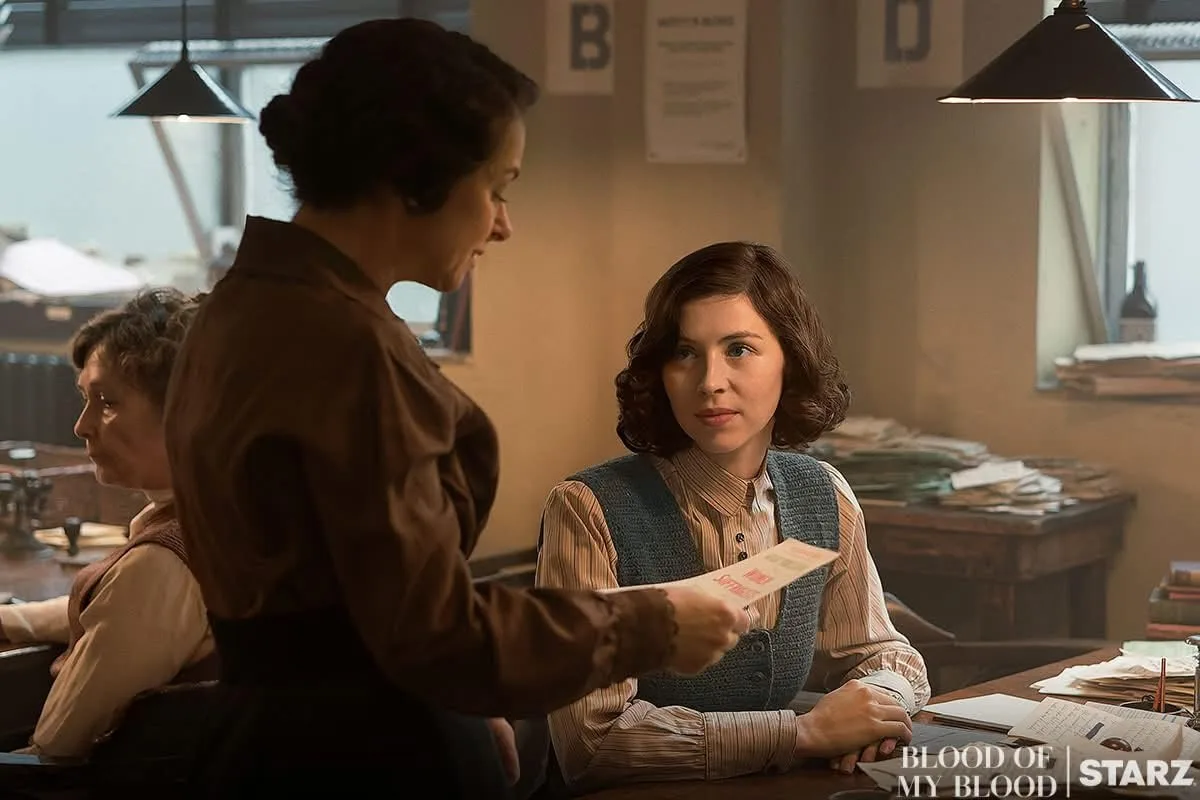
In stark contrast, the scenes from World War I are gritty and grim, steeped in the mud and mechanical horror of the trenches. The production design and costumes create an immersive sense of place, contrasting a past that feels alive with a more recent history defined by death.
Structurally, the series is patient. It lays its two narrative tracks separately in the opening episodes, allowing each story to breathe before weaving them together. The momentum builds considerably once the time-travel element is fully deployed, and the collision of the two timelines becomes the engine of the plot. The cinematography, however, occasionally relies on a rather blunt visual shorthand.
A technique of color desaturation, a sort of temporal filtering, is used to distinguish the 20th-century scenes. While it effectively signals the time period, the effect can be flattening, rendering a whole era in a palette of muted grays that feels aesthetically uninspired. It is a functional choice, but one that sacrifices visual richness for clarity.
More Than an Echo: Standalone Strength and Franchise Connection
A prequel always faces the question of its own necessity. Blood of My Blood works as a standalone drama because its central conflicts are universal: forbidden love, family rivalry, the struggle for survival. A newcomer can invest in these stories without any prior knowledge of standing stones or the Fraser clan.
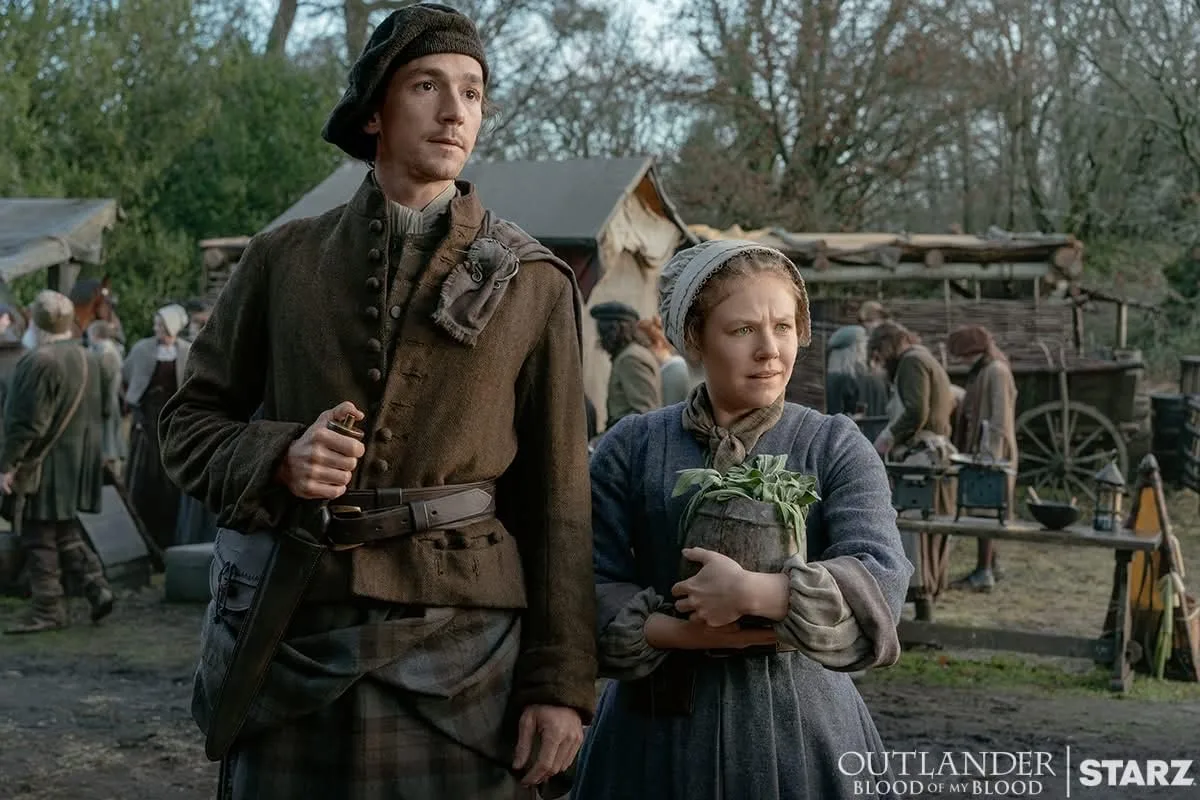
For the established viewer, the show offers something different. It is not just backstory; it is retroactive foreshadowing. It enriches the existing lore, giving weight to Jamie’s complicated family history and supplying a startling new origin for Claire. Seeing younger versions of familiar characters is fan service, certainly, but it is fan service with a purpose, adding layers to a world many already know intimately.
At its philosophical heart, the series is a meditation on fate. It operates on a powerful sense of romantic predestination, suggesting that the universe itself conspired through generations of turmoil to bring its two most famous lovers together. The show also deepens the franchise’s examination of female agency. Ellen MacKenzie fights for her autonomy within the rigid rules of her patriarchal world. Julia Moriston, a product of a more liberated century, finds herself stripped of her rights and must navigate that same system as an outsider.
The show’s tone feels like a deliberate recalibration. It is lighter than the accumulated trauma of the parent series’ later seasons, a return to the foundational appeal of new love blooming against a backdrop of historical danger. It is a confident, compelling expansion that proves the roots of a good story can be as fascinating as its branches.
Full Credits
Directors: Jamie Payne, Azhur Saleem, Emer Conroy, Matthew Moore
Writers: Matthew B. Roberts, Diana Gabaldon, Danielle Berrow, Curtis Kheel, Taylor Mallory, Macy Grace Smolsky, Kiersten Van Horne, Maggie Ye, Margot Ye
Producers: Patrick Conroy, Michael Wilson, Michael O’Halloran, Daniella Barros, Laura Lambie Levinson
Executive Producers: Matthew B. Roberts, Ronald D. Moore, Maril Davis, Jim Kohlberg, Kiersten Van Horne
Cast: Harriet Slater, Jamie Roy, Hermione Corfield, Jeremy Irvine, Tony Curran, Conor MacNeill, Sam Retford, Rory Alexander, Jason Alan Staines, Seamus McLean Ross, Jhon Lumsden, Allison McKenzie, Mark White, Annabelle Dowler, Sally Messham, Ailsa Davidson, Sadhbh Malin, Terence Rae, Harry Eaton, Lauren Grace, Adam McNamara, Gregor Firth, Bobby Robertson, Peter Mullan, Sara Vickers, Brian McCardie
Director of Photography (Cinematographer): Søren Bay, Peter Robertson
Editors: Michael O’Halloran, Hibah Schweitzer, Leah Tuscano
Composer: Bear McCreary
The Review
Outlander: Blood of My Blood
A confident and intelligently crafted expansion, Outlander: Blood of My Blood succeeds by treating its lineage as both a romantic and a philosophical puzzle. Driven by impeccable casting and two compelling, intertwined narratives, the series explores the powerful forces of fate and history that shaped its iconic characters. It is a thematically rich prequel that stands firmly on its own merits while profoundly deepening the world for those already devoted to it. A rewarding and immersive historical drama.
PROS
- Exceptional casting, with lead actors who remarkably embody the spirit and look of their future-generation counterparts.
- An engaging dual-timeline narrative that merges history, romance, and supernatural elements effectively.
- Thematically rich, exploring ideas of fate, determinism, and the historical constraints on women.
- Functions as both a satisfying standalone story for newcomers and an enriching expansion for dedicated fans.
- High-quality production values with immersive costumes and set designs.
CONS
- The pacing is somewhat segmented in the first couple of episodes before the timelines fully converge.
- The visual choice to use color desaturation to distinguish time periods is a functional but aesthetically uninspired decision.
- Relies on some familiar forbidden-love and power-struggle tropes, though it executes them well.