




















![Kingdom Hearts Collection [I-III] Review](https://gazettely.com/wp-content/uploads/2026/10/Kingdom-Hearts-Collection-I-III-1-360x180.webp "Kingdom Hearts Collection [I-III] Review: KHII Holds Steady as Newer Entries Fluctuate 40")
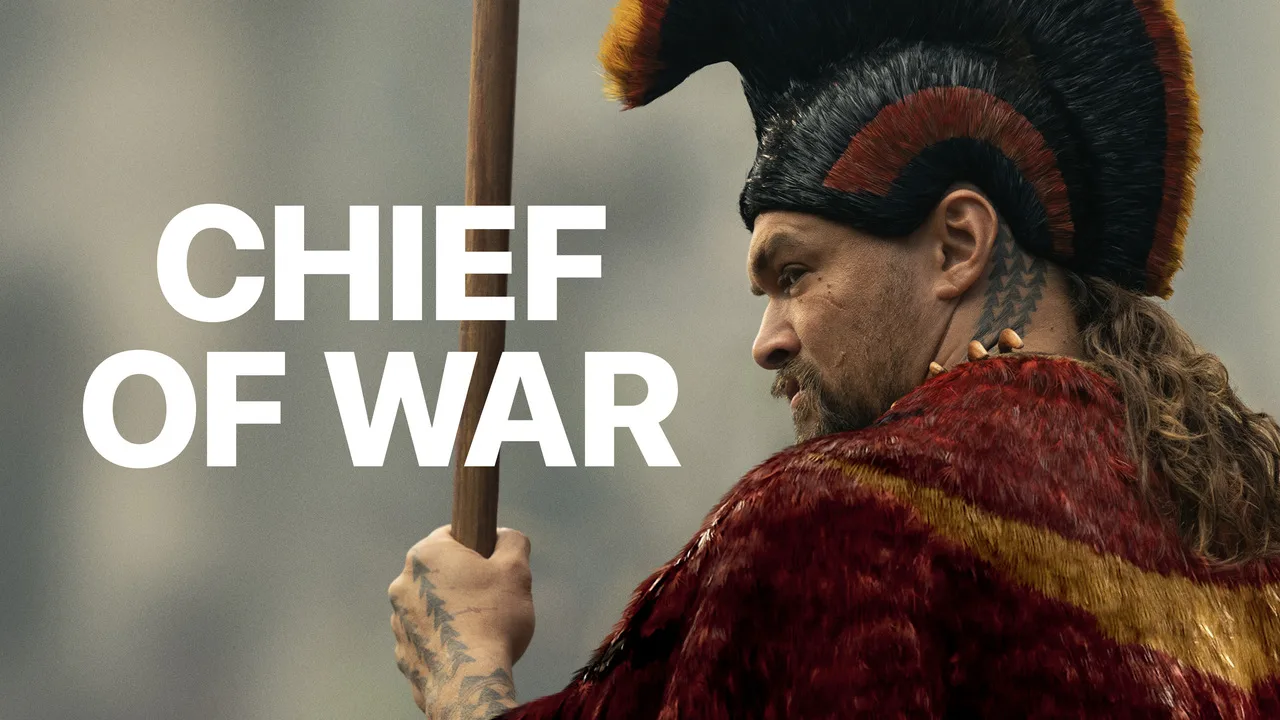

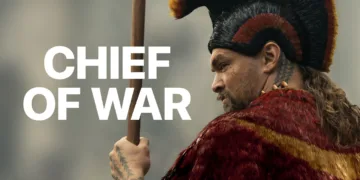
Apple TV+’s Chief of War arrives with the scope and ambition of a grand historical epic, planting its flag in the soil of late 18th-century Hawaii. The series introduces a world of breathtaking beauty rent by internal strife. Before unification, the islands were a fractured realm of four kingdoms, locked in a perpetual cycle of combat fueled by the ambitions of powerful chiefs and whispered prophecies of a leader who would bring an end to the bloodshed.
Into this cauldron of conflict, the narrative introduces a second, more insidious threat: the arrival of Western ships, the “paleskins,” whose foreign technologies and intentions cast a long shadow over the islands’ future. At the heart of this story is Ka’iana, a warrior chief of immense renown played by series co-creator Jason Momoa. When we first meet him, he is not on the battlefield but in self-imposed exile, having renounced his title and the brutal politics of his station.
He lives a life of determined peace with his family, his ohana, hunting for sustenance and existing in harmony with the natural world. This tranquility is, by the laws of dramatic storytelling, destined to be shattered. A summons from his uncle, the formidable King Kahekili, serves as the inciting incident, pulling Ka’iana back into the very cycle of violence he desperately sought to leave behind.
The Weight of the Warrior
The narrative framework of Chief of War is built upon the sturdy bones of the reluctant warrior archetype, a familiar figure in storytelling whose appeal lies in the tension between professed pacifism and proven lethality. Ka’iana embodies this conflict. He is a man who has seen enough bloodshed to reject it completely, yet his skill in it is legendary and, crucially, necessary for the survival of his people. His internal struggle is the show’s emotional core.
The script examines this contradiction from multiple angles: is it honorable to refuse to fight for a corrupt king, or is it a greater dishonor to stand aside while your world burns? Ka’iana’s motivation is thus rendered with compelling clarity. He is not a man seeking power or glory; he is a protector, driven by a desperate instinct to shield his culture and people from threats both internal and external. The entire dramatic weight of the series rests on whether this man of peace can use the tools of war to build a lasting peace, or if in doing so, he will only perpetuate the very cycle he despises.
Jason Momoa’s performance is the undeniable anchor, a charismatic and physically commanding presence that makes Ka’iana’s legendary status believable from his first moments on screen. The show cleverly uses his physique not just for intimidation in battle, but as a storytelling tool that defines his relationship with the world. In combat, wielding the shark-toothed lei o mano, he is a terrifying force of nature. But the script wisely establishes his prowess through non-combat feats that connect him deeply to Hawaiian tradition and the natural world.
The opening scene, which sees him single-handedly lasso a shark, could have been a moment of pure Hollywood absurdity. Instead, it functions as a modern myth, establishing his character as a man in tune with the raw power of his environment. A later sequence featuring a gravity-defying lava sledding competition serves a similar purpose, showcasing a form of strength and courage rooted in culture, not just combat. These moments are vital, preventing him from becoming a simple brute.
Beyond the action, Momoa effectively conveys the immense emotional cost of Ka’iana’s journey. The quiet scenes are filled with a palpable sense of burden, as he grapples with loss and the weight of leadership. His evolution is not just physical but philosophical. The decision to adopt and master the white man’s firearms is a pivotal moment, representing a painful but necessary adaptation.
It is here that Momoa’s performance finds its nuance, portraying a man forced to sacrifice a piece of his tradition in order to save its whole. He successfully embodies both the hulking warrior and the vulnerable leader, a man whose greatest strength might be his profound understanding of the tragedy of his own actions.
A Brutal Pageant
As a piece of television craftsmanship, Chief of War is a feast for the senses, aspiring to the kind of visual grandeur that defines the modern epic. The cinematography is a standout element, painting with a palette of vibrant colors and sweeping vistas. The series captures the breathtaking natural beauty of its Hawaiian and New Zealand locations, lingering on lush forests, formidable volcanic mountains, and the endless, brilliant blue of the Pacific Ocean.
This visual reverence for the land is a constant and delibe
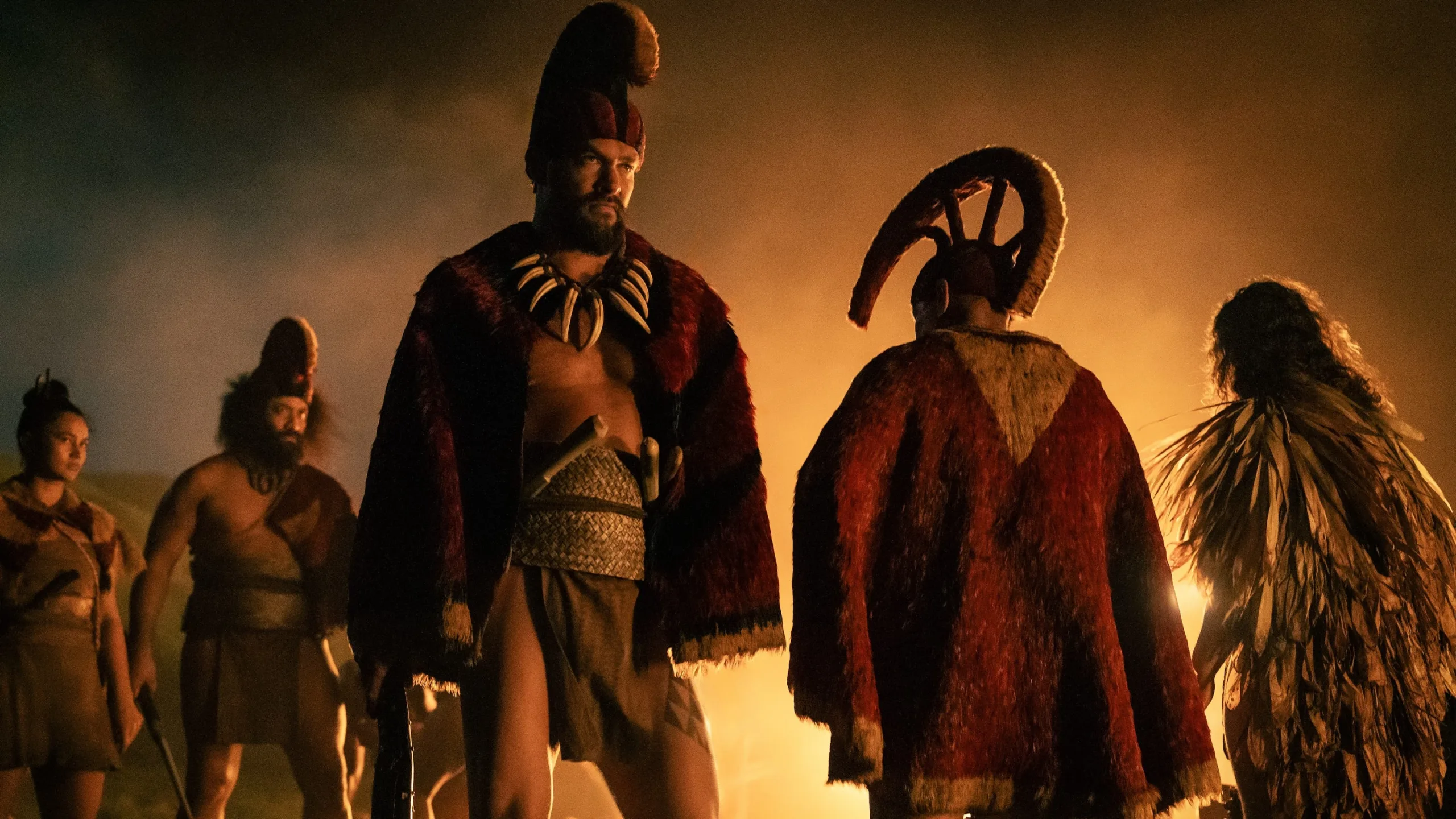 rate choice. It serves as a powerful, often poignant, contrast to the brutal human violence that frequently erupts upon it. Every stunning sunset and majestic cliff face reinforces the stakes of the conflict; what is being fought over is not just a strategic piece of land, but a paradise on the verge of being lost forever.
This rich visual tapestry is interwoven with an equally impactful soundscape. The musical score is grand and momentous, swelling at key moments to underscore the dramatic scale of the narrative without becoming overbearing. But it is the meticulous sound design of the combat sequences that truly immerses the viewer in the show’s world. The sound of a spear striking a wooden shield, the sickening crunch of bone, the raw screams of battle—these effects are rendered with a visceral clarity that refuses to sanitize the grim reality of 18th-century warfare. The audio places the audience directly within the chaos, making every skirmish feel personal and harrowing.
The action itself is a primary draw, meticulously choreographed and unflinchingly brutal. The series excels in depicting the intimate, terrifying nature of traditional hand-to-hand combat. These sequences are not just for spectacle; they are character-driven and thematically rich. A significant narrative thread is the introduction of Western firearms, which forever alters the landscape of war.
The grotesque inhumanity of rifles and cannons, which kill from a distance without honor or personal risk, is sharply contrasted with the warrior’s code of the Hawaiian fighters. This technological shift is a point of no return, forcing Ka’iana and his allies to adapt or be annihilated. The season finale’s climactic battle, expertly directed by Momoa, serves as the powerful culmination of this theme. It is a thrilling, expertly staged set piece that delivers on the series’ promise of epic, meaningful action.
Between History and Hollywood
At its core, Chief of War is unmistakably a passion project, a deeply personal undertaking for Jason Momoa to tell a foundational story of his heritage from an indigenous point of view. This guiding principle elevates the series beyond simple genre fare, imbuing it with a sense of cultural significance. It is a deliberate act of reclamation, an effort to present Hawaiian history not as a footnote in a larger colonial narrative or as a backdrop for tourism, but as a sovereign story of a nation’s birth.
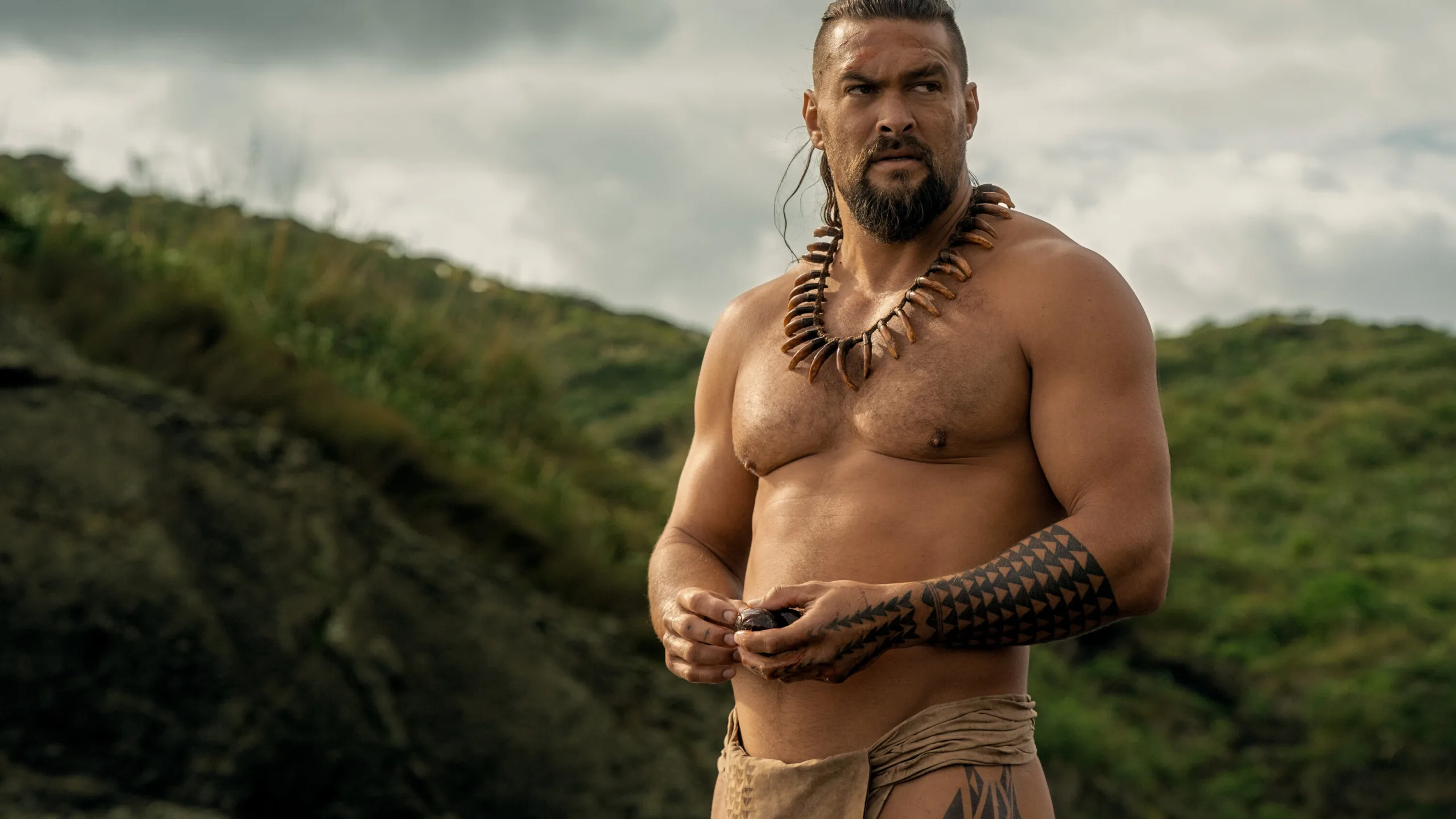
The decision to have the cast speak primarily in ʻŌlelo Hawaiʻi is the boldest manifestation of this mission. For a mainstream global production, this is a significant choice, bringing a once-banned language to millions of viewers and adding a profound layer of authenticity. This commitment is also evident in the careful depiction of cultural traditions, such as the hōlua lava sledding, which provides a valuable glimpse into a world defined by more than just warfare.
However, this noble pursuit of authenticity creates a complex, sometimes awkward, tension with the demands of dramatic television. The show walks a fine line between historical representation and entertainment, and it occasionally stumbles. In its effort to be respectful and educational, the narrative pace can slow considerably, with certain scenes feeling more like a “history museum exhibit” than a living, breathing story. These moments, while valuable, can feel inert when placed alongside the show’s high-octane action.
This friction is most apparent when the grounded realism collides with flourishes of pure Hollywood spectacle. A sequence involving a character’s death by volcano, or the aforementioned shark-lassoing, feels pulled from a different kind of story altogether. One can almost picture the production meeting where the desire for historical accuracy met the undeniable appeal of a blockbuster moment. The series thus exists in a fascinating, contested space, constantly navigating the divide between its duty to history and its obligations to epic entertainment.
A World in Orbit
While Ka’iana provides a powerful and compelling center of gravity, the narrative structure of Chief of War reveals a universe where most other bodies are locked in a fixed, secondary orbit around him. The story benefits greatly from its memorable antagonists, who provide the formidable opposition necessary to test the hero’s resolve. Temuera Morrison is a force of nature as the ferocious, megalomaniacal King Kahekili, while Cliff Curtis brings a chilling, gruesome energy to the rival chief Keōua.
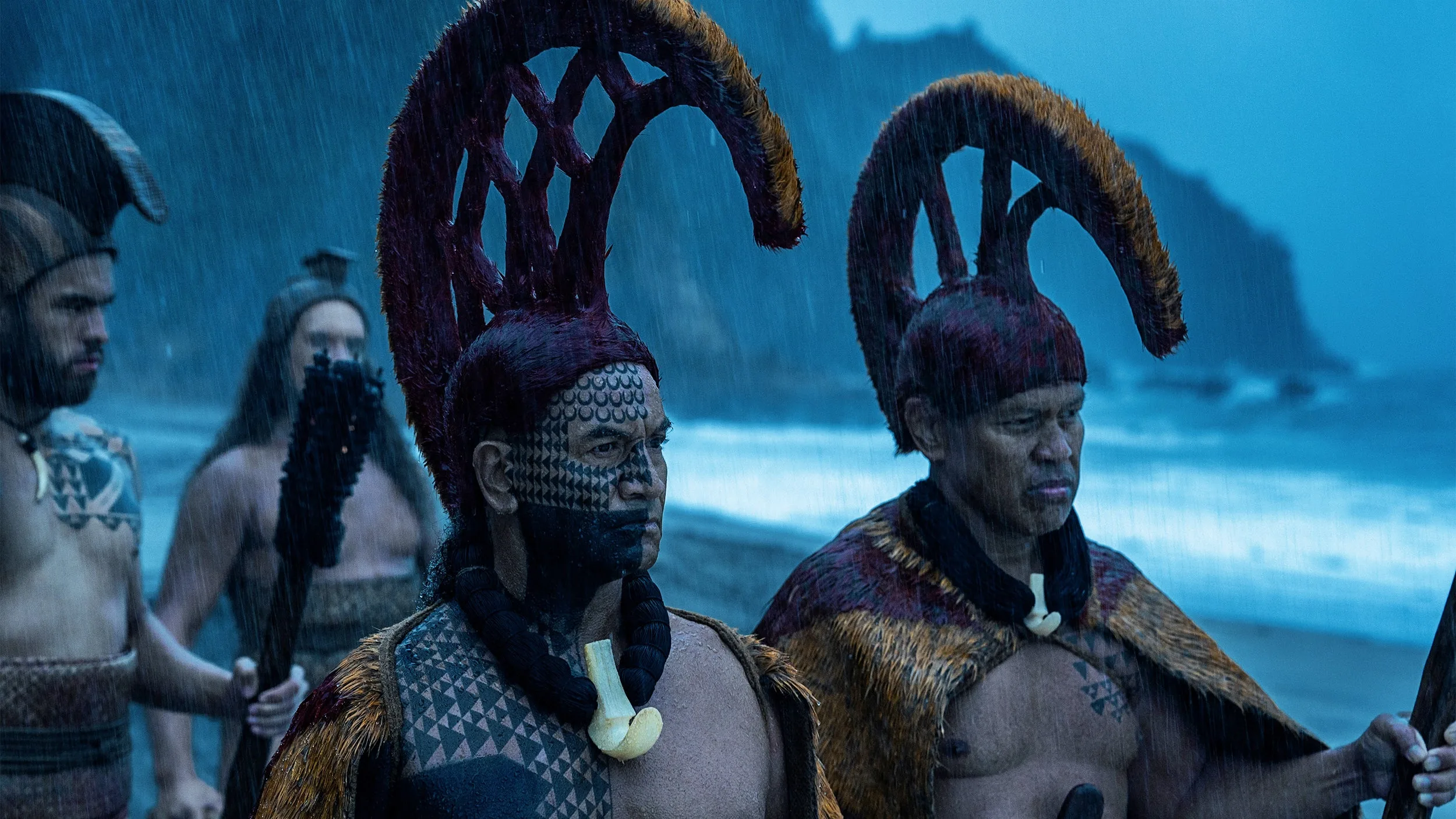
Both veteran actors deliver scenery-chewing performances that give the series a sharp, dangerous edge. Their characters, however, function more as archetypal threats than as complex political actors. They are driven by a seemingly bottomless lust for power, a one-dimensional motivation that is effective in creating clear conflict but misses an opportunity for a more nuanced political drama.
This intense, almost singular focus on its protagonist is the show’s most significant narrative weakness. The world-building feels vast in its visuals but is surprisingly narrow in its character development. The supporting cast is largely underdeveloped, their individual stories and motivations remaining secondary to Ka’iana’s journey. This is particularly noticeable with the female characters. Luciane Buchanan delivers a strong, charismatic performance as the queen consort Kaʻahumanu, hinting at a shrewd political mind and a deep well of strength.
Yet, the script rarely allows her to move beyond the confines of her relationship to the male leaders, leaving her potential largely untapped. The Western characters fare even worse. They are, for the most part, forgettable placeholders, existing merely to introduce foreign goods and colonial anxieties without having any meaningful arcs of their own. This narrative choice makes the world feel smaller than it should, rendering a story about the fate of a nation into a drama that feels, too often, like the story of just one man.
Full Credits
Directors: Justin Chon, Jason Momoa
Writers: Jason Momoa, Thomas Pa’a Sibbett, Doug Jung
Producers: Molly Allen, Sarah J. Donohue, Angela Laprete, Brian Andrew Mendoza, Jim Rowe, Annie Weston, Peter Chernin, Justin Chon, Tracey Cook, Cliff Curtis, Anders Engström, Spike Allison Hooper, Doug Jung, Brian L. Keaulana, Francis Lawrence, Julie Lawrence, Jason Momoa, Christina Porter, Thomas Pa’a Sibbett, Jenno Topping, Timothy Van Patten, K.C. Colwell, Brian Mendoza
Cast: Jason Momoa, Luciane Buchanan, Temuera Morrison, Te Ao o Hinepehinga, Cliff Curtis, Kaina Makua, Moses Goods, Siua Ikale’o, Brandon Finn, James Udom, Mainei Kinimaka, Te Kohe Tuhaka, Benjamin Hoetjes, Roimata Fox, Keala Kahuanui-Paleka, Tanaloa Ropati Tejada, Joseph A. Napeahi Sr., Ocean Kaowili, Te Po Mitai-Ngatai, Joseph Oge, Daniel Watta, Sisa Grey
Editors: Yael Hersonski, Aaron Marshall, Stephen Philipson, Marc Roussel, Marta Evry, Ron Rosen, Mark Yoshikawa
Composers: Hans Zimmer, James Everingham
The Review
Chief of War
Chief of War is a visually spectacular and brutally effective epic, anchored by a commanding, career-best performance from Jason Momoa. Its laudable commitment to authentic cultural representation and its stunning action sequences make for riveting television. However, the series is hampered by an almost singular focus on its protagonist, leaving its supporting cast underdeveloped and its narrative feeling unbalanced. It is a powerful, important, and flawed achievement—a passion project whose immense strengths and noticeable weaknesses are inextricably linked. It is a rewarding watch, carried by the sheer force of its star and its convictions.
PROS
- A powerful and nuanced lead performance from Jason Momoa.
- Stunning cinematography that beautifully captures the landscapes of Hawaii and New Zealand.
- A significant commitment to cultural authenticity, including the prominent use of the Hawaiian language.
- Visceral, well-choreographed, and meaningful action sequences.
CONS
- Supporting characters, especially female and Western roles, are significantly underdeveloped.
- The narrative pacing is uneven, sometimes slowing to a crawl between action scenes.
- The intense focus on historical detail can sometimes feel more educational than dramatic.