

























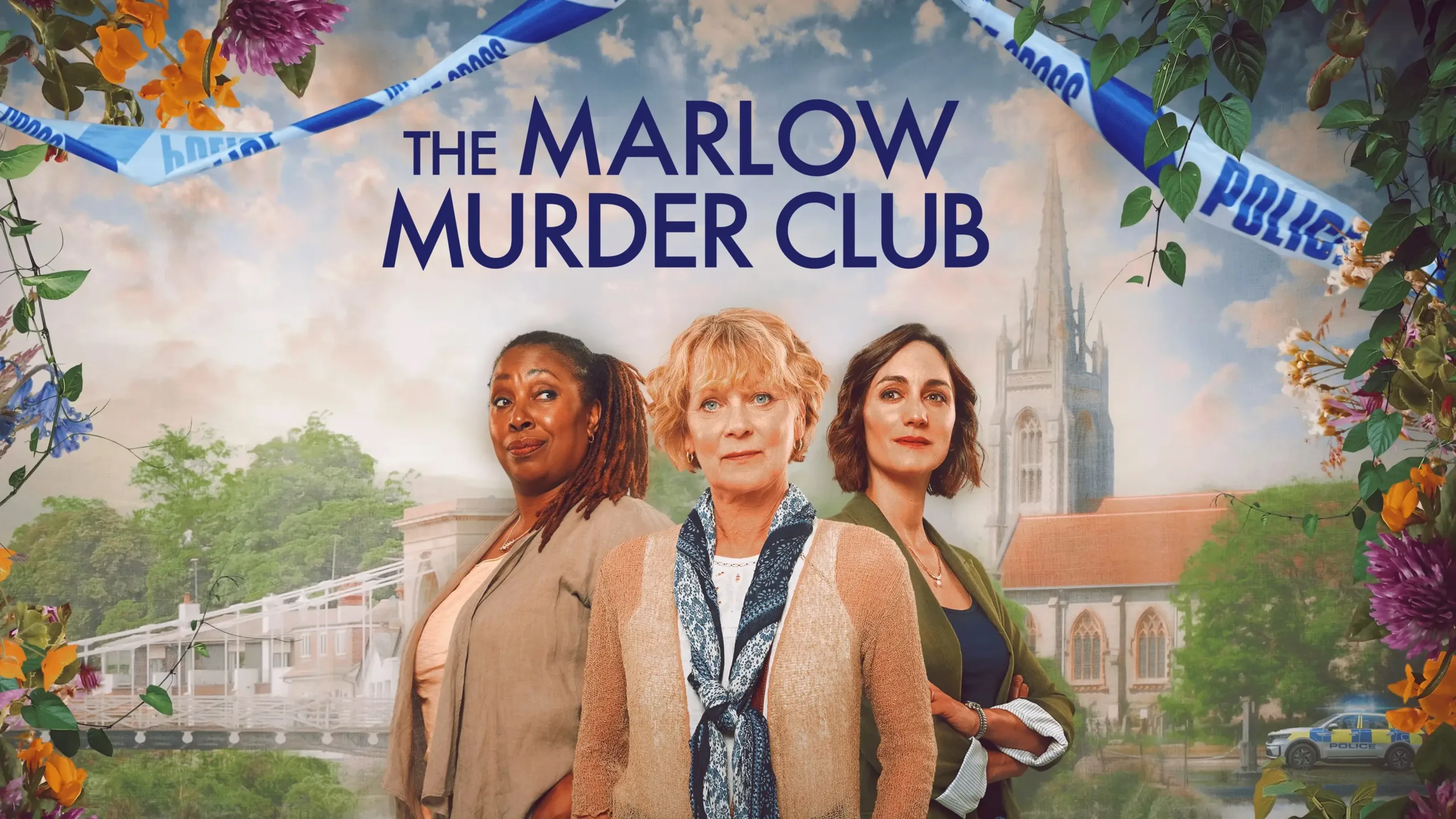

The idyllic English town of Marlow has a problem. It’s not the spotty Wi-Fi or the price of a good scone. It’s the alarmingly high body count. Luckily, the town also has The Marlow Murder Club, a trio of amateur sleuths who treat a suspicious death like a particularly tricky crossword puzzle.
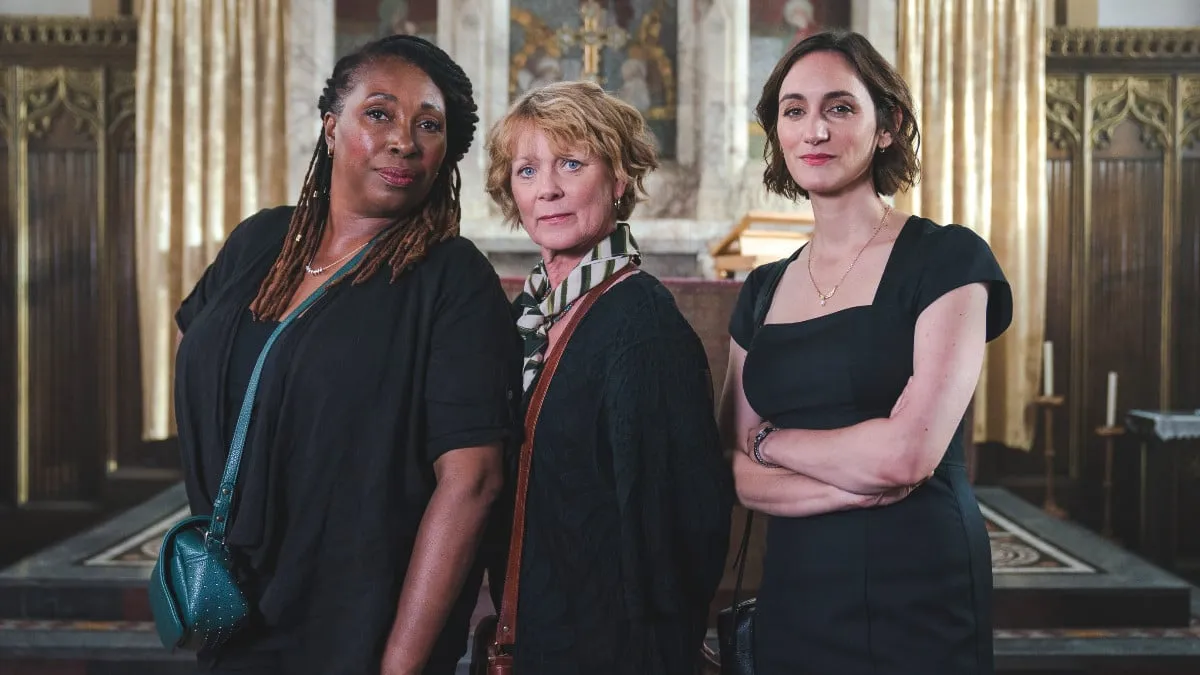
The group’s unofficial leader is Judith Potts (Samantha Bond), a retired archaeologist whose brilliant mind is matched only by her penchant for wild swimming. She is joined by Suzie Harris (Jo Martin), a no-nonsense dog-walker with an extensive network of local gossip, and Becks Starling (Cara Horgan), the vicar’s wife with a hidden rebellious streak.
This is a cozy mystery in its purest form, a modern heir to the grand British tradition of Miss Miss Marple. The series is a comfortable armchair of a show, promising gentle puzzles and clever deductions. It asks you to expect tea and biscuits, not terror and high-speed chases.
New Structure, Same Charm
The biggest change in the show’s second season is a structural overhaul, a deliberate pivot that speaks volumes about television production trends. The first season adapted a single novel across its runtime, feeling more like a self-contained miniseries. This new set of episodes smartly retools the series for the long haul, trading one extended case for three distinct two-part mysteries.
This shift immediately establishes Marlow as a sustainable, episodic drama, better suited for both traditional broadcast schedules and the content-hungry world of streaming. It is a declaration of intent to stick around. The new format gives the stories significantly more room to breathe, allowing for quieter character beats that were sometimes lost in the forward rush of the initial plot.
These are the scenes dedicated to the women discussing their lives over coffee or dissecting clues during a riverside walk, moments of character building that the previous season could seldom afford. This structure builds out the world and gives the friendship between Judith, Suzie, and Becks a more grounded, lived-in feel.
The logic of three civilians repeatedly stumbling into active police work also becomes slightly more palatable with the episodic rhythm. The trade-off for this stability is a noticeable dip in the stakes. With no single, menacing villain lurking in the background, the personal danger that previously targeted Judith has evaporated.
This aligns perfectly with the cozy genre’s primary directive: the audience’s comfort is paramount. The threat remains external, a puzzle to be solved, never an existential crisis for the heroines. Readers of the books might also find the premiere, which condenses an entire novel into two hours, feels a bit compressed, with certain subplots and nuances sacrificed for pacing. The show is betting its future on a reliable, repeatable formula.
Case Files of the Cozy Kind
A procedural lives or dies by its cases, and Season 2 offers a mixed but enjoyable bag of criminal puzzles. The opening mystery, adapted from Robert Thorogood’s novel Death Comes to Marlow, is easily the highlight and a masterclass in trope execution. It is a wonderfully constructed puzzle box, a classic locked-room scenario involving a wealthy patriarch, a cast of greedy heirs, and a seemingly impossible cause of death. Its resolution is so ingenious Agatha Christie would surely nod in approval.

This case also delivers the season’s single greatest comedic set piece: a surprisingly tense chase scene involving two dueling mobility scooters. The sight of Judith grimly pursuing a suspect at top speed through Marlow’s pristine streets is a moment of sublime silliness that perfectly captures the show’s spirit. The subsequent two mysteries, written for television by new writers, are perfectly serviceable yet lack the same spark of invention.
They feel tonally appropriate, fitting neatly into the established world of Marlow. Longtime viewers of British crime dramas will find the beats and suspect pools familiar, echoing the “murder-of-the-week” format of shows like Midsomer Murders. One case centers on a competitive rowing club, another on a contentious town council meeting.
These are reliable backdrops for murder, though they do not offer many narrative surprises. The show never pretends its puzzles are brain-breakers. Instead, it invites the audience to tag along. The direction frequently positions the viewer as a fourth member of the club, showing us the clue that the police miss or letting us overhear a suspicious conversation. This technique makes the investigation feel like a communal activity, a game to be played from the sofa.
The Club’s Roster
With another three murders under their belts, the friendship between the central trio has deepened into a comfortable, authentic rapport. The chemistry between Samantha Bond, Jo Martin, and Cara Horgan is the show’s engine, and the series is at its most engaging when the three are simply together, whether they are examining a crime scene or sharing a pot of tea.

The dynamic is clear: Judith provides the intellectual firepower, Suzie offers practical wisdom and connections, and Becks contributes unexpected insights born from a life spent observing people. The new episodic structure gives Bond’s Judith Potts more room for personal reflection. She confronts the moral dilemmas of her meddling and even entertains a mild flirtation, adding new facets to her sharp-witted character.
The official police presence also gets a welcome boost. DS Tanika Malik, played with grounded charm by Natalie Dew, is a true standout. She functions as the audience surrogate within the system, her initial skepticism slowly giving way to a grudging partnership. A subplot about her work-life balance gives her a reality that grounds the sometimes-fantastical proceedings.
Yet the spotlight is not shared equally. With so much attention on Judith and Tanika, Suzie and Becks are often left on the periphery. Their personal lives are reduced to quick mentions, their skills used for plot mechanics instead of character exploration. We learn little more about Suzie’s relationship with her daughter or Becks’ navigation of her duties as a vicar’s wife.
They remain likable figures, but their potential feels untapped, leaving two-thirds of the central club feeling more like helpful accessories than fully realized partners. The cases themselves are populated by a rotating cast of familiar British actors, a testament to the ecosystem of UK television where esteemed performers appear for a fun, contained role.
The Art of the Cozy Crime
The world of The Marlow Murder Club is aggressively pleasant. Its version of Marlow is a sun-drenched, “chocolate-box” England of cricket on the green, high-street bunting, and homes that seem to exist purely for design magazines. The cinematography leans into this warmth, employing a bright, saturated color palette that creates a visual buffer against the grim reality of homicide.
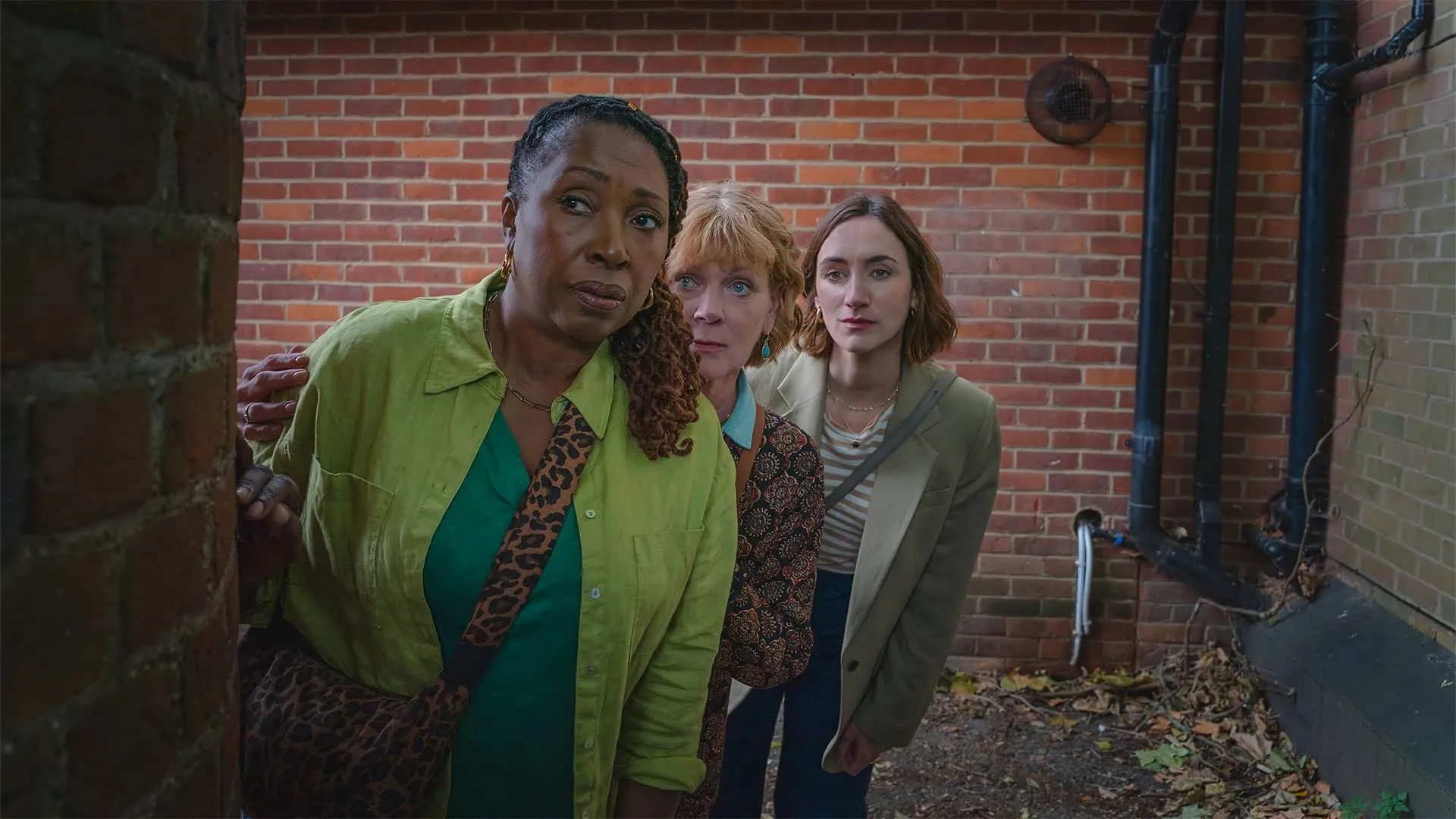
The sound design reinforces this feeling, filled with gentle birdsong and a light, unobtrusive score. Here, murder is a clean affair, a puzzle to be solved without any messy psychological or forensic details. The tone is light to the point of being fluffy. Personal subplots are almost comically low-stakes; a character’s biggest problem might be a disappointing art class or a disagreement with a town official.
This heightened reality sometimes extends to the dialogue, which can feel a bit mannered, as if the characters are speaking from a script written in 1955. It eschews modern cynicism and slang, creating a timeless quality that is a key part of its appeal. The humor often lands better through action than words. While some of the banter feels stilted, a bit of physical comedy or a clever detail, like Becks’ encyclopedic knowledge of expensive wellington boots, can produce a genuine laugh.
A Charming Continuation
The second season of The Marlow Murder Club is a confident continuation, delivering precisely what its audience expects. It successfully transitions from a one-off adaptation into a durable episodic series, securing its place in the television landscape.
The show is built on a foundation of charm, and the likable performances and pleasant atmosphere are often enough to smooth over its narrative simplicity. It is an enjoyable escape, a perfect program for a quiet evening. The show has found its comfortable rhythm. The only question is how many more residents of this sleepy town will have to perish to maintain it.
The Marlow Murder Club Season 2 is a British crime drama series that premiered in the United States on PBS Masterpiece on Sunday, August 24, 2025. It is also available for streaming on the PBS app and website. In the UK, the series airs on U and U&Drama.
Full Credits
Director: Steve Barron, Katherine Churcher
Writers: Robert Thorogood, Lucia Haynes, Julia Gilbert
Producers and Executive Producers: Robert Thorogood, Steve Barron, Alison Carpenter, Debra Hayward, Alison Owen, Serena Cullen, Susanne Simpson
Cast: Samantha Bond, Jo Martin, Cara Horgan, Natalie Dew, Nina Sosanya, Tom Stourton, James Wilby, Patrick Robinson, Samantha Womack, Hugh Quarshie
Director of Photography (Cinematographer): Trevelyan Oliver
Editors: David Yardley, Jeremy Strachan
Composer: Cora Miron
The Review
The Marlow Murder Club Season 2
With a charming cast and a successful new episodic format, The Marlow Murder Club’s second season is a comfortable and enjoyable watch for fans of cozy crime. While the central trio's chemistry remains the show's greatest strength, a focus on its lead investigator leaves other characters underdeveloped. The mysteries are clever, if sometimes familiar, but the show's pleasant atmosphere makes it a consistently delightful escape. It knows its formula and executes it well.
PROS
- Excellent chemistry among the three leads.
- Samantha Bond's strong central performance.
- Delightful 'cozy' atmosphere and picturesque setting.
- Smart transition to an episodic format that suits the series.
- Ingenious opening mystery with memorable comedic moments.
CONS
- Supporting main characters Suzie and Becks feel underdeveloped.
- Later mysteries can feel conventional for the genre.
- Dialogue is sometimes mannered and old-fashioned.
- Very low stakes with little sense of real jeopardy.