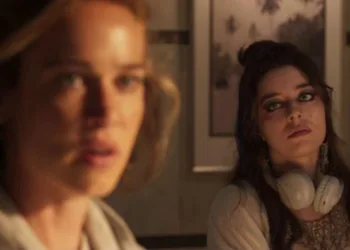







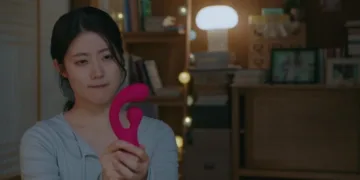












In the concrete penumbra of Minsk, White Snail locates a quiet, unnerving story of human connection. The film is a study in melancholy, a fragile narrative built around two souls adrift in a sea of emotional detachment. We meet Masha, an aspiring model whose spectral beauty seems almost translucent, her mental state as precarious as her physical frame.
Then there is Misha, a morgue worker whose body is a canvas of tattoos, his days spent in the silent company of the dead, his art a visceral scream into the void. Their worlds are hermetically sealed until a failed suicide attempt brings Masha to the hospital and, by extension, into Misha’s sterile domain.
This macabre meeting, far from any cinematic convention of romance, becomes the catalyst for a sincere, unsettling bond. The film frames their story not as a cure for loneliness but as an unflinching exploration of it, a search for mutual understanding in an alienating landscape that offers little comfort.
Flesh as Canvas, Flesh as Commodity
The film’s central philosophical query revolves around the body as a vessel, and it dissects this theme with surgical precision. For Masha, her flesh is a commodity, an object to be measured and perfected for the transactional gaze of the modeling industry. The camera apes the cold objectivity of a talent agent, turning her into a living mannequin whose value is contingent on her silent, flawless appearance.
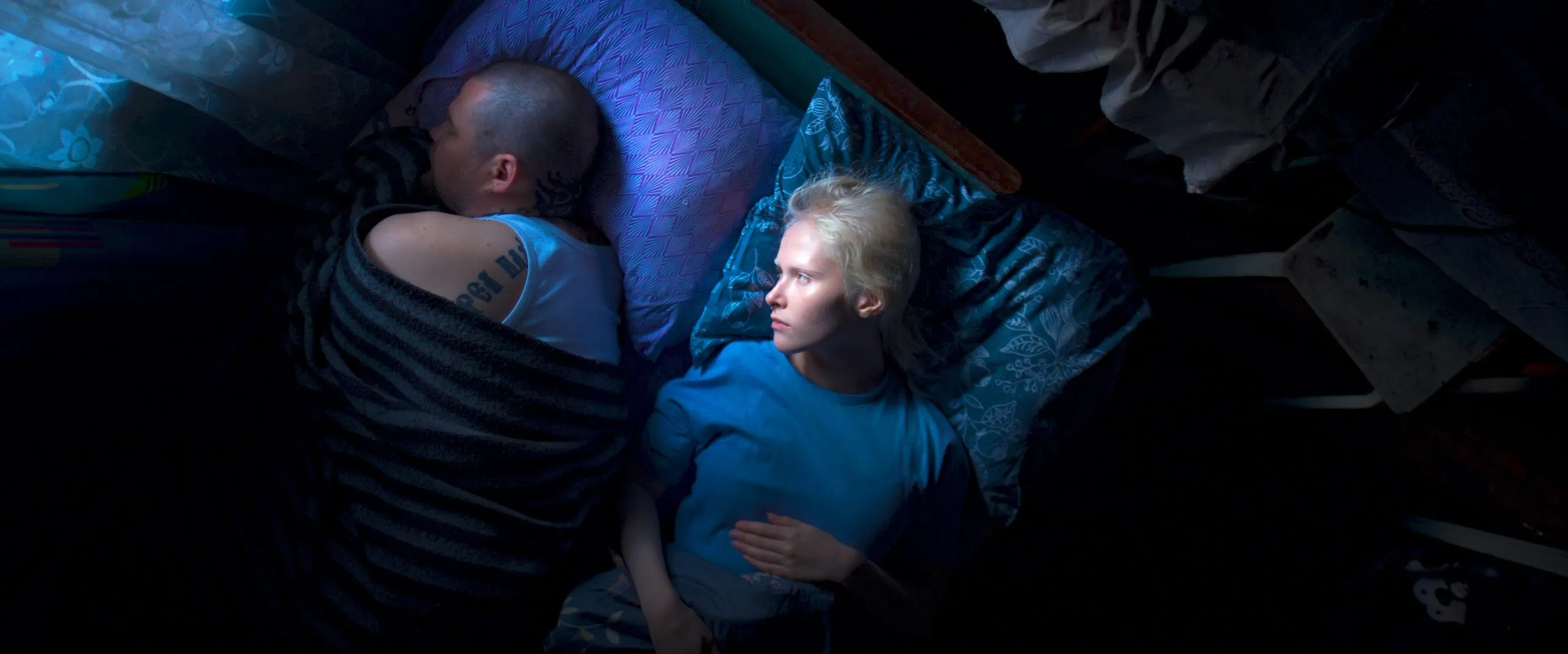
She learns to perform beauty, an affectation that bleeds into a Gen Z goth detachment, a shield against the world. This is contrasted with Misha’s professional life. In his morgue, the body is also an object, but one stripped of all artifice, a collection of tissues and organs to be methodically cataloged. This shared focus on mortality diverges critically: Masha’s is an internalized force of self-destruction, while Misha’s is an externalized, professional duty he processes through his brutalist paintings.
The casting of non-professionals Marya Imbro and Mikhail Senkov is a masterstroke. Their lived experiences—her time as a model, his as a morgue worker and artist—inject a stark verisimilitude that feels less like performance and more like testimony.
Their chemistry is a thing of hesitant gestures and shared silences, a fragile alliance built on a mutual vocabulary of isolation. His solid, inked form and her pale, breakable presence create a potent visual dialectic. The film refuses the easy catharsis of a love story, instead offering something far more ambiguous and intellectually honest.
A City Bathed in Neon and Nihilism
Directors Elsa Kremser and Levin Peter leverage their documentary background to create an atmosphere of profound, almost tactile realism. The visual language of White Snail is one of stark precision, building a world that feels both hyper-real and dreamlike.
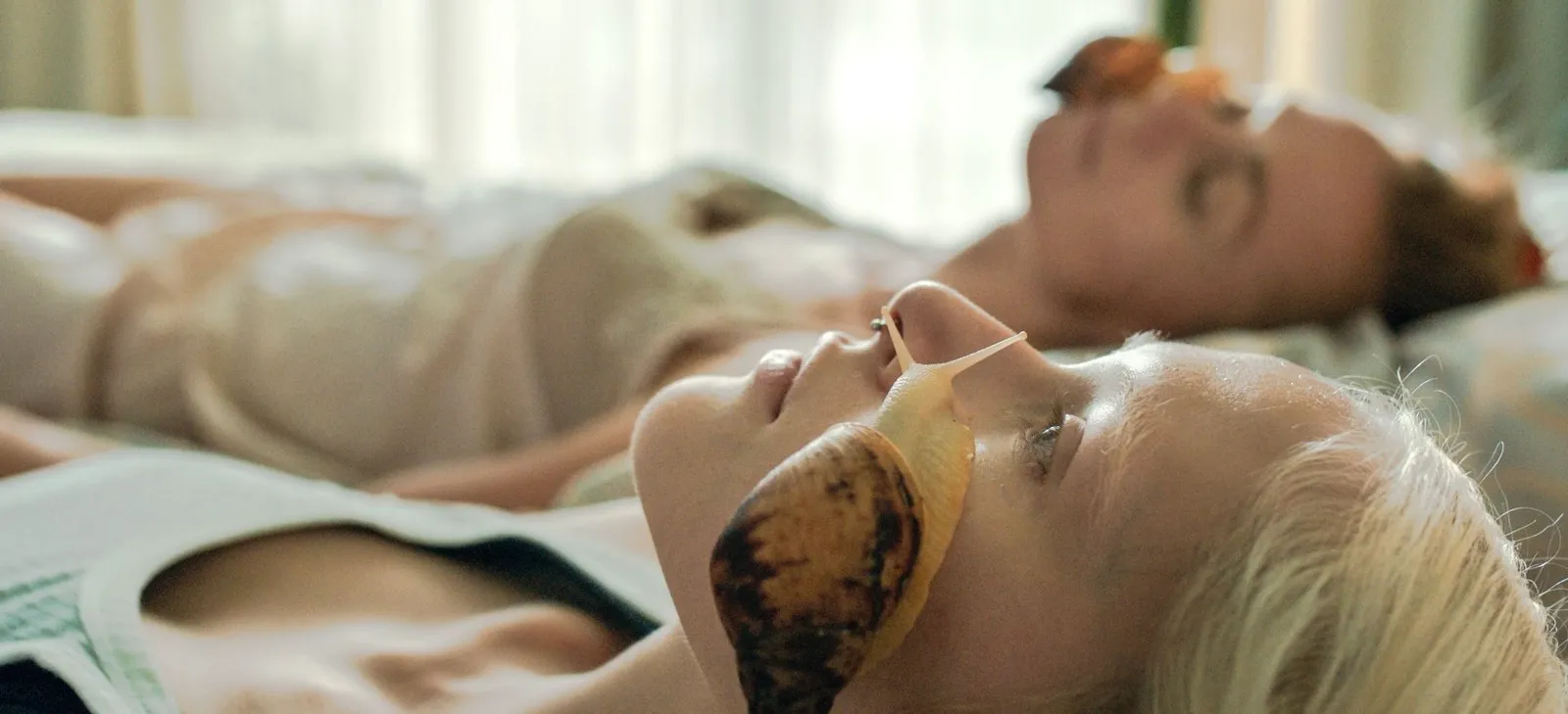
Cinematographer Mikhail Khursevich employs a restless handheld camera, creating an intimacy that is both immediate and deeply unsettling, as if the viewer is an unseen, anxious observer. The film’s expressionistic use of color paints a psychological portrait of Minsk itself.
The city at night is a canvas of inky blues punctuated by the isolated warmth of streetlights, a modern chiaroscuro effect that traps its inhabitants in pools of light and shadow. When the film follows Masha into clubs or through the city, the frame is often flooded with the cold, alienating neon of pink and blue, visually coding her entrapment within a superficial world.
The sound design further manipulates audience perception, layering the diegetic hum of the city with a sense of dread. The sterile quiet of the morgue is as loud as any shout. The pacing is deliberately languid, mirroring the slow, deliberate movement of the titular creature.
This forces the audience into the characters’ static existence, making their isolation palpable. Moments that might be cliché in other hands—a scooter ride on a deserted road, a tense lakeside getaway—are rendered strange and melancholic through this studied minimalism. The score from John Gurtler and Jan Miserre is a work of masterful restraint, a low hum of anxiety that enhances the nervous mood without ever dictating it.
Art in a Cold Climate
The film uses its intimate character study to ask larger questions about the societal systems that contain them. The sterile, image-obsessed world of modeling becomes a chilling metaphor for a culture that prizes the surface above all else, a stark counterpoint to the raw finality of Misha’s morgue where all bodies are rendered equal.

His art serves as a crucial psychological outlet, a private language to process the public silence surrounding death. The paintings, which are the actor’s own creations, are not merely props; they are a key to his psyche, a defiant act of creation against a backdrop of decay. Floating just beneath this personal drama is the pervasive unease of the Belarusian state.
News reports of border tensions flicker on radios, a low-frequency hum of geopolitical anxiety that evokes the fatalism of classic noir. This context is not overt, yet it shapes the characters’ limited horizons and fuels their desperate desire for escape.
The snail itself becomes a layered symbol: a bizarre skincare treatment, a fragile pet, a metaphor for their slow and shelled existence. The film argues that their connection is not a solution. It is a momentary reprieve, an imperfect but vital act of two people truly seeing each other in a world that prefers them to be invisible. It is a symbolic connection, as the film suggests, rendered possible in slime. It poses a final, chilling question: in a dehumanizing world, is a fleeting moment of shared darkness the only authentic light one can hope for?
The Austrian-German romance film White Snail premiered on August 8, 2025, at the Locarno Film Festival. It was also screened at the Sarajevo Film Festival starting on August 18, 2025. The film is distributed in Austria by Filmladen Verleih and in Germany by Real Fiction Filmverleih.
Full Credits
Director: Elsa Kremser, Levin Peter
Writers: Elsa Kremser, Levin Peter
Producers and Executive Producers: Lixi Frank, David Bohun, Elsa Kremser, Levin Peter
Cast: Marya Imbro, Mikhail Senkov, Olga Reptuh, Andrei Sauchanka
Director of Photography (Cinematographer): Mikhail Khursevich
Editors: Stephan Bechinger
Composer: John Gürtler, Jan Miserre
The Review
White Snail
A challenging and visually precise film, White Snail is a stark meditation on isolation. It trades narrative momentum for a somber, atmospheric study of two alienated souls. The directors create a potent, melancholy mood piece anchored by authentic performances. While its deliberate pacing may test some viewers, the film's unflinching look at the human need for connection in a cold world is both intellectually and emotionally resonant. It is a quiet, unsettling work that lingers long after the credits roll.
PROS
- Stunning, atmospheric cinematography with a strong visual identity.
- Authentic and compelling performances from non-professional actors.
- A thoughtful and deep exploration of themes like isolation, mortality, and the body.
- Effective use of a subtle socio-political backdrop to enhance the mood.
CONS
- The deliberately slow pacing could feel sluggish or inaccessible to some viewers.
- A narrative that is intentionally subdued and lacks conventional dramatic tension.
- The emotional tone is consistently downbeat, which can be oppressive.