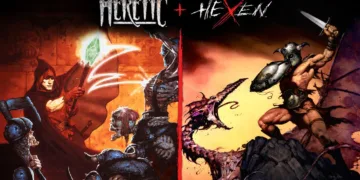

























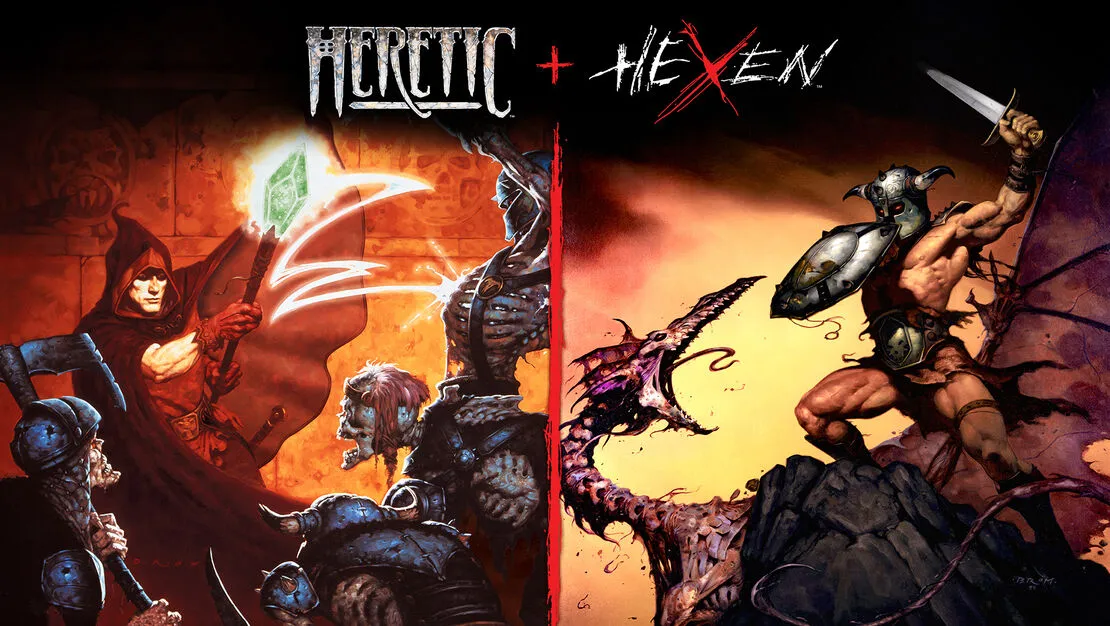

In the mid-1990s, the first-person shooter was defined by science fiction. We explored Martian bases and futuristic corridors, but Raven Software invited us to walk a different path, one shrouded in shadow and sorcery. Their games, Heretic and Hexen, took the powerful engine behind Doom and twisted it into a vessel for dark fantasy.
These titles became cornerstones of a subgenre, trading plasma rifles for magical staves and demons for medieval monstrosities. Now, Nightdive Studios has unearthed these cult classics in a new remastered package. It contains both original games, their official expansions, and even brand-new episodes crafted for this release. This collection serves as a careful restoration, making two essential pieces of shooter history accessible once more.
The Two Faces of Serpent-Slaying
Heretic presents an experience built on raw, kinetic satisfaction. Its design lineage from Doom is unmistakable in the blistering speed of its combat and the aggression of its enemies. Playing as the Sidhe elf Corvus, your mission is a straightforward crusade of vengeance against the first of the Serpent Riders. The game’s emotional arc is one of constant, forward momentum, a desperate fight through corrupted chapels and hellish dungeons. The narrative is communicated through atmosphere and action.
Yet, Heretic’s identity is secured by its inventory system, a simple addition that profoundly alters the rhythm of play. Discovering a Tome of Power is not an immediate buff; it is a tactical choice held in reserve. Activating it transforms your simple elven wand into a machine of clerical wrath or your crossbow into a multi-shot cannon.
This gives you direct control over the pacing, allowing you to punctuate long stretches of frantic combat with a moment of god-like power. Other items, like the Morph Ovum that turns horrific beasts into squawking chickens, inject a welcome dose of dark humor and strategic crowd control.
Hexen takes the foundation Heretic built and erects a far more complex and ambitious structure upon it. This is where the series pivots from pure action toward a contemplative, atmospheric adventure. The first choice you make, selecting between the Fighter, Cleric, or Mage, has immense consequences for your entire playthrough.
The Fighter is a creature of brutal, close-quarters combat, excelling at pulverizing enemies but struggling against distant or flying threats. The Mage is a classic glass cannon, capable of immense destruction from afar but perilously fragile up close. The Cleric exists in the middle, a versatile hybrid with tools for nearly any situation. This class system forces you to see the world through a specific lens. Hexen’s most radical departure, however, is its interconnected hub world.
Instead of a linear sequence of levels, you navigate a cluster of maps, where activating a switch in one might open a distant door in another. This design transforms the experience into a grand environmental puzzle. The emotional reward comes not just from defeating a powerful foe, but from the “aha” moment when you remember a locked passage from two hours prior and realize you now hold the key. It demands more from the player, asking for memory and patience, but the satisfaction of slowly prying open its secrets is immense.
Modern Magic – The Nightdive Enhancements
Nightdive Studios approaches its projects with the care of a master restoration artist, and this package is a prime example of their philosophy. Their work is not about reinvention but about removing the friction that time has introduced, allowing the original design to shine. This is most evident in the two brand-new episodes, Heretic: Faith Revived and Hexen: Vestiges of Grandeur.
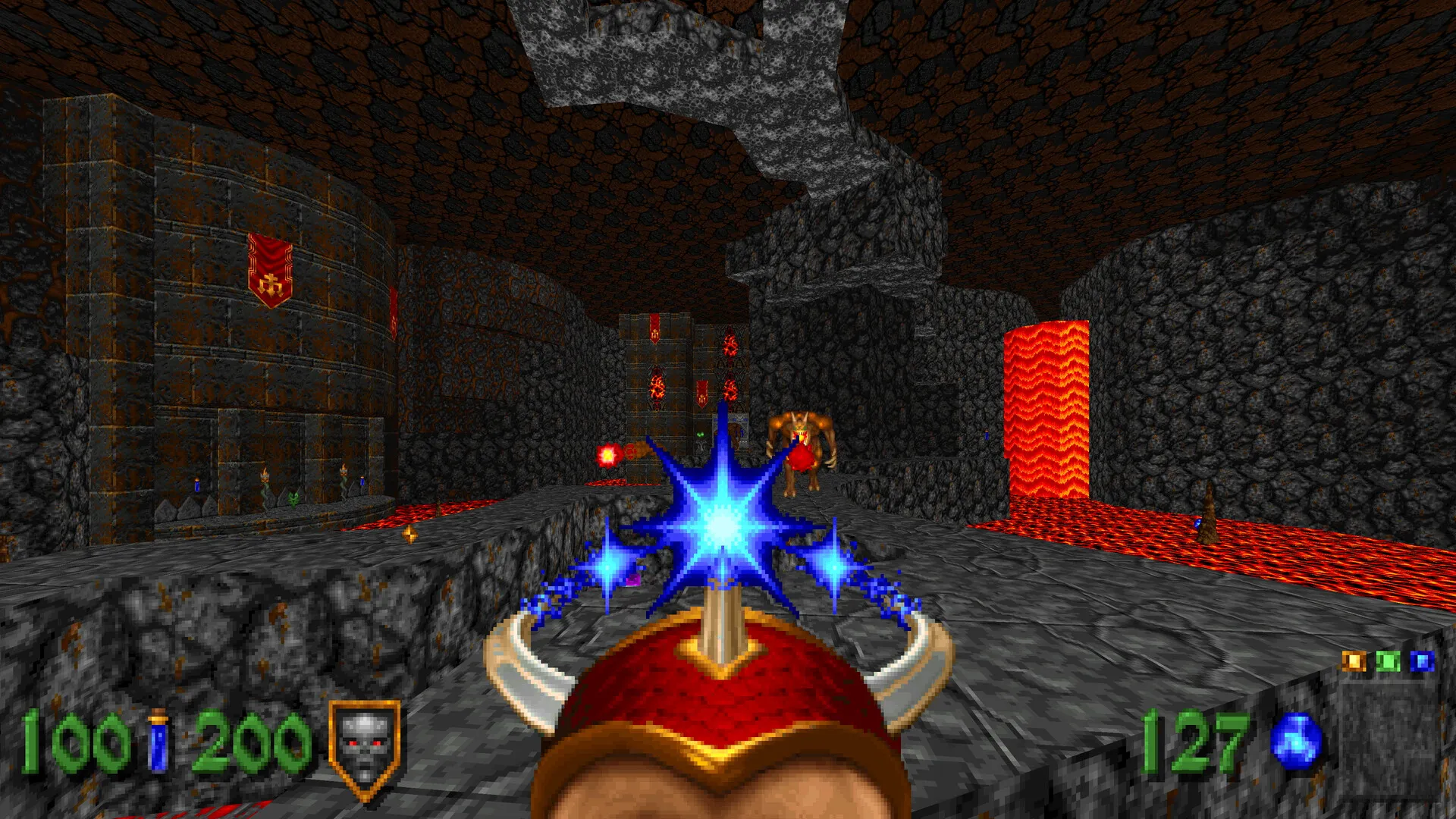
These are not mere map packs; they are masterful continuations of the original design language. They feel as if they were created by Raven Software’s top designers in 1996, pushing the classic engine to its limits with intricate layouts and clever encounters that demonstrate a deep reverence for the source material. They are a loving tribute from master students of the craft.
The gameplay refinements are surgical and intelligent. In Heretic, many enemies were originally designed with excessive health, leading to tedious circle-strafing encounters that bogged down the action. Nightdive has rebalanced these foes, making the combat feel more decisive and punchy without sacrificing the challenge.
The game’s pacing is dramatically improved as a result. The changes to Hexen are even more critical. The original game’s cryptic nature could often lead to hours of aimless wandering, a kind of friction that pulls a player out of the experience. The new, optional map markers and hint system elegantly solve this. They do not give you the answers; they simply point you in the right direction, ensuring your time is spent solving puzzles rather than fighting the interface.
This modification makes Hexen far more approachable for a modern audience. The ability to switch classes at designated terminals is another brilliant stroke, respecting the player’s time and encouraging the experimentation that is so central to Hexen’s appeal. These are the kinds of thoughtful changes that preserve a game’s spirit while honoring the sensibilities of today’s players.
Sights and Sounds of a Cursed World
The presentation of this package masterfully balances modern standards with authentic preservation. A locked 60fps frame rate provides the smoothness necessary for the fast-paced combat to feel responsive and satisfying. Widescreen support and high-resolution options make the visuals clean on modern displays. Yet, Nightdive has wisely chosen to preserve certain artifacts of the original id Tech 1 engine.
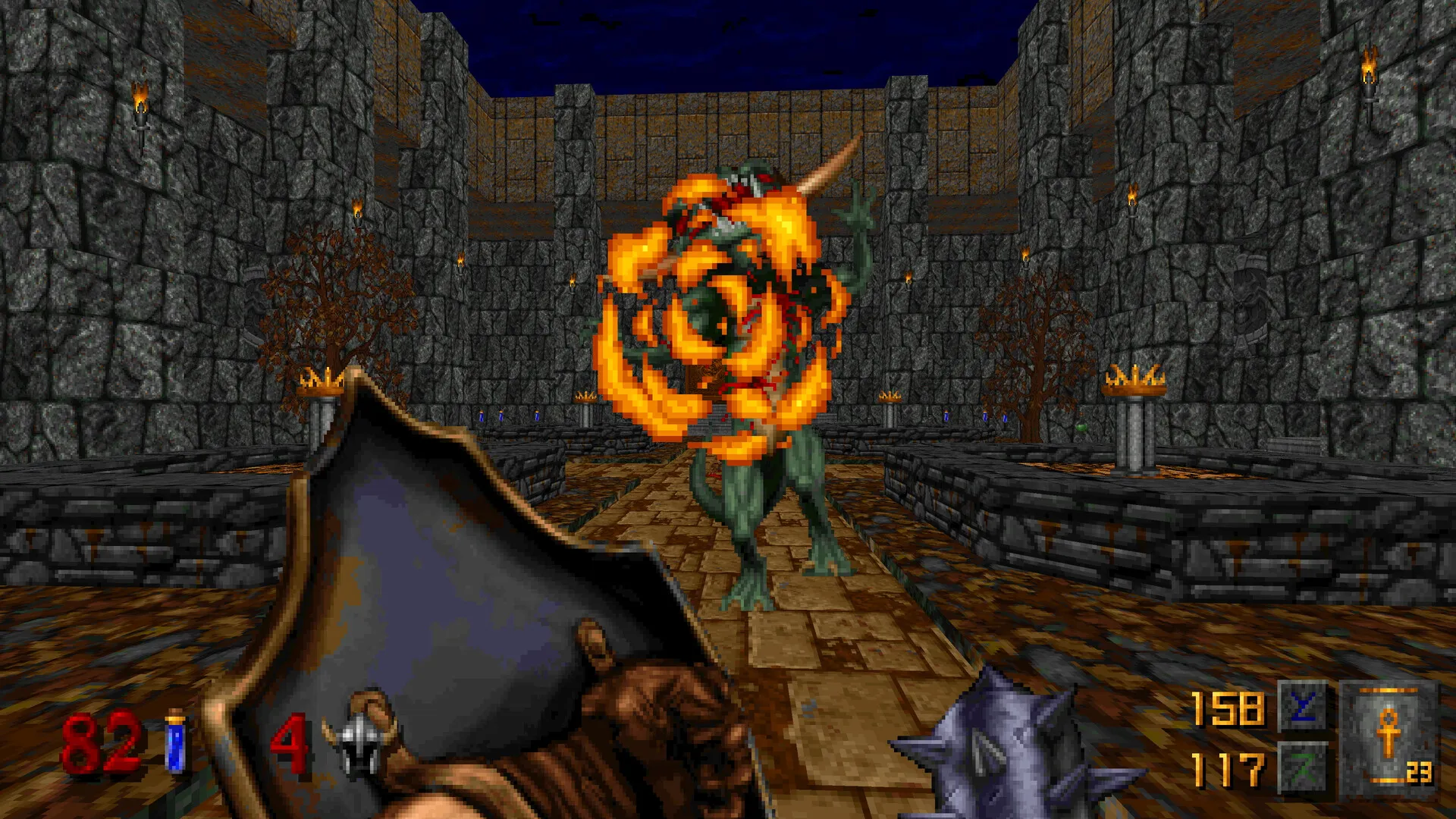
Most notable is the “texture warping” that occurs when looking up or down, a visual quirk that defined an entire generation of games. Keeping it here is an intentional artistic choice. It is the video game equivalent of film grain, a signature of the medium’s history that roots the experience in its era and connects the player to its authentic form.
The underlying art direction is strong enough to transcend its technical origins. Heretic’s world of gothic decay, with its stained-glass windows and lava-lit halls, remains powerfully atmospheric. Hexen’s environments are even more varied, from occult cathedrals and murky swamps to grand forges, all communicating a sense of a world collapsing under a great evil.
The audio design offers a fascinating choice in how you experience this world. The newly remixed and orchestrated soundtrack by Andrew Hulshult is spectacular, transforming the action into something bombastic and cinematic. It gives the combat a sense of modern, epic scale. In contrast, the original MIDI tracks have a lonely, haunting quality that creates a completely different emotional tone, one of isolation and dread.
The ability to switch between these scores at will is a powerful feature, allowing you to curate the game’s mood. One enhances the power fantasy, the other deepens the horror. Beneath the music, the classic sound effects remain. The satisfying crunch of the Fighter’s mace, the sharp crack of the Cleric’s serpent staff, and the unholy shriek of an Afrit are all perfectly preserved, providing the essential, visceral feedback that makes the combat timeless.
Multiplayer, Museums, and Minor Curses
Beyond the extensive single-player campaigns, the package includes a wealth of additional content. The online multiplayer supports both cooperative play and competitive deathmatch, with the welcome addition of cross-platform functionality. The cooperative mode is where the package truly finds new life.
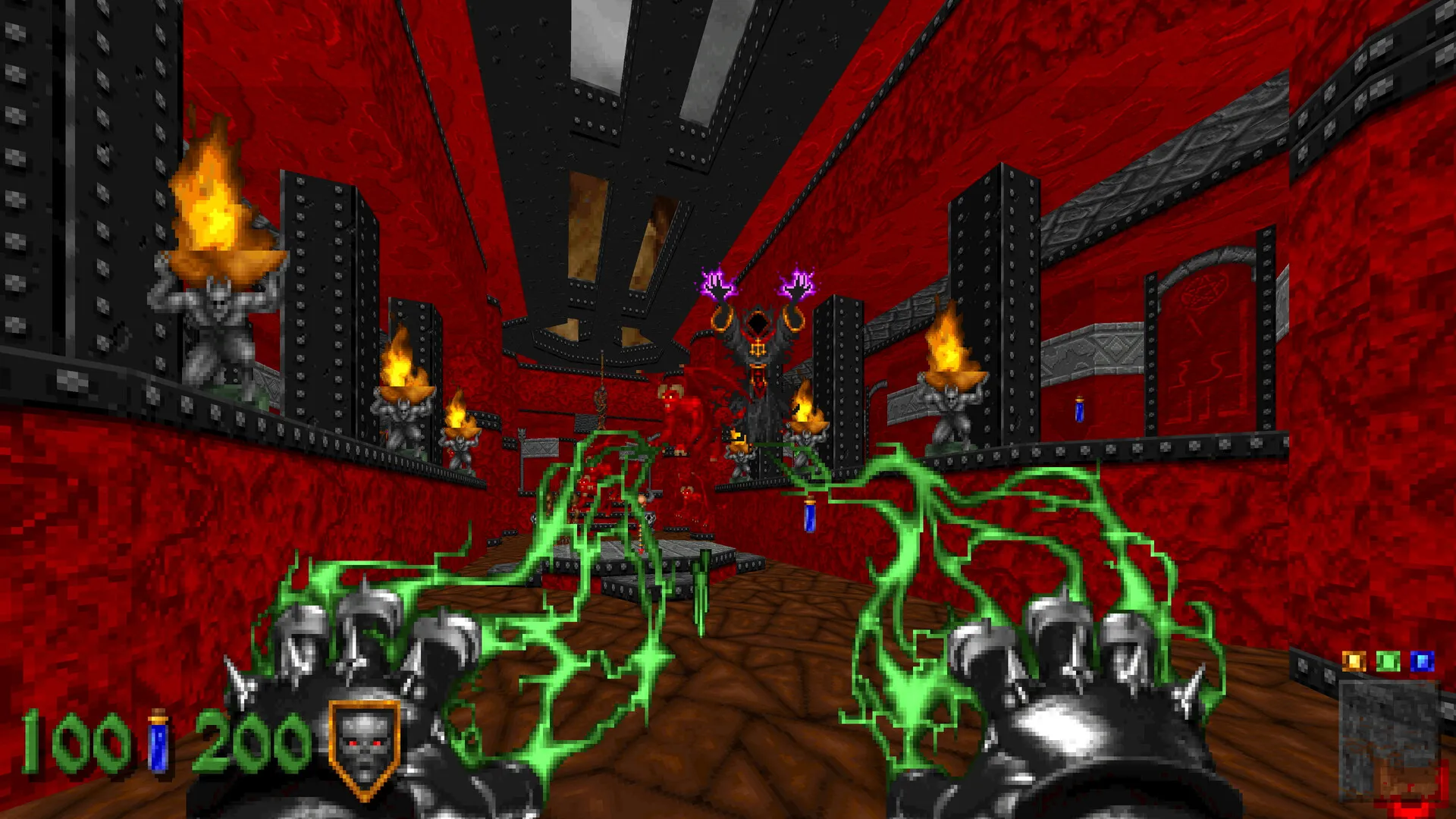
Playing Hexen with two other people, each controlling a different class, is a chaotic and joyous experience. A Fighter can hold the frontline against a horde of monsters while a Mage offers support from a safe distance, a dynamic that amplifies the game’s core mechanics. The experience can be affected by network latency, causing some jerky movement, but it remains a fantastic way to engage with these worlds.
For those interested in history, the “Raven Vault” is an invaluable resource. It is an act of digital archeology, a museum of behind-the-scenes concept art and design documents. Seeing the early sketches for iconic enemies or reading original design notes provides a deeper appreciation for the craft and constraints of 1990s game development.
There is, however, one significant curse placed upon this otherwise magnificent collection: its save system. All five distinct campaigns—Heretic and its expansion, and Hexen and its two expansions—all share a single, unified list of save files. Worse, they all share one quicksave slot. This is a baffling design decision in a package focused on preservation and quality-of-life improvements.
The potential for disaster is constant. You can spend an hour making progress in Heretic, make a quicksave, then decide to try Hexen for a few minutes. If you quicksave in Hexen, your Heretic progress is instantly erased. This flaw creates a persistent anxiety around the simple act of saving your game and actively discourages the kind of freeform exploration between the different titles that a bundle like this should encourage. It is a critical misstep in an experience that is otherwise handled with the utmost care.
The Review
Heretic + Hexen
This package is a masterful act of preservation, bringing two essential dark fantasy classics to the present with intelligence and care. The wealth of content, including expertly crafted new episodes and vital quality-of-life updates, makes this the definitive way to experience these games. While a deeply flawed save system creates unnecessary frustration, it is a single blemish on an otherwise outstanding and historically important collection that beautifully honors its source material.
PROS
- Two foundational fantasy FPS games plus all expansions in one bundle.
- Two brand-new, high-quality episodes that expand the experience.
- Intelligent quality-of-life improvements, especially the map markers for Hexen.
- Excellent new orchestral soundtrack alongside the classic MIDI versions.
- An immense amount of content and historical material.
CONS
- The shared save system with a single quicksave slot is a critical design flaw.
- Online multiplayer can suffer from technical instability.