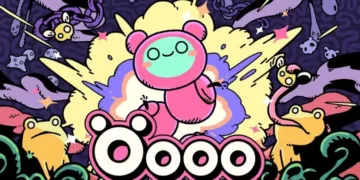



























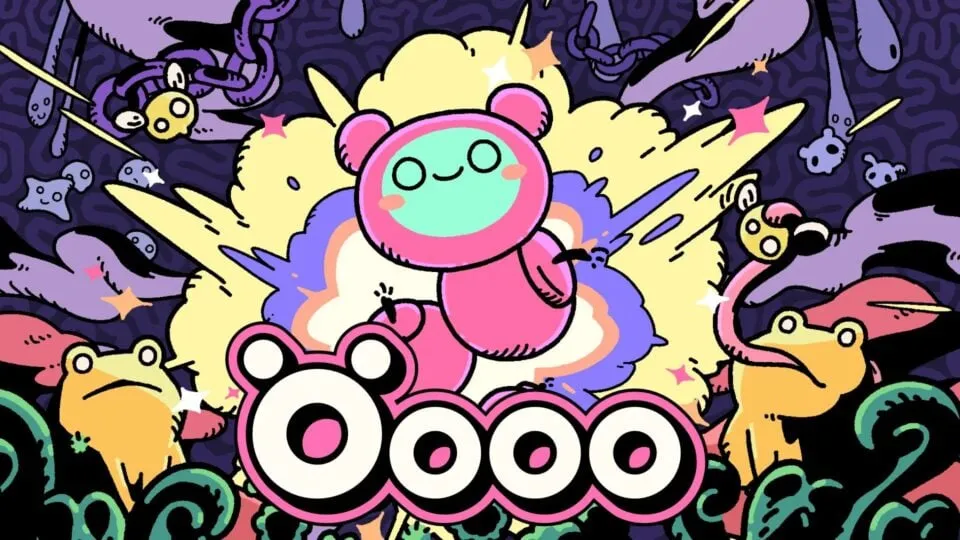

The day starts poorly for the small, caterpillar-like hero of Öoo. In pursuit of breakfast, our protagonist is abruptly swallowed by a giant bird. This comical predicament sets the stage for a simple, urgent goal: get out. The journey of escape takes place entirely within the bird’s surprisingly spacious digestive system. The central idea that defines this adventure is the bug’s unique biology.
It is a Bomb Caterpillar, and eating food causes it to grow a new body segment which is, quite literally, a bomb. This turns a desperate situation into a whimsical puzzle experience. The tone is kept light and humorous, focusing on the clever application of this explosive ability rather than the grim reality of being eaten alive.
Learning to Explode
Öoo commits completely to a design of minimalist mechanics, building its entire world on a foundation of three simple player actions: moving, priming a bomb, and detonating it. The controls are immediately accessible, yet the game’s depth emerges from the countless ways these actions can be combined. The game teaches its systems without a single word of text, a design choice that shares its philosophy with titles like Limbo or Inside.
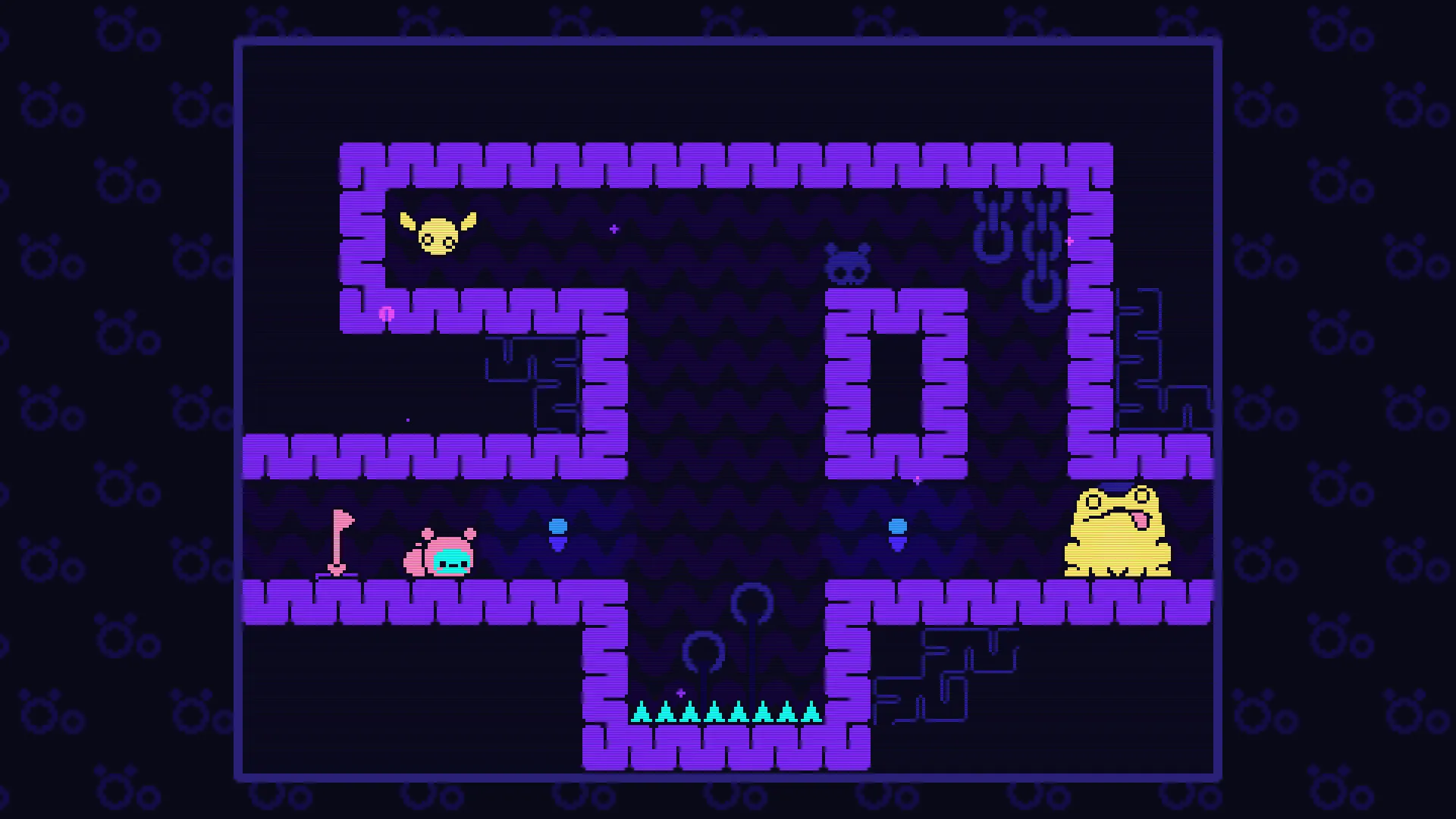
The player learns by doing, fostering a direct and intuitive connection with the game world. This process begins the moment you start a new game, where you are prompted to press buttons corresponding to icons floating above the sleeping protagonist. It is a brilliant, diegetic tutorial that teaches you everything you need to know before the first screen of gameplay even appears. It removes language as a barrier and trusts the player to learn through observation and interaction.
Initially, your movement is limited. With only one bomb segment, you learn the absolute fundamentals of traversal. Placing a bomb directly beneath your character and detonating it results in a vertical launch, the game’s equivalent of a standard jump. Tucking yourself to one side of the bomb before it explodes sends you flying horizontally across gaps.
Also Read





These first few puzzles gently guide you into understanding the basic physics of your explosive propulsion. You learn about timing, about positioning, and about the predictable arc of your launch. The puzzles are designed to feel like natural experiments, slowly building your confidence and your mechanical vocabulary.
The experience transforms once you acquire your second bomb segment. This is not a simple power-up; it is a logarithmic leap in complexity and potential. With two bombs, the player must begin thinking in sequences. The most immediate application is a form of double jump: stack both bombs, launch with the first, and then detonate the second at the apex of your climb for extra height. Soon, however, the game demands more intricate solutions.
A common scenario might require you to use the propulsive force of the first bomb to send your character sliding across a ravine, all while you are sitting atop the second bomb, ready to detonate it mid-flight for a high vertical leap onto a previously unreachable ledge. The mental shift from single-action solutions to multi-stage planning is a significant and satisfying hurdle.
You even learn to use one bomb to move the other bomb into a more advantageous position, treating your own segments as part of the environmental puzzle. This design stands in contrast to many puzzle-platformers that continuously add new, distinct abilities. Where a game like Braid introduces complex time manipulation, Öoo sticks to its core concept, deriving its surprising depth not from adding more tools, but from revealing the endless versatility of the tools you already have.
An Internal Metroidvania
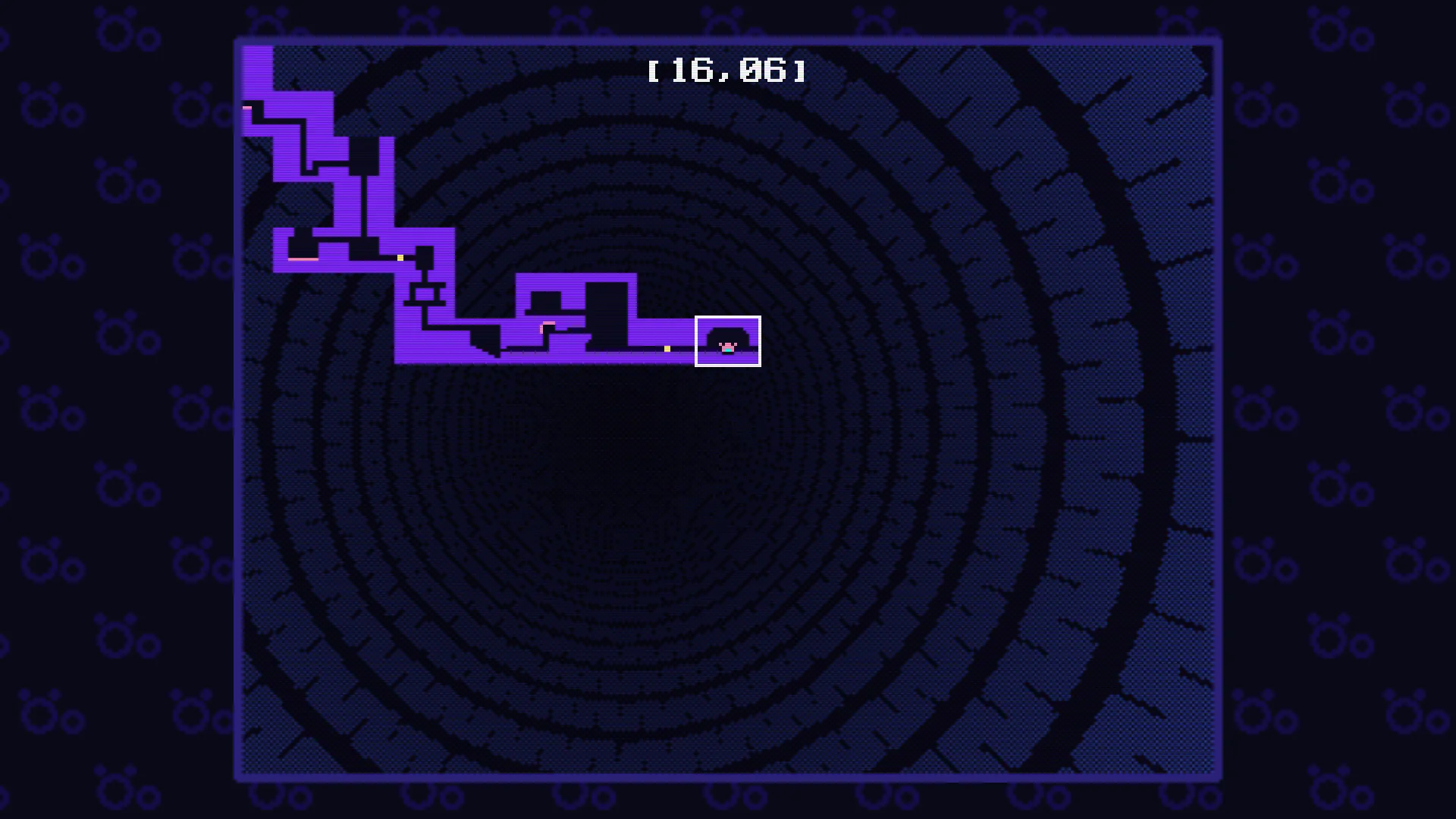
The structure of Öoo cleverly subverts the traditional Metroidvania formula, creating what might be best described as a “knowledge-vania.” In genre keystones like Super Metroid or Hollow Knight, progression is explicitly tied to acquiring new physical abilities. A high ledge is impassable until you find the Double Jump; a narrow tunnel is blocked until you acquire the Morph Ball. In Öoo, your physical toolset is fixed very early in the game. Progression is instead gated by your own understanding and ingenuity.
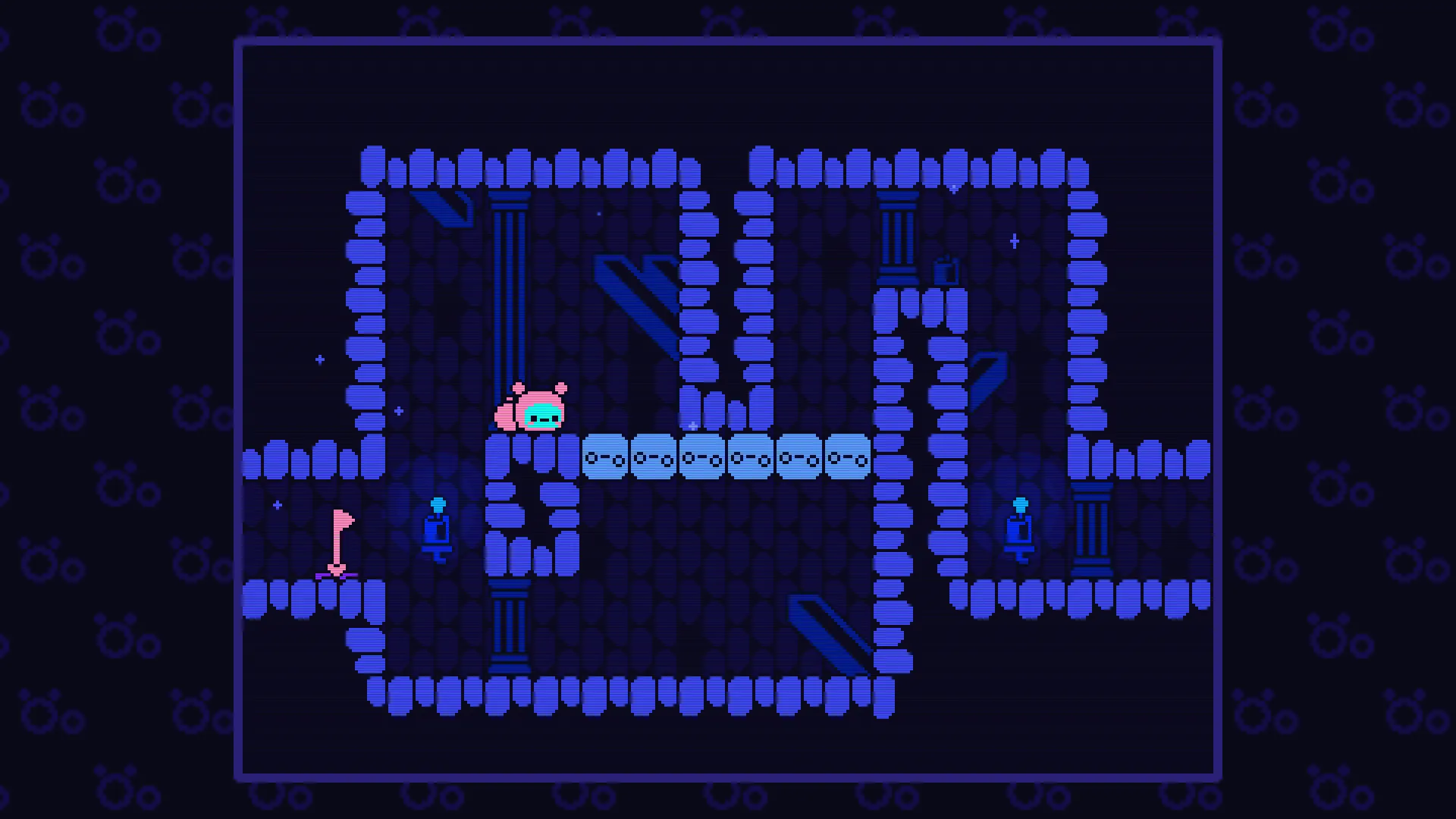
This is the game’s most profound design choice. You will frequently encounter a screen that seems impossible to solve and be forced to turn back, only to return much later with no new items in hand. The path is not unlocked by a new key, but by a new idea. You have not gained a new power, but a new perspective on how to use the powers you have always had. This makes backtracking an act of intellectual discovery rather than a simple chore of revisiting a location with the correct key.
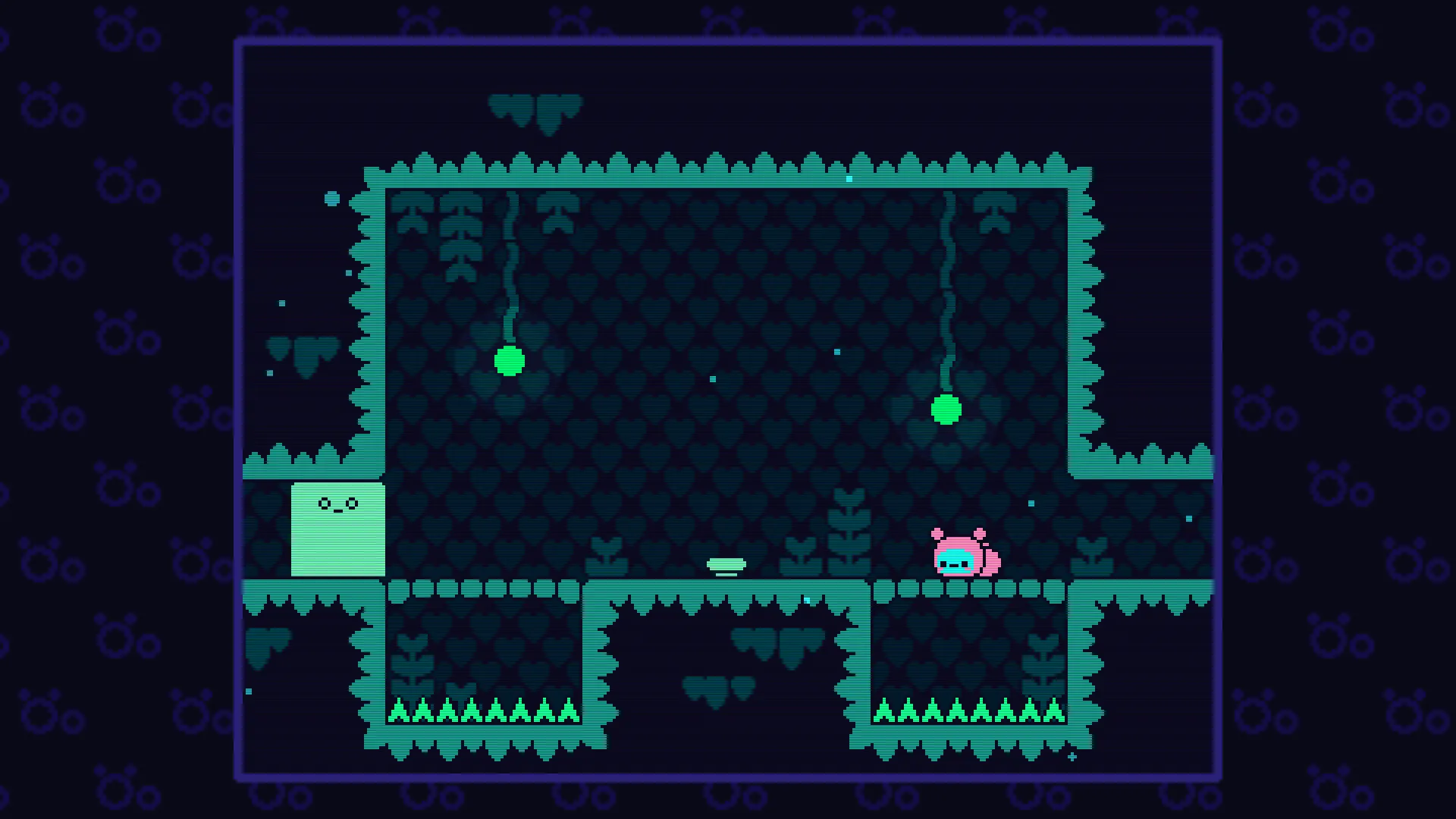
This mental progression is guided by a masterful level design. The world, set entirely within the anatomical regions of the bird, is divided into distinct zones, each with its own color palette and aesthetic theme. There are toxic swamps, dense jungles, deep caves, and even strange, futuristic areas made of stone and light. Each of these zones functions as a self-contained lesson, built around a specific principle or a new application of your bomb mechanics.
One area might focus on perfecting timing, forcing you to detonate bombs mid-air to navigate a maze of hazards. Another might be built around momentum, teaching you how to chain explosions together to build up enough speed to cross a massive chasm. This focused approach ensures that new techniques are internalized before the game asks you to combine them in more complex ways later on. The satisfaction comes from those frequent “Eureka!” moments, when the solution to a vexing puzzle clicks into place and feels beautifully simple in retrospect.
The core mechanics are supplemented by a few additional puzzle elements. The most common involves escorting small, buzzing yellow flies to large, hungry toads who block your path. These sections add a light escort-mission dynamic, as you must protect the fly from hazards while navigating the environment. The game also includes a fast-travel system in the form of friendly Warp Worms, a vital quality-of-life feature that prevents the tedious traversal that can sometimes plague the genre.
This design respects the player’s time. This respect is further demonstrated by the generous checkpointing and instant respawns. Much like in tough-as-nails platformers such as Celeste or Super Meat Boy, death is a trivial and expected part of the learning process, not a punishment.
This encourages risk-taking and experimentation, which are essential for discovering the game’s more obscure techniques. For players who do become truly stuck, the developer has included access to a full video walkthrough from within the game itself. This is a modern, thoughtful approach to difficulty, acknowledging that the goal is player enjoyment and progress, not arbitrary frustration.
Pixelated Presentation
The game’s aesthetic is inseparable from its mechanical excellence, with every audio-visual choice made in service of gameplay clarity and charm. The chunky, clean pixel art is highly readable, a crucial quality for a puzzle game where interpreting the environment correctly is everything. This clarity allows the game to present all necessary information diegetically, removing the need for an intrusive heads-up display.
For instance, when you prime your two bombs, they are color-coded to indicate which will detonate first when you press the button. Obstacles that can be destroyed but will quickly regenerate are displayed with a fading outline after they break, clearly communicating the limited time you have to pass. This kind of visual shorthand is elegant and intuitive, allowing the player to focus on the puzzle at hand.
The artistic variety between zones keeps the experience visually engaging. The shift from the organic greens of a jungle region to the cold blues of a stone-and-light area provides a refreshing change of pace and gives each section of the world a memorable identity.
The character design is simple, cute, and expressive. Animations are bouncy and full of personality; the main character will even doze off and begin to snore if left idle for too long. Small details, like the way the entire level seems to warp and distort slightly around an explosion, add a satisfying sense of impact and polish that elevates the entire presentation.
This meticulous attention to detail extends to the game’s soundscape. The chiptune soundtrack, composed by Tsuymoi, provides a brilliant and energetic backdrop to the puzzle-solving. Each region features its own distinct theme that perfectly matches the visual style and atmosphere without ever losing the game’s overarching lighthearted nature.
The music is also dynamic and responsive to gameplay. When you are escorting one of the yellow flies, the background track cleverly shifts to incorporate a buzzy, kazoo-like instrumentation, sonically reinforcing your current objective. The sound effects are equally impeccable. Every movement, jump, and explosion is accompanied by a suite of satisfying bleeps, chirps, and pings that provide crucial audio feedback and fill out the world with a sense of whimsy.
A Tightly Packed Explosive
Öoo is a masterful exercise in minimalist design, a superb example of a game that commits to a single core mechanic and explores it with immense depth and creativity. It is a clear reflection of the design ethos of its creator, Nama Takahashi, whose previous work like ElecHead also demonstrated a passion for this focused approach.
The puzzle design is consistently intelligent, challenging the player to think in new ways while respecting their time and intelligence through user-friendly features. It is an easy recommendation for any player who values design elegance over sprawling content, and for those who find joy in the process of intellectual discovery.
The experience is concise, lasting only a few hours, but this brevity is one of its greatest strengths. There is no filler here, only a perfectly paced and deeply satisfying adventure that represents the very best of the puzzle-platformer genre.
The Review
Öoo
Öoo is a triumphant example of minimalist design, transforming a simple, two-button mechanic into an endlessly inventive puzzle-platformer. Its "knowledge-vania" structure is a brilliant twist on genre conventions, rewarding player ingenuity over item collection. With a charming presentation and perfectly paced, filler-free design, it offers a deeply satisfying and intelligent experience from start to finish.
PROS
- Exceptionally deep puzzle design born from a simple mechanic.
- Inventive "knowledge-vania" progression feels fresh and rewarding.
- Clean, charming pixel art and a wonderful chiptune soundtrack.
- Respectful of player time with smart pacing and user-friendly features.
CONS
- Short runtime may leave some players wanting more.
- The minimal premise offers little for those seeking a complex story.