










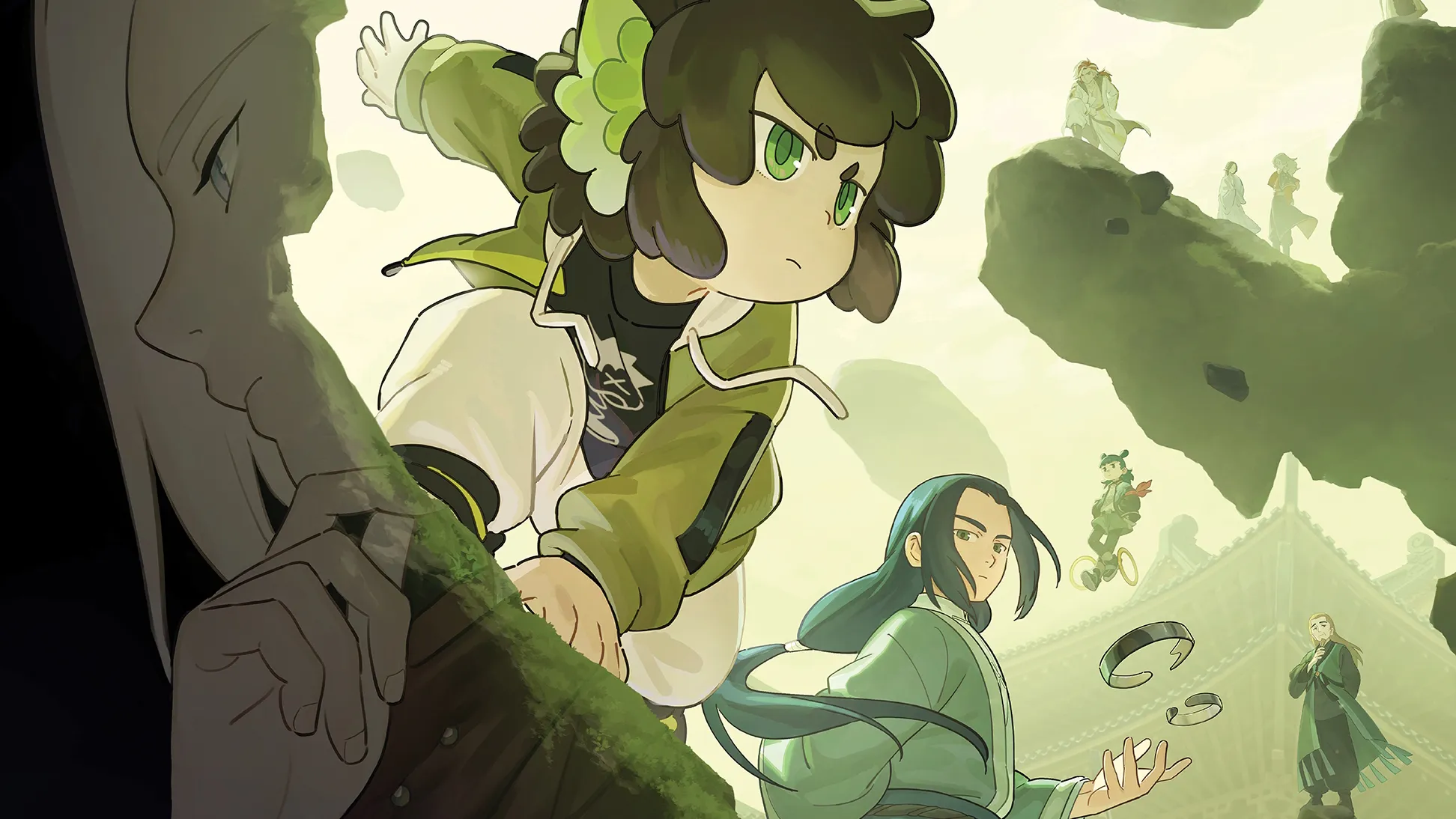

The meal is, once again, barely edible. This small, domestic failure is one of the few constants in the life of the young cat spirit Xiaohei and his human master, Wuxian. Their peace, however, is a fragile thing in a world where humans and spirits maintain a delicate truce.
The Legend Of Hei II quickly shatters this tranquility with a brutal, calculated attack on a spirit guild. The evidence points to one suspect: Wuxian. With his master detained and his name disgraced, Xiaohei is forced on a desperate mission to uncover the truth.
Thrown together with Luye, another of Wuxian’s pupils, the young spirit must find the real conspirators. The film immediately establishes that this is a story where personal loyalty is tested against the backdrop of an impending war, blending spectacular action with the simple, powerful motivation of saving one’s family.
Kinetic Calligraphy
The film’s artistry is a spectacle of motion and color, representing a substantial leap in technical confidence. Its animation is exceptionally energetic, creating a world that feels constantly alive. The cinematography contributes to this feeling, with a dynamic camera that sweeps through vast mountain ranges and dips into the clamor of a futuristic city, generating an authentic sense of place and scale.
Shots are composed for maximum dramatic effect; a low angle might be used to make a spirit appear immense and intimidating, filling the screen to emphasize their power. Where the visuals truly excel is in the action choreography. The elemental combat feels both powerful and graceful, as direction and movement evolve to emulate the flow of water or the unyielding force of earth. Fights are not chaotic blurs; they are clear and purposeful.
Key sequences are animated “on the ones,” a meticulous frame-by-frame technique that gives the powers a startling smoothness and clarity. The much-discussed airplane sequence is a masterful display of this craft, a ballet of destruction and control that is both thrilling and beautiful.
This technical precision is matched by the world’s design, a seamless mixture of traditional Chinese aesthetics and modern cyberpunk elements. Ancient guilds operate with high-speed portals, while spirits use smartphones. This visual union of nature and technology, the ancient and the new, serves as a constant, silent reflection of the story’s central conflict.
The Fractured Family
The film’s emotional weight rests on the strength of its character bonds, which are established with surprising efficiency. The opening montage, a charming depiction of daily life, solidifies the found-family dynamic between Xiaohei and Wuxian through small moments: Wuxian’s patient instruction, his comically bad attempts at cooking, and their shared adventures.
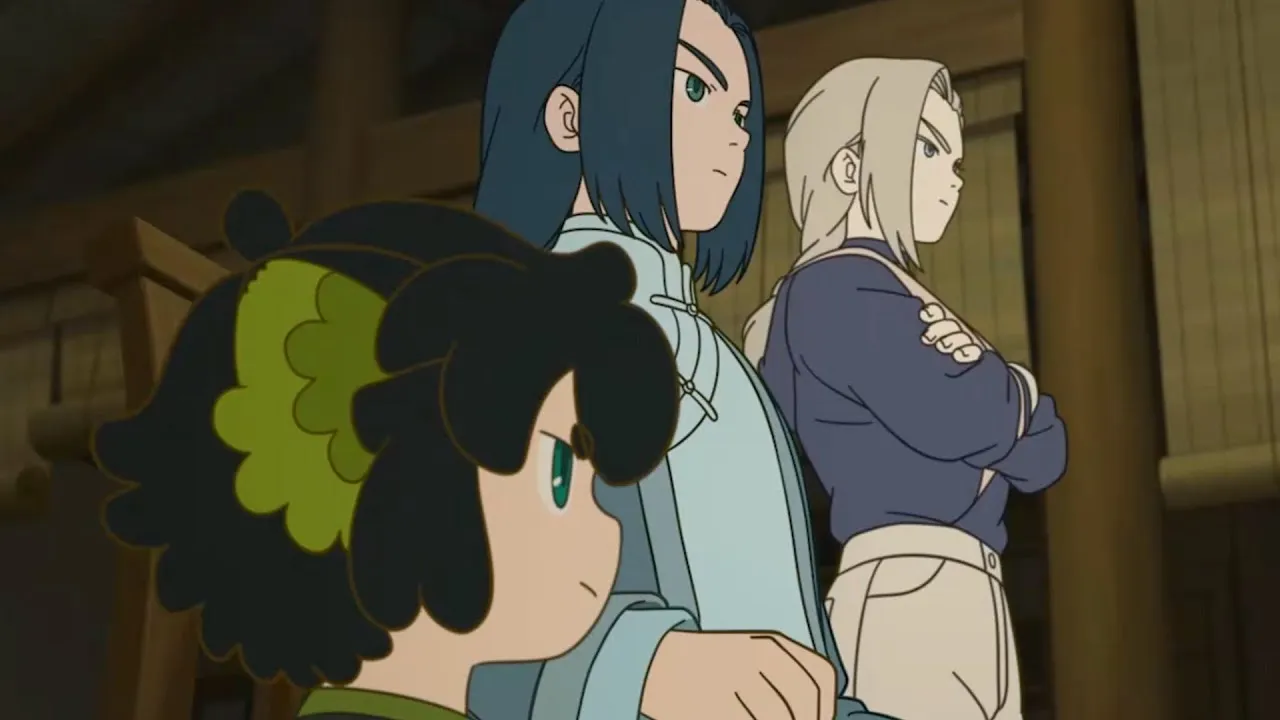
Their relationship is the story’s anchor. By separating them near the start, the narrative creates a powerful engine for Xiaohei’s quest, turning a large-scale conflict into a deeply personal mission. This separation makes way for a new, essential pairing: Xiaohei and Luye.
Their initial interactions are marked by friction. Luye’s past, revealed in stark flashbacks of a homeland where humans annihilated all spirits, has left her with a deep trauma that fuels her cynicism. She cannot easily accept Xiaohei’s unwavering trust in a human. Their shared devotion to Wuxian forces them into an alliance, and through their joint investigation, their relationship slowly transforms.
They learn about each other’s histories and vulnerabilities. The guarded respect between them softens into a sibling-like connection, complete with bickering and fierce loyalty. This careful development of personal relationships ensures the stakes remain grounded and relatable, even as the battles grow to an epic scale.
The Question of Coexistence
Beyond the impressive visuals and character arcs lies a serious inquiry into the nature of peace. The film directly confronts the question of whether two fundamentally different peoples can live together or if conflict is an unavoidable outcome of their differences. This is crystallized in a sharp exchange where Luye is asked which side she would choose in a war.
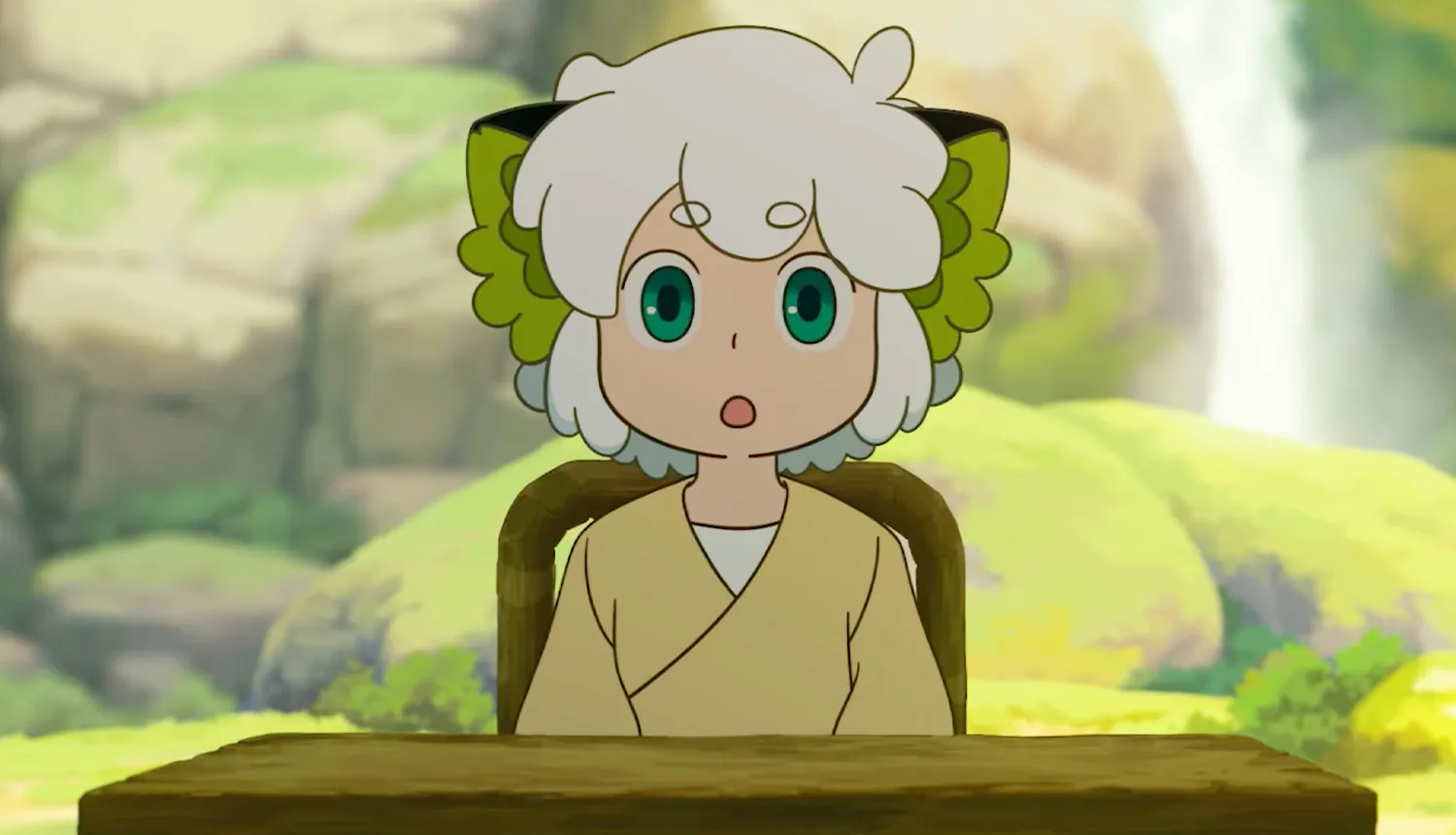
She answers without hesitation: the spirits, regardless of who is right. Xiaohei, in contrast, hopes to choose the “right” side, a distinction that reveals his idealism is still intact. The story systematically challenges that optimism, forcing him to witness the deep-seated historical grievances and fear that fuel both sides of the growing war.
The narrative avoids easy moral pronouncements. Its antagonists are not driven by pure malice but by a pragmatic and desperate logic. They fear that spirits, for all their power, will be reduced to exhibits in a world dominated by human technology, and they see a preemptive war as their only path to survival.
The film proposes that the answer to such a deep-rooted conflict is not found in grand treaties or decisive battles. Instead, it locates hope in individual actions and shifts in perspective, suggesting that changing one person’s mind is a more tangible form of progress than ending a war. It champions empathy as a quiet, revolutionary force.
The film, The Legend of Hei II, is a Chinese animated action adventure movie that was released in China on July 18, 2025. It had a limited theatrical release in the United States and Canada on September 5, 2025, distributed by GKIDS. It is the sequel to the 2019 film The Legend of Hei.
Full Credits
Director: MTJJ, Gu Jie
Writers: Fengxishenlei, Jie Gu, MTJJ, Kexin Peng
Producers and Executive Producers: Fangbing Cong
Cast: Shan Xin, Chenyang Fu, Zhenji Huang, Lu Li, Mingyue Liu
Director of Photography (Cinematographer): Liang Shuang
Composer: Sun Yujing
The Review
The Legend Of Hei II
The Legend Of Hei II is an exceptional piece of filmmaking, a sequel that confidently expands its world while deepening its emotional and thematic core. It pairs some of the most spectacular action sequences in recent animation with a genuinely moving story about loyalty and the difficult search for peace. While the separation of its central duo is felt, the introduction of new dynamics and a more complex conflict results in a richer, more ambitious, and visually stunning work of art. It is a triumph of technical craft and heartfelt storytelling.
PROS
- Stunning, fluid animation and masterfully choreographed action sequences.
- A strong emotional foundation built on well-developed character relationships.
- A thoughtful and nuanced examination of conflict, prejudice, and coexistence.
- Visually creative world-building that blends traditional and futuristic aesthetics.
CONS
- The separation of the primary characters, Xiaohei and Wuxian, for a large portion of the story.
- The broader, more serious conflict may not appeal to viewers who preferred the simpler charm of the first film.
- The political and spiritual lore is dense, potentially posing a slight barrier for new audiences.