





























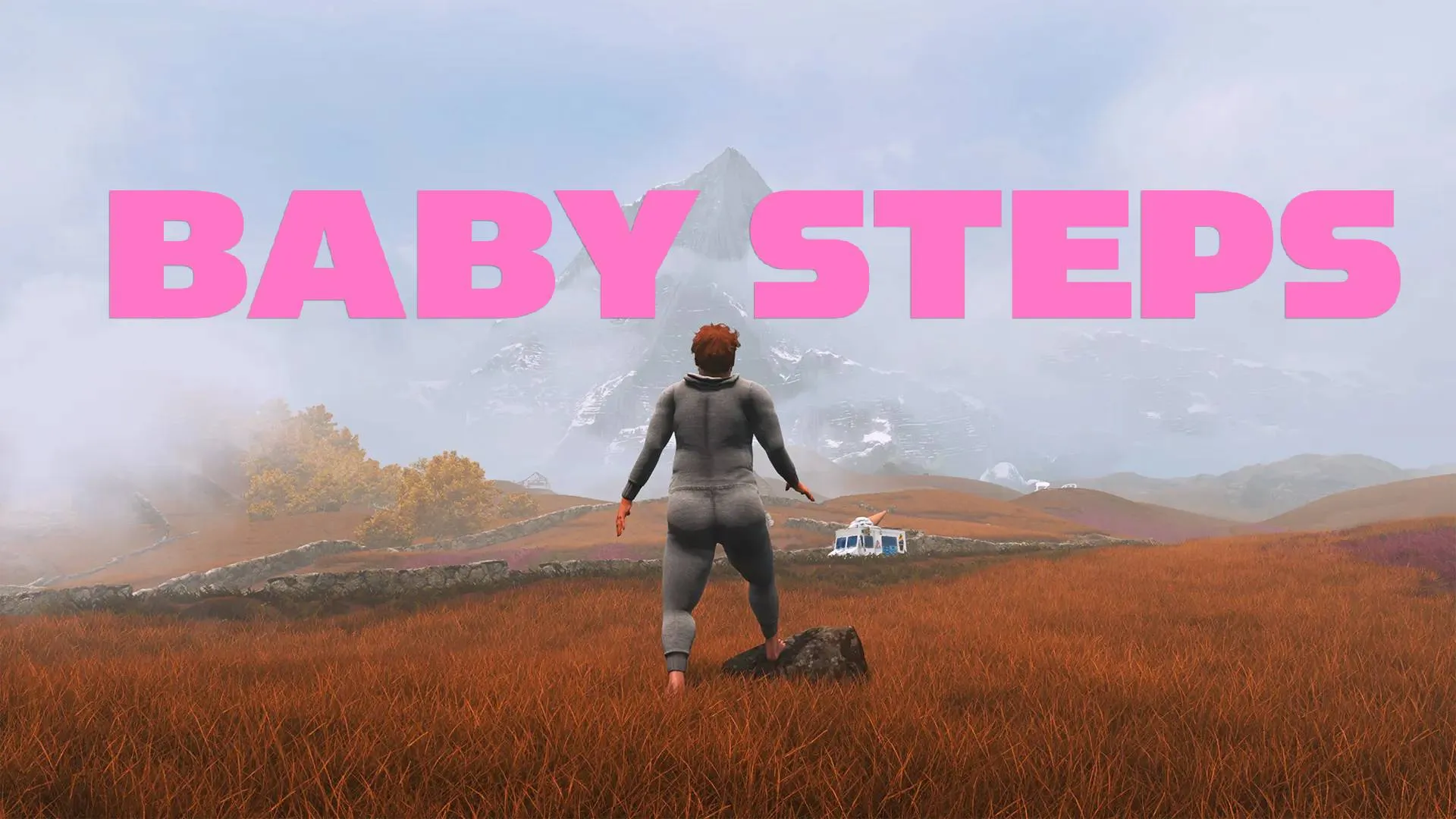

Baby Steps transforms the mundane act of walking into a profound meditation on personal agency and self-imposed limitations. This physics-based climbing adventure from Bennett Foddy, Gabe Cuzzillo, and Maxi Boch presents itself as a simple hiking simulator, yet reveals layers of mechanical complexity and thematic depth that challenge both your dexterity and your preconceptions about difficulty in games.
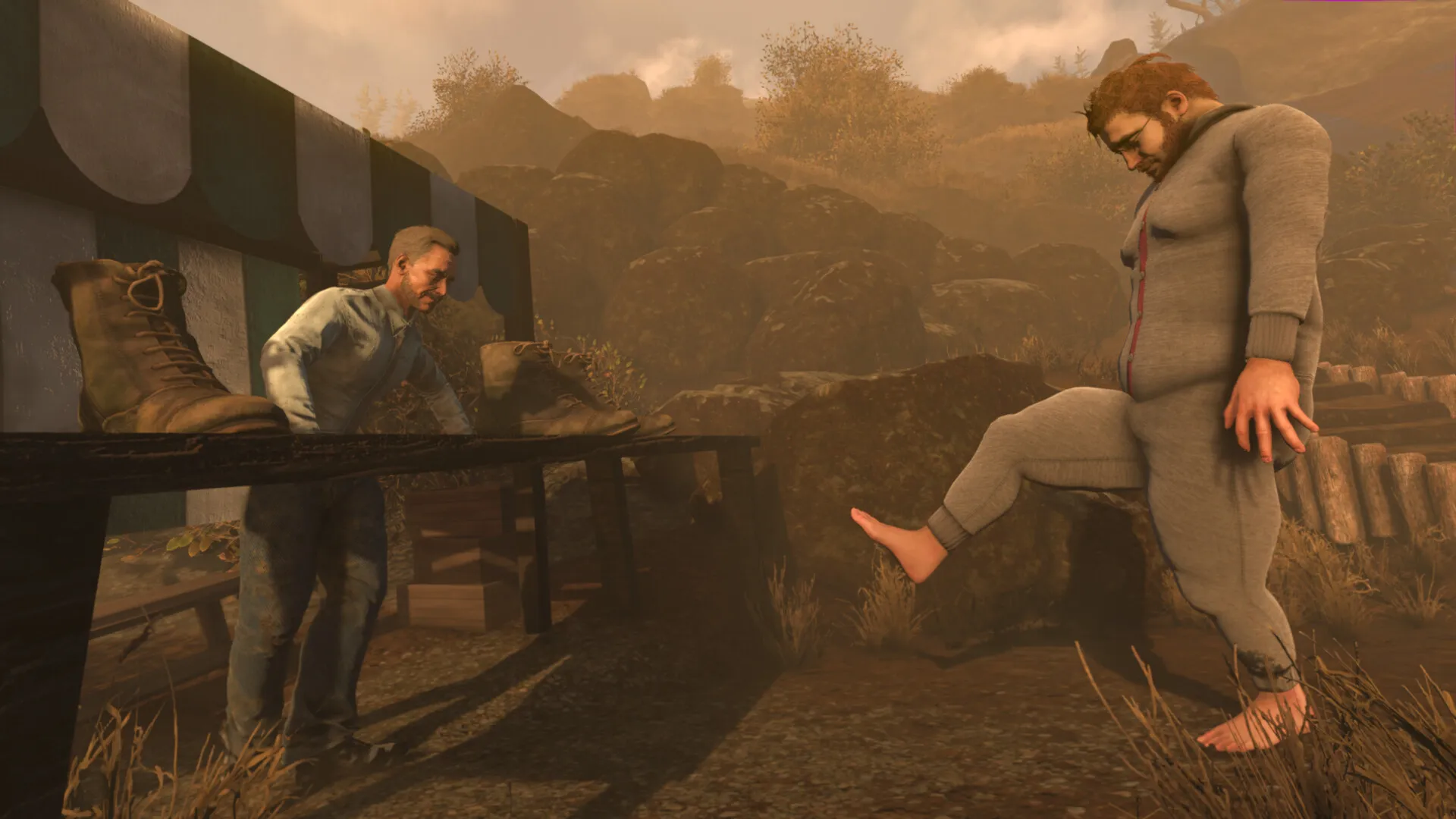
The premise centers on Nate, a 35-year-old recluse who finds himself transported from his basement sanctuary to a surreal mountain wilderness. Armed with nothing except a grimy onesie and bare feet, this socially awkward protagonist must ascend a towering peak using a control scheme that makes every footfall a deliberate act of concentration. What initially appears to be an exercise in absurdist punishment gradually unfolds into something far more nuanced: a climbing adventure that uses its unwieldy mechanics as both gameplay challenge and narrative metaphor.
The game’s brilliance lies in how it reframes basic locomotion as a complex puzzle of balance and timing. Each step requires conscious effort as you squeeze controller triggers to lift individual legs and manipulate analog sticks to position them precisely. This seemingly simple system transforms routine movement into a series of micro-decisions about weight distribution, momentum, and risk assessment that mirror the broader themes of personal growth and self-reliance woven throughout Nate’s journey.
Mechanical Mastery Through Controlled Chaos
The control system operates on multiple layers of complexity that reveal themselves gradually as your understanding deepens. Surface-level mechanics involve trigger pressure determining step height while analog stick movements control foot placement and weight distribution. This foundation supports surprisingly sophisticated physics interactions where momentum conservation and precise timing become essential tools for advanced traversal.
Early sessions involve frequent face-plants and tumbling failures that initially feel like the game mocking your incompetence. However, these moments serve a crucial developmental purpose. Each failure teaches subtle lessons about balance points, surface tension, and the relationship between confidence and catastrophe. The learning curve mirrors real-world skill acquisition: frustrating plateaus punctuated by breakthrough moments where complex movements suddenly click into muscle memory.
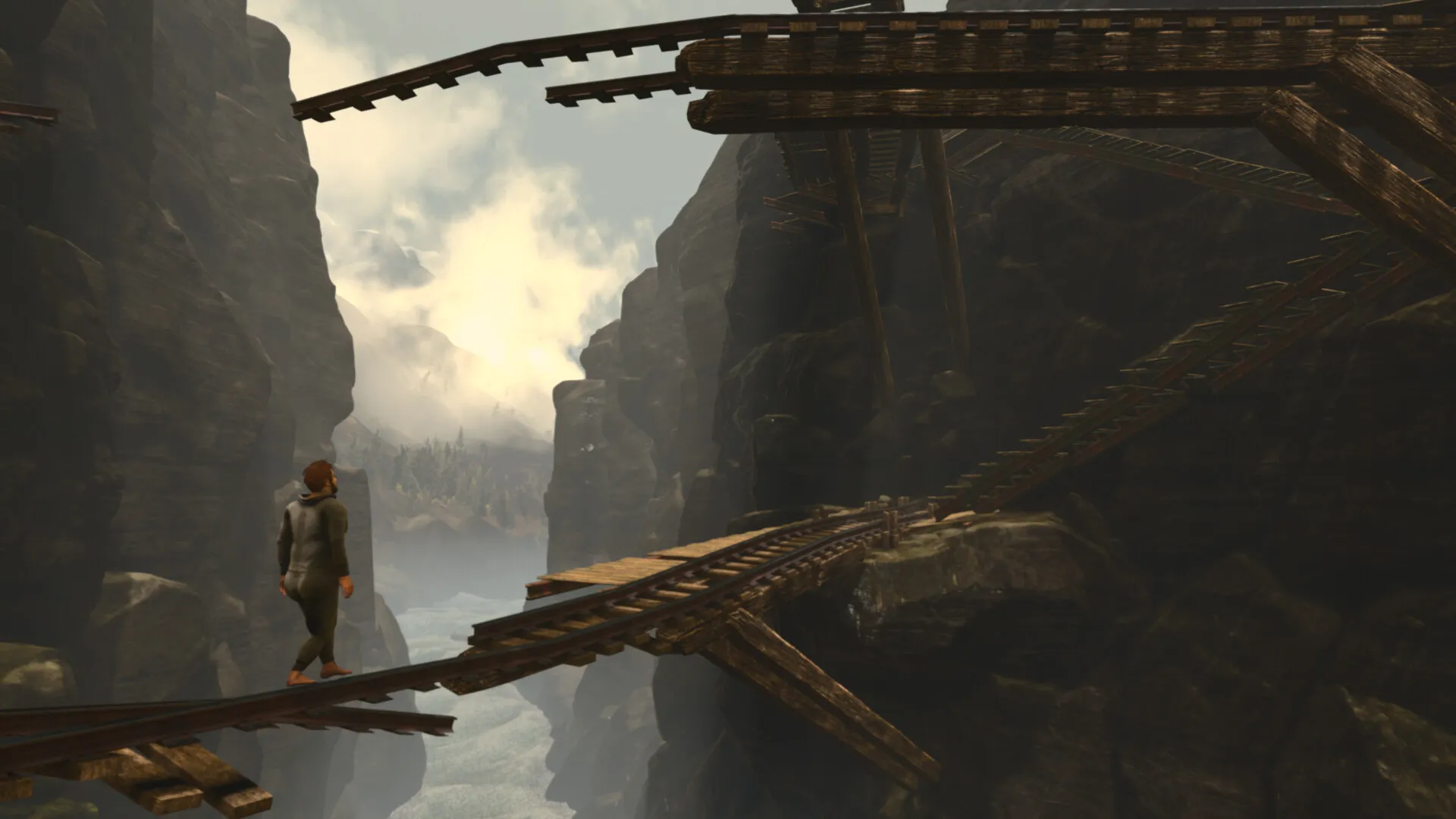
Environmental challenges escalate organically from basic walking to intricate climbing puzzles. Rocky outcroppings demand careful foot placement, while muddy slopes require momentum management to avoid sliding backward. Narrow wooden planks become psychological battlegrounds where hesitation proves as dangerous as recklessness. The game succeeds in making each obstacle type feel like a distinct mechanical puzzle with its own optimal solutions.
The physics system generally feels fair and predictable, though occasional moments of apparent randomness can undermine the sense that skill determines success. These instances are relatively rare, yet they sting particularly sharply in a game where precise control represents the primary source of satisfaction. When the system works as intended, the sensation of mastery development creates genuine feelings of accomplishment that few games can match.
Environmental Storytelling and Player Agency
The world design operates as both playground and metaphor, with each biome introducing unique traversal challenges that reflect different aspects of personal development. Desert areas force players to adapt to shifting terrain that provides no stable foundation, while cavernous sections demand careful navigation through darkness and uncertainty. Mountain peaks test endurance and determination through sheer vertical challenge.
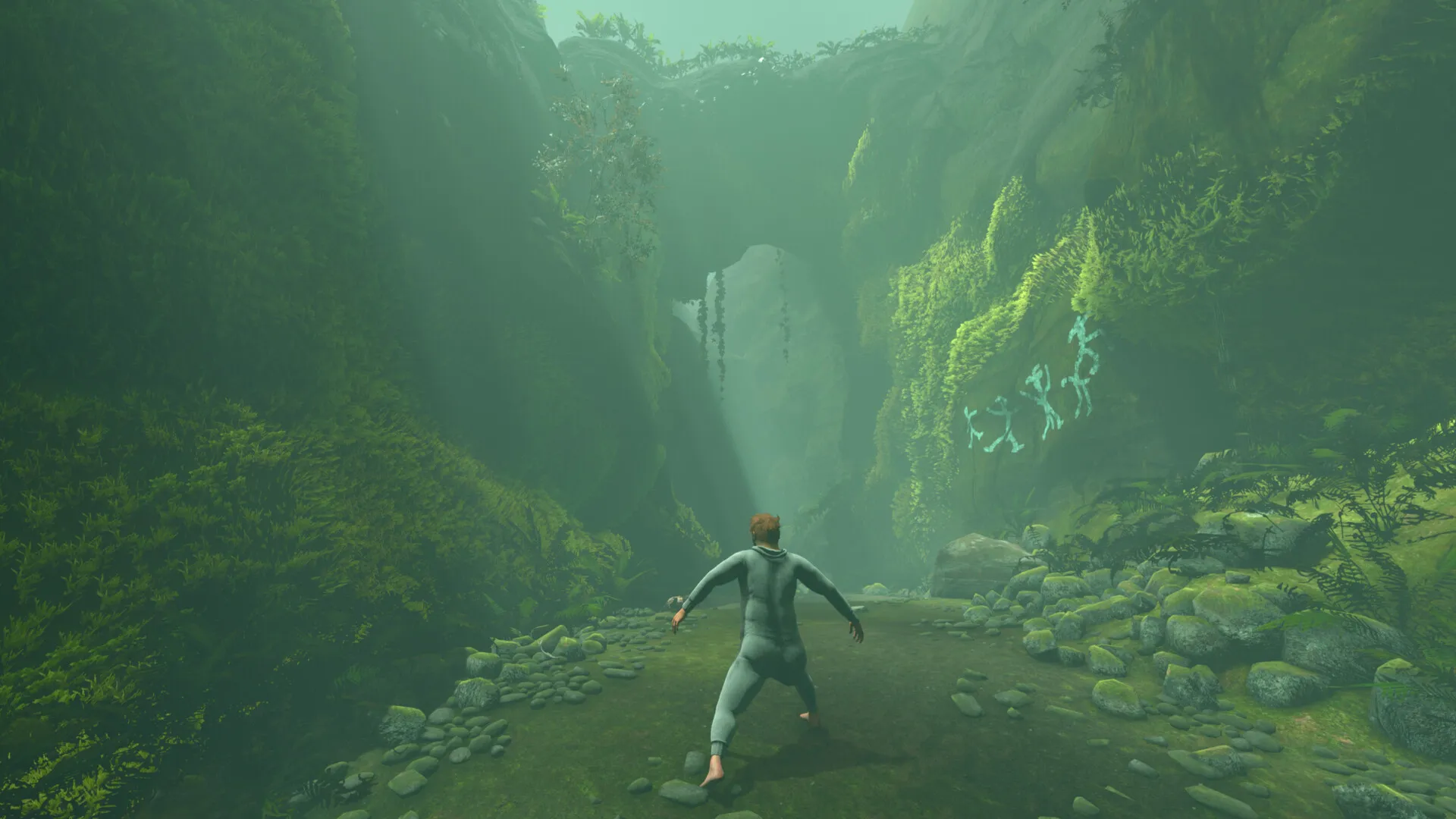
The semi-open structure provides meaningful player agency through route selection. Multiple paths typically connect each checkpoint, allowing players to choose their preferred balance of risk and reward. This design philosophy extends to optional challenges scattered throughout the environment: precarious hat collection points, delivery quests to remote fire towers, and towering structures that exist purely to test climbing skills.
These optional elements serve multiple functions within the game’s ecosystem. They provide skill development opportunities for players struggling with mandatory sections, while simultaneously offering extreme challenges for those seeking to push their abilities. The placement of these diversions feels deliberate rather than arbitrary, with most offering clear visual telegraphing of their difficulty level and potential rewards.
The pacing benefits tremendously from alternating challenge intensity with peaceful traversal sections. Serene forest walks and gentle riverside paths provide psychological recovery time between demanding climbing sequences. These breathing spaces prove essential for maintaining long-term motivation, preventing the frustration inherent in difficult sections from overwhelming the broader experience.
Character Development Through Mechanical Metaphor
The narrative framework uses Nate’s physical awkwardness as an extended metaphor for social anxiety and personal growth. His consistent rejection of helpful NPCs reflects real-world patterns of self-isolation, while his gradual adaptation to the mountain environment parallels psychological development. The story unfolds primarily through environmental cues and character interactions, avoiding heavy-handed exposition in favor of symbolic representation.
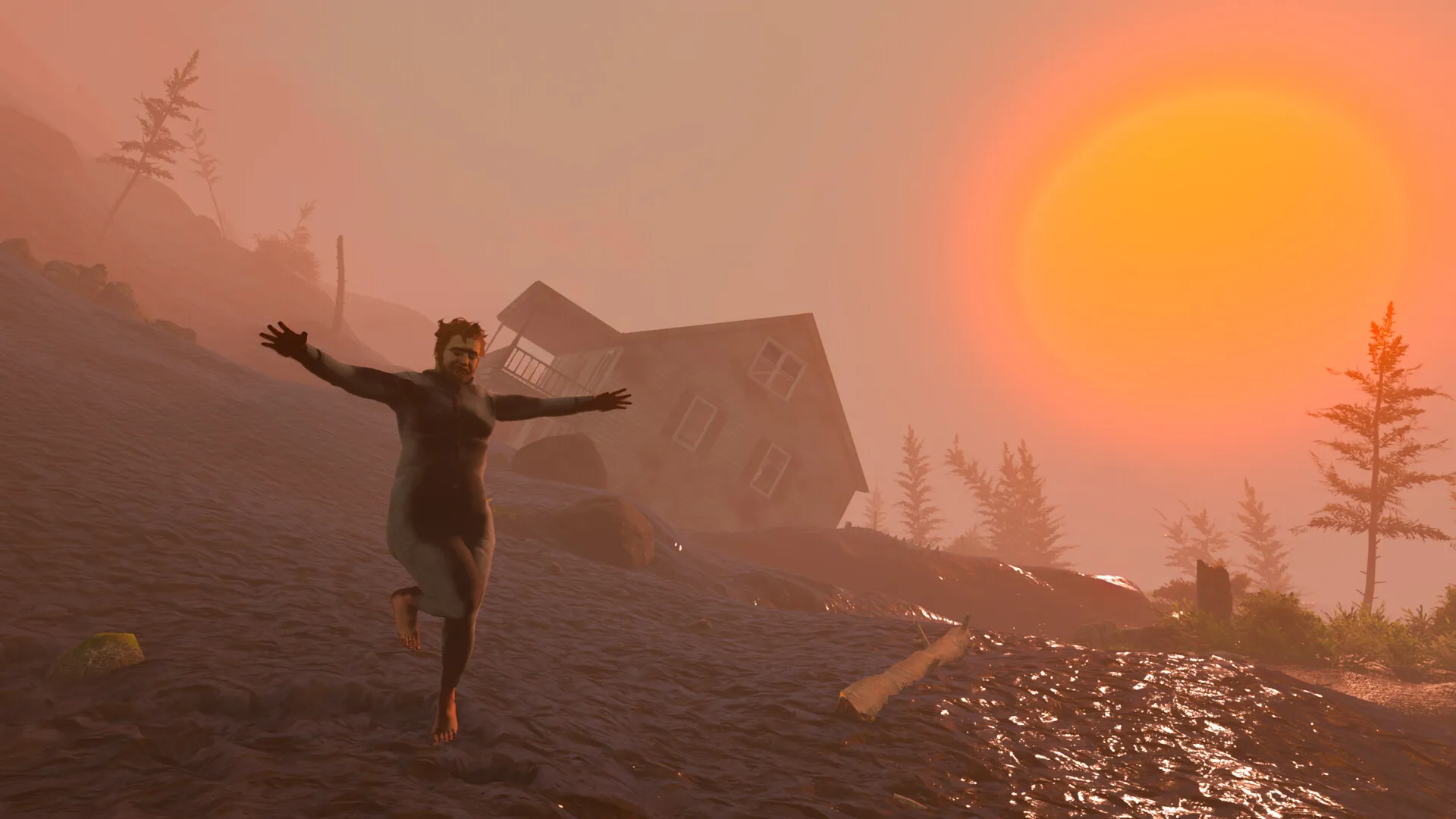
Character encounters punctuate the climbing action with moments of absurdist humor and social commentary. Jim, the enthusiastic Australian hiker whose offers of assistance Nate repeatedly spurns, represents the external support systems that socially anxious individuals often reject. These interactions feel genuinely improvised, with voice actors breaking character occasionally in ways that enhance rather than diminish the comedic impact.
The humor oscillates between clever observational comedy and crude shock value, with mixed results. Physical comedy arising from movement failures works consistently well, turning player frustration into shared laughter. However, the frequent nudity and scatological elements feel less integrated into the broader thematic framework, occasionally undermining the more sophisticated aspects of the narrative design.
Thematic depth emerges through the game’s pointed satire of difficulty culture in gaming. Nate’s stubborn refusal to accept help directly parodies the “git gud” mentality that pervades challenging games, while his eventual success through persistence and skill development validates the learning process itself. This commentary feels particularly relevant given Bennett Foddy’s history with intentionally frustrating games.
Technical Foundation and Artistic Choices
The visual presentation embraces intentional crudeness as an artistic statement rather than technical limitation. Character models appear deliberately awkward, with Nate’s ungainly proportions and ragdoll physics creating comedic moments during failures. Environmental textures and modeling show clear technical constraints, yet these limitations serve the game’s overall aesthetic goals of unpretentious, handmade charm.
The dynamic music system responds intelligently to player actions, ramping up intensity during challenging sections while providing ambient calm during peaceful traversal. Sound design integrates movement audio with environmental acoustics effectively, though the relentless musical commentary on every action can become overwhelming during extended play sessions.
Camera positioning creates occasional problems during precision climbing sections where foot placement visibility becomes crucial. These technical limitations feel particularly frustrating when they coincide with challenging traversal sequences, as they introduce variables beyond player control into situations that otherwise reward skill and preparation.
User interface design maintains admirable restraint, avoiding cluttered HUD elements that might distract from the core climbing experience. Progress tracking through the campfire checkpoint system provides clear advancement markers without overwhelming players with excessive completion metrics. The post-game map revelation serves as an interesting retrospective tool for understanding the scope of your journey.
Difficulty Philosophy and Player Psychology
The game’s approach to challenge management reveals sophisticated understanding of player psychology. Setbacks carry genuine weight through the threat of lost progress, yet the semi-open world structure typically provides alternative routes when specific obstacles prove insurmountable. This design choice respects player agency while maintaining meaningful stakes.
Optional content serves as both skills tutorial and pressure valve. Players struggling with mandatory sections can practice advanced techniques on optional challenges, while those seeking extreme difficulty can pursue precarious collectibles and towering climbing challenges. This layered approach accommodates diverse skill levels without compromising the core experience for any particular audience.
The checkpoint system strikes a careful balance between meaningful consequences and player respect. Campfires provide progress preservation at reasonable intervals, preventing catastrophic setbacks while maintaining tension during individual climbing sequences. Recovery time between attempts varies significantly based on the nature and location of failures, with some falls requiring extensive backtracking that tests player persistence.
Long-term engagement depends heavily on individual tolerance for repetitive failure and gradual skill development. The game succeeds in making improvement feel tangible through increasingly complex maneuvers becoming routine, yet the time investment required for mastery may exceed what casual players are willing to commit.
Final Verdict and Lasting Impact
Baby Steps achieves something remarkable within the physics-based climbing genre by treating its unwieldy controls as narrative device rather than mere mechanical gimmick. The game understands that the journey toward competence provides its own form of satisfaction, independent of traditional progression systems or narrative rewards.
The integration of comedy with genuine mechanical challenge creates a unique emotional experience that oscillates between frustration and delight. When the systems work in harmony, few games can match the pure satisfaction of executing a complex climbing sequence that would have seemed impossible during early play sessions. These moments of triumph feel earned through genuine skill development rather than character progression or equipment upgrades.
Technical limitations and occasional pacing issues prevent the game from reaching its full potential. Camera problems during crucial sections and extended recovery times from failures can push player frustration beyond the threshold where challenge feels enjoyable. These design choices may alienate players who lack the patience for gradual mastery development.
The target audience consists primarily of players who derive satisfaction from mechanical mastery and appreciate unconventional narrative approaches. Those seeking traditional progression systems or immediate gratification will likely find the experience unrewarding. However, for players willing to embrace the game’s unique philosophy, Baby Steps offers a genuinely transformative experience that reframes failure as education and persistence as its own reward.
This represents a significant artistic achievement within indie gaming, demonstrating how seemingly simple mechanics can support complex thematic exploration. The game’s influence will likely extend beyond its immediate genre, inspiring developers to consider how control schemes can serve narrative purposes rather than merely facilitating gameplay interactions.
The Review
Baby Steps
Baby Steps succeeds as both mechanical experiment and thematic statement, transforming deliberate awkwardness into genuine artistry. Despite technical rough edges and occasional pacing missteps, the game creates a unique emotional journey that rewards patience with authentic satisfaction. The control scheme brilliantly reinforces themes of persistence and self-reliance, while the world design provides meaningful player agency through risk assessment and route selection. This ambitious indie project earns respect for its willingness to challenge conventional design wisdom.
PROS
- Innovative control scheme that serves narrative purposes
- Meaningful player choice through multiple routes and optional challenges
- Excellent thematic integration of mechanics and story
- Genuinely funny humor and character interactions
- Satisfying skill progression and mastery development
- Creative environmental design across diverse biomes
CONS
- Camera issues during precision climbing sections
- Extended recovery times from failures can frustrate
- Technical limitations with pop-in and visual quality
- Some crude humor feels disconnected from core themes
- High time investment required for skill development
- Occasional physics unpredictability undermines player agency