
























![Kingdom Hearts Collection [I-III] Review](https://gazettely.com/wp-content/uploads/2026/10/Kingdom-Hearts-Collection-I-III-1-360x180.webp "Kingdom Hearts Collection [I-III] Review: KHII Holds Steady as Newer Entries Fluctuate 37")



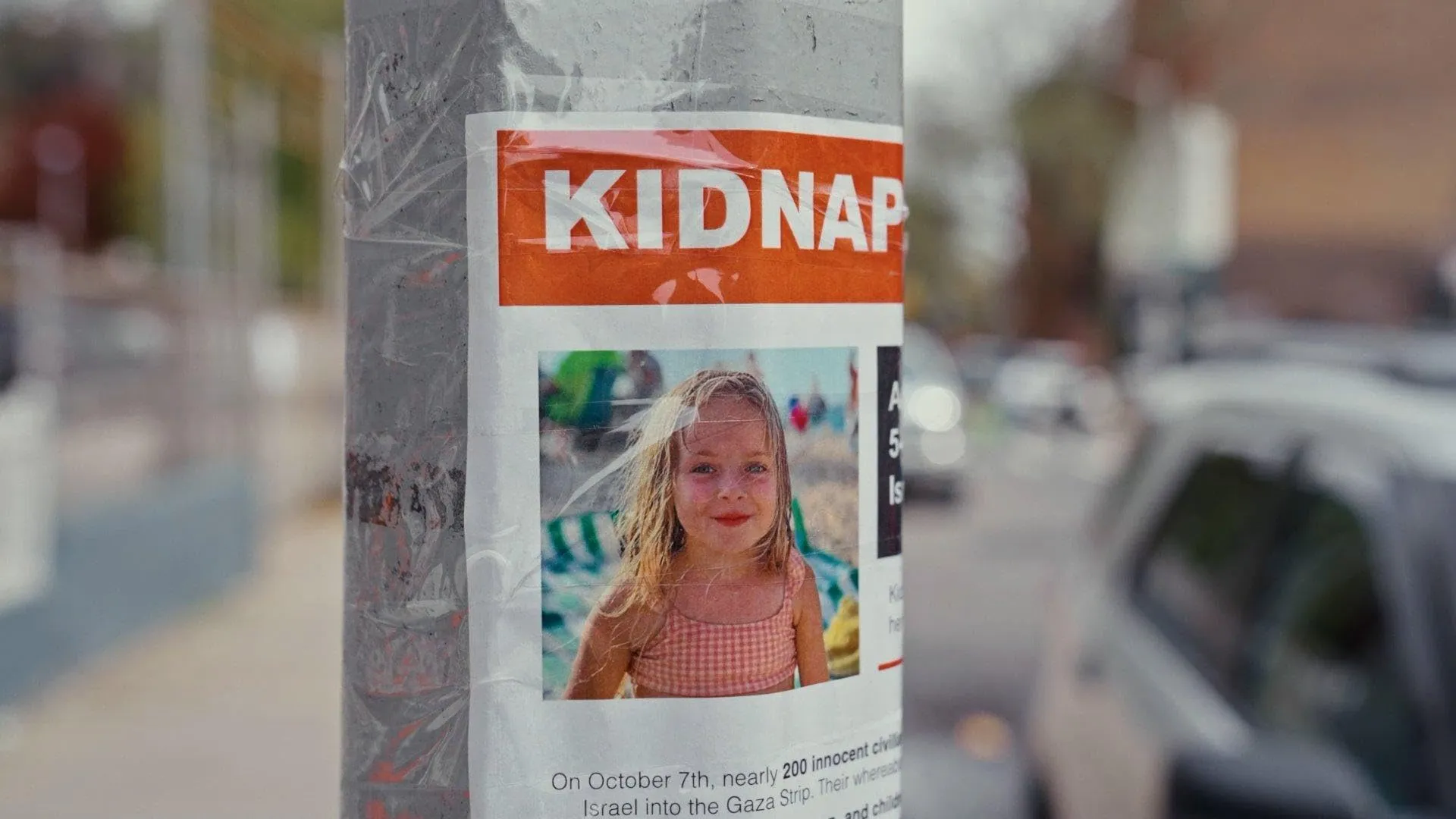

A city street is a shared text, constantly being written and rewritten. A single poster, glued to a lamppost, can alter its meaning entirely, transforming a neutral public space into a battleground for memory and narrative. This is the territory of TORN, a documentary that examines the Israel-Palestine conflict not from the front lines, but through the paper ghosts that haunted New York City in the wake of the October 7th attacks.
The film chronicles the “poster war,” a low-tech, high-emotion struggle over the red-banded “KIDNAPPED” flyers depicting Israeli hostages. Director Nimrod Shapira bypasses a direct political history of the conflict, focusing instead on a hyperlocal, visceral reaction.
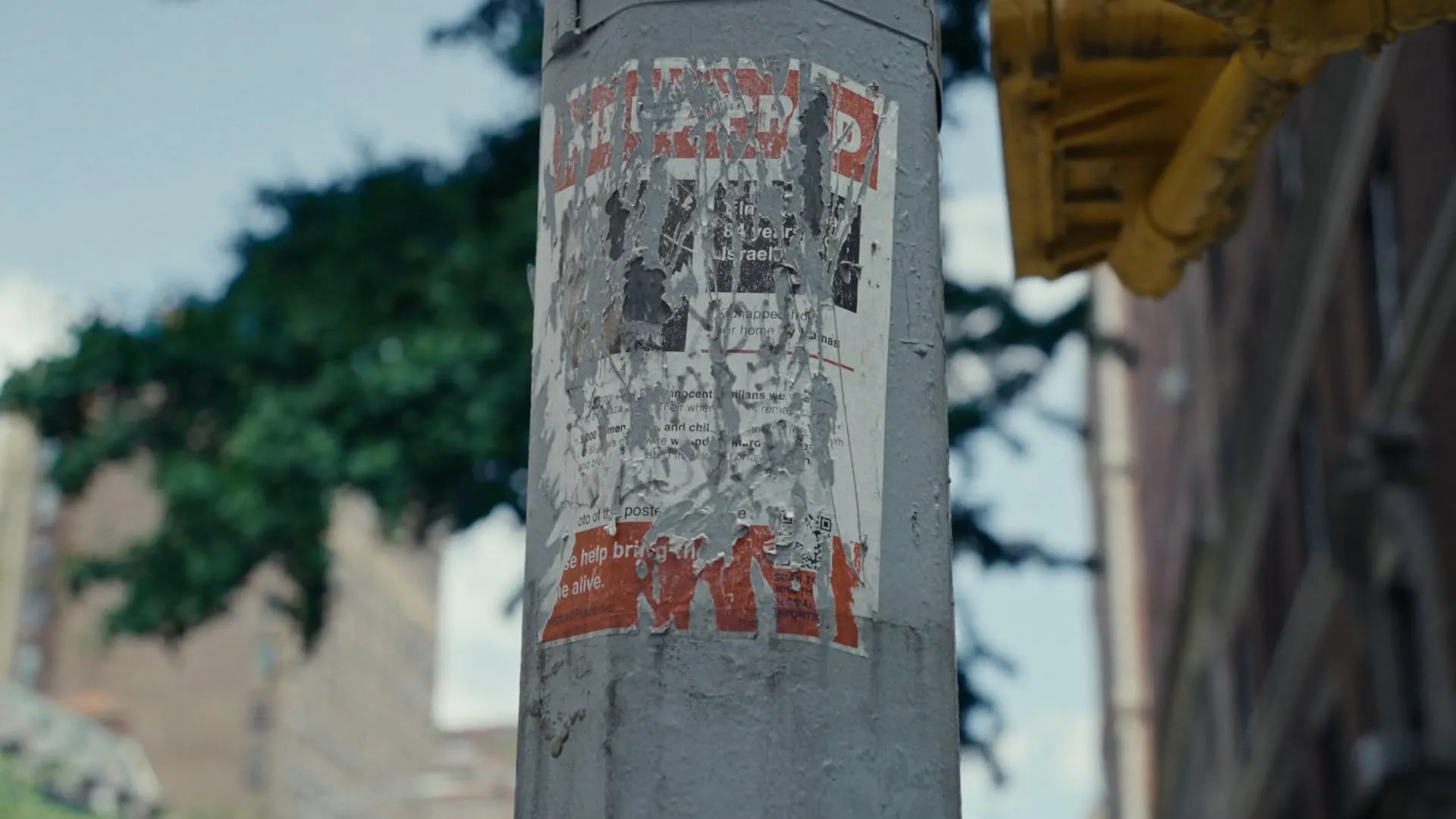
He follows the Israeli expatriate community and families of the hostages as they attempt to make their private agony a public spectacle. Using a raw aesthetic built from cellphone footage and intimate interviews, the film documents a city’s surfaces becoming a proxy for a distant war, where the simple acts of posting and tearing paper become charged with generations of history and pain.
The Emotional Core: A Plea for Visibility
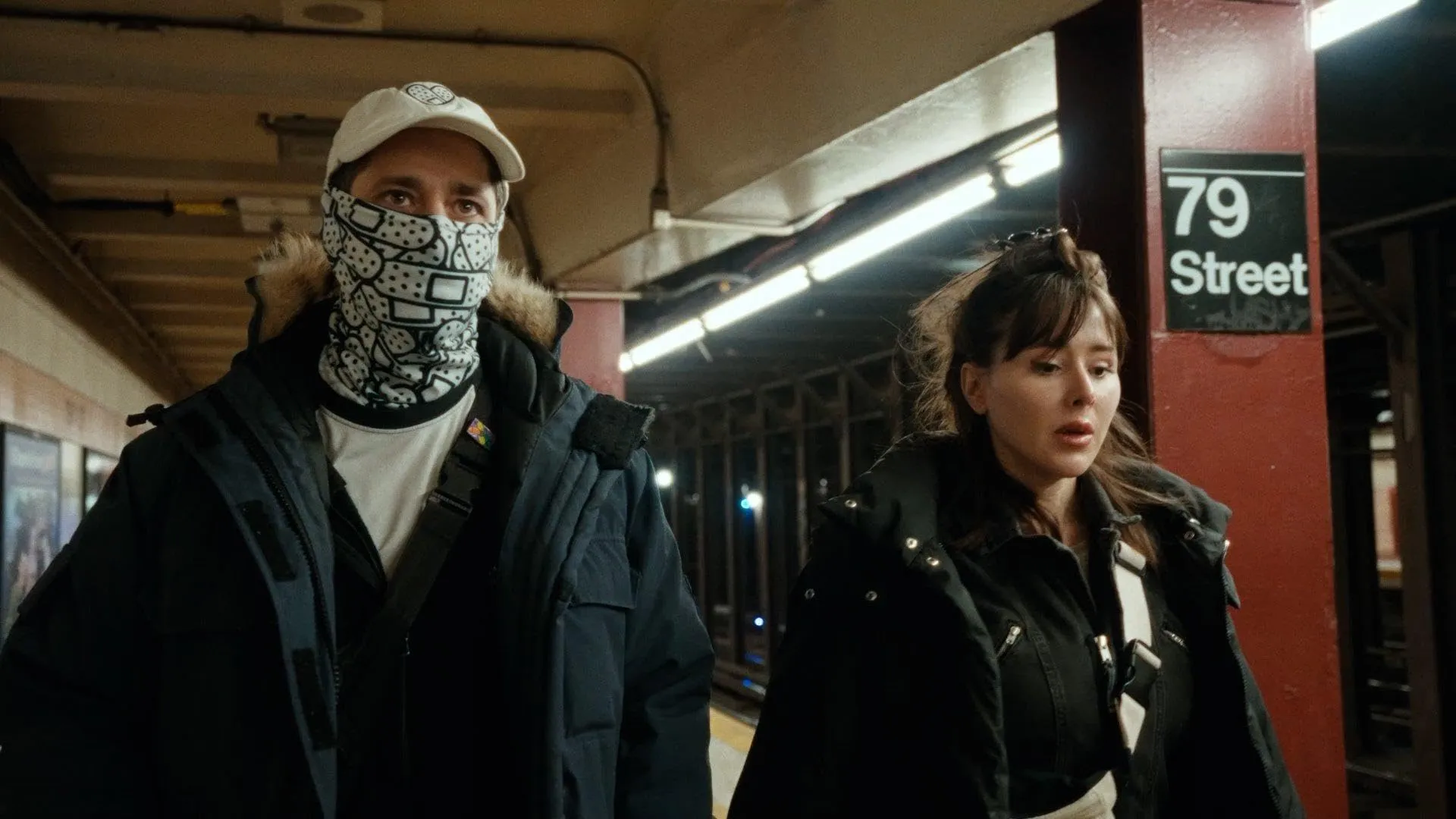
The documentary finds its most secure footing when it centers the raw, human pain of those connected to the hostages. It gives the screen to individuals for whom this is not a political debate but a matter of life and death. For family members like Alana Zeitchik, the posters are a desperate defense against the world’s forgetting, a tangible way to assert the existence and humanity of loved ones who have vanished into the chaos of the conflict.

The simple act of affixing a face to a wall becomes a vital tool against a crushing sense of helplessness. The film details the campaign’s origins with Israeli artists like “Dede BandAid,” framing it as an instinctual, artistic response to an incomprehensible trauma. The stark, urgent design of the posters is its own form of communication, crafted to cut through the visual noise of a city like New York with a single, arresting word: “KIDNAPPED.”
This plea is echoed by activists like Nina Mogilnik, whose participation is driven by a profound empathy that seeks to humanize the victims. Through these deeply personal accounts, the film builds a powerful case for the posters as a fundamentally humanitarian gesture, a non-violent insistence on seeing individual faces within the larger machinery of war.
A One-Sided Conversation
Any document of a fiercely contested narrative must contend with the challenge of perspective, and it is here that TORN’s structure becomes most telling. The film is a lopsided account, granting extensive time and emotional depth to the pro-Israel activists while the pro-Palestine voices who tear the posters down remain largely silent and unseen. This significant imbalance shapes the entire narrative.
The documentary acknowledges the omission, with the director explaining that his invitations to interview poster removers were declined. The film’s solution is to have an activist read aloud from a printed document summarizing the counter-arguments, which posit that the posters are a form of propaganda that erases the suffering of Palestinians and the broader political context. This choice to mediate the opposition’s viewpoint through a textual artifact, read by an adversary, strips it of all human expression and emotional weight.
It turns a political stance into a dry recitation. Consequently, the people tearing down the flyers are shown almost exclusively through the grainy, agitated lens of cellphone footage during street confrontations. This visual strategy denies them any moment of quiet rationale, positioning them as an anonymous, antagonistic force rather than as individuals motivated by their own set of deeply held convictions and griefs.
A Microcosm of a Deeper Impasse
In its final analysis, TORN is less a film about finding resolution and more an artifact of the very impasse it documents. The poster war becomes a potent metaphor for a complete breakdown in communication, where each side is so entrenched in its own narrative of pain that it cannot acknowledge the other’s. The public spaces of New York become a stage for this mutual incomprehension.
While the film presents itself as an observer of this dynamic, its own framing suggests a subtle alignment. Director Shapira’s choice to use specific, politically weighted language in the film’s closing title cards, distinguishing between “IDF soldiers” and “Hamas terrorists,” is a significant one. It signals a departure from a neutral documentarian stance and reveals an adherence to a particular narrative framework.
This undercuts the film’s broader, simpler message against violence. The documentary’s true value, then, is not in its political analysis or its call for dialogue, but in its function as a time capsule. It effectively captures the raw, chaotic, and deeply polarized atmosphere of a specific, painful moment in a city thousands of miles from the conflict’s epicenter, making it a compelling document of how global trauma is filtered through a local, cultural lens.
TORN: The Israel-Palestine Poster War on NYC Streets is a feature-length documentary that explores the controversy surrounding the “KIDNAPPED” poster campaign in New York City, following the Hamas attacks of October 7, 2023. The documentary premiered at various film festivals in 2024 and 2025 and was released for an Oscar-qualifying theatrical run starting in September 2025. It is distributed internationally by PBS Distribution, and is also available to rent on Video On Demand platforms like Gathr.
Full Credits
Director: Nim Shapira
Writers: Nim Shapira, Shay Mizrahy
Producers and Executive Producers: Nim Shapira, Jane Rosenthal, Elad Schanin, Yarin Cerf, Yuval Lion
Cast: Alana Zeitchik, Nitzan Mintz, Rabbi Yehuda Sarna, Dede Bandaid, Julia Simon, Liam Zeitchik, Nina Mogilnik, Aaron Terr, Elisha Fine, Chen Levy
Director of Photography (Cinematographer): Eyal Bau Cohen
Editors: Shay Mizrahy
Composer: Daniel Salomon
The Review
TORN: The Israel-Palestine Poster War on NYC Streets
TORN succeeds as a raw, intimate portrait of one community's grief, effectively capturing the desperate drive to make private pain public. However, its significant structural imbalance, which silences the opposing viewpoint, prevents it from being a comprehensive document of the conflict it portrays. The film is less a balanced analysis and more a valuable, if flawed, time capsule of a deeply fractured moment, powerfully documenting a symptom of a conflict rather than the conflict itself.
PROS
- A powerful and empathetic portrayal of the hostage families' anguish.
- Effectively documents a unique, localized manifestation of a global conflict.
- Serves as an important time capsule of the post-October 7th atmosphere in New York City.
CONS
- Critically unbalanced, offering no direct voice to pro-Palestine activists.
- Lacks the necessary political and historical context for its subject matter.
- Its narrow focus and subtle directorial choices undermine any sense of journalistic objectivity.







