

























![Kingdom Hearts Collection [I-III] Review](https://gazettely.com/wp-content/uploads/2026/10/Kingdom-Hearts-Collection-I-III-1-360x180.webp "Kingdom Hearts Collection [I-III] Review: KHII Holds Steady as Newer Entries Fluctuate 37")



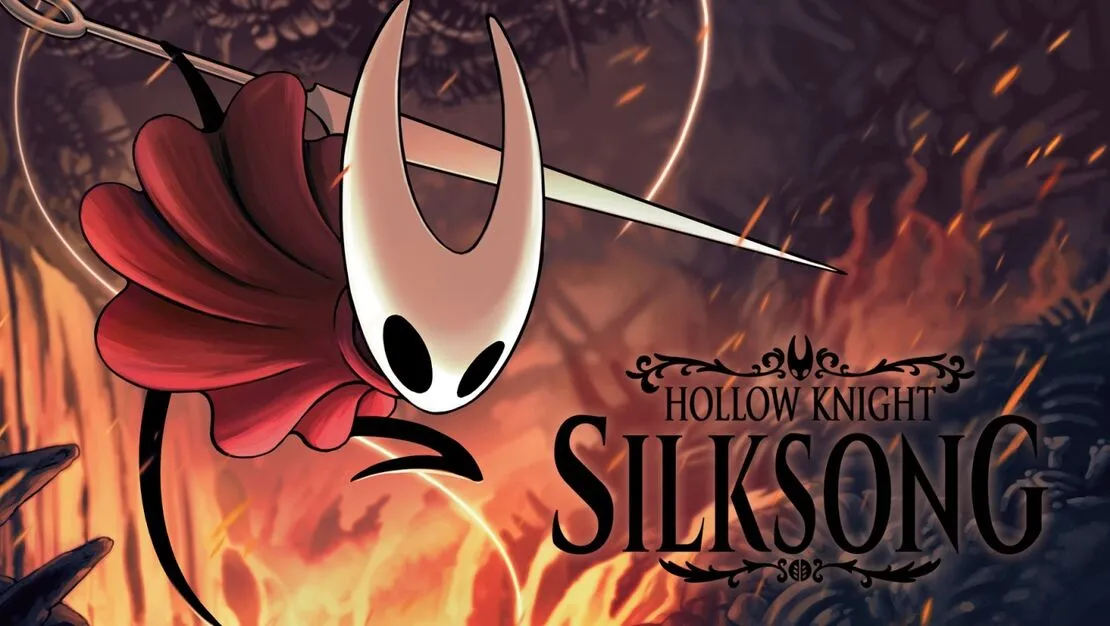

The wait for Hollow Knight: Silksong has been a defining story in itself, a period of anticipation so long it became a piece of gaming culture. Now that it has arrived, the question is whether any game could meet such towering expectations. Team Cherry’s sequel does not simply replicate the formula of its predecessor; it reframes it with a new hero and a new philosophy of design.
We are introduced again to Hornet, the needle-wielding protector from the first game, but this time as the protagonist. Captured and spirited away to the unknown land of Pharloom, she breaks free with a singular goal: to ascend to a distant, shining citadel and find answers.
This vertical climb stands in direct opposition to the first game’s descent into darkness. Silksong evolves the original’s ideas by building its experience around Hornet’s speed, acrobatic combat, and a world that feels decidedly more alive.
The Nimble Predator: Movement and Traversal
Where the original Knight was deliberate and weighty, Hornet is a blur of motion. Her inherent speed changes the entire feel of exploration, encouraging a proactive and aggressive mindset from the very start. She moves with a constant forward momentum, aided by a fast sprint and an automatic ledge mantle.
If timed correctly as she reaches a ledge, this mantle becomes a vaulting leap that maintains her flow across platforms, rewarding rhythmic and precise inputs. Wall-jumps are fluid and responsive, allowing for rapid vertical ascent that feels both empowering and natural.
These abilities work together to let players move through the world with an uninterrupted rhythm, making traversal feel less like a series of discrete challenges and more like a continuous performance of acrobatic skill. This constant motion creates a state of engagement where the act of simply moving from one point to another is a source of satisfaction.
The most significant mechanical change is Hornet’s downward attack. The Knight’s straight-down pogo strike is replaced by a 45-degree diagonal lunge. This move has a steep learning curve. Its specific angle requires far greater precision to hit enemies, especially smaller or faster ones, and to bounce off environmental objects.
Many early attempts will result in missing a target and taking damage. Yet, mastering this plunge unlocks an extraordinary degree of aerial control. It can be used to reposition in combat, sail over the heads of enemies to strike from behind, or cross huge gaps that would otherwise be impassable.
Specific platforming sections are designed around it, requiring the player to “thread the needle” through spinning blades or other hazards. The initial frustration gives way to a deep sense of accomplishment as complex sequences become second nature.
Pharloom’s design is built around this verticality. Hornet’s moveset feels perfectly matched to the kingdom’s tall spires and deep chasms. Later traversal tools, such as a grappling needle that can latch onto specific points or even enemies, further expand these options, turning the world into an acrobatic playground.
The game’s interconnected structure means that returning to old areas with new abilities feels like genuine discovery. A high wall that was once an impassable barrier now becomes a clear path with the grapple, revealing secret rooms or entire new regions. This design recontextualizes the game world in a way that recalls the best moments of the Metroid series, making backtracking an exciting prospect instead of a chore.
A Dance of Silk and Steel: Combat and Customization
The high-speed traversal carries directly into combat. Encounters in Silksong are faster and more aggressive, built to complement Hornet’s agility. Her swift attacks can be chained together into aerial combos, allowing her to stay airborne while dispatching foes.
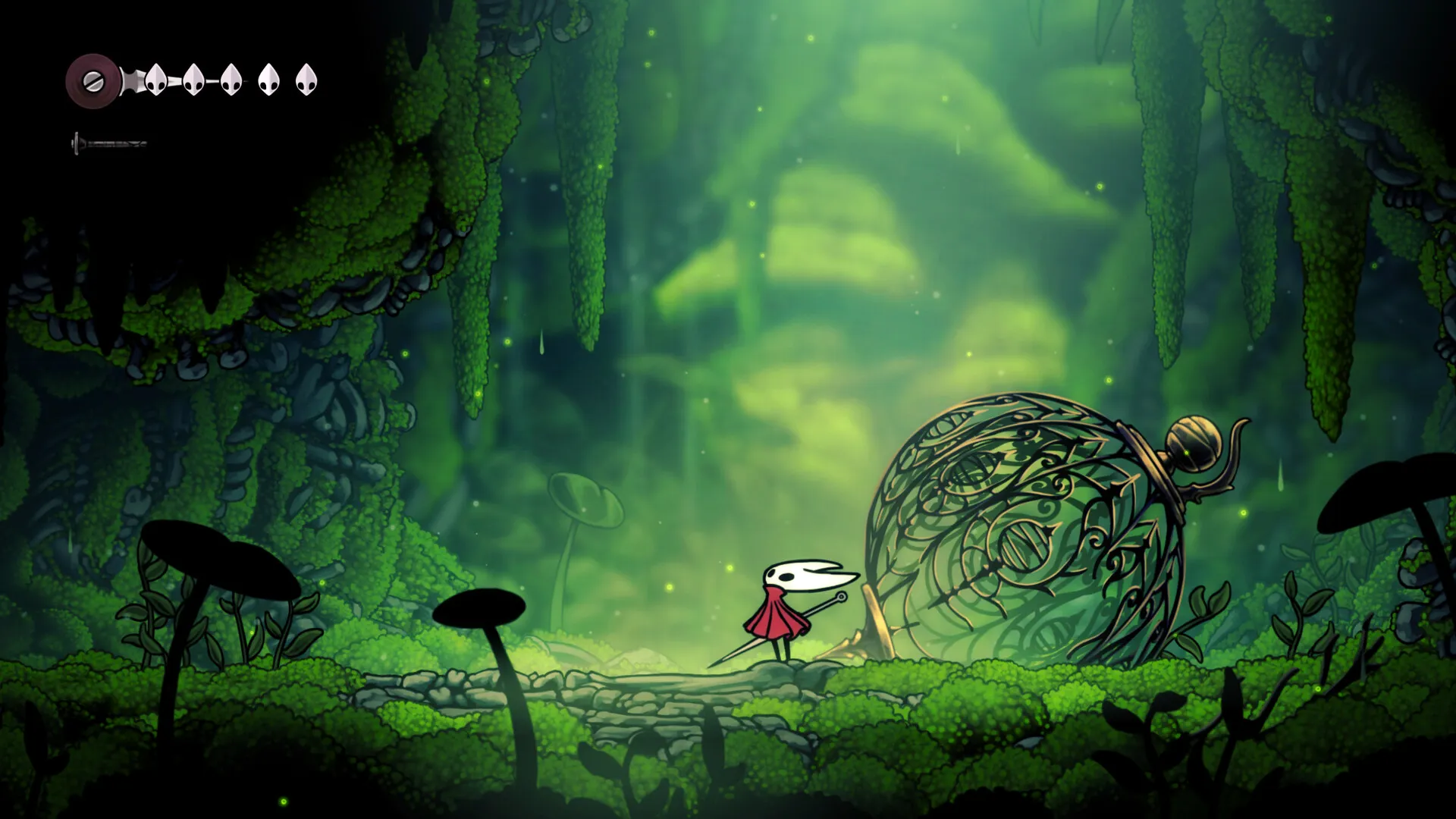
A typical fight involves dashing in for a quick strike, leaping into the air, using the diagonal lunge to dive past a counter-attack, and then grappling back to the enemy to continue the assault. The game’s enemy design demands this level of dexterity.
Many creatures have shields that must be broken, parry stances that deflect frontal attacks, or burrowing patterns that require precise timing to strike. This forces the player to use Hornet’s full range of movement to find openings. Combat becomes a dance of positioning and timing, a constant assessment of risk and opportunity.
Healing has been reworked into a strategic choice defined by risk. Instead of slowly focusing Soul, Hornet can “Bind” her wounds using a full spool of Silk to instantly restore three health masks. This action can be performed in mid-air, a critical option for avoiding ground-based attacks during hectic boss fights. This safety is balanced by a brief animation that locks Hornet in place, leaving her completely vulnerable.
If she is hit, the heal fails and the Silk is lost. Each attempt to heal is a calculated gamble. The player must learn the boss’s attack patterns not just for offense, but to identify the small, precious windows where a Bind is possible. This active, tense system is a departure from more passive healing mechanics and makes every point of health feel earned.
The Charm system from the first game is replaced by a deeper crafting system centered around Tools and Crests. Tools are consumable sub-weapons, such as throwable Straight Pins, ground-laying buzzsaws, or long-range harpoons that can pin enemies to walls. These must be crafted from materials found in the world and repaired with collected Shards, adding a resource management layer to combat preparation. You cannot simply spam your most powerful abilities.
Crests are powerful artifacts that modify Hornet’s core abilities. One might change her lunge back to a traditional downward strike for players who prefer the original’s feel, while another might cause her dash to leave behind a damaging trail of silk. Each Crest has different colored sockets that correspond to specific Tool types; a Crest with many yellow sockets is ideal for an exploration build with map and movement Tools.
This system encourages players to create specialized loadouts. You might create a setup focused on ranged attacks for a flying boss, then switch to a defensive build for a tight corridor filled with enemies. This active encouragement of experimentation gives players a much greater sense of authorship over their playstyle.
The Ascending World of Pharloom: Art, Sound, and Story
Silksong retains the beautiful hand-drawn art style of the original, but applies it to a world with a different feel. While Hallownest was a kingdom of elegant decay, Pharloom is a land of life and activity. The world is filled with color, from the deep greens and shimmering blues of a mossy grotto to the hot oranges and grays of a clockwork forge.
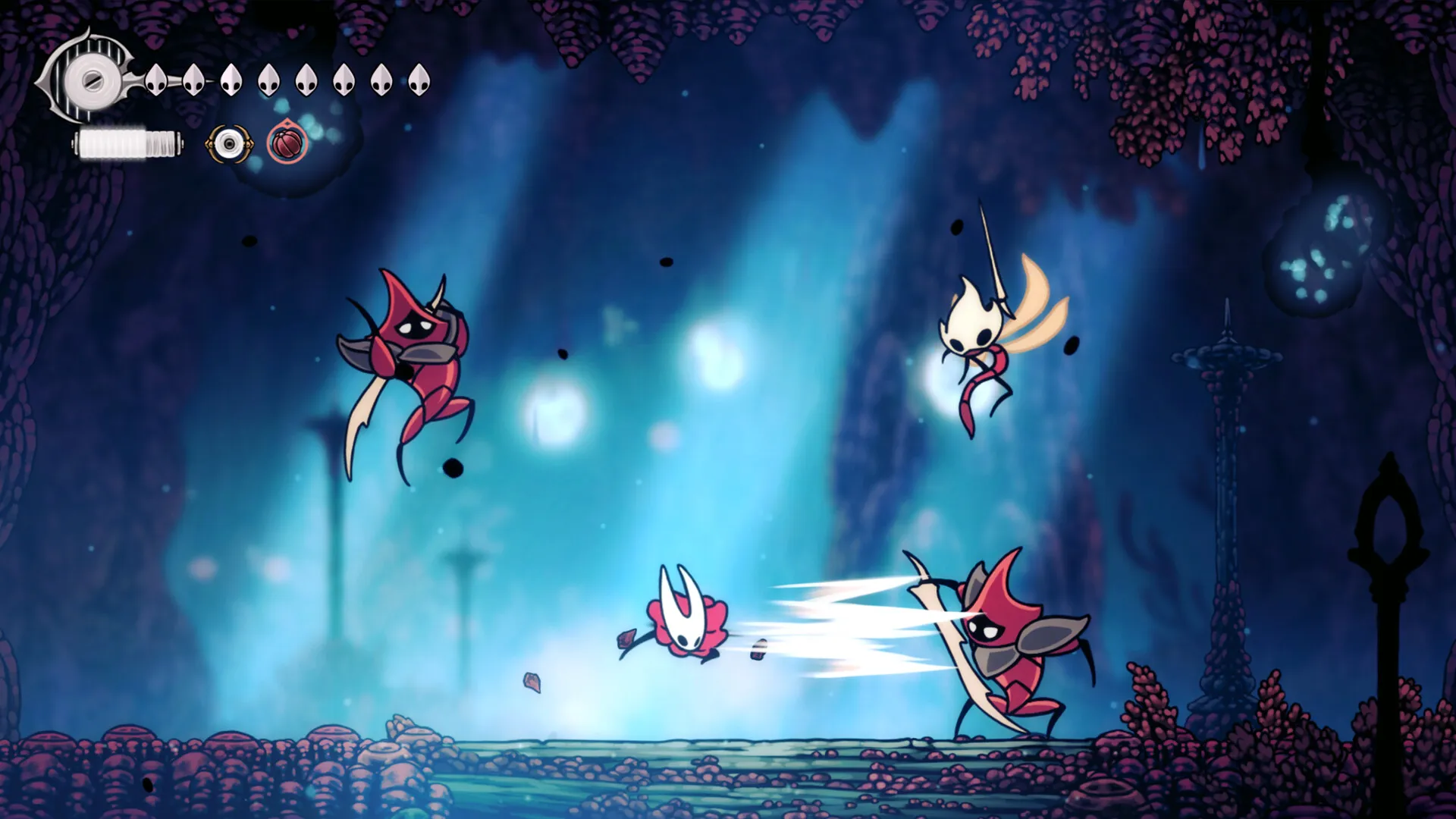
This sense of life is supported by excellent animation. Hornet moves with a dancer’s grace, her cloak flowing behind her with each dash and leap. Enemies telegraph their attacks with clear, characterful actions that are vital for learning combat patterns. The backgrounds are filled with small details that tell stories of their own, from the discarded shells of great beasts to the intricate machinery of a forgotten civilization.
Christopher Larkin returns to compose the score, and his music is once again essential to the experience. The soundtrack is dynamic, shifting from haunting piano melodies in somber towns to intense, orchestral arrangements during boss battles that drive the action forward. Specific instruments are used to give each region its own identity. The sound design is equally impressive.
The skittering of an enemy’s legs on stone, the thud of Hornet’s feet on different surfaces, and the sharp clang of needle against shell all provide critical feedback that makes the gameplay feel tactile and grounded. The subtle squish of walking through a damp cave or the clink of landing on a metal platform are small details that make the world feel physically present.
The game’s largest narrative shift comes from its protagonist. Hornet is not a silent vessel; she is a voiced character with a defined personality. She speaks with the NPCs she meets, expressing a disposition that is both chivalrous and firm. Her presence makes the storytelling more direct. The world’s lore is still delivered through environmental clues and item descriptions, but Hornet’s interactions with the charming, complex inhabitants of Pharloom ground the story in personal stakes.
Her spoken lines, even if in a fictional bug language, convey emotion and intent that a silent hero cannot. This is formalized through the “Wishes” quest system. These structured side-quests feel more personal than a generic task list because they are given by characters the player has spoken with through Hornet, creating a stronger connection to the world and its people.
Trials of the Citadel: Challenge and Progression
Be prepared for a significant challenge. Silksong is a more difficult game than its predecessor. The design decision to have many enemies and environmental hazards inflict two masks of damage at once fundamentally changes the economy of health. It teaches players to respect every opponent and to prioritize damage avoidance over trading hits.
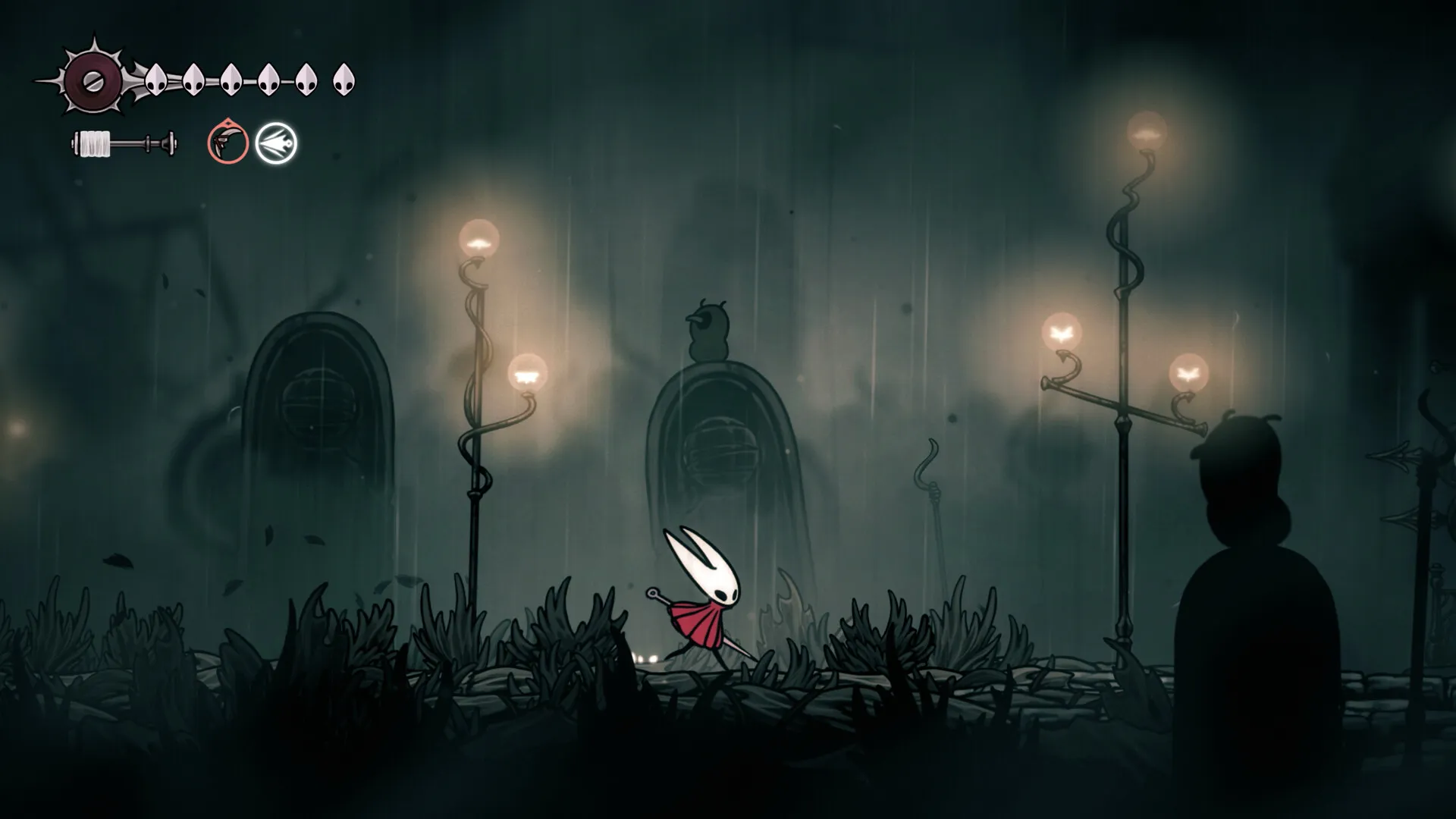
This elevated difficulty is most apparent in the boss encounters. With over 40 unique bosses, the game consistently tests player skill through fights with complex patterns and multiple phases. These are not simple DPS races; they are intricate puzzles that demand mastery of Hornet’s entire moveset. Success comes from learning, adapting, and executing with precision.
This difficulty is balanced by several smart quality-of-life refinements. The new currency, Rosary Beads, is protected upon death by a necklace system that allows the player to retain most of their collection. This lessens the frustration of a long run back to a difficult spot and encourages players to take risks and explore dangerous areas without the fear of losing a great amount of progress.
Benches are also placed more thoughtfully, often appearing just before a major boss arena to cut down on frustrating runs back to a fight. These changes show a respect for the player’s time and focus the challenge on the encounter itself, not the journey to it.
Progression is rooted entirely in skill and discovery. There is no experience-point grinding. Your power grows as you find new tools and abilities, and as your personal mastery of the controls improves. This model of progression is immensely satisfying.
The feeling of returning to an early-game boss that once seemed insurmountable and defeating it easily is powerful, not because your stats are higher, but because you are a better player. The central loop is one of exploration, discovery, and overcoming difficult obstacles through practice. The game’s rewards are knowledge and capability, which are far more lasting than a simple increase in a damage number.
Final Verdict
Hollow Knight: Silksong is a masterful evolution of its forerunner’s design, a sequel that demonstrates a deep understanding of what made the original special while possessing the confidence to make bold changes. It takes the solid foundation of the original and builds upon it with a character whose speed and grace transform every aspect of play.
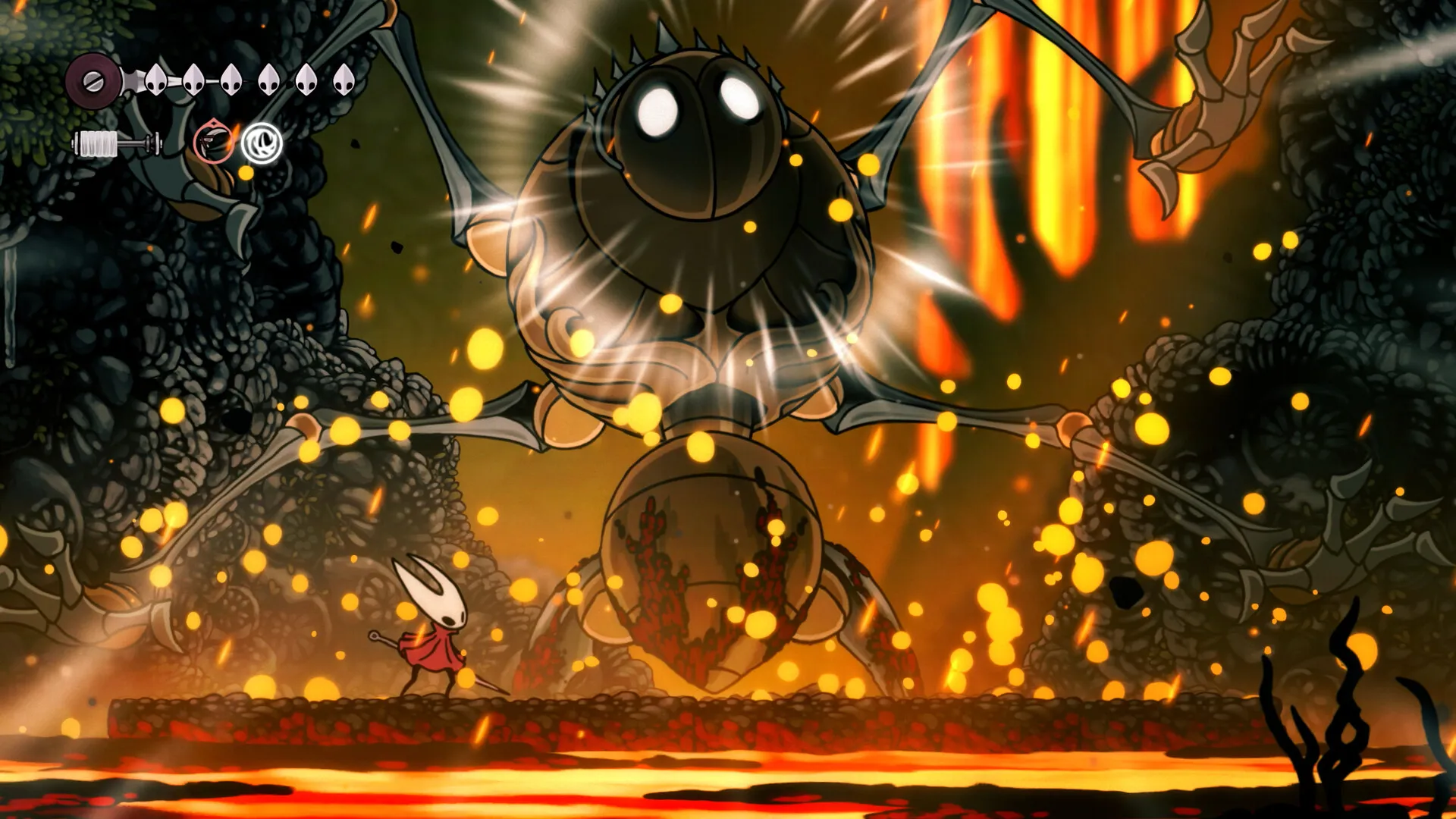
The experience is defined by its fluid, fast-paced gameplay, which makes movement and combat consistently engaging. Its deep and flexible combat customization systems give players meaningful ways to shape their approach to the game’s many challenges. All of this is set within the stunning, living world of Pharloom, a realm brought to life with impeccable artistry and a memorable musical score.
Team Cherry has crafted a beautiful, demanding, and expertly designed adventure that stands as a true testament to their passion and meticulous craft. It honors its origins while confidently forging its own identity, setting a new high mark for the genre.
The Review
Hollow Knight: Silksong
Hollow Knight: Silksong is a brilliant and demanding evolution. It builds upon its predecessor's foundation with faster, more fluid gameplay and deeper combat systems that reward skill and experimentation. Hornet's acrobatic grace makes traversing the beautiful, living world of Pharloom a constant delight. While its steep difficulty curve presents a formidable challenge, the experience is a masterclass in design, weaving together its refined mechanics and stunning presentation into an essential adventure. It is a sequel that surpasses towering expectations with confidence and artistry.
PROS
- Exceptionally fluid and responsive movement and platforming.
- Fast-paced, aggressive combat that rewards skillful play.
- Deep and flexible Tool and Crest customization system.
- Stunning hand-drawn art style and a vibrant, living world.
- Superb musical score and tactile sound design.
- Smart refinements that respect the player's time.
CONS
- A significant increase in difficulty that may deter some players.
- The new diagonal lunge mechanic can be frustrating to master initially.







