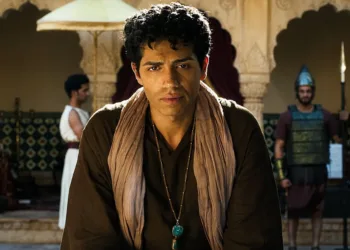

























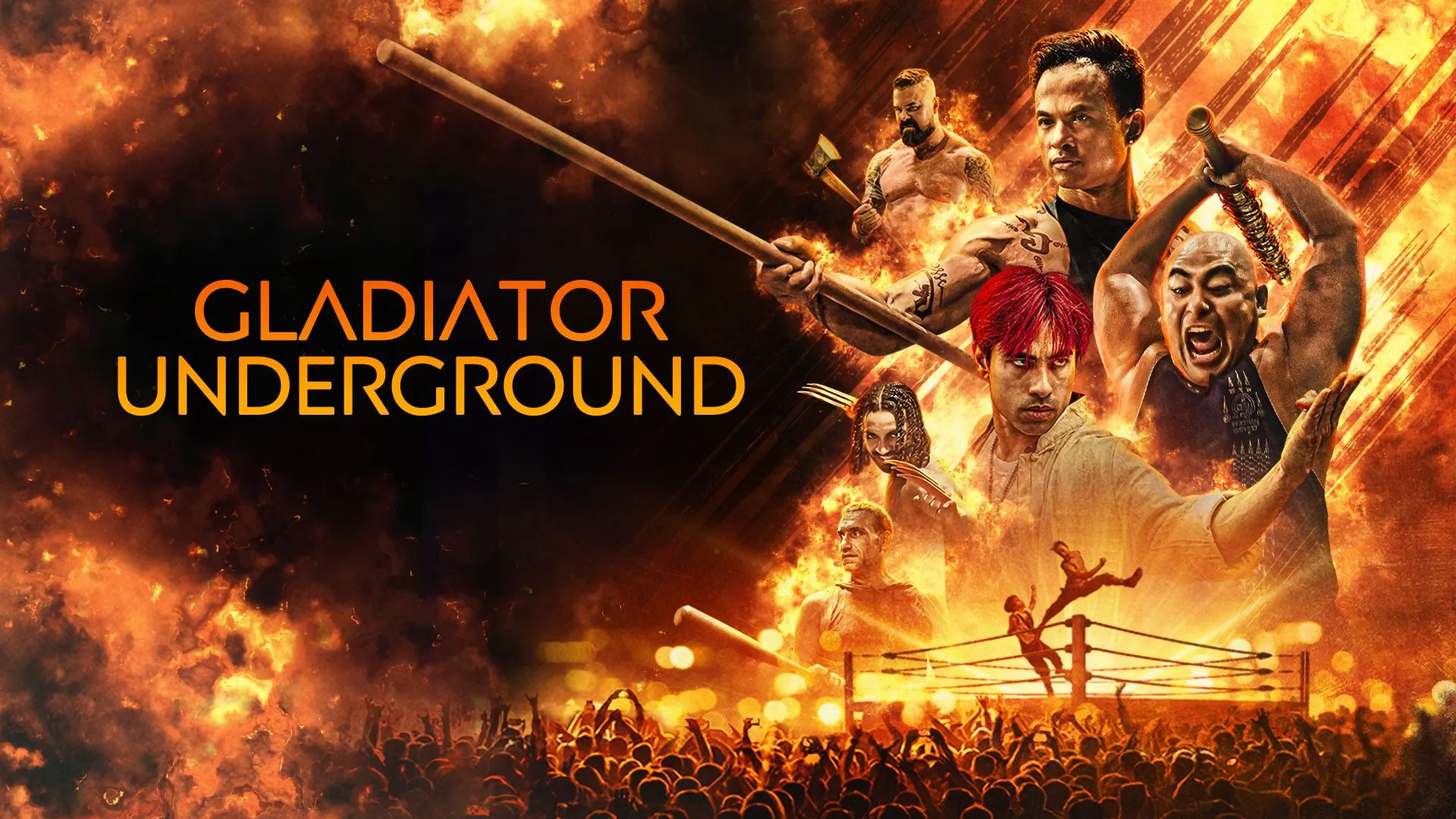

Gladiator Underground opens as a high-voltage salute to late-80s and early-90s tournament fighters. Director Chaya Supannarat and the Martial Club leads D.Y. Sao, Andy Le, and Brian Le shape the premise of a winner-take-all bloodsport into contemporary, precision-cut combat. The story unfolds in Loklang City, where crime boss Mantis runs a lethal underground competition.
That arena frames the film’s emotional center: the damaged bond between brothers Max Yen, played by D.Y. Sao, and Wu Yen, played by Andy Le. Old wounds place them on a collision course with each other and with the machine that profits from their pain. The familiar comfort of Kickboxer and Bloodsport remains present, and the filmmaking accelerates the pace to modern speed, which keeps every beat sharp.
Choreography and Custom Combat
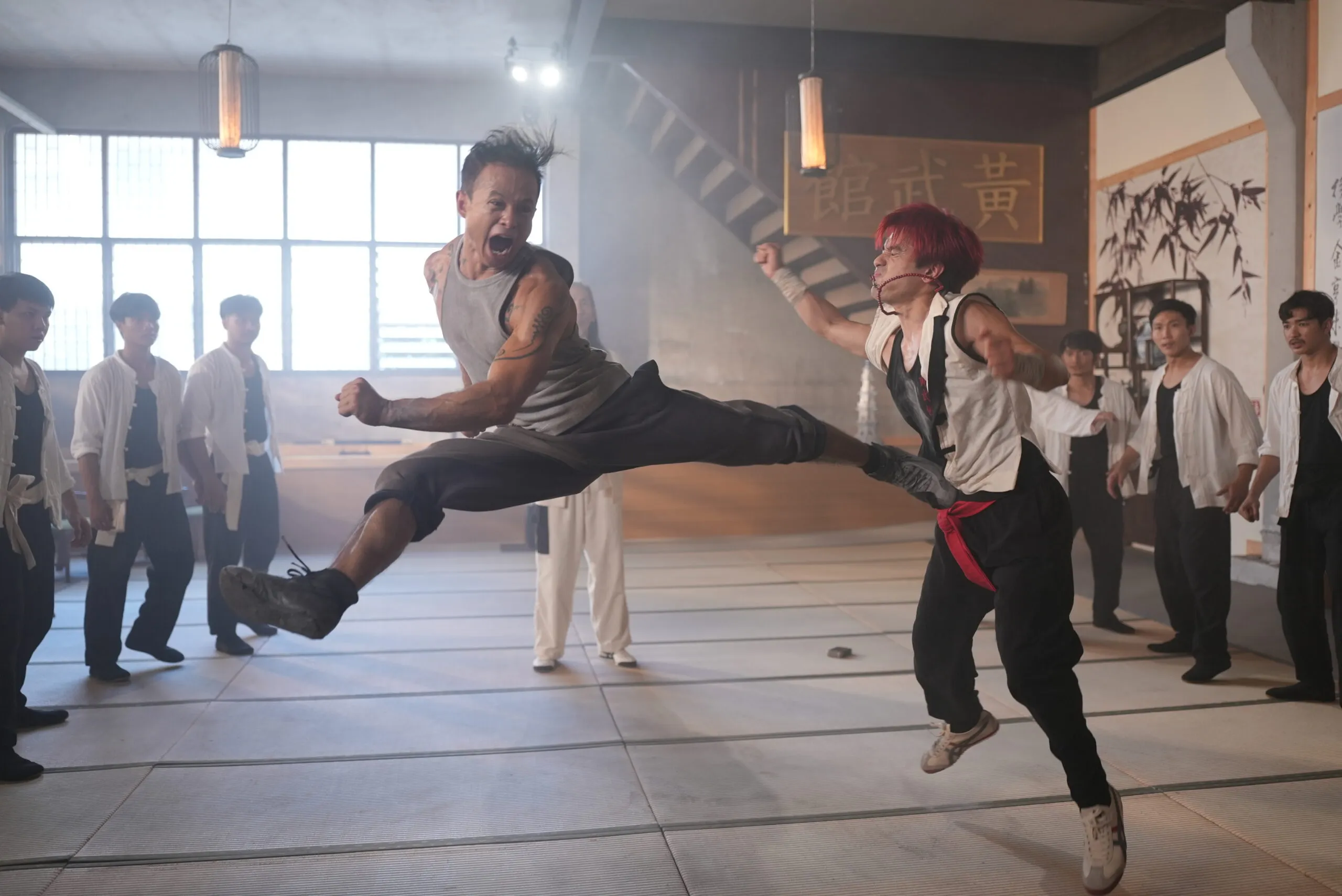
The film’s standout quality comes from the relentless action design. Joseph Le orchestrates the fights with input from the leads, and the movement reads clean on every hit. The three Martial Club principals deliver distinct “movesets” that read like a top-tier roster.
Andy Le’s Wu moves with acrobatic kung fu that could slot into a fighting game character select. D.Y. Sao’s Max takes a grounded, concussive approach and occasionally shifts into drunken boxing. Brian Le’s Shojin fights with feral unpredictability and raw, animal power.
The tournament’s “game mechanics” keep the match flow fresh. Sponsors can trigger the Steel Wheel, which drops random weapons into the arena. The inventory ranges from knives and guns to an umbrella that forces creative tactics. Match formats evolve from one-on-one bouts to tag-team skirmishes and finally a piled-on battle royale.
The last round plays out across platforms laced with cages and barbed wire, which turns the set into an active hazard and gives the action a readable objective space. Cinematographer Picha Srisansanee tracks the velocity with clarity under low light, so footwork, weapon beats, and positional changes stay visible.
Emotional Stakes and Character Dynamics
The violence carries weight because the character conflicts press on every exchange. The Max and Wu relationship acts as the emotional anchor. Their rift started when their Sifu left the city with Wu, leaving Max to grind through the underground scene. That history fuels the tension inside their uneasy alliance.
Max Yen avoids a clean-cut hero template. He bristles, holds grudges, and pushes people away. That edge gives him a layered arc instead of a straight revenge path. Shojin projects swagger and aggression, and his choices land with moral heft. Gangster Bohan, played by Geoffrey Giuliano, corners him into hard decisions, and Shojin moves to protect his family.
That pressure shapes one of the film’s most affecting trajectories. The supporting bench features Ron Smoorenberg as the Templar and Apasiri Kulthanan as Veena, who sponsors Max and drives him to face his messes head-on. The antagonists keep the temperature high. Bohan and Mantis, played by Selina Wiesmann, push the stakes forward, and the parade of lethal opponents fills the ring with threat even when the bosses stay off the mat.
Vision and Indie Polish
The visual identity reflects an independent build. The digital texture and tight resources leave a rough finish that fits the setting. Chaya Supannarat counters limitations with punchy momentum. The production leans on a small set of locations and squeezes them for maximum effect. The underground pit looks grimy and claustrophobic, which suits a rules-optional tournament where pain is currency.
The pacing hits clean marks. A concise runtime near ninety minutes keeps the film in motion and trims dead air between bone-crunching beats. Some supporting performances read stiff, and the film stays clear about its priorities.
The emphasis remains on action design and execution that cater to genre diehards. Gladiator Underground lands as a fast, punishing martial-arts showcase that may gather a cult audience on the strength of its fight choreography and relentless tempo.
Gladiator Underground is a high-octane martial arts action film released in 2025. Directed by Chaya Supannarat, the movie centers on two estranged brothers, Max and Wu, who are forced to compete in a deadly, underground fighting tournament controlled by powerful crime lords. The film, backed by Bleiberg/Dimbort and distributed by Samuel Goldwyn Films, had its official digital release on October 17, 2025, and is available to rent or buy on major VOD platforms like Apple TV, Amazon Prime Video, and Google TV. The movie is known for its intense action choreography from the Martial Club team, paying homage to classic tournament films while showcasing a modern, brutal style of combat.
Credits
Director: Chaya Supannarat
Writers: Ariel Bleiberg
Producers: Ehud Bleiberg, Ariel Bleiberg, Charlie LaHie, D.Y. Sao
Cast: D.Y. Sao, Andy Le, Brian Le, Craig Ng, Apasiri Kulthanan, Selina Wiesmann, Geoffrey Giuliano, Bear Williams, Elliott Allison, Ron Smoorenberg, Sahajak Boonthanakit, Byron Bishop
Director of Photography (Cinematographer): Picha Srisansanee
Editors: Matthew Lorentz
Composer: Sean Murray
The Review
Gladiator Underground
Gladiator Underground succeeds by perfectly blending classic fighting tournament tropes with high-octane modern choreography. The film’s energy is infectious, driven by the exceptional Martial Club leads and the inventive tournament mechanics like the Steel Wheel. The dramatic heart, involving the conflicted Yen brothers, gives the extensive brutality necessary emotional context. While the budget shows occasionally and the antagonists could be more imposing, this is a fast, ferocious, and compelling martial arts spectacle. Genre fans should prioritize this one.
PROS
- Fluid, brutal, and technically excellent action sequences.
- Each lead (D.Y. Sao, Andy Le, Brian Le) brings a unique and visually arresting martial arts approach.
- Gimmicks like the "Steel Wheel" for random weapons and the multi-stage environment (cages, battle royale) keep the combat fresh.
- The rivalry and forced alliance between the Max and Wu Yen brothers grounds the violence.
- The tight runtime and relentless action ensure a fast, energetic viewing experience.
- Chaya Supannarat effectively maximizes the limited budget and locations to create a gritty atmosphere.
CONS
- The main crime bosses (Mantis and Bohan) feel less physically threatening than the stakes require.
- Some performances from the supporting cast are occasionally stilted.
- The film’s low-budget nature is visually apparent in certain production aspects.