










The Alaskan air is sharp, thin, and cold enough to feel like glass in the lungs. A man runs through it, his breath pluming behind him. He is U.S. Marshal Frank Remnick, and this pre-dawn ritual is a quiet communion with a landscape he chose for its peace, its vast emptiness a balm for old city wounds. The silence is broken only by his footfalls on the packed snow and the sudden, hulking appearance of a moose, a silent titan of the wilderness.
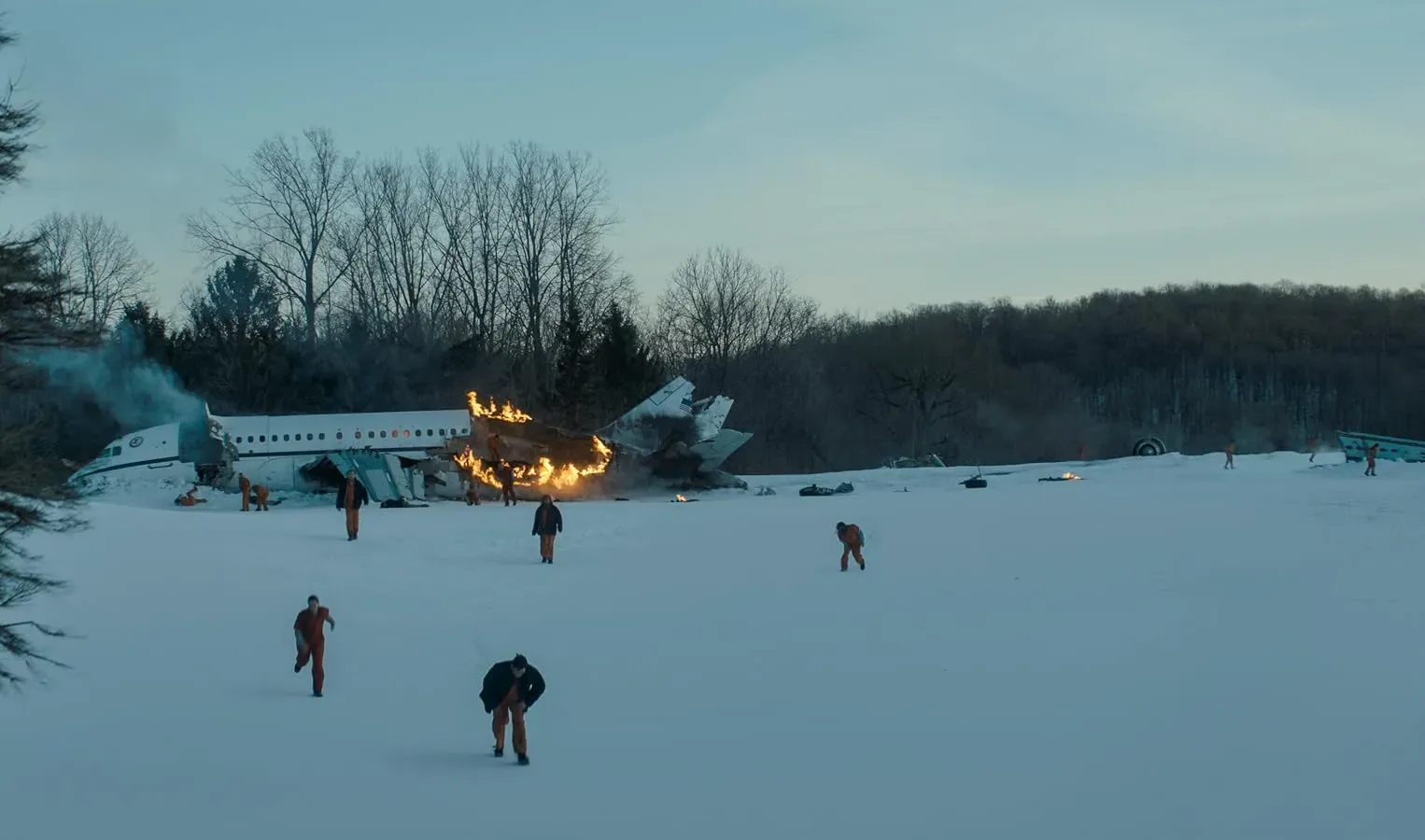
This is the world as it should be: immense, indifferent, and orderly. But miles above, a darker order is about to be shattered. A prisoner transport plane, a steel cage in the sky, is beginning its violent descent. This impending chaos will not just interrupt Frank’s run; it will obliterate the fragile peace he has built.
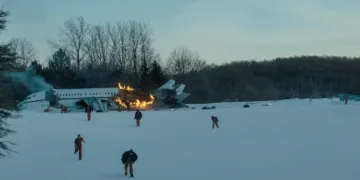
The crash is an invasion, releasing dozens of the nation’s most dangerous criminals into his quiet jurisdiction. It also frees a singular threat, a mastermind named Havlock, whose escape draws the attention of the CIA and its mercurial agent, Sidney Scofield. Frank’s quiet frontier is about to become a war zone.
Pulp Fiction in the Permafrost
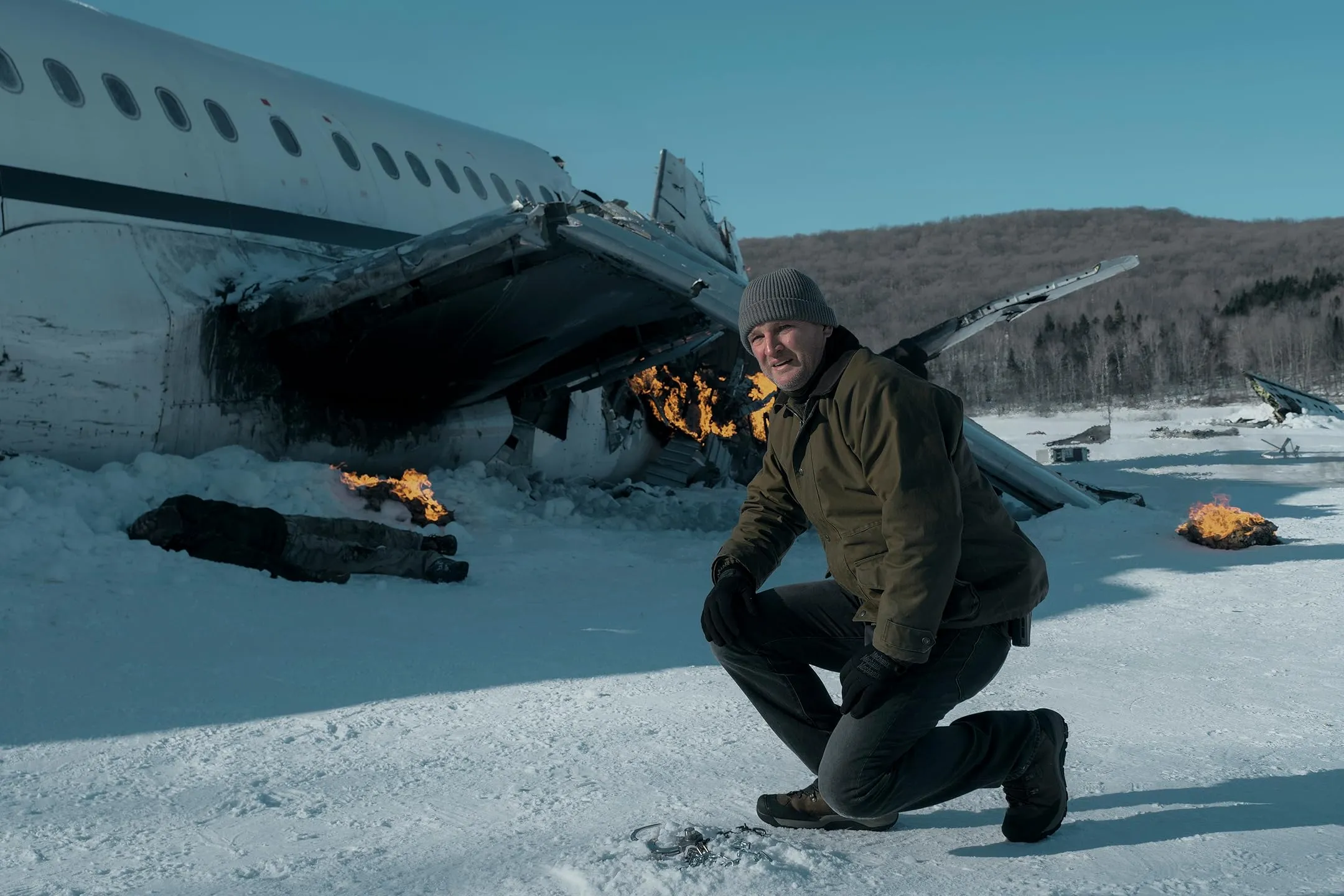
The series is at its most potent and lucid when it sheds its loftier ambitions and revels in the brutal ballet of survival. This is most apparent in the sequences guided by director Sam Hargrave, whose history in stunt work translates into action that feels grounded, weighty, and painfully real. The initial plane crash is not just a spectacle of CGI fire; it is a claustrophobic, terrifying ordeal.
The camera work places the viewer inside the disintegrating fuselage, capturing the chaos of bodies and debris in a disorienting, visceral storm of violence. Every punch lands with a sickening thud, and every desperate grab for a handhold tells a small story of survival. This commitment to physical storytelling extends to the show’s other high points, like a desperate brawl inside a research truck as it dangles over an icy precipice, the laws of physics becoming a third combatant.
The action here is not merely an interruption of the plot; it is the plot, expressed through a language of force and desperation. This clarity of purpose also defines the show’s procedural structure. When Frank and his team are simply hunting down the fugitive-of-the-week, the narrative breathes.
The mission is clear, the stakes are immediate, and the antagonists form a memorable gallery of archetypal threats. There is the hulking brute, the slick con artist, and the unpredictable psychopath, figures who allow the show to indulge in the straightforward pleasures of the chase. This episodic format provides a necessary anchor, a series of contained, satisfying conflicts that stand in stark contrast to the sprawling and ill-defined nature of the central conspiracy.
A Cold and Convoluted War
Where the series finds kinetic grace in its action, it stumbles into a narrative quagmire with its central espionage plot. The immediate, tangible threat of escaped convicts roaming the wilderness is consistently sidelined for a convoluted story of government secrets and betrayals. This plot is a Russian nesting doll of MacGuffins, built from forgettable, jargon-laden concepts like “Archive Six” and “the Atwater Protocol.”
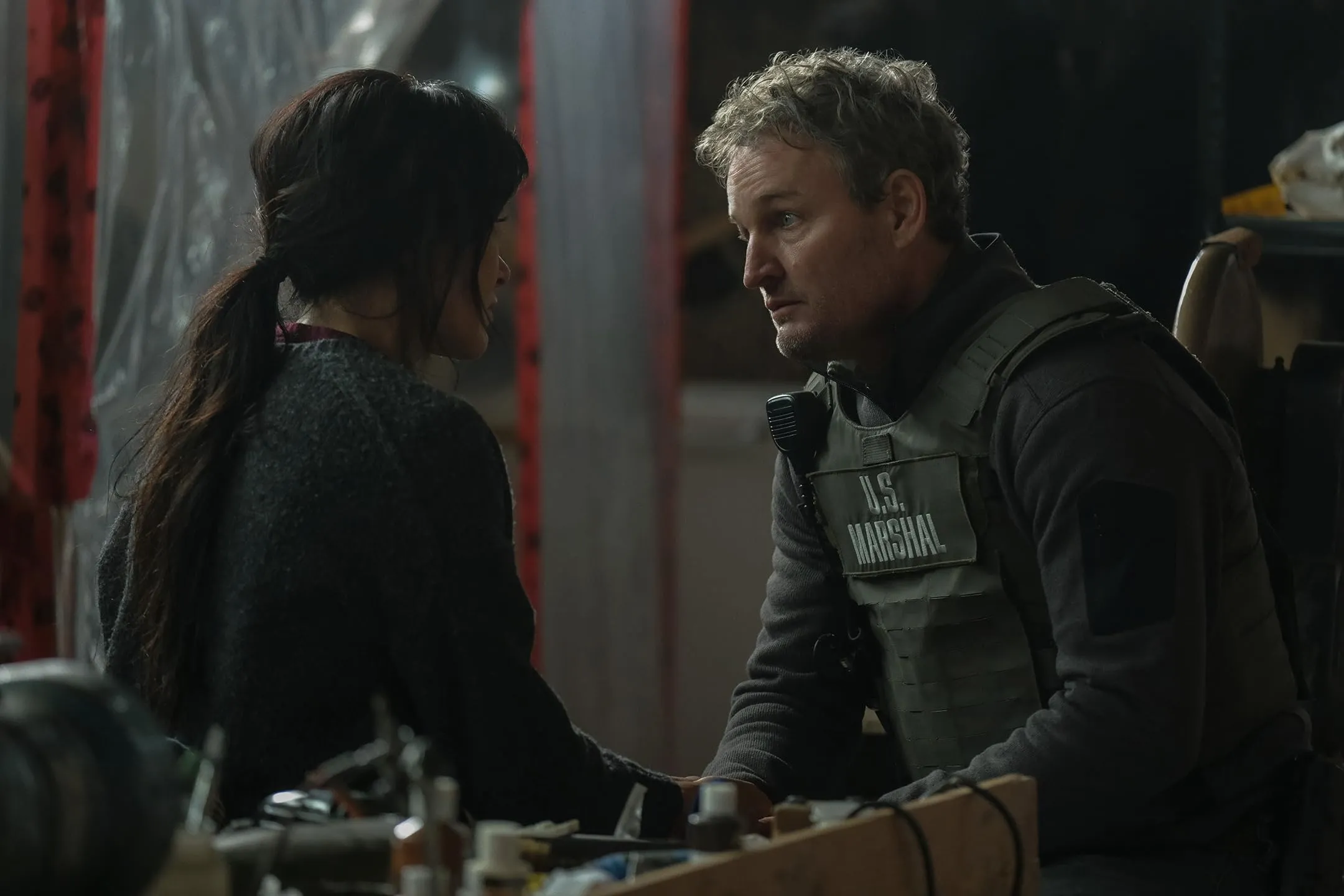
These terms are meant to suggest a deep and complex mythology, but they function as narrative shorthand, substituting the appearance of depth for the genuine article. The twists, like the reveal of Havlock’s true identity, are telegraphed so far in advance that they land with the flat thud of the inevitable. This abstract conspiracy pulls the action away from the visceral setting of Alaska and into sterile briefing rooms and interrogation cells, trading the chill of the wild for the dull hum of exposition. The problem is magnified by the show’s distended runtimes.
Episodes frequently clock in near sixty minutes, a length the story cannot sustain. The pacing sags under the weight of excessive flashbacks that do more to pad the clock than to illuminate character, and long stretches of melodrama that feel unearned.
There is a profound tonal rift running through the series. It presents scenes of grave, emotional trauma with the sober intensity of a prestige drama, yet it will pivot to a sequence of almost cartoonish, campy violence without a hint of irony. This whiplash is not a sign of audacious tonal blending; it is evidence of a show that takes itself too seriously to recognize the pulpy, ridiculous heart that beats strongest within it.
Faces in the Frost
Jason Clarke’s performance as Frank Remnick provides the series with a much-needed center of gravity. He carries the immense weight of his past not as a tic but as a physical presence, his stoicism a shield against the world’s chaos. Clarke makes Frank’s competence feel lived-in and his weariness authentic, creating a believable anchor in a story that often strains credulity. He is a man of honor in a world that has little.
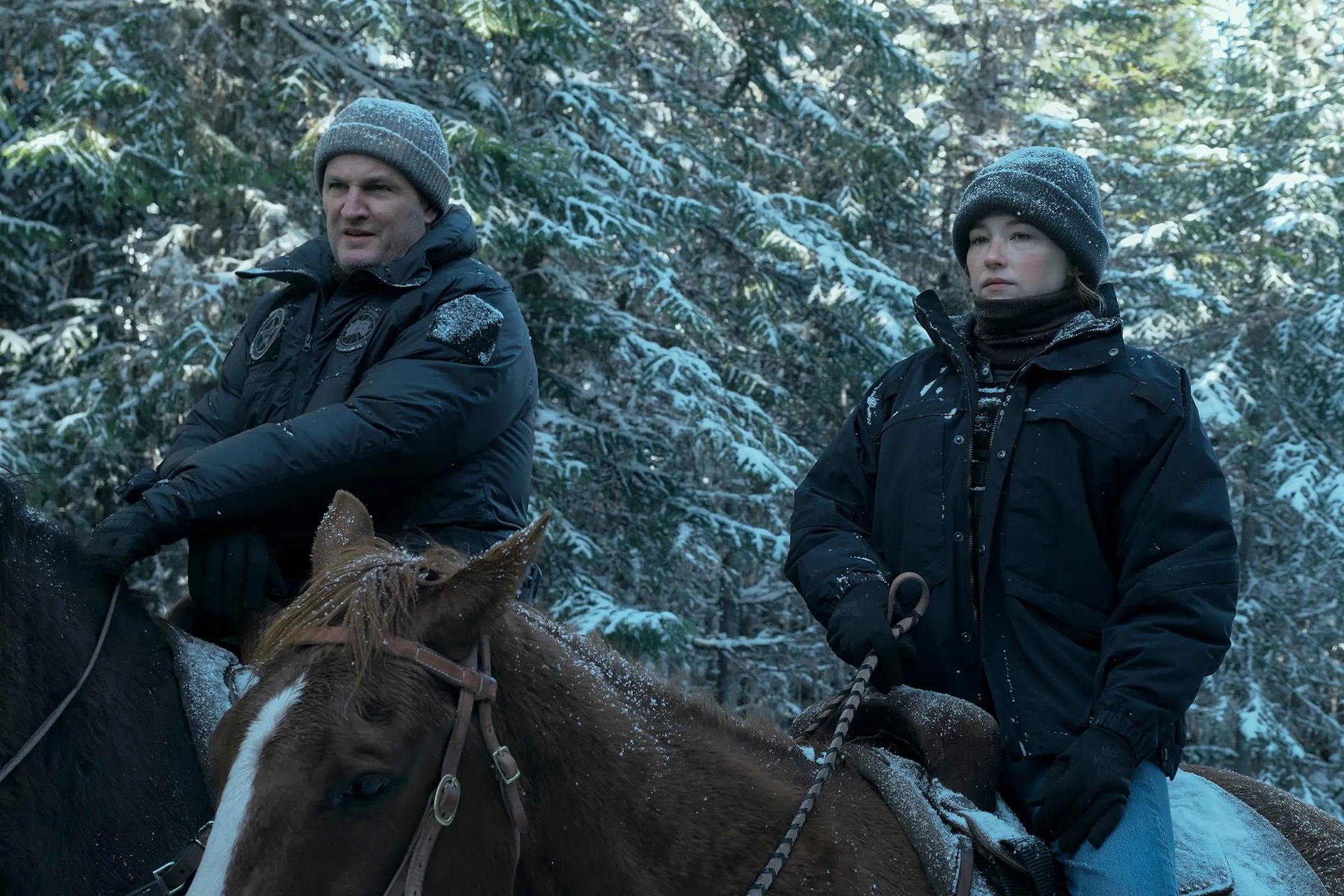
His reluctant partner, Sidney Scofield, is sketched with far less certainty. As played by Haley Bennett, Sidney is a collection of spy-fiction clichés: the agent with a complicated relationship with her legendary father, the operative whose drinking problem is meant to signify a deep inner turmoil. These are tropes, not traits, and they prevent the character from coalescing into a believable human being.
The chemistry between the two leads is virtually nonexistent, hobbling a partnership that should be the engine of the narrative. The supporting cast is a study in wasted potential. Alfre Woodard and John Slattery, actors capable of immense power and nuance, are stranded in Langley, tasked with delivering exposition with an authority the script never earns them. In Alaska, Dallas Goldtooth’s character, Hutch, represents a significant missed opportunity.
He is reduced to the role of a concerned subordinate, a sounding board for his boss’s troubles, when his perspective could have offered a vital connection to the land and communities affected by the disaster. Frank’s family is treated with similar instrumentality. His wife and son exist less as characters and more as potential hostages, their primary function to be imperiled on cue, turning them into little more than plot devices.
An Unsteady Landing
The Last Frontier exists in a state of perpetual conflict with its own best instincts. Within it is a lean, aggressive, and deeply satisfying action-thriller, a story of survival told with brutal clarity. This superior version of the show is constantly being suffocated by a ponderous, self-important espionage drama that mistakes complexity for intelligence.
The simple, muscular premise of a lawman protecting his home from an army of criminals is buried under layers of narrative padding and a conspiracy that generates little interest. The result is an uneven experience, a show that offers moments of breathtaking action and genuine tension, but only as islands in a vast sea of mediocrity.
To appreciate its strengths, one must endure its significant weaknesses. The series begins with a spectacular, high-altitude crash, promising a story of intense thrills and dire consequences. It fulfills that promise only in flashes, spending the rest of its time struggling to find a steady flight path, ultimately weighed down by its own ambitious but misguided design.
Full Credits
Director: Sam Hargrave, John Curran, Dennie Gordon
Writers: Jon Bokenkamp, Richard D’Ovidio
Producers and Executive Producers: Jon Bokenkamp, Richard D’Ovidio, Laura Benson, Glenn Kessler, Albert Kim, Sam Hargrave, Jason Clarke
Cast: Jason Clarke, Dominic Cooper, Haley Bennett, Simone Kessell, Dallas Goldtooth, Tait Blum, Alfre Woodard, Clifton Collins Jr.
Director of Photography (Cinematographer): Giorgio Scali, Bernard Couture, Michael Caracciolo, Patrick Murguía
Editors: Chris Brookshire
The Review
The Last Frontier
The Last Frontier is a frustratingly uneven thriller. It soars during its brilliantly staged action sequences, offering visceral, high-octane entertainment. However, these thrilling peaks are surrounded by valleys of slow pacing, a convoluted espionage plot, and underdeveloped characters. The series contains the DNA of a superb, pulpy adventure, but it is ultimately weighed down by its own self-important ambitions, making for a watch that is as often tedious as it is exciting.
PROS
- Spectacular and well-directed action sequences with a visceral, grounded feel.
- A strong, compelling lead performance from Jason Clarke.
- The straightforward "prisoner-of-the-week" procedural elements provide clean, episodic fun.
- An instantly engaging, high-concept premise.
CONS
- The central conspiracy plot is bloated, generic, and overly complicated.
- Pacing is sluggish, with excessively long episodes filled with melodrama and repetitive flashbacks.
- The tone is jarringly inconsistent, shifting between serious drama and campy violence.
- A talented supporting cast is largely wasted on underdeveloped characters.