




























Neyyah arrives as a deliberate act of temporal resurrection. Developed primarily by solo creator Aaron Gwynaire under Defy Reality Entertainment and published by MicroProse, this debut title spent seven years in careful construction. The result channels the spirit of 1990s point-and-click adventures with remarkable fidelity, particularly the Myst and Riven lineage that defined the genre’s golden age.
Players navigate a fantastical realm where portals connect scattered islands teeming with exotic flora and oversized fauna. The presentation stays faithful to its inspirations through pre-rendered static environments viewed from locked camera angles, a choice that feels increasingly rare in modern game design. FMV cutscenes featuring live actors composited into digital scenes handle narrative delivery, complete with the theatrical performance style that characterized adventure games from that era.
Gwynaire himself appears as one of the characters, echoing how developers often filled acting roles in those early productions. While the game incorporates modern technical conveniences like widescreen support, every design decision otherwise commits to recreating the experience of playing a lost Myst entry from 1997.
The Mechanics of Exploration and Problem-Solving
The gameplay follows traditional point-and-click conventions, moving players between pre-rendered CG images rather than offering free movement. This slideshow approach brings both benefits and drawbacks. Navigation through environments that don’t align to simple grid layouts can disorient players, making it difficult to maintain spatial awareness. However, the static nature allows Gwynaire to curate each view like a photographer composing a shot, controlling exactly what players see and how they see it. The game handles interactable elements well, clearly signaling what deserves investigation without descending into frustrating pixel hunts.
Puzzles form the experience’s foundation, offering variety through pattern recognition challenges, lever-based mechanisms, color-coded systems using payeetas that transform room configurations, code entry sequences, and environmental observation tasks. Solutions demand attention to multiple information sources: character dialogue, scattered journals and notes, audio recordings, and visual clues embedded in the scenery. Players comfortable with physical note-taking will find that practice helpful here, if not essential depending on chosen difficulty settings.
The challenge level occupies a reasonable middle ground. Puzzles feel fair rather than arbitrary, presenting obstacles that suggest their solutions without spelling out every step. Each individual puzzle provides satisfaction when solved, though they could interconnect more deeply with each other and the game’s ecological systems. The fauna that crosses your path throughout the islands remains largely decorative rather than mechanically meaningful, representing a missed opportunity for the kind of environmental integration that made Riven’s challenges feel inseparable from its world.
Three assistance modes accommodate different player preferences and tolerances. “Master of Your Own Adventure” strips away all guidance, offering the purest hardcore experience where nothing gets saved or tracked automatically. This mode practically requires keeping a physical notebook nearby. “Whispers in the Wind” provides a middle path, automatically updating your map with discovered locations while the Traveller’s Guide journal logs information silently in the background for reference.
“Guided by the Ancients” takes things further, actively notifying you when new information appears in your guide and offering periodic text hints about next steps. Even the most helpful mode avoids explicit solutions, maintaining the requirement that players actually read the materials they collect and engage with the clues presented.
The pacing moves deliberately, allowing time to absorb atmosphere and consider puzzles carefully. Players accustomed to faster modern games may struggle with the methodical tempo. The adventure stretches to roughly 20 hours, noticeably longer than Riven’s 12-hour runtime, which amplifies some of the game’s repetitive elements.
Visual and Audio Craft
The visual presentation impresses through careful attention to composition and lighting. Each static screen receives photographic consideration, resulting in sharp, occasionally breathtaking imagery. Animation techniques inject movement into otherwise frozen scenes, while large creatures wander through at intervals, adding life to the environment. The pre-rendered approach enables visual fidelity that serves the game’s aesthetic goals well.
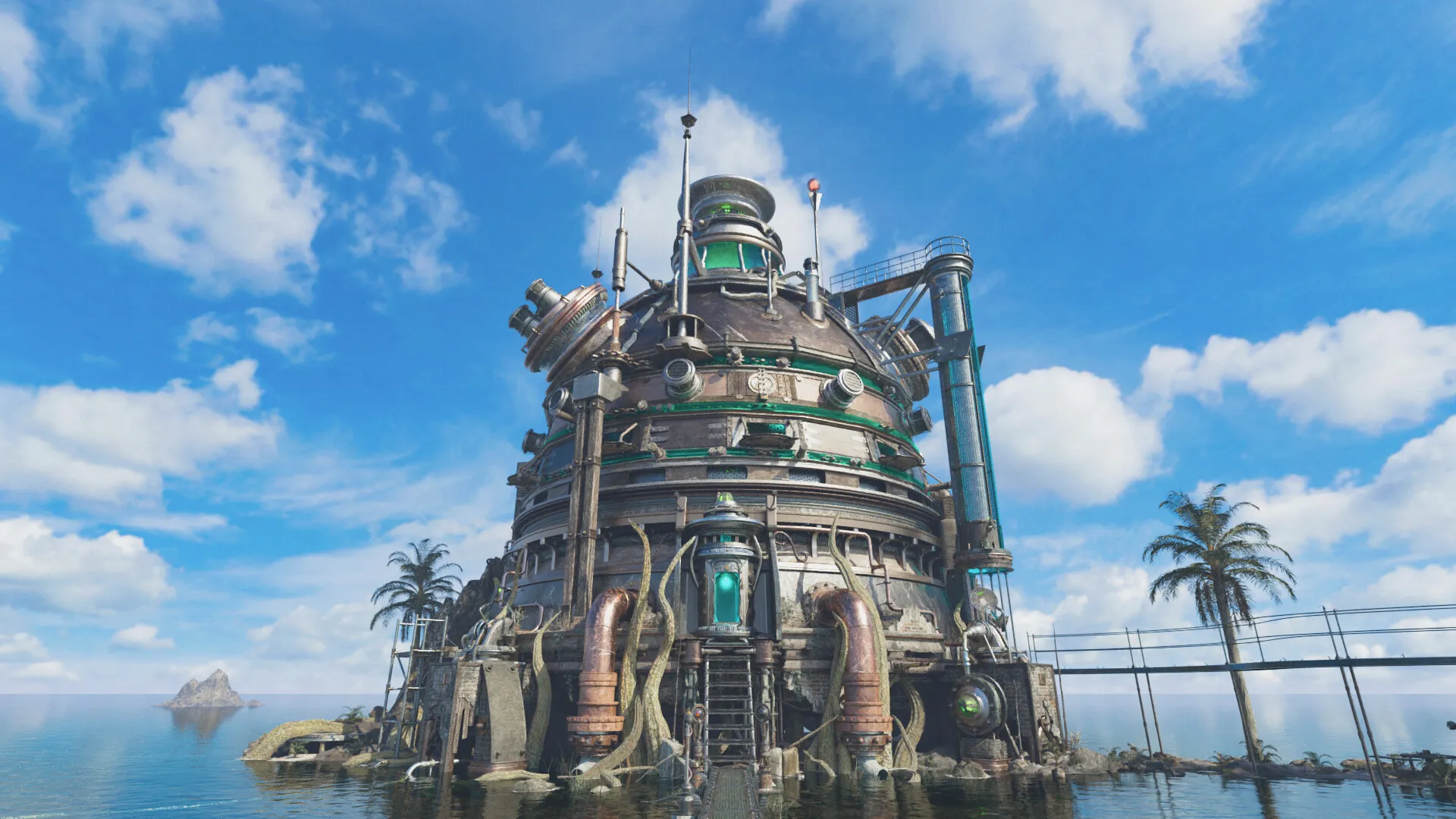
The tropical setting dominates across all islands, creating a coherence that can also feel monotonous. Different areas shift lighting and atmospheric conditions, but lack the distinct visual identities that gave Riven’s varied island biomes such strong character.
When stretched across 20 hours, this sameness becomes more noticeable. The computer terminal interfaces stand out as particularly successful pieces of period recreation, capturing Y2K web design sensibilities with vectorized graphics and faux-futuristic styling reminiscent of Flash animation introductions. UI elements throughout employ fonts similar to Papyrus on maps and documentation, adding another layer of authenticity.
The FMV performances hit exactly the right tone for the era being emulated. Green screen compositing places actors into digital environments, and their theatrical delivery embraces the camp that defined 1990s adventure game acting. These performances aren’t trying to be subtle or naturalistic; they lean into melodrama and broad gestures. Gwynaire’s decision to cast himself follows the tradition of budget-conscious developers filling roles themselves. The character Smollax deserves specific mention for villainous theatrics that consistently entertain.
Audio design proves equally successful at creating immersion. Environmental sounds paint detailed sonic pictures: metal walkways creak underfoot, mine interiors echo with every footstep, ancient machinery clanks and whirs with mechanical precision. Waves crash against wooden structures that groan in response, while insects produce clicks and whines from hidden positions in the reeds. The soundtrack, composed by Zaedyn Turner and Gwynaire, channels ethereal ambient folk music that recalls the Myst series’ approach to scoring. Music and environmental audio combine effectively with the visual presentation to strengthen the sense of place.
Technical performance remains smooth throughout, with widescreen support functioning without issues. The menus and navigation systems feel appropriately aged without introducing actual 1990s technical limitations.
Narrative Architecture and Textual Density
Story delivery splits between FMV cutscenes and extensive written materials scattered throughout the world. Journals, diaries, and notes left by previous inhabitants reveal plot and context gradually. The opening segments can overwhelm with unfamiliar terminology and proper nouns before the narrative framework becomes clear through subsequent character interactions and document discovery.
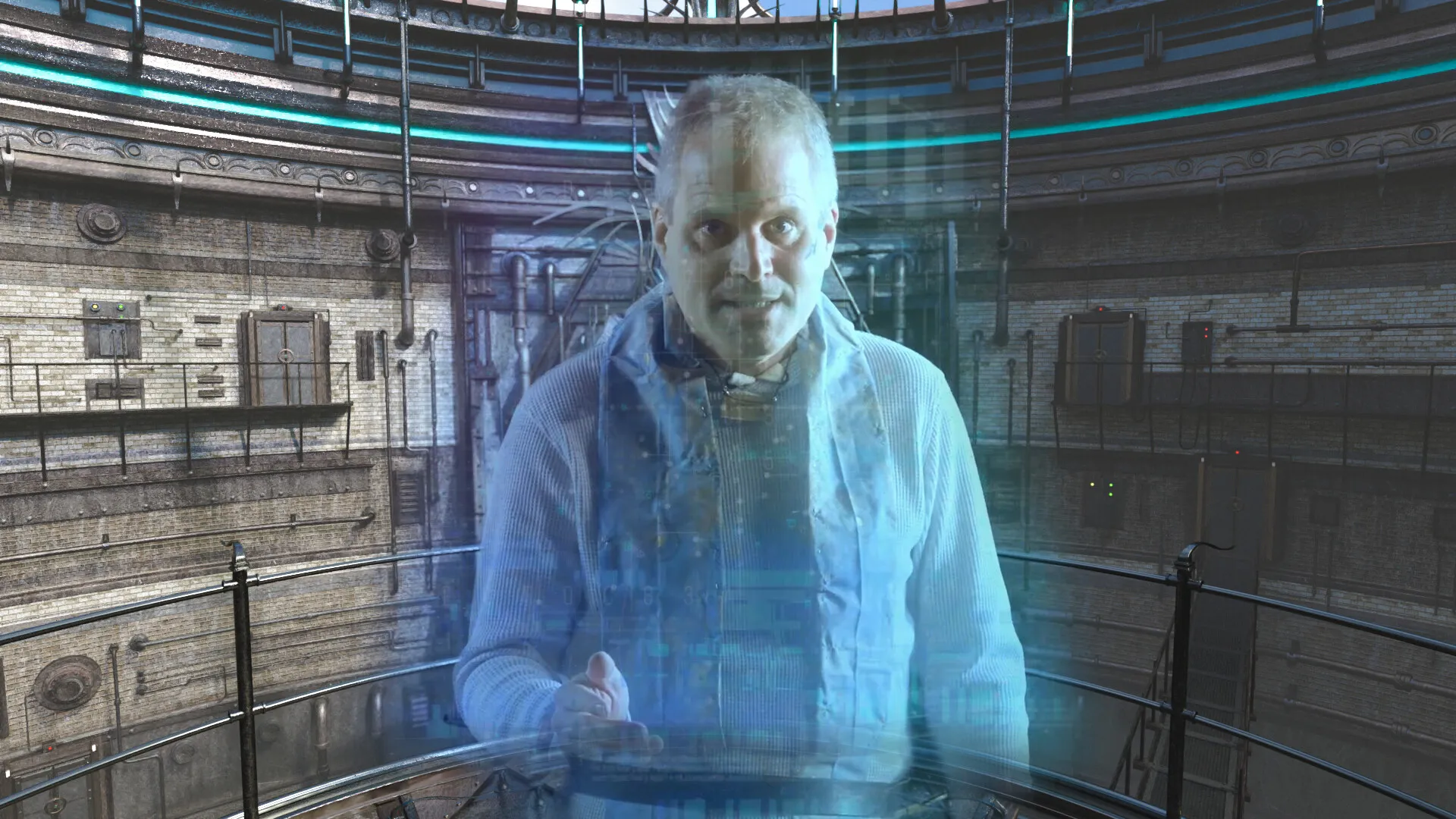
The worldbuilding demonstrates depth and care, constructing a detailed history for the portal-linked islands and their inhabitants. The lore contains genuine interest for players willing to engage with it, revealing a richly imagined culture and ecology.
The text volume becomes a defining characteristic, for better and worse. Estimates suggest a word count roughly ten times that of Riven, presenting a substantial reading commitment. The challenge lies in distinguishing essential puzzle information from optional background material. The game provides no clear markers for this differentiation, pressuring players to read nearly everything encountered to avoid missing crucial details.
The writing itself maintains quality at the sentence level, often achieving beauty in its descriptions and characterizations. However, the sheer volume creates fatigue, especially given the density of invented proper nouns. Terms like “Felitsu Island Gufunkye Zone” appear without explanation, demanding that players track numerous alien-sounding names for locations, objects, and concepts. Fragments of an invented language add another comprehension layer. This complexity emphasizes the setting’s otherworldliness while simultaneously making it harder to maintain mental maps of places, people, and plot threads.
A tension emerges between reading about the world and experiencing it directly. The environments possess richness that invites observation and experimentation, yet much learning occurs through textual exposition in found documents. The assistance modes help filter information overload for players who find the reading demands excessive. Those who engage fully with the text will discover fascinating lore, but players preferring environmental storytelling and hands-on discovery may feel the balance tips too far toward written exposition.
The trade-off requires consideration based on personal preferences. The writing quality justifies the reading time for patient players interested in deep lore, while others may find it interrupts the exploratory puzzle-solving that defines the genre’s appeal.
The Review
Neyyah
Neyyah succeeds as an authentic recreation of 1990s point-and-click adventure design, capturing that era's aesthetic and mechanical sensibilities with impressive precision. The visual and audio presentation excels, while puzzle design offers satisfying challenges within three thoughtful difficulty modes. However, extensive text requirements and repetitive tropical environments test player patience across the 20-hour runtime. This remains a strong debut for players craving genuine Myst-style experiences, though the heavy reading load and limited environmental variety prevent it from matching its inspirations' elegance.
PROS
- Authentic 1990s adventure game aesthetic with excellent production values
- Strong atmospheric audio design and beautiful pre-rendered visuals
- Three difficulty modes accommodate different skill levels
- Entertaining FMV performances with appropriate theatrical camp
- Deep, well-written worldbuilding for dedicated readers
CONS
- Extremely text-heavy with unclear distinction between essential and optional reading
- Tropical setting lacks visual diversity across islands
- 20-hour length amplifies repetitive elements
- Puzzles could integrate more deeply with world ecology
- Difficult proper nouns make tracking information challenging