












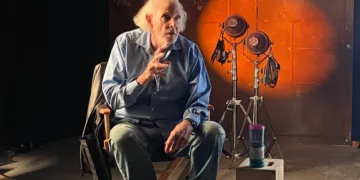











The documentary Brunaupark, directed by Felix Hergert and Dominik Zietlow, presents a patient, empathic oral history of a large residential complex in Zurich, known for a close-knit, multicultural, multi-generational community. The film organizes itself around a single, grinding conflict. The owner, a pension fund tied to Credit Suisse, plans a partial demolition followed by new construction.
That plan threatens to uproot hundreds of long-term tenants. Over three years, the camera follows daily routines, resistance, and unfiltered reactions as people confront the possible unraveling of their homes and the social infrastructure that sustains them. The film’s quiet, steady observation frames the housing dispute as a clash between lived human geography and financial abstraction, a small portrait that reflects a common contemporary crisis.
The Social Fabric Under Threat
The filmmaking structure places the neighborhood’s character at the center, treating it as a civic organism rather than a set of units. Brunaupark appears as an “oasis” with a distinct “heart and soul.” That life rests in the residents themselves: families, older neighbors, and local proprietors. Ciccio, the pizza maker who ran his restaurant for 28 years, anchors this portrait. His place functioned as a confessional and crossroads, a room where private stories accumulated into a shared record.
Memory and resilience shape the storytelling method. Tenants recount years of history and defiance. A former restaurant owner remembers a clientele that spanned backgrounds, while a tender passage lingers on a woman revisiting home videos, mapping her son’s growth across hallways and courtyards. Past and present sit side by side in these images, and the contrast underlines how deeply the site holds personal timelines.
The film watches children and teenagers gather in common areas that feel protective and formative. The central grievance remains explicit. The apartments work, and many were recently renovated, which renders the planned teardown blunt and punishing. The force moving the project forward follows property speculation and a neo-capitalist appetite indifferent to people. The potential loss includes housing, friendships, and a basic sense of belonging.
Resistance and Structural Shifts
The film arranges a classic David-versus-Goliath frame to track refusal and rising indignation. Residents apply the limited forms of leverage they possess. The directors point to the economic absurdity that shapes the tenor of the fight.

The owner circulates a recommendation meant to help tenants locate new housing, a gesture that rings hollow in a city where affordable apartments are scarce and prices continue to soar. The tenants compare their current, practical flats and generous green spaces with the developer’s drawings of smaller units, higher rents, and ornamental greenery that reads as cosmetic. Financial pressure fills the background of nearly every scene.
The section’s narrative strength rests on the slow, irreversible shifts that accumulate over three years. As apartments empty, short-term occupants move in, including students and foreign employees. A scene built around a communal garden brunch captures the uncomfortable meeting of these groups.
The newcomers appear focused on professional connections, while long-time residents value durable ties. The change drains the area of a familiar identity. The point lands with a simple image: where Ciccio’s restaurant once operated as a communal hearth, a sleek coffee shop takes its place, cool to the touch. The film registers how money can replace intimacy and how that exchange alters daily texture.
Documentary Style and Distance
Hergert and Zietlow keep a patient, empathic distance. They present a spare film without cheap sensationalism and commit to real-time, human responses. The work carries a strong moral charge at the idea that this proven model of urban living no longer counts as viable. Attention to local conversational rhythms among Swiss sub-demographics gives the material specificity and a grounded voice. The camera records the protagonists’ confusion and bewilderment as they attempt to understand the terms of their displacement.
The structure also invites critique. The community that once thrived appears frequently as memory. Residents speak about it in the past tense, which means the on-screen struggle aims to preserve something that already feels faint. A cool, unsentimental stance reinforces that perception. The objective posture may read as formal clarity for some viewers.
Others may feel the rising stress never fully lands with immediate urgency. That distance can create a thin barrier between subjects and audience, softening the instant emotional bond the story seeks to establish. The film still brings sharp attention to the paradoxes of speculation and to the ways those market logics weaken the social ties that protect the most vulnerable.
Brunaupark is a Swiss documentary that premiered in 2024, with its German-speaking Swiss theatrical release occurring on August 29, 2024. The film chronicles the lives of residents in a Zurich housing complex fighting eviction due to a planned demolition by the Credit Suisse pension fund. The documentary has screened at festivals like Visions du Réel and is distributed by Vinca Film in Switzerland. It has also been available to stream on platforms like Play Suisse in Switzerland.
Credits
Title: Brunaupark
Distributor: Vinca Film, Filmdelights (International Sales)
Release date: August 29, 2024 (Switzerland)
Rating: FSK 6 / Recommended 14+
Running time: 91 minutes
Director: Felix Hergert, Dominik Zietlow
Writers: Felix Hergert, Dominik Zietlow
Producers and Executive Producers: Anne-Catherine Lang, Julia Schubiger, Lilith Verny, Olivier Zobrist
Cast: Ciccio, Elena, Frau Müller, The Restaurant Owner, The Elderly Woman, The Stiess Family
Director of Photography (Cinematographer): Dominik Zietlow
Editors: Selin Dettwiler
Composer: Simon Borer, Marcel Gschwend
The Review
Brunaupark
Brunaupark is a compelling documentation of community erosion under financial pressure. Hergert and Zietlow’s patient storytelling effectively captures the residents’ dignity and confusion as they fight displacement. The film succeeds in spotlighting the cruelty of property speculation that prioritizes profit over social fabric. However, its deliberate, unsentimental distance limits the immediate emotional engagement, sometimes making the battle feel abstract. It remains a vital, politically charged record of a recurring crisis in modern urban life.
PROS
- Empathic and patient storytelling style.
- Authentic capture of residents' memories and confusion.
- Strong political edge against property speculation.
- Impressive attunement to the specific conversational cadences of the subjects.
- Effective use of oral history to establish deep community value.
CONS
- Coolly unsentimental stance limits immediate emotional kinship for the viewer.
- Pacing can feel slow or distant in certain sequences.
- The focus on the "lost paradise" means the current struggle sometimes feels less immediate or palpable.
- The scope is somewhat limited, which prevents a deeper exploration of certain questions and fears raised by the narrative.