
























The second season of the Netflix docuseries Missing: Dead Or Alive takes viewers back into the high-stakes operations of the Missing Persons Bureau within the Richland County Sheriff’s Department in Columbia, South Carolina. Across four episodes, the series tracks real disappearance cases from the moment an initial report comes in, emphasizing the frightening ambiguity that shadows the work. The title’s question, “Dead or Alive?”, supplies the tension that threads through each hour.
Two investigations shape this run. The first spans two episodes and follows the disappearance of Morgan Duncan, a young man living with schizophrenia. The second case follows Shandon Floyd. A swiftly resolved search for a missing toddler opens the season as a short prologue, giving a glimpse of what a quick recovery looks like before the longer, messier stories begin. Visually, the show keeps a polished, cinematic look, leaning into the feel of a scripted procedural drama and using fewer traditional documentary interviews than many true-crime series.
Beneath the Badge: The Labor of Finding
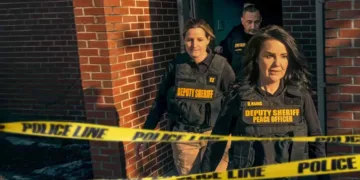
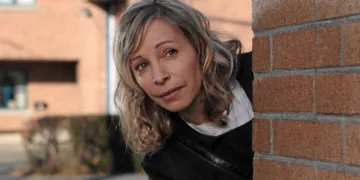
The series draws much of its strength from the personnel leading the searches. Investigator Sergeant Vicki Rains emerges as the unit’s anchor, pairing operational expertise with a steady empathy that feels lived-in rather than performative. Investigators J.P. Smith and Sherwin Ruiz round out the portrait of a focused, methodical team working in sync.
The investigative process unfolds as a slow accumulation of details, a patient assembly of clues that may only click after days of effort. Viewers see canvassing in neighborhoods, long stretches spent on surveillance footage, careful parsing of phone logs, and the way minor observations become leads. The Morgan Duncan case arrives layered with difficulty.
His essential items remain behind, and drug-related crimes involving vulnerable residents in his apartment complex complicate the search from the start. Shandon Floyd’s disappearance, following a sighting at a hotel, comes with its own hard circumstances and heavy emotional stakes. Through both cases, the investigators keep pushing for answers and for some form of closure for anxious families, fully aware that certainty is never promised.
The Blending of Form and Fiction
Streaming television keeps moving toward reality formats that borrow the texture of fictional genres, and Missing: Dead Or Alive fits squarely inside that shift. Season 2 adopts a cinematic, procedural aesthetic, with dramatic framing and close-ups that echo scripted crime dramas. That stylistic choice separates the series from conventional true crime and signals the way streaming services want nonfiction to look and feel.

The hybrid identity, though, lands unevenly. Footage that appears to unfold in real time, watching investigators question witnesses or discover evidence as events develop, carries a genuine sense of immediacy. Alongside it, the season uses clearly re-created sequences. Conversations among squad members, including moments between Rains and Captain Heidi Jackson, can read as stiff and rehearsed, pulling the viewer out of the case.
The glossy dramatic flourishes sometimes crowd the gravity of the tragedies being shown. The season also stays committed to the slow, uneventful rhythms of real police work. That honesty can test the binge-driven habits of a platform built for pace, leaving stretches that feel laborious across the run time.
Vulnerability and the Social Blind Spot
The cases chosen for Season 2 highlight serious societal issues that the series leaves largely unexplored. Morgan Duncan’s disappearance places mental illness and community vulnerability in view, compounded by drug exploitation inside his residence. The episodes hint at questions around mental-health resources and at systemic conditions that leave some people susceptible to harm.
The show does not follow those threads very far. Shandon Floyd’s case, ending in a fatal overdose, touches on addiction and associated negligence. The investigation delivers the facts of his death quickly, with little attention to the failures or complexities surrounding drug abuse and exploitation.
Production priorities stay fixed on moment-to-moment procedural tension and dramatic flair, so social commentary remains thin. True-crime storytelling has room to engage directly with the social realities sitting beside these disappearances, and this season rarely takes that step. What comes through most strongly is the raw sorrow of the families and the sincere commitment of the officers who keep searching.
Missing: Dead Or Alive Season 2 is a true-crime docuseries that follows the dedicated investigators of the Richland County Sheriff’s Department in South Carolina as they urgently search for missing persons. The series focuses on real cases, including the disappearance of Morgan Duncan and Shandon Floyd, highlighting the uncertainty and emotional strain that accompany these investigations. The second season, which consists of four episodes, premiered on November 24, 2025, and is available to stream exclusively on Netflix.
Full Credits
Title: Missing: Dead Or Alive? Season 2
Distributor: Netflix
Release date: November 24, 2025
Rating: TV-MA
Episode length: Approximately 42 minutes per episode
Director: Alexander Irvine-Cox
Cast: Vicki Rains, Heidi Jackson, J.P. Smith, Nina Mauldin, Molly Nations, Tony Garcia, Mansoor Watson, Cathy Taylor
Director of Photography (Cinematographer): Colin Archdeacon, Cody Ball, Joel Craig, Seth Distelzweig
Editors: Martin McDonnell
Composer: H. Scott Salinas
The Review
Missing: Dead Or Alive Season 2
The season showcases the highly methodical and empathetic work of the Richland County Missing Persons team, anchored by Sergeant Rains's persistent leadership. Its compelling moments lie in the authentic depiction of difficult investigation. However, the production’s commitment to a dramatic, procedural style, complete with noticeable staging, creates a genuine identity conflict. This execution undermines the gravity of the real cases and sacrifices deeper analysis of critical social issues like mental illness and exploitation. The series is inconsistent, providing both sharp procedural insight and frustratingly superficial thematic engagement.
PROS
- Sergeant Vicki Rains's strong, empathetic presence
- Authentic portrayal of methodical police procedure
- Compelling, real-time investigative moments
- High emotional stakes drawn from real family distress
CONS
- Confused show identity (documentary versus staged drama)
- Heavy reliance on stiff, reconstructed scenes
- Fails to explore critical social context (e.g., mental health, exploitation)
- Pacing issues arising from showing the uneventful nature of work