
























![Kingdom Hearts Collection [I-III] Review](https://gazettely.com/wp-content/uploads/2026/10/Kingdom-Hearts-Collection-I-III-1-360x180.webp "Kingdom Hearts Collection [I-III] Review: KHII Holds Steady as Newer Entries Fluctuate 37")



Commissioning a natural history series about long-vanished eras signals a cultural impulse to anchor present-day anxiety in deep time. The arrival of the third installment, Prehistoric Planet: Ice Age, marks a striking turn in how large-scale documentary worlds are built. This project joins the BBC Studios Natural History Unit, long treated as the reference point for nature filmmaking, with the resources of Apple TV as a streaming platform.
Executive producers Jon Favreau and Mike Gunton guide the production, drawing on the visual craft of VFX studio Framestore. The narrative shifts tens of millions of years beyond the dinosaur age to the Pleistocene Epoch, widely associated with the Ice Age.
Across five episodes, the series applies cutting-edge CGI tools and careful paleontological research to highlight the daily struggles of the era’s megafauna. The depicted world is icy and unstable, marked by severe cold and sweeping ice sheets. The show avoids a single image of endless snow and presents varied, recognizable environments, including forests, grasslands, deserts, and coasts.
Visual Currency and Creative Authority
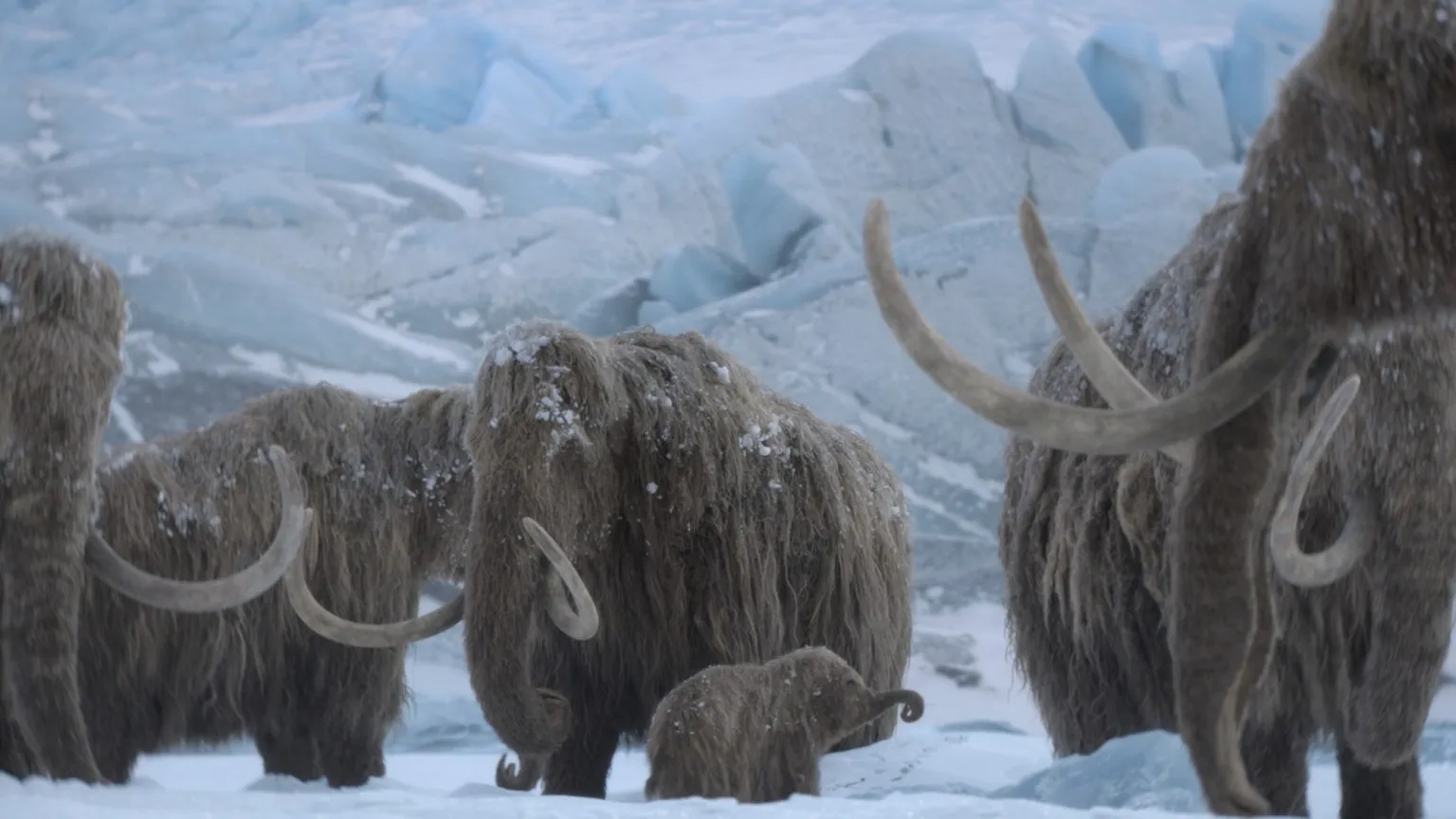
In an attention economy that rewards immediate spectacle on streaming services, visual fidelity becomes a marker of credibility. Prehistoric Planet: Ice Age offers a clear statement about technical ambition. The series builds a convincing sense of realism through striking imagery and the precise detail of Framestore’s CGI work. Animals appear with persuasive, lifelike presence.
Their textures feel carefully realized, and their movements carry enough nuance to invite viewers to accept them as living subjects. This standard of craft raises expectations for future prehistoric storytelling on screen. The production supplies bold, visually forceful portraits of its featured megafauna, among them the massive short-faced bear Arctotherium, the large rhinoceros relative Elasmotherium, the primate Gigantopithecus, the giant deer Megaloceros, and the scimitar-toothed cat Homotherium.
The environments receive equal care. Striking landscapes support the visual impact, while still conveying the harsh conditions of the period. Wide, carefully composed shots set the mood, for instance when ground sloths move through snow-covered conifer forests. The soundscape completes this image of premium spectacle. Hans Zimmer, Anže Rozman, and Kara Talve of Bleeding Fingers Music provide an original score that adds sweeping drama and emotional weight to the series. This level of production investment signals how large creative budgets can reset aesthetic expectations for non-fiction television.
The Scope of Survival and Narrative Choices
The five-part structure allows the series to stretch its scope, echoing a rising television pattern in which segmented global coverage keeps audiences engaged across episodes. The reach is explicitly planetary. “The Big Freeze” concentrates on the coldest northern regions and highlights woolly mammoths. “New Lands” tracks biogeography and migration, focusing on Arctotherium in South America.

“Desert Lands” visits harsh environments from Australia to North America, increasing visibility for extinct Australian megafauna such as Procoptodon. “Grass Lands” highlights distinctive herbivores, including Elasmotherium and Gigantopithecus. “The Big Melt” portrays species confronting the pressures of a warming climate.
One of the production’s strengths lies in its focus on species that rarely appear in prehistoric screen stories, including Homotherium, Gigantopithecus, Stegodon, and Elasmotherium. The series mixes still-extant animals with extinct ones in a way that underlines how these lost ecosystems functioned as coherent worlds. A shift in narration from Sir David Attenborough to Tom Hiddleston reflects an intentional recalibration of tone.
Hiddleston’s emotive delivery heightens tension and drama and steers the project toward a more overtly narrative, broadly family-oriented register than earlier seasons. The storytelling leans on anthropomorphism without tipping into heavy sentimentality, humanizing the animals’ efforts to survive and protect family groups.
Brief “Under The Ice” segments at the end of each episode contribute compact scientific context and pair the spectacular with clear educational notes. This dual strategy, aligning cinematic sweep with scientific explanation, positions the series as high-end infotainment.
Historical Narratives and The Climate Crisis Lens
The show’s commitment to scientific material, while often impressive, reveals selective choices that favor familiar, easily digestible stories over the complexity of contemporary research. That tension raises questions about how television shapes public understanding of deep history. The production struggles with vague geographic framing and repeated references to undefined regions such as the “far north.” Locations receive few explicit labels.
This imprecision can disorient viewers with limited paleontological background and can imply that species from different continents and time periods shared the same spaces. The preference for generic descriptors over scientific names, such as labeling glyptodonts only as “giant armadillos,” also blurs distinctions and makes taxa like Elasmotherium less visible.
A more serious issue arises in the depiction of Ice Age hydrology, particularly in “Desert Lands.” The series leans on an outdated image in which massive ice sheets drive a sweeping expansion of ultra-arid deserts across the globe, including regions such as Australia. Current paleoclimatic work presents Ice Age climate swings as far more intricate, with strong regional differences and multiple drivers. The ice-age world did not function as a uniformly dry planet.
The most ethically charged concern appears in the handling of extinction stories. The show repeatedly emphasizes climatic forces such as aridification or warming as the main causes of extinction for species like Megaloceros. Human impacts during the Late Quaternary Extinctions receive only brief and nearly obligatory acknowledgment. That choice foregrounds environmental determinism and sidelines human agency.
It reflects a broader pattern in popular media that softens the connection between human behavior and ecological loss, even in projects framed around environmental awareness. In this telling, extinction appears as a planetary process, with human actions pushed to the margins. The series offers viewers distance from historical responsibility while still invoking the language of concern for the natural world.
Prehistoric Planet: Ice Age is the third installment in the award-winning natural history documentary franchise, premiering globally on November 26, 2025. The five-part docuseries transports viewers to the Pleistocene Epoch, millions of years after the age of the dinosaurs, focusing on the iconic megafauna of the Ice Age, such as the woolly mammoth and saber-toothed cats. Produced by the BBC Studios Natural History Unit, the series combines cinematic storytelling with photorealistic CGI, all narrated by Tom Hiddleston. Viewers can stream the entire series exclusively on Apple TV+.
Full Credits
Title: Prehistoric Planet: Ice Age
Distributor: Apple TV+
Release date: November 26, 2025
Rating: TV-PG
Running time: 35–46 minutes (per episode)
Director: Adam Valdez, Andrew R. Jones (Note: Directors are credited per episode for the overall series)
Producers and Executive Producers: Jon Favreau, Mike Gunton (Executive Producers), Tim Walker (Series Producer)
Cast: Tom Hiddleston (Narrator)
Director of Photography (Cinematographer): Jeff Lobb, John Brown
Editors: Nick Lyon, Dom Walter, Andrew R. Jones
Composer: Hans Zimmer, Anže Rozman, Kara Talve
The Review
Prehistoric Planet: Ice Age
The series is an extraordinary technical achievement that sets a new industry standard for photorealistic spectacle. However, its reluctance to fully embrace scientific complexity, particularly regarding paleoclimatology and human influence on extinction, reveals an unfortunate preference for accessible dramatic tropes over difficult truths. It is a stunning visual document that occasionally falters in its intellectual mission, reflecting the contradictions inherent in premium streaming infotainment.
PROS
- Stunning, photorealistic CGI and environmental rendering (Framestore).
- Showcases diverse, lesser-known megafauna (Elasmotherium, Gigantopithecus).
- Emotive, cinematic narrative style; powerful score.
- Highlights the Ice Age as a diverse range of biomes, not only frozen tundra.
CONS
- Ambiguous or omitted geographical locations.
- Scientific simplifications, especially regarding global aridity tropes.
- Minimizes human impact on Quaternary Extinctions in favor of climate focus.
- Vague use of scientific names and terminology ("giant armadillos").