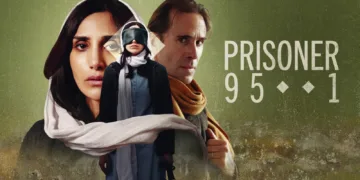


















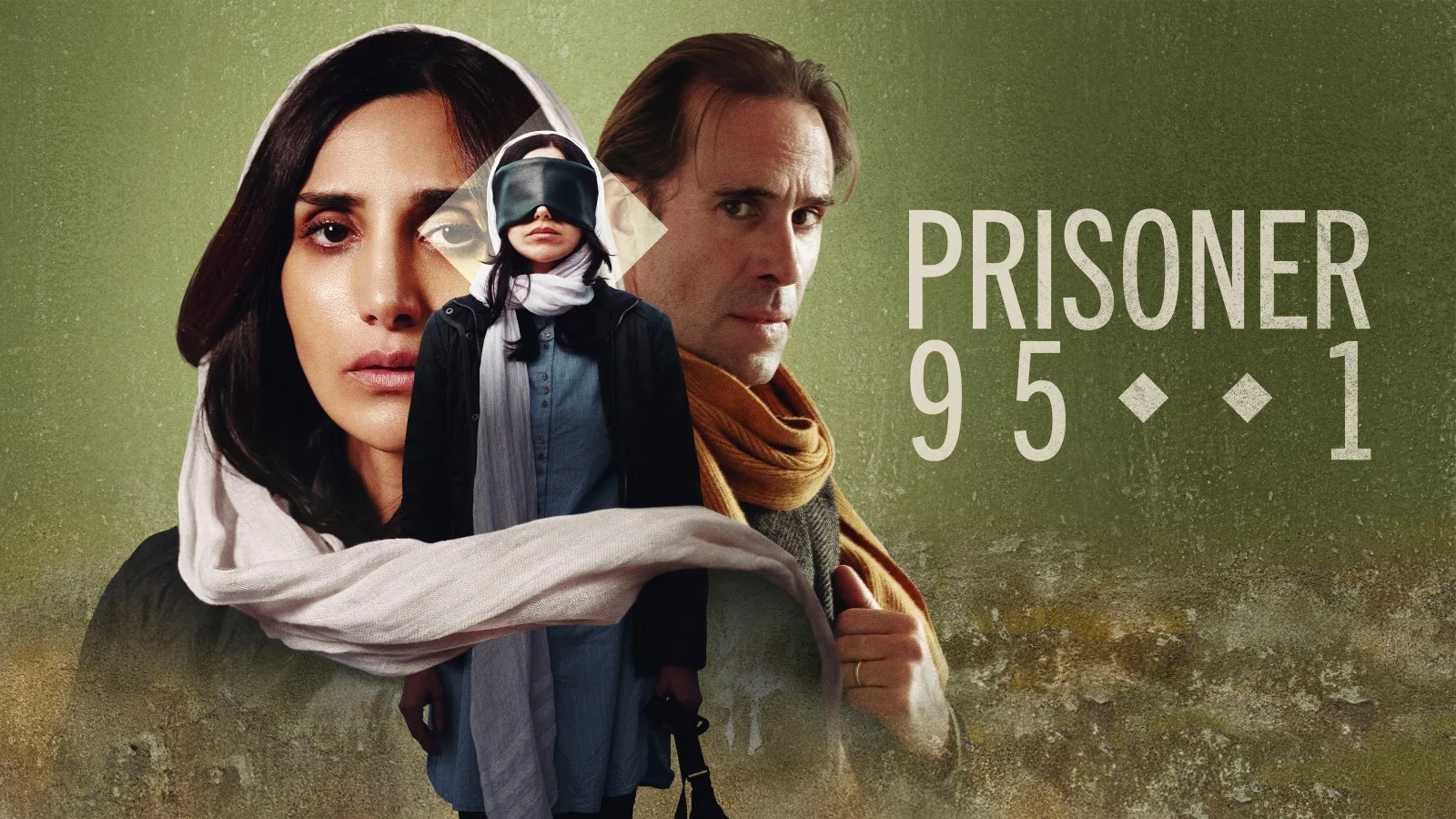

The BBC drama Prisoner 951 follows the true, harrowing six-year ordeal of Nazanin Zaghari-Ratcliffe, a British-Iranian citizen arrested and held in Iran beginning in 2016. The series begins at Tehran airport, capturing the moment of her detainment when she and her 22-month-old daughter, Gabriella, were seized and accused on fabricated charges of plotting against the Iranian government.
This four-part adaptation by Stephen Butchard, drawn from the couple’s forthcoming account A Yard of Sky, arranges the story around a deliberate double track: Nazanin’s brutal survival in custody runs in parallel with her husband Richard Ratcliffe’s public campaign for her freedom from their London home. The series frames itself as both a defiant love story and a pointed political drama, and it seeks to move viewers beyond headline recognition toward a fuller emotional sense of the injustice and powerlessness that shaped the family’s experience.
Performance, Trauma, and Shifting Cultural Representation
Prisoner 951 centralizes powerlessness as a force that produces hardened endurance. The show presents Nazanin’s ordeal in Kafkaesque terms, inside an opaque theocratic apparatus that refuses accountability. In London, Richard’s frustration registers as repeated encounters with what he sees as governmental apathy and often unhelpful diplomatic counsel.
Narges Rashidi’s work as Nazanin is raw and exact. She renders the silent scaffolding of trauma, the mental attrition of prolonged confinement, and the swing between defiance and despair. Rashidi layers suffering with fragments of memory, small, stubborn hope, and occasional wit; those layers keep the portrayal from collapsing into one-note misery.
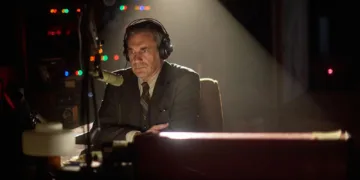
Joseph Fiennes’s performance as Richard is quietly controlled. He traces a change from a courteous, authority-respecting accountant into a focused public campaigner who remakes private anguish into sustained advocacy. The emotional connection sustained across distance becomes the programme’s backbone.
Formal techniques such as sepia-tinged flashbacks, strained long-distance phone calls, and lingering camera attention on domestic artifacts — Gabriella’s outgrown shoes, for example — construct visual bridges that compress the physical separation. The focus on an international, multiethnic family under prolonged pressure offers a timely counterpoint to cultural currents that can discourage cross-cultural relationships.
Political Reality and the Problem of Direct Depiction
The drama engages the political machinery that produced personal suffering without treating that machinery as mere backdrop. The series sets out the geopolitical exchange plainly: Nazanin functioned as a hostage, a bargaining chip held by Iran as leverage in a long-running dispute tied to a £400 million debt the UK government owed for undelivered military equipment from the 1970s.
That factual frame presses the viewer to confront the UK government’s repeated official denials that attempted to separate the debt from her detention. Richard’s campaign highlights the limitations of the British response and the harm of early advice to “stay quiet,” as well as the slow, distracted tempo of diplomacy that coincided with a period in which five different foreign secretaries served in five years.
The series makes a pointed representational choice in how it depicts actual British politicians. It declines to cast an actor for former Foreign Secretary Boris Johnson and inserts archival news footage of his 2017 gaffe in which he said Nazanin was “teaching journalism.” From the vantage of Nazanin’s confinement, that archival moment lands as a raw provocation and can induce anger.
Other ministers — Liz Truss, James Cleverly, Tobias Ellwood — are dramatized by actors; those enacted scenes sometimes feel sharp and suitably angering, and at other moments they verge on caricature when placed beside the unmediated archival Johnson footage. The political sequences are filtered through Richard and Nazanin’s personal vantage, keeping attention on the human cost of high-level decisions and diplomatic inertia.
Pacing, Repetition, and the Changing Tides of Storytelling
Prisoner 951 shapes its tempo around sustained tension and a formal repetition that can feel punishing. The narrative repeatedly cycles through moments in which Nazanin is offered hope of release only to have that possibility cruelly withdrawn. That repeating pattern operates as an explicit representational device.
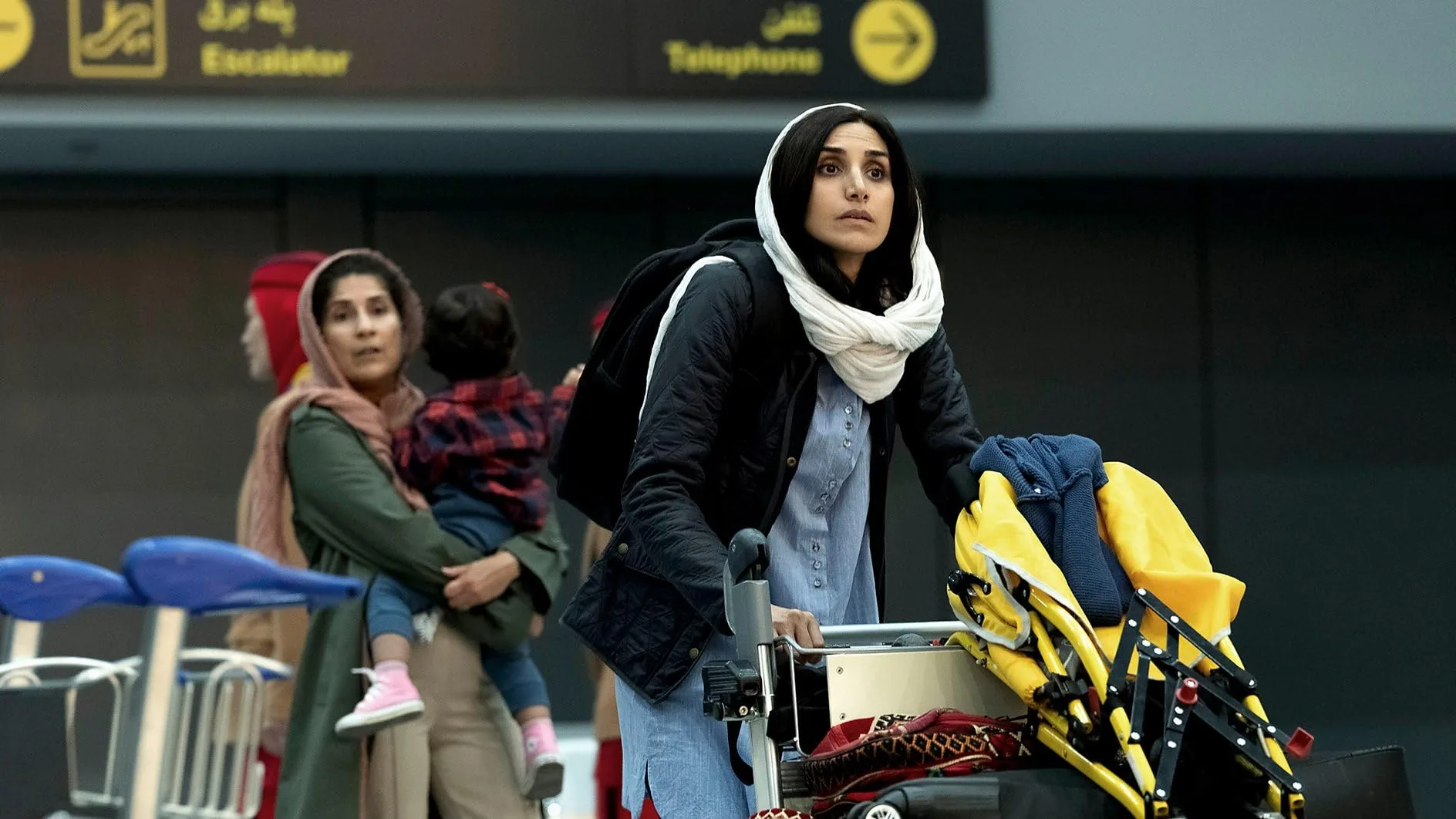
It communicates wheel-spinning frustration and the agonizingly slow passage of six years as experienced by the family. The series resists the arc of a propulsive thriller in favor of a meditative, sometimes wrenching rhythm that compels viewers to share the same frustrating lack of progress the protagonists endure.
The contrasting settings sharpen the emotional rupture: the dank squalor and isolating confinement of Nazanin’s initial detention set against the familiar London flat where Richard organizes, petitions, and protests. The eventual release, arriving alongside the payment of the disputed debt, is staged as a slow easing of breath rather than as a sudden eruption of joy, a choice that acknowledges the persistent psychological imprint of the ordeal.
Prisoner 951 is an unflinching, emotionally concentrated watch. It honors the ordeal of two ordinary people forced into extraordinary circumstances and leaves the audience with a sustained sense of injustice and anger. The series also participates in a developing television current that recognizes streaming viewers’ appetite for prompt, direct engagements with recent socio-political events and for stories that translate headline crises into intimate testimony.
The four-part factual drama series, Prisoner 951, premiered on BBC One and BBC iPlayer on November 23, 2025. Based on the forthcoming memoir A Yard of Sky by Nazanin Zaghari-Ratcliffe and Richard Ratcliffe, the series meticulously recounts the six-year ordeal of British-Iranian citizen Nazanin Zaghari-Ratcliffe, who was imprisoned on espionage charges in Iran, and the tireless public and private campaign led by her husband, Richard Ratcliffe, to secure her release. Viewers in the United Kingdom can currently stream all episodes on BBC iPlayer or watch them weekly on BBC One.
Full Credits
- Title: Prisoner 951
- Distributor: BBC One, BBC iPlayer (Fremantle handles international distribution)
- Release date: November 23, 2025
- Rating: Unspecified (Mature Factual Drama)
- Running time: 57 minutes (per episode)
- Director: Philippa Lowthorpe
- Writers: Stephen Butchard, Nazanin Zaghari-Ratcliffe, Richard Ratcliffe
- Producers and Executive Producers: Laurence Bowen, Chris Carey, Nazanin Zaghari-Ratcliffe, Richard Ratcliffe
- Cast: Narges Rashidi, Joseph Fiennes, Yasaman Mohsani, Ella Varavipour, Mana Sayyah, Ava Rose, Bijan Daneshmand, Nicholas Farrell
- Director of Photography (Cinematographer): Ole Bratt-Birkeland
- Editors: Úna Ní Dhonghaíle
- Composer: Dickon Hinchliffe
The Review
Prisoner 951
Prisoner 951 is a potent, essential piece of television. It succeeds as an intimate, agonizing portrait of a family devastated by geopolitical indifference, anchored by two raw and deeply committed performances from Narges Rashidi and Joseph Fiennes. The series’ unconventional, repetitive pacing powerfully conveys the psychological torment of six years of political hostage-taking. It is an unflinching, rage-inducing drama that serves as a profound statement on governmental failure and enduring human resilience.
PROS
- Narges Rashidi’s raw, physical portrayal of Nazanin's solitary trauma.
- The story effectively balances the physical confinement in Iran with the political struggle in London.
- The repetitive structure viscerally communicates the agony of false hope and the glacial passage of time.
- Directly confronts the issue of state hostage-taking and bureaucratic apathy, reflecting current cultural anxieties.
- The deployment of Boris Johnson's real footage creates an intensely rage-inducing moment of documentary-level authenticity.
CONS
- The use of actors for other real-life British politicians feels stylistically artificial and occasionally borders on caricature compared to the rest of the drama.
- The subject matter is relentlessly harrowing and offers minimal relief, which may make it a difficult, emotionally exhausting watch for some viewers.
- The deliberate, cyclical pacing might frustrate viewers accustomed to fast-moving political thrillers.