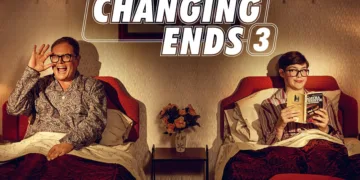


























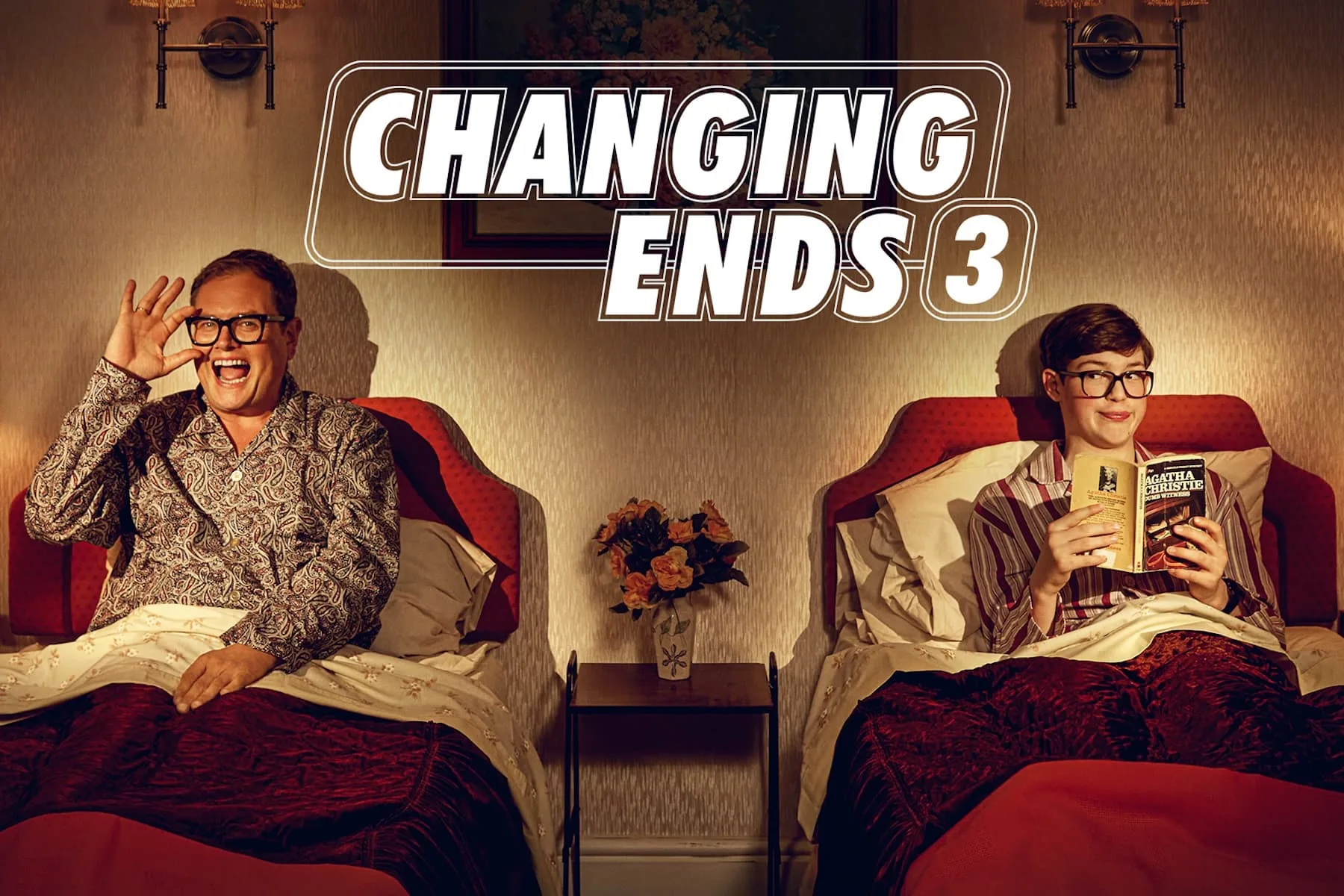

Changing Ends Season 3 returns to Northampton in 1989 and to a 13-year-old Alan Carr navigating the awkward currents of adolescence. The series draws directly from the comedian’s youth while keeping its themes instantly readable. This season centers on Alan’s emerging sexuality and an intense crush on Jake, a handsome classmate.
The adult Alan Carr appears often as an on-screen narrator, offering wry, self-mocking asides on his younger self. The show stays light and funny, heavy on nostalgia and texture, and it captures the awkwardness of growing up queer in a conventional era with a comforting slice of British life. The dual timeline works as a structural choice that sharpens the comedy and keeps the tone steady.
Performance and the Comedy Engine
The series relies on Oliver Savell to power nearly all of its laughs, and he delivers. Savell nails Carr’s mannerisms and vocal ticks in a way that feels truthful rather than exaggerated. Alan’s spirit stays irrepressible despite a string of school humiliations, from being stuck in swimming lessons with six-year-olds to getting picked last in PE. A new, saucy phase arrives as his libido rises, which plays nicely against his social clumsiness.
Adult Alan’s narration provides a consistent comic counterpoint, a Greek chorus that speaks to the camera. His one-liners land cleanly and often. The olive comparison about women — you learn to love them if you persevere — is the sort of throwaway that becomes memorable. That split of perspectives keeps the pacing nimble and the storytelling sharp.
Supporting players furnish both comic fuel and emotional ballast. Shaun Dooley is Graham, Alan’s sport-obsessed Third Division football manager dad. Dooley finds tension in the father-son relationship through Graham’s traditional idea of masculinity. The father’s love registers clearly; his disappointment when Alan rejects traditional norms, even dismissing darts as “not a sport,” adds strain to family scenes.
Nancy Sullivan plays Christine, the newly established WAG mum, and she handles domestic disputes with a practiced touch. Taylor Fay’s Gary, Alan’s younger brother, contributes a blunt comedic beat and rescues Alan from bullies with a memorably executed poo-in-the-pool incident.
The Weight of First Love and Authenticity
Season 3 draws its emotional center from Alan’s first crush on Jake, played by Austin Taylor. Jake is a decent classmate who works part time at the local Athena poster shop and becomes the focus of Alan’s longing. The show captures how teen infatuation magnifies small gestures; a free keyring can feel like a promise. Alan’s experience reads as a universal chapter of googly-eyed pining complicated by same-sex attraction.
The series treats coming-of-age with a light touch. It shows the awkwardness, the disguises, and the panicked moments of being a queer teen in the 1980s. When Alan is pressured to name a crush, his flustered answers ring true.
Homophobia appears as a reality but in comparatively mild form, and Jake responds to unwanted attention with restraint. Comedy remains the primary mode for exploring painful moments, and the show often uses humor to make those moments approachable rather than overwhelming.
Period Detail and Sitcom Craft
Changing Ends functions as a cheerful late-1980s time capsule. Period detail is used with purpose to create a textured atmosphere. Mentions of Blue Nun wine and a nickname for the Athena shop, “Woolies for perverts,” drop viewers back in time. The soundtrack choices, such as Gloria Estefan’s “Get On Your Feet” and Inner City’s “Good Life,” anchor the era. Small domestic pressures — balking at the price of a pint or the idea of phoning a mobile phone — add authentic flavor.

The writing moves quickly and with nimble comic timing. Jokes arrive at a steady clip, which is essential for sitcom momentum. Beyond Alan’s arc, the series offers standout set pieces: an absurd dispute between his mum and a neighbor over a free biscuit, and Terri’s disastrous babysitting attempt.
The interplay between the younger and older Alan acts as a structural device that preserves narrative flow and comedic rhythm. The show’s strength lies in its ability to build a world and populate it with characters who feel like pleasant company. It satisfies a core sitcom aim: creating a place viewers will gladly revisit.
A few boardroom-bound football scenes drift away from the central family story and could have yielded sharper focus if pared back. The show’s specificity and heart make it an uncomplicated pleasure. Do we really need new attempts at Adrian Mole when something pitched this precisely already captures the spirit of British coming-of-age comedy?
Changing Ends is a semi-autobiographical sitcom loosely based on the childhood of comedian Alan Carr growing up in Northampton during the 1980s. The third season premiered on Sunday, November 23, 2025, with all six episodes immediately available for streaming on the UK platform ITVX. The series offers a humorous and heartfelt look at young Alan, played by Oliver Savell, navigating puberty and his burgeoning sexuality, with the adult Alan Carr providing commentary and context throughout. The show has earned positive critical reception, becoming one of ITVX’s most-viewed comedies.
Full Credits
Title: Changing Ends
Distributor: ITVX, ITV
Release date: Sunday, November 23, 2025 (Series 3 Premiere)
Running time: Approximately 30 minutes per episode (Season 3 consists of 6 episodes)
Director: Dave Lambert
Writers: Alan Carr, Simon Carlyle
Producers and Executive Producers: Steve Coogan, Jonathan Merrell, Sarah Monteith, Lyndsey Shingler (Line Producer)
Cast: Alan Carr, Oliver Savell, Shaun Dooley, Nancy Sullivan, Taylor Fay, Gabby Best, Harry Peacock, Colin Salmon
Director of Photography (Cinematographer): Bud Gallimore
Editors: Thomas Perrett
Composer: Richard Day
The Review
Changing Ends Season 3
Changing Ends Season 3 is a pure delight, a joyful and witty sitcom that smartly balances nostalgic 1980s texture with the universal awkwardness of first crushes and identity. Oliver Savell and Alan Carr’s dual performance is the show’s inventive core, maintaining a sharp, joke-packed rhythm. It's a comforting, well-crafted return to a golden era of British comedy. The series is essential viewing for its heart and humor.
PROS
- His convincing portrayal captures Alan Carr’s essence without descending into caricature.
- The interaction between the younger Alan and the adult narrator keeps the show fresh, sharp, and provides consistent comic relief.
- Specific, affectionate details (e.g., Athena posters, specific slang, pricing) create a rich, authentic 1989 atmosphere.
- The scripts are packed with nimble one-liners and effective comedic situations.
- It handles the themes of first love and growing up queer with warmth and honesty, prioritizing humor over heavy drama.
CONS
- Occasional scenes, such as those focusing on the local football boardroom, feel less essential and slightly slow the pace of the main story.
- The show’s commitment to being lighthearted sometimes means the underlying pain of teenage bullying or familial tension is passed over quickly.