























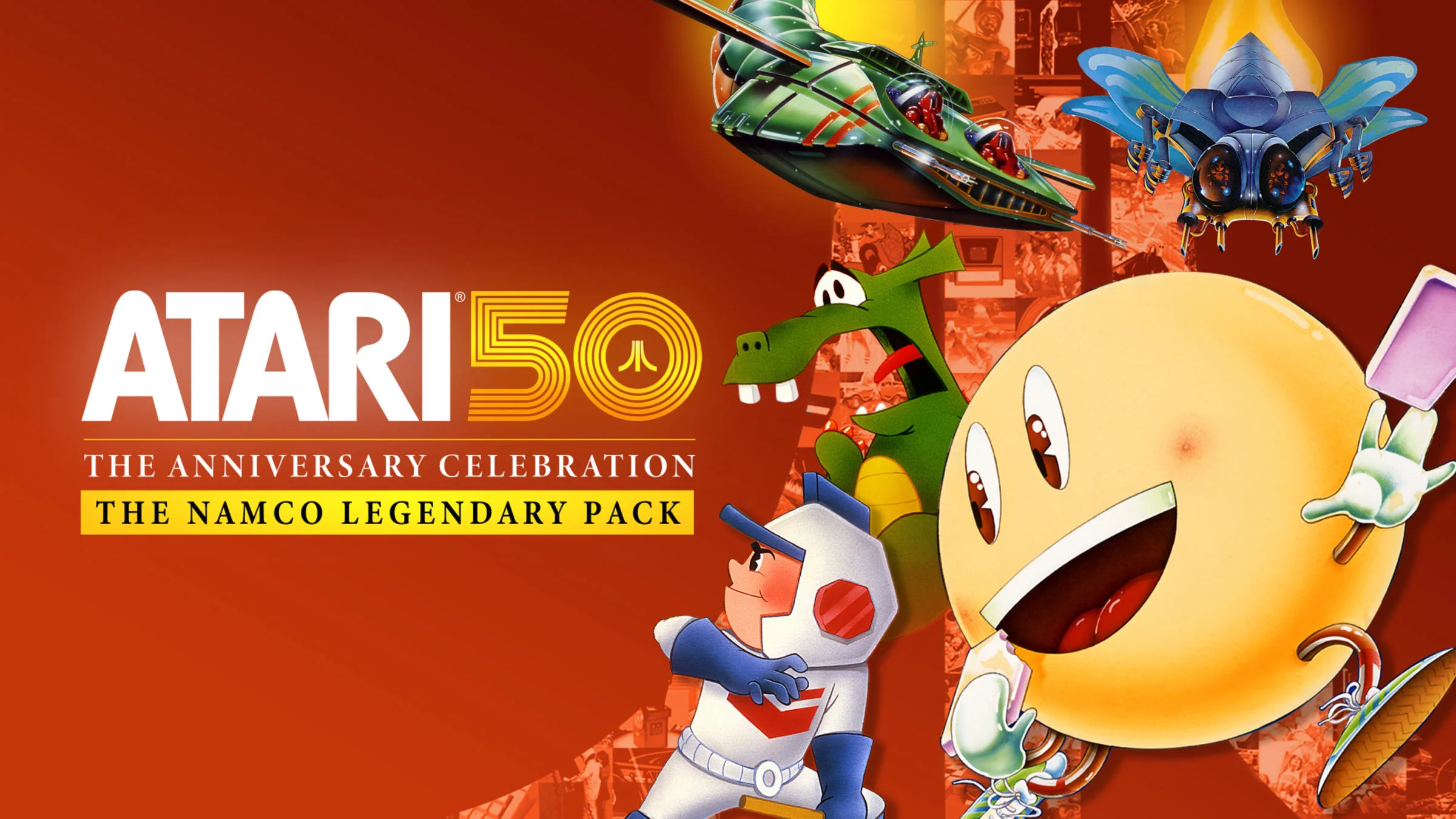

Digital Eclipse expands Atari 50 with The Namco Legendary Pack, a DLC that examines one of gaming’s most consequential business relationships. The release explores the tangled history between Atari and Namco across the formative era of home consoles, covering the mid-1970s through the 1980s. The project uses an interactive timeline to combine playable versions of games with interviews, archival documents, and period promotional materials. That structure frames a corporate story that even Bandai Namco has not presented with this level of detail.
The narrative centers on an ironic outcome: Atari’s failed push into the Japanese market created an opening for Nakamura Manufacturing Company, which acquired Atari Japan in 1974 and later became Namco. The DLC maps that corporate thread by showing Namco titles as they were adapted for Atari hardware.
The collection concentrates on console adaptations across Atari platforms instead of prioritizing arcade originals. That focus supports the documentary aim of tracing porting decisions and technical compromises. Expect to compare how Pac-Man, Dig Dug, Galaxian, Galaga, and Xevious were handled on the Atari 2600, 5200, 7800, and Atari 800 computer.
Documentary Elements That Illuminate the Development Process
Interview footage with Tod Frye and Mark Ackerman provides clear technical detail about the gymnastics required to move arcade designs onto severely limited hardware. Frye explains the Atari 2600’s constraints and how little developers had to work with. RAM measured in double and triple digits, so every byte mattered. He describes leveraging screen flicker as a deliberate feature rather than a bug, a concrete example of the creative problem-solving that defined that era. Frye uses the phrase “scraped the bottom of the barrel” to describe how teams made these conversions functional.
Digital Eclipse includes personal recollections alongside technical descriptions. Mike Mika recalls sneaking out during lunch breaks to play Pac-Man’s two-player mode. These anecdotes connect the engineering challenges to lived experience and show how the games became cultural touchstones for players. The documentary segments are short and focused. They avoid excess material and keep attention on technical and human details.
Archival documents form a strong supporting thread. Magazine reviews from 1980s gaming publications provide period perspectives that contrast with modern retrospectives. Original TV commercials reproduce the era’s marketing energy, complete with enthusiastic narration and the visual style of early game advertisements. Concept art presents alternate visual directions, including unused Pac-Man designs that differ from the yellow circle that became iconic. One standout primary source is a Video Take-Out newsletter that documents the chaos around Pac-Man pre-orders and shortages. These artifacts add texture to the timeline.
The historical timeline itself begins in 1955 with Namco’s origin as a mechanical horse repair operation in Japan. The sequence shows how that humble start links to video game development through Atari’s partnership. Photographs of the Atari Japan team at their offices and images from company golf tournaments in California humanize a corporate history that could otherwise read as dry. Digital Eclipse includes Atari missteps alongside successes, and that frank treatment strengthens the narrative. The DLC addresses Atari’s mishandling of the Japanese market and the documented quality issues with certain ports.
Games as Historical Artifacts Rather Than Definitive Versions
The selection of games clarifies the DLC’s priorities. The package contains 19 versions of seven games across multiple platforms, and only two arcade originals appear: Dig Dug and Xevious. That balance sets expectations quickly. For players who want the most faithful arcade experience, Namco Museum collections provide better arcade emulation and more arcade originals. In this release, the playable titles operate as interactive case studies that support the documentary argument.
Pac-Man receives the most attention. The Atari 2600 conversion remains one of gaming’s most notorious ports. Playing that version now confirms criticisms that have followed it since 1982. The graphics exhibit aggressive flicker, the maze design resembles the arcade layout only loosely, the rectangular pellets look awkward beside the arcade’s smooth dots, and the sound effects grate within seconds.
Atari developed the 2600 port internally, so Namco bears no responsibility for those shortcomings. The DLC treats this failure as a historical lesson rather than hiding it. Versions for the 5200 and Atari 800 demonstrate how later or more capable hardware moved closer to arcade accuracy, and those contrasts make platform differences instructive.
Galaxian and Galaga generally present stronger conversions across their available versions. The Atari 2600 port of Galaga shows improvements that reflect lessons learned after Pac-Man. Neither Galaxian nor Galaga includes an arcade original in this package, but the accompanying materials explain how Galaxian’s basic mechanics evolved into Galaga’s more complex systems. The documentation highlights the captured ship feature that lets players double their firepower, which illustrates a concrete step in gameplay development. Seeing that progression in documentary context adds useful perspective that standalone play cannot supply.
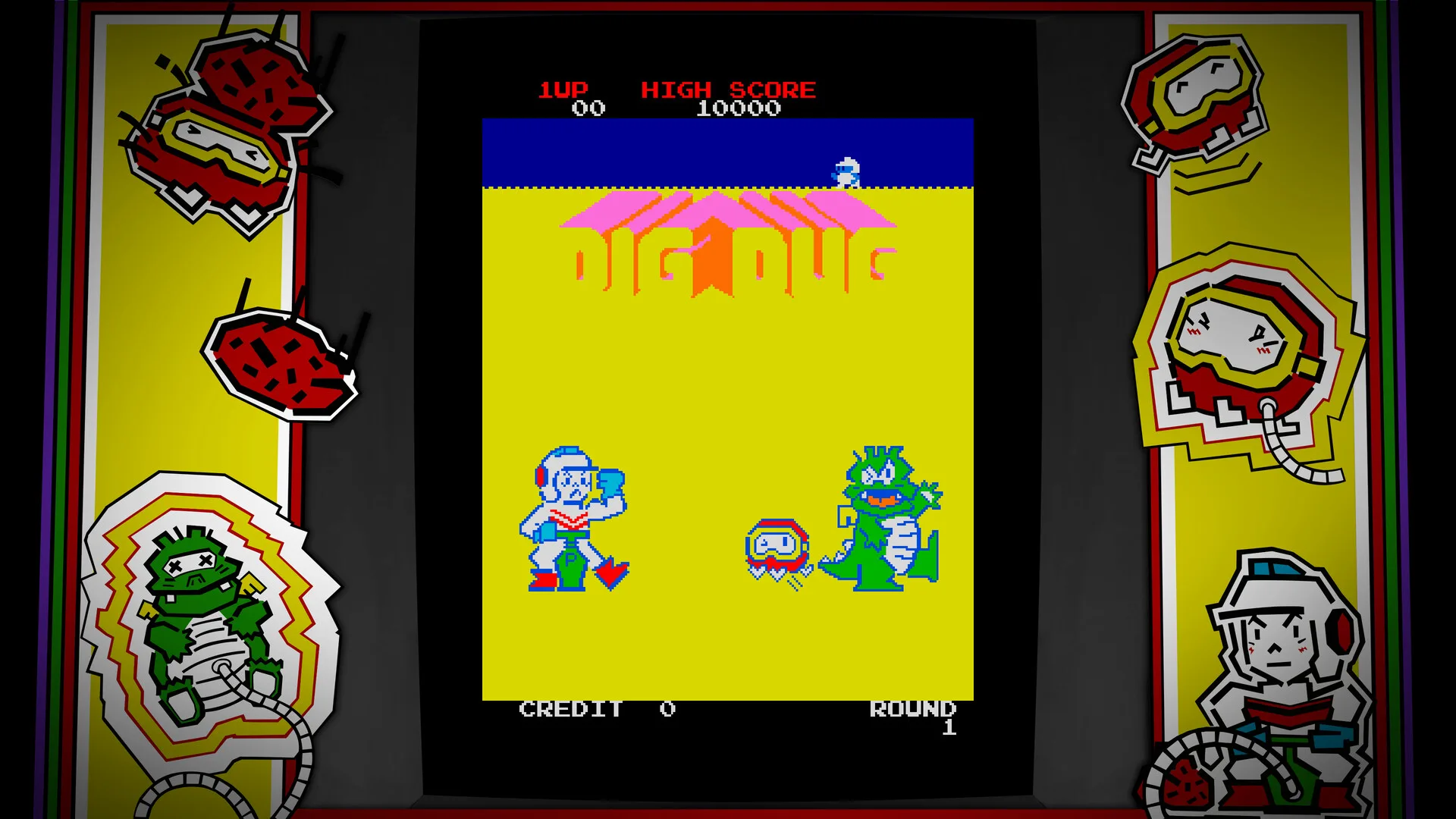
Dig Dug stands out as the collection’s most consistently excellent offering. The arcade original runs well and demonstrates design longevity. The freedom to tunnel in any direction and to develop personalized strategies keeps the gameplay engaging decades after its release. Enemy behavior reacts to player tactics, which creates dynamic challenges that avoid feeling scripted. Offering Dig Dug on multiple consoles (2600, 5200, Atari 800) makes it possible to track how different hardware handled the same mechanics. Supporting materials include period advertisements and commercials that read as entertaining artifacts in addition to historical evidence.
Xevious receives detailed documentation despite the absence of the Atari 2600 version described in interviews. The arcade release ships with detailed maps that show full level layouts and the manner in which developers divided the play area into manageable sections. A six-minute mini-documentary about porting challenges supplies focused coverage of the title. The 7800 version illustrates what later Atari hardware could achieve. The lack of the 2600 port for direct comparison feels like a missed chance to complete the technical thread established by the interviews.
Breakout and Super Breakout appear because Namco licensed them for Japanese distribution, which ties them to the early partnership history. Playing those paddle-based titles with modern controllers highlights a control mismatch: the precision required for paddle hardware does not translate well to analog sticks or D-pads. These entries serve the package’s documentary purpose without contributing much to pure gameplay value.
Understanding Your Interest Before Purchasing
This DLC requires a clear view of what a buyer wants from a retro collection. History-oriented players will find substantial value. The documentary approach compiles technical detail about RAM limitations and the workarounds developers created to make conversions feasible. Digital Eclipse addresses both triumphs and disasters, and that coverage builds a rounded picture of the period. Players who are interested in how business relationships shaped the industry will appreciate watching Atari’s Japan failure become Namco’s opportunity.
Buyers who prioritize arcade fidelity and a high count of arcade originals should consider other releases. Two arcade originals in the entire package means the emphasis stays on console variations. Namco Museum releases deliver a different set of priorities by centering arcade gameplay with limited historical framing.
This DLC reverses that model by using multiple console ports as evidence for a documentary narrative about development and corporate interaction. The focus on variations across platforms demonstrates how developers adapted the same titles for very different hardware constraints. That approach reveals aspects of the development process that a single definitive version cannot.
The timeline requires roughly an hour to complete when you watch all videos and inspect the materials. That runtime is shorter than the base Atari 50 content, and the quality remains consistent throughout. Some gaps are noticeable, such as the missing Atari 2600 Xevious that interviews discuss. Those omissions stand out because the documentary raises expectations the playable content does not fully satisfy.
The DLC’s educational value reaches beyond what Bandai Namco has provided about its own past. Technical explanations about working with minuscule RAM give perspective on constraints that feel remote from modern development. The candid discussion of corporate missteps and development problems contrasts with sanitized corporate histories and supports preservation goals. Digital Eclipse documents a significant era of the industry while keeping both successes and mistakes visible.
Preservation and Presentation
Digital Eclipse’s commitment to game preservation appears in the package presentation. The menus remain polished and familiar for anyone who used the base Atari 50 release. Navigation stays intuitive, materials are organized clearly, and the integration of playable games with documentary content flows without friction.
Fans of the Gold Master series and prior Digital Eclipse projects will recognize the care in curation and presentation. For players who value history and technical context, The Namco Legendary Pack strengthens Atari 50. The DLC’s focus places it squarely for a specific audience and makes clear it will not match the expectations of every buyer.
Atari 50: THE NAMCO LEGENDARY PACK is a major downloadable content (DLC) expansion for the critically acclaimed interactive compilation, Atari 50: The Anniversary Celebration. Classified primarily as an interactive documentary, action, and retro game collection, the pack centers on the history of classic Namco titles released on Atari hardware. It features an all-new interactive timeline that guides the player through this specific era of gaming, complete with video interviews, archival documents, and photos from the 1980s. The core content includes multiple versions of legendary Namco arcade games like PAC-MAN, GALAGA, DIG DUG, GALAXIAN, and XEVIOUS. Developed by preservation experts Digital Eclipse and published by Atari, the pack was released on November 13, 2025, and is playable on PC via Steam, in addition to the major console platforms (PlayStation, Xbox, and Nintendo Switch) that support the base game.
Full Credits
Director (Creative/Game Director): Mike Mika, Chris Kohler
Writers (Lead Writer/Narrative Designer): Chris Kohler, Dan Amrich
Producers/Studio Leadership (Producers, Executive Producers, and Key Studio Heads): Drew Scanlon, Bao Calvin Vu, Stephen Frost, Andrew Ayre, Mike Mika, Wade Rosen
Lead Voice Cast: Nolan Bushnell, Allan Alcorn, David Crane, Howard Scott Warshaw, Tod Frye, Eugene P. Jarvis, Tim Schafer, Cliff Bleszinski, Wade Rosen, Mike Mika, Jerry Jessop, Owen Rubin, Bill Rehbock, Ed Fries, Faran Thomason
Art Director/Lead Artist: Norman Badillo, John Kauderer
Key Engineering/Technical Leads: Jeremy Williams, Dave Rees, Jason Cirillo, Kevin Wilson
Composer/Sound Director: Robert Baffy
Developer, Publisher: Digital Eclipse, Atari
Release Date: November 13, 2025
The Review
Atari 50: The Namco Legendary Pack
The Namco Legendary Pack excels as interactive history but disappoints as a game collection. Digital Eclipse's documentary approach shines through candid interviews, rich archival materials, and honest examination of both successes and failures. The focus on console ports over arcade originals serves educational purposes well, revealing how developers adapted games across vastly different hardware. History enthusiasts will find substantial value, while those seeking definitive Namco gameplay should look elsewhere. This DLC strengthens Atari 50's preservation mission for the right audience.
PROS
- Excellent documentary footage with technical insights
- Honest presentation of failures and successes
- Rich archival materials and concept art
- Dig Dug arcade version plays wonderfully
- Educational value about porting challenges
CONS
- Only two arcade originals included
- Missing discussed Atari 2600 Xevious version
- Breakout games play poorly with modern controllers
- Brief runtime compared to base content