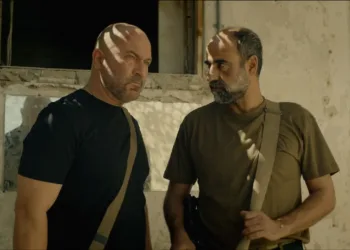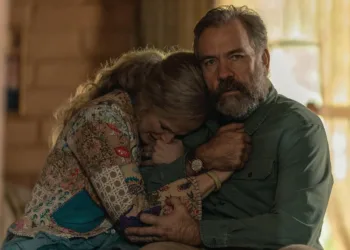



























I Wish You Had Told Me presents an emotionally layered Filipino drama built around Seph, a young man training to become a missionary or pastor. His life rests on strict certainties until the death of his devout father, Otep, shatters that sense of order. The film builds its premise in two clear movements. First comes the public shock at Otep’s funeral, where Seph learns that his father was gay.
Second comes the private discovery of Otep’s love letters to a pen friend. These letters function as an archive of a hidden existence, filled with emotions that stand in sharp contrast to the father Seph thought he knew. The structure makes its aim explicit: to follow Seph’s painful and complex inner response as he tries to reconcile his father’s true identity with his own deeply held religious convictions. The result is a story about the difficult path toward acceptance, understanding, and love, framed in a tender and reflective tone.
The Dual Narrative of Hidden Lives
The film constructs a carefully shaped dual narrative, moving back and forth in time to track two intertwined tragedies. Otep’s side of the story is marked by intense social and religious pressure. Raised within a conservative Filipino environment, he learns to regard his identity as sinful, which forces a choice between self-acceptance and his role within his family. His decision to marry and raise Seph requires the sacrifice of both his authentic self and his romantic fulfillment. The box of letters becomes a crucial narrative device, a tangible gateway to Otep’s unfulfilled emotional life.

This narrative design reorients the familiar pattern of parent child acceptance stories. The usual image of parents learning to embrace a child’s identity gives way to a scenario in which the child, Seph, must absorb the truth of a parent’s life after that parent has died. Seph’s character arc follows a process of searching self-examination, moving from confusion and hurt toward empathy.
The film’s treatment of faith and society remains notably nuanced. It avoids attacking the spiritual core of religion and instead highlights how human judgment and biased interpretation twist divine teachings into tools of shame and fear. The movie proposes that love remains the central message, a truth Seph must learn to see on his own. The story construction uses the intimate crisis of one family to mirror a larger social failure.
Authenticity in Performance and Bond
The bond between father and son serves as the film’s emotional anchor. The depth of connection between Otep and Seph feels tender and specific, which gives Seph’s grief genuine weight. He mourns the father he knew and simultaneously grieves the version of Otep he never had the opportunity to meet or understand.
The performance of the actor playing Seph becomes essential to this emotional honesty. His work comes across as grounded and raw, especially in moments that demand intense vulnerability. The review describes this as a clear evolution in his craft, one that lends necessary credibility to Seph’s turmoil, confusion, and sorrow.
The film’s directorial intent deepens this sense of truth, since the story takes its cue from the writer director’s own personal history. That foundation keeps Seph’s emotional reality from feeling heightened or artificial and secures the film’s sincerity. These dynamics shape two bittersweet love stories at once: the romantic connection that never fully materializes between Otep and his pen pal, and the enduring yet complicated familial bond between Otep and Seph.
Visual Poetry and Measured Pacing
The film achieves a quietly striking visual quality, applying an artistic eye to its varied locations. The cinematography emphasizes the contrast between settings, from the Philippines to the wide open landscapes of Spain, with the olive tree sequences described as particularly beautiful. This attention to visual composition keeps the emotional intensity from becoming oppressive.
I Wish You Had Told Me maintains a tender, soulful atmosphere through its chosen pacing. The narrative flow stays even and unhurried, giving viewers space to absorb the weight of each new revelation. This measured structure serves the storytelling, allowing the film to linger on delicate moments and avoid a rushed resolution. The dialogue remains consistently good natured, which reinforces the warmth that runs through the piece. The ending offers closure that feels both hopeful and satisfying.
Otep’s romantic relationship never reaches physical fulfillment. The film leaves audiences with the comforting idea that the lovers stand united in spirit. This emotional resolution is paired with a brief touch of retribution aimed at a figure of judgment. The film forms a deeply affecting experience for viewers, delivering a relevant and heartfelt narrative that signals a strong new voice within its national cinema.
I Wish You Had Told Me (Sana Sinabi Mo) is a Filipino drama film that premiered globally on the streaming service Netflix on December 4, 2025. The movie follows Seph, a young missionary, whose life is turned upside down by the sudden death of his father, Otep, and the subsequent discovery of his father’s decades-long secret: he was a gay man who lived a life of devotion while concealing his true identity. The film traces Seph’s journey of grief, faith reconciliation, and finding acceptance as he travels from the Philippines to Spain to understand the suppressed life of his father.
Full Credits
Title: I Wish You Had Told Me (Original title: Sana Sinabi Mo)
Distributor: Netflix
Release Date: December 4, 2025
Rating: TV-14 / 16+
Running Time: 102 minutes
Director: Shaira Advincula (as Shaira Advincula-Antonio)
Writers: Shaira Advincula (as Shaira Advincula-Antonio), Clarisse Grajo (creative associate)
Producers and Executive Producers: Not explicitly listed in top credits, typical for Netflix original structure.
Cast: Juan Karlos Labajo, JC Santos, RK Bagatsing, Jaime Fabregas, Rosanna Roces, Nonie Buencamino, Lotlot De Leon, Bodjie Pascua, Xyriel Manabat, Yesh Anne Burce
Director of Photography (Cinematographer): Kara Moreno
The Review
I Wish You Had Told Me
The film is a powerfully intimate character study that excels in framing personal grief within the broader societal tension between faith and identity. Its narrative is layered and respectful, using the posthumous discovery of a father’s hidden life to fuel a son's profound emotional transformation. The strong lead performance and measured, artistic direction establish it as a moving and significant entry into contemporary Filipino cinema, making it an experience that stays with the viewer long after the credits roll.
PROS
- Fresh take on the parent-child acceptance dynamic.
- Exceptional, grounded, and raw lead performance (Seph).
- Nuanced handling of religion, focusing on human judgment over faith itself.
- Beautiful cinematography, especially the location work (Spain/olive trees).
- Even and unhurried pacing allows for full emotional absorption.
CONS
- Some commentary on church issues felt abruptly handled.
- Secondary characters and plotlines could sometimes overshadow the core grief story.
- The ending, while comforting, is slightly idealized in its spiritual resolution.
- Not explicitly mentioned in the reviews, but a potential criticism: the emotional weight might be too heavy for some viewers.