

























![Kingdom Hearts Collection [I-III] Review](https://gazettely.com/wp-content/uploads/2026/10/Kingdom-Hearts-Collection-I-III-1-360x180.webp "Kingdom Hearts Collection [I-III] Review: KHII Holds Steady as Newer Entries Fluctuate 37")



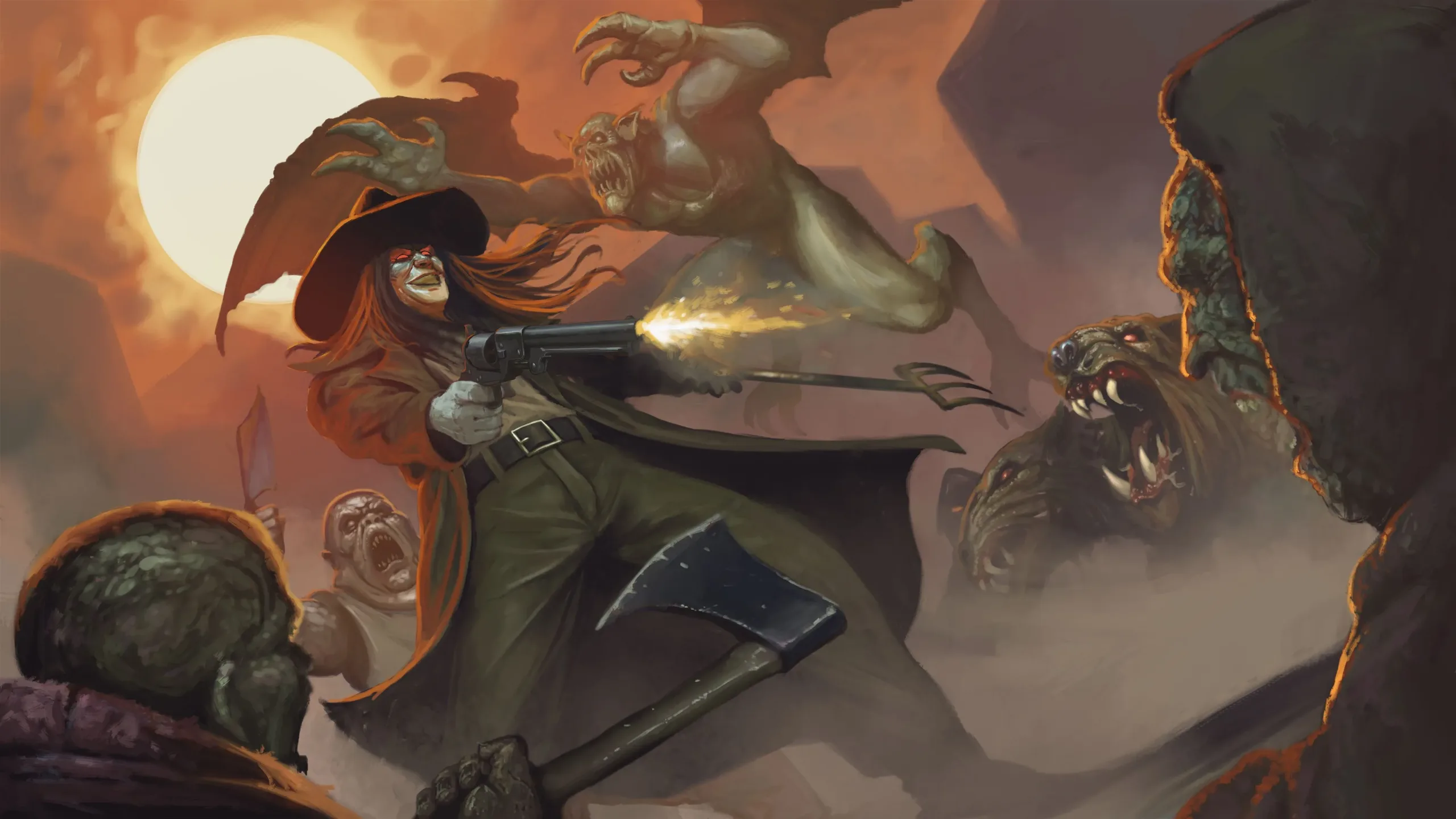

The late 90s saw the first-person shooter genre explode with loud, high-speed gunfights and sci-fi backdrops. Blood, now presented as Blood: Refreshed Supply, stood apart from that wave and still feels distinctive in this modern release. The game built its reputation on a pitch-black tone: hyper-violent, dryly funny, and steeped in occult horror. Its world runs on Eldritch grotesquerie, cult obsession, and unrelenting brutality.
The story follows Caleb, the former leader of a sinister cult who is betrayed and murdered by his own followers. His arc never shifts toward redemption or heroism. He claws his way out of the grave with a single purpose: to exact revenge on the cultists and their god, the deity Tchernobog.
The revenge narrative leans heavily on familiar horror cinema touchstones, echoing the gleeful gore of Evil Dead and the sinister mood associated with Stephen King adaptations. The tone walks a careful line, pairing genuine dread with constant, grisly action and a steady stream of Caleb’s dark, theatrical one-liners. The result feels intense, grim, and knowingly stagey at the same time.
The Tools of Vengeance
Blood: Refreshed Supply delivers its satisfaction through mechanical precision and the personality of its arsenal. Combat moves at a rapid clip, with classic FPS demands: constant strafing, snap shooting, and quick reactions while cutting down crowds of cultists and demons. Across 42 distinct levels, players hunt for keys and hidden areas to progress, which keeps the pace brisk and exploratory at the same time. The weapons drive much of the game’s identity, since they lean into spectacle and creativity instead of standard military hardware.
The starting weapon, the Flare Gun, immediately defines the tone of combat. Rather than rely on a typical pistol, the game hands Caleb a single-shot tool that sets enemies alight, sending them panicking and screaming before they collapse in flames. That kind of theatrical brutality sits at the core of the experience. From there, Caleb assembles a varied arsenal. Workhorse weapons like the Sawed-Off Shotgun and rapid-fire Tommy Gun handle direct firefights and feel dependable in tight encounters.
The game finds its most distinctive flavor in its stranger tools. The Aerosol and Lighter combination turns a can and a flame into a short-range makeshift flamethrower with devastating effect. Dynamite clears clusters of foes in an instant, while forcing the player to think carefully about spacing, since a poorly placed throw can damage Caleb as well. The arsenal reaches peak oddity with the Voodoo Doll, a silly yet practical weapon that injures enemies whenever Caleb stabs it with a needle. This mix of reliable firearms and bizarre occult instruments keeps firefights varied and unmistakably tied to Blood’s personality.
Combat gains extra tactical depth from the presence of alt-fire modes on nearly every weapon. These secondary functions let the player adjust quickly to different types of encounters, whether that means firing a stronger blast or shifting to another damage profile. Enemy design supports this flexible approach. Foes behave aggressively and apply constant pressure, so fights rarely feel static. Caleb faces deranged cultists with guns, swollen zombies that spit acid, airborne demons, and reanimated axe-wielding killers.
These enemies hit hard, shoot with surprising accuracy, and often pour in from hidden doors or side passages, which tests spatial awareness as much as raw aim. The bloodshed and dismemberment, complete with exploding bodies and exaggerated death animations, reinforce the game’s mix of horror and dark comedy while forcing the player to remain alert at all times.
An Imaginative World Design
Level design in Blood favors creativity and structural intricacy instead of simple corridor layouts. Stages link together in ways that make the campaign feel like one continuous quest rather than a chain of isolated maps. A scene where the player halts a runaway train leads directly into the next level, which begins in the wreckage left behind. In another sequence, Caleb pilots a boat across open water, then blasts a hole in an iceberg to climb into a hidden cult facility carved inside the ice. These transitions create a strong sense of physical continuity from one scenario to the next.
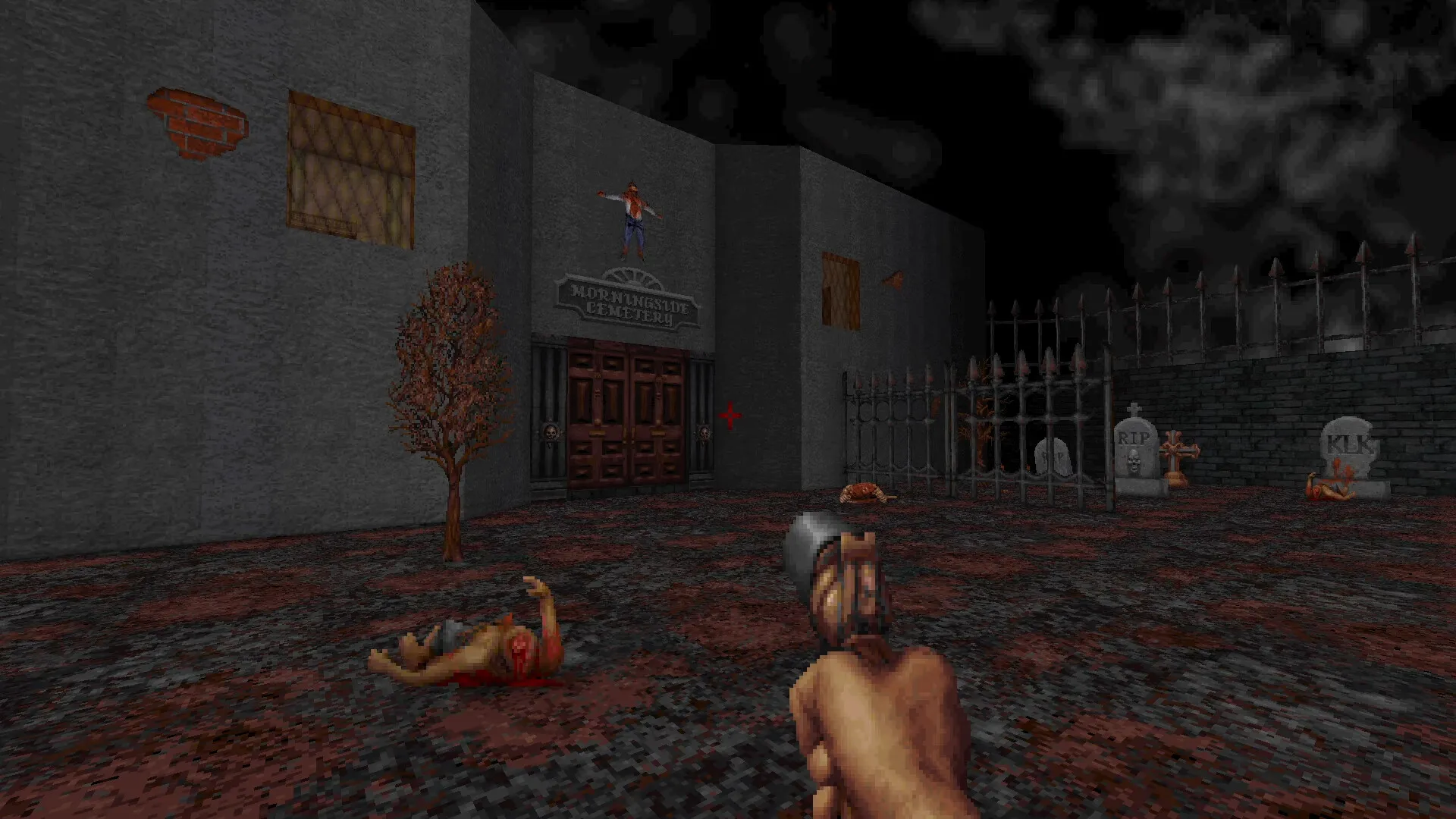
The locations pull heavily from horror fiction and classic genre cinema. One standout stage takes place in a twisted circus filled with odd carnival attractions, including a machine-operated monster mouth used to solve a puzzle. Elsewhere, players wander through the unnerving corridors of the “Overlooked Hotel,” a clear, carefully detailed nod to The Shining that horror fans will recognize immediately.
Exploration plays a major role in how these spaces work. Levels contain secret rooms, hidden paths, and pop culture Easter eggs that reward curiosity and close observation. The game relies on the Build Engine to support these ideas, which allows key parts of the environment to break apart under fire.
Certain walls crumble when hit with explosives or gunfire, revealing hidden routes or stockpiles of ammunition and weapons. This combination of destructible architecture, dense secret placement, and genre-inspired locations gives the campaign strong replay value, since each return trip offers another chance to uncover something previously missed.
The Definitive Modern Version
Blood: Refreshed Supply functions as a definitive modern package for this cult shooter, designed for both long-time players and newcomers. Nightdive Studios worked from the original source code, which leads to responsive controls, smooth performance, and behavior that aligns closely with the original game compared to earlier remasters. From a technical standpoint, the release looks and runs cleanly, with support for high frame rates and 4K resolution on contemporary systems.
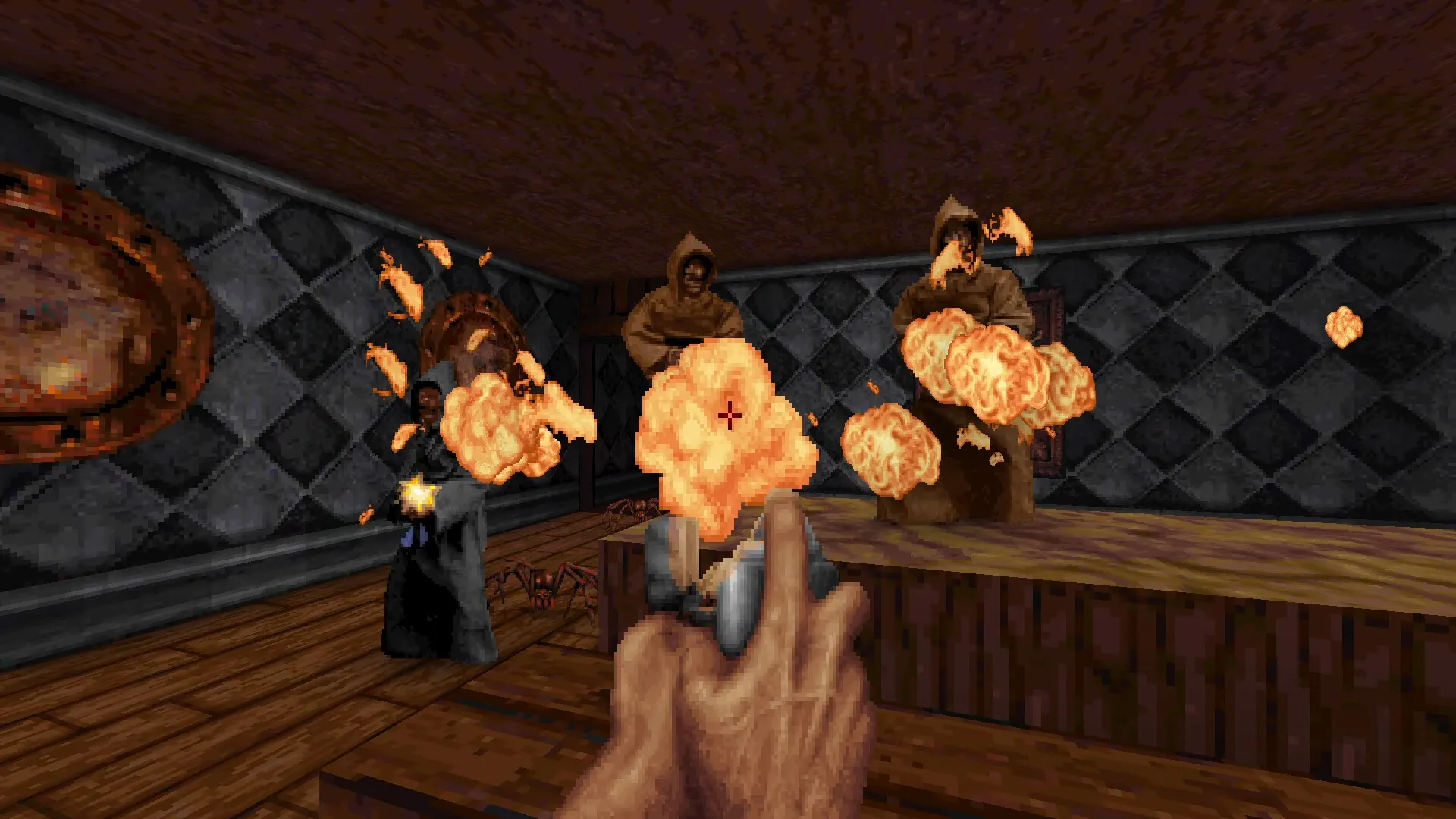
On the visual side, the remaster upgrades storytelling with fully reworked cutscenes built from new 3D models. These sequences clarify plot points and character beats while still preserving the gritty, retro look that defined Blood’s original presentation. Audio options reinforce that sense of choice: players can switch between classic and remastered sound mixes, depending on their taste for nostalgia or updated clarity.
Content-wise, Blood: Refreshed Supply offers more than a simple touch-up. The package includes two complete fan-made campaigns. Marrow arrives with the main release, while Deathwish appears as a complimentary post-launch update. For those interested in how Blood took shape, the Vault feature serves as an archive of development material, filled with behind-the-scenes items, concept art, and dozens of prototype and unreleased levels that map out the game’s evolution.
Nightdive also added a series of quality of life upgrades. Gamepad support feels stronger and more adaptable, the new weapon wheel speeds up gear selection in the middle of fights, and optional fixes address long-standing enemy behavior quirks so the challenge feels tough but fair. Restored local multiplayer and Deathmatch modes round out the feature set. This release also marks the first time Blood reaches modern consoles in a widely accessible form, which opens this notorious occult shooter to a broader group of players than ever before.
The Review
Blood: Refreshed Supply
Blood: Refreshed Supply is the essential, definitive version of a 90s FPS masterpiece. Nightdive Studios successfully rebuilt this game from the source code, delivering buttery smooth performance, 4K visuals, and a massive vault of new content. The game’s unique blend of occult horror, violent spectacle, and dark humor holds up perfectly. Its creative arsenal and imaginative level design ensure the action remains compelling. For veterans and newcomers seeking a classic shooter with unparalleled style and substance, this package is a must-play.
PROS
- Unconventional and highly satisfying weapon arsenal.
- Unique, humorous occult horror atmosphere.
- Definitive technical polish built from source code.
- Vast content included (new campaigns, Vault, prototype levels).
- Highly imaginative and non-linear level design.
CONS
- Inherited difficulty spikes and challenge.
- Some enemy behaviors feel dated (e.g., hitscan accuracy).
- Level designs occasionally show signs of their 90s origin.







