














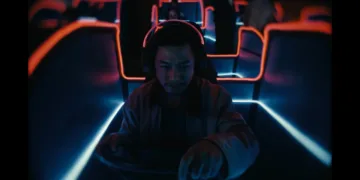








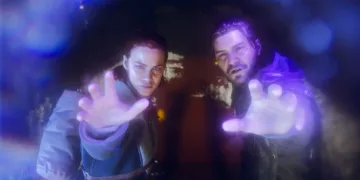



The stage is Vélez Sarsfield Stadium, packed with thousands of people and charged with a shared intensity. Lali: Time to Step Up opens at this exhilarating peak, a monumental concert that immediately draws us into the world of Mariana “Lali” Espósito. Lautaro Espósito’s musical documentary plants its flag in this climactic moment, then patiently rewinds through the three years that led there.
This structure reshapes the viewing experience. The film presents itself as a concert movie and a detailed study of the creative machinery that makes that stadium show possible. It tracks a demanding personal and professional transformation, concentrating on a stretch marked by relative professional silence and heavy self-doubt.
Out of that demanding phase come the Disciplina album and the explosive Disciplina Tour. The film’s strongest idea lies in its attention to transition, tracing how the vulnerable figure in rehearsal and reflection connects with the unstoppable public performer onstage.
A Period of Necessary Retreat and Renewal
The documentary’s narrative core follows a key turning point in Lali’s career, centering on a retreat that sets up a major resurgence. The main dramatic movement lands in late 2021, when she steps away from her music career. That hiatus carries the weight of deep introspection, internal contradictions, and anxiety, all coinciding with her thirtieth birthday. The film handles this stretch with care, showing how constant questioning turns into a creative pressure cooker.
The impulses that ignite her return come through clearly: a trip to Spain that offers distance and clarity, and a renewed commitment to the studio that prepares the burst of energy behind Disciplina. I find this process deeply fascinating, because it mirrors artists who need space from their work to see it again with sharper eyes. The documentary leans on a temporal back-and-forth, mixing interviews with archival footage, and frames her growth as a continuous, deliberate act of creative redefinition rather than a single turning point.
The film reaches its most affecting passages in moments of raw vulnerability. We see Lali without professional makeup or careful staging, voicing genuine stress and admitting entrenched doubts about her career. These scenes carry force because they underline the strict discipline and demanding workflow required to sustain the “impeccable” public image.
The intention behind the narrative feels clear: reveal the intense labor that often stays invisible. Personal archive material, especially childhood and teenage home movies, becomes a key structural element. That footage builds an unbroken, human line between the young performer and the current superstar, so her essence feels consistent even as the scale of her fame grows. This emotional sincerity gives the project its deepest strength, letting viewers track growth while still feeling close to the roots that shaped her.
Dissecting the Cinematic Framework
The film’s technical presentation matches the high standards of contemporary music documentaries. Lautaro Espósito works with a careful mix of interviews, extensive archival material, and electrifying fragments of live performance. This combination creates a clear narrative rhythm that steers away from the heavy melodrama often found in similar projects.
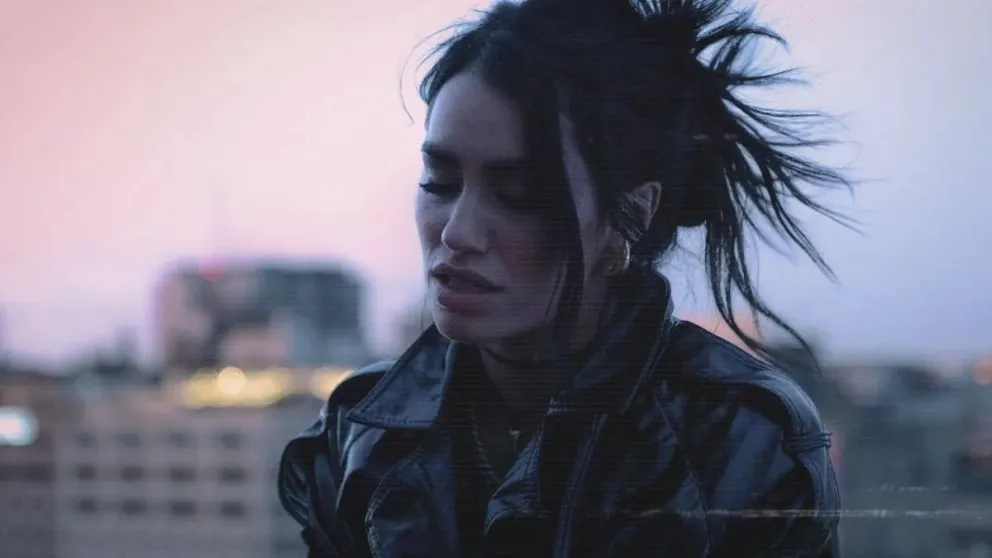
The visual design rests on a sharp stylistic alternation. Intimate, often moody images of Lali backstage, with close-ups soaked in shadow that capture private moments, sit alongside the open grandeur of the show, where wide lenses register the sheer scale of the stadium.
The film carries the sheen of a major production, and that polish comes with familiar documentary habits. Rapid-fire concert montages, sweeping drone shots, and time-lapse passages appear with some frequency and occasionally favor spectacle over sustained emotional connection. Yet the handling of the Vélez concert reorients those familiar moves.
That performance appears as a synthesis, a culmination where months of private preparation, from writing and study to physical conditioning, converge with the public spectacle. The concert feels like the natural outcome of the process described across the documentary instead of a disconnected high point. The prominence of Lali’s inner circle, including her mother, her director cousin, friends, and nephews, reinforces a key narrative thread. The carefully built family environment functions as a protective space, a shield against the harsh demands of the pop industry.
Cultural Weight and Social Discourse
Beyond her songs and shows, Lali Espósito appears here as a cultural presence with real weight, and the documentary gives that role generous attention. The film addresses themes of female empowerment and independence, presenting her as a strong, vocal figure inside an industry and a society with a long male-dominated history. Her willingness to step into political debate becomes a central point.
The documentary highlights her visibility in the national conversation about abortion legalization and her repeated presence at Gay Pride marches, underlining her strong connection with the LGBTQ+ community. Through these choices, the film places her work inside current social shifts rather than treating it as isolated entertainment.
The documentary also revisits a charged episode from recent years: the coordinated attacks and public backlash that followed a widely discussed political comment she made after a change in government. This part of the film extends beyond biography and uses Lali’s experience as a lens on cultural conflict and the way social media can be weaponized against public figures who speak openly. At the same time, the camera returns to the bond she shares with her fans, who relate to her as a source of freedom and celebration.
As a critic approaching the film with an analytical eye, I feel a persistent tension here. The project seeks an unvarnished truth, yet its careful construction reveals a piece shaped for strong impact. The cinematic packaging at times leans on familiar documentary formulas, yet the lasting strength of Lali: Time to Step Up comes from Lali herself, from her frank presence on screen and her ongoing conversation with the audience that comes through the film’s every layer.
Lali: Time to Step Up is a documentary focusing on the artistic evolution and personal journey of Argentine pop star Lali Espósito as she prepares for her first stadium tour. The film offers an intimate look behind the scenes, tracking her self-discovery and creative process over three years leading up to the massive Vélez Sarsfield Stadium concert. The documentary premiered on December 4, 2025, and is available to watch exclusively on the streaming platform Netflix.
Full Credits
Title: Lali: Time to Step Up
Distributor: Netflix
Release date: December 4, 2025
Running time: 1 hour 14 minutes (74 minutes)
Director: Lautaro Espósito
Cast: Lali Espósito, Ana Laura Espósito, Majo Riera, Beltrán Espósito, Santino Espósito
The Review
Lali: Time to Step Up
Lali: Time to Step Up is a highly polished documentary that succeeds in demystifying the pop icon by focusing on the intense discipline and personal growth required for her resurgence. While the film occasionally employs predictable stylistic frameworks common to the genre, the core power lies in Lali Espósito's genuine vulnerability and magnetic presence. It offers meaningful insight into the necessary coexistence of fame and family, and the cultural relevance of an artist who uses her platform for social discourse. It’s an essential watch for fans and a valuable look at modern celebrity for critics.
PROS
- Successfully shows the doubts, stress, and hard work behind the "impeccable" public image.
- Skillfully tracks the period of retreat and creative redefinition, making the concert feel like an earned outcome.
- Addresses Lali's social and political engagement, placing her within a broader societal context.
- Seamlessly blends private footage with public performance, establishing a strong, continuous personal connection.
CONS
- Occasionally relies on cinematic clichés typical of mainstream pop star documentaries (e.g., fast edits, excessive drone shots).
- At times, the high technical polish can make the documentary feel like a calculated marketing product.
- The focus is narrow, which may leave some viewers wanting a deeper exploration of certain psychological or historical aspects.