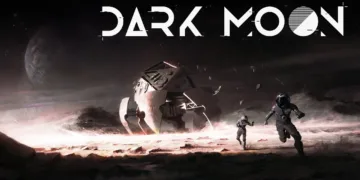




























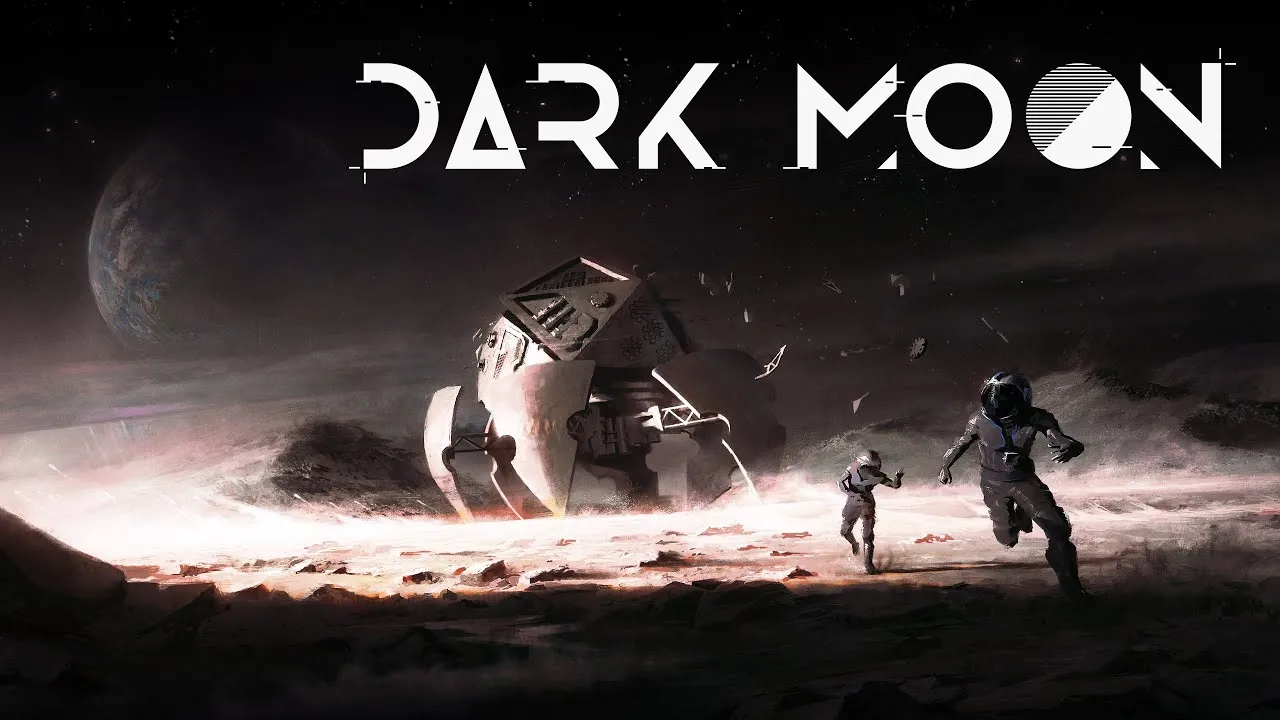

Dark Moon opens with a bleak, high-pressure setup built for survival strategy fans. You play as a member of the Engineering Council after a catastrophic solar event leaves Earth effectively silent. Your job on the lunar surface is straightforward on paper: run a mining operation. In practice, you are running from a sun that has turned into a roaming death sentence.
The game’s defining rule forces constant retreat into the moon’s shadow, since solar radiation will incinerate anything left in the light. That single constraint shapes everything into a tight survival loop where the environment behaves like a relentless timer. Every decision sits on the same fault line: extract what you can, then move before daylight erases your work.
That pressure creates real momentum. The game leans into isolation and urgency through its “sun as the enemy” framing, turning each stretch of darkness into borrowed time. Many city-builders reward settling in and reinforcing one place. Dark Moon asks for a roaming mentality instead. You build, harvest, dismantle, and relocate in a repeating scramble that keeps your crew alive in a silent, airless void. The focus stays on logistics, survival math, and the strain of directing people through a hostile vacuum where the dawn is never a comforting sight.
Engineering on the Move with the Mechaplex
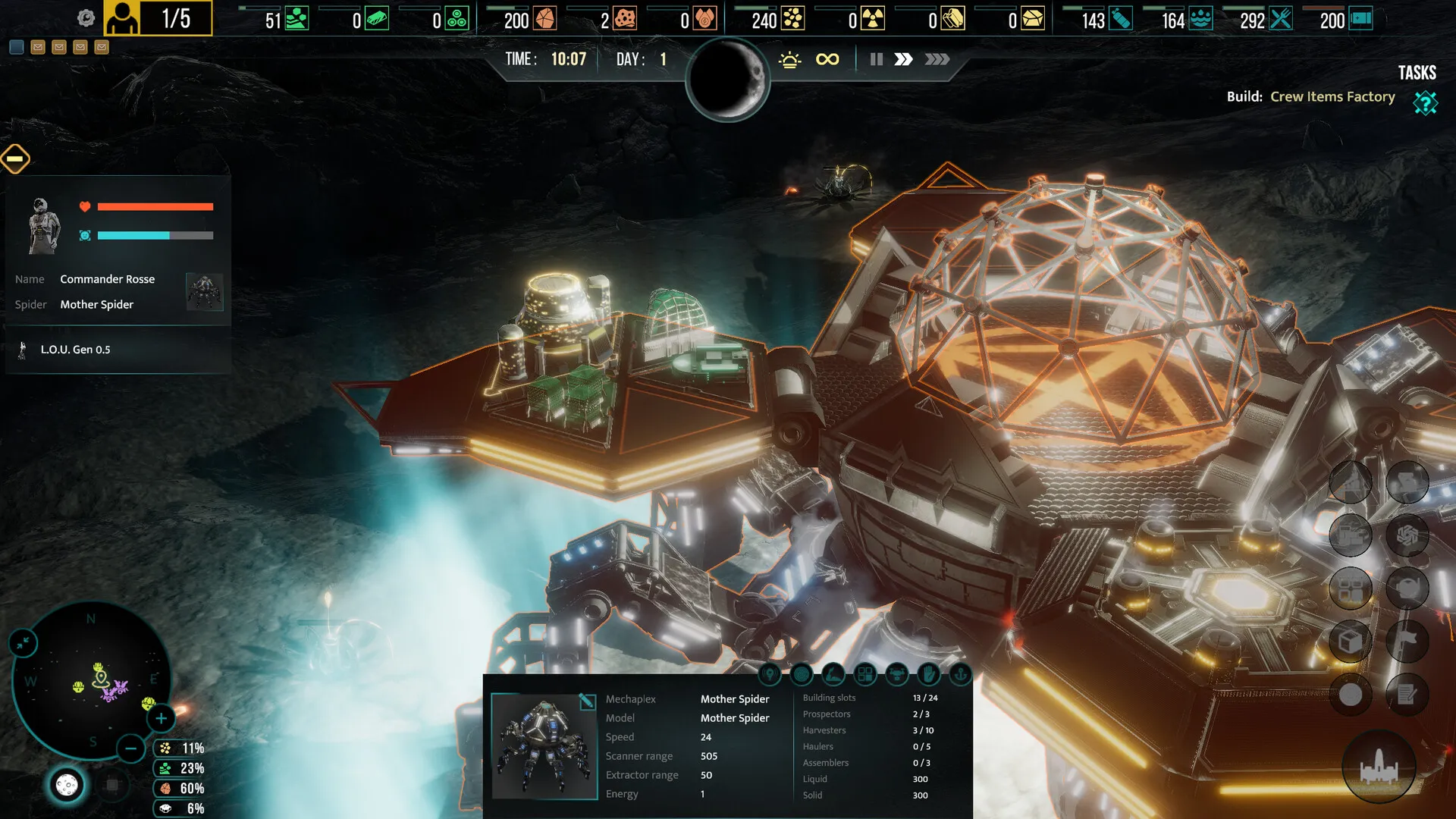
The Mechaplex is the core of the experience: a massive, spider-like vehicle that functions as your mobile command center. It steers the game away from stationary base building, and the comparison to Frostpunk lands quickly. This machine anchors every operation, letting you drop mining modules and power stations across the lunar regolith, then pull up stakes once the sunlight closes in. You can upgrade the Mechaplex directly, boosting movement speed or improving crew quarters, and those upgrades carry a clear mechanical meaning because mobility equals survival.
Building on the move creates its own planning puzzle. Expansion depends on power distribution and supply lines that can survive the stress of travel. You keep deciding how much to invest in temporary structures, how far to spread your grids, and when to pack everything up to remain in darkness. That constant teardown gives construction a different texture than typical builder comfort projects.
Habitat domes and power networks feel temporary by design, since the sun will eventually force your hand. The lunar terrain adds to the cadence, too, as navigating jagged ground can turn a clean relocation plan into a nervous calculation. Each push for deeper mining carries a clear risk: a wider footprint can mean more to dismantle, more to protect, and a higher chance that daylight catches a base before it can move.
Survival Logistics and the Weight of Command
Survival hinges on steady control of moon-regolith, helium-3, and ice. These resources feed upkeep and support a research tree that unlocks stronger life-support options and automated defenses. The early hours deliver satisfying forward motion as new tech improves efficiency. The pacing later can feel rushed, with some players reaching the end of meaningful research by the mid-game. That can leave long-term progression feeling thin once the key upgrades are in place.
Resource systems handle the hardware side of survival, then the game brings in the human cost. You encounter survivors scattered across the moon, and each comes with motives and the potential to help or hinder your run. The game leans on recurring moral dilemmas: who earns a spot aboard the Mechaplex, and who gets left behind to the solar rays. Those choices feed directly into crew morale and the day-to-day effectiveness of your colony, which gives the decision-making mechanical weight instead of leaving it as flavor text.
The social layer pushes further with systems like faction demands and disease management, aiming to add internal pressure alongside the external threat. Some of these mechanics can be hard to read in play because they offer limited transparency. Water production and the personality systems, for example, provide minimal feedback, making it tough to judge how your policies are shaping outcomes. Even with that opacity, the command pressure remains strong. Keeping a community alive under permanent threat gives the strategy layer an edge, and the game’s best moments come from that friction between what you want to do and what the situation allows.
Atmospheric Tension and Technical Friction
The lunar setting lands visually, capturing both stark beauty and creeping terror. Sharp isometric visuals paired with haunting sound design sell the isolation, making space feel empty in a way that supports the game’s tone. Hazards like micrometeorite showers and solar flares regularly interfere with infrastructure, forcing reactive repairs and quick tactical adjustments. These disruptions fit the survival loop, since stability rarely lasts long enough to feel safe.
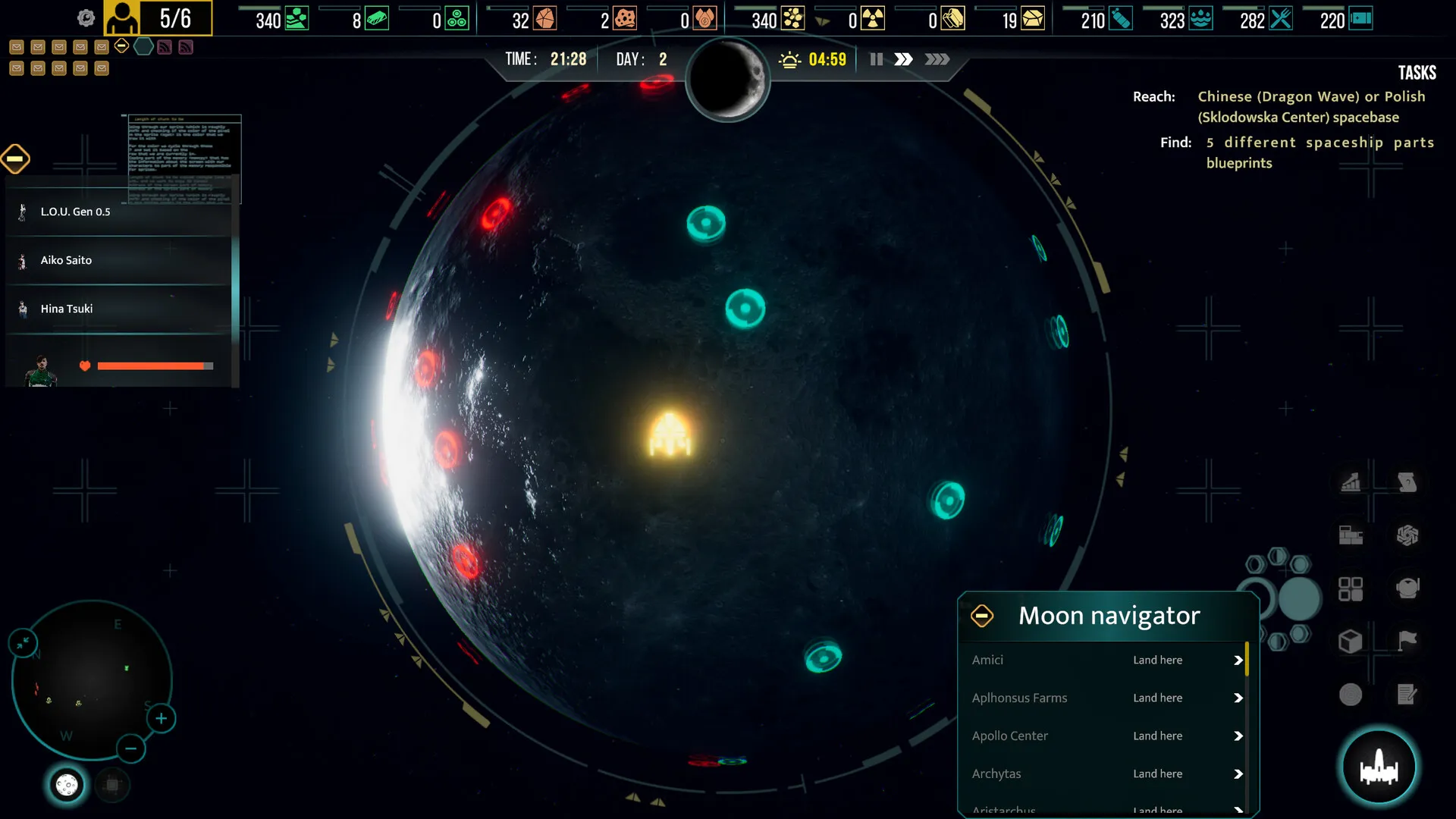
The technical side does not always keep pace with the atmosphere. Pathfinding for drones and the Mechaplex can behave inconsistently, leading to units getting stuck or wandering into danger. The user interface adds strain in the wrong places, especially through unclear resource presentation. The lack of tooltips for resource icons pushes players to memorize symbols, pulling attention away from planning and execution.
Bugs can also puncture immersion, including construction progress freezing at one hundred percent and drones spawning outside the playable map. The 3D character models and dialogue lack the cleaner finish seen in Ixion, which makes story beats and interactions feel rougher than the surrounding mood suggests.
Dark Moon still shows the shape of a strong space strategy experience: a clear survival rule, a mobile base that meaningfully changes how building works, and choice-driven crew management that ties morale to your decisions. The same run can also wrestle with performance issues, unclear UI elements, and disruptive glitches that compete with the tension the game works hard to build.
The Review
Dark Moon
Dark Moon captures a tense atmosphere through its clever solar-evasion mechanic. The pressure of moving your base creates a distinctive flow that sets it apart from typical strategy titles. However, technical friction and a lack of late-game depth prevent it from reaching its full potential. While the core loop is satisfying, bugs and poor UI clarity occasionally hinder the experience. It remains a solid choice for those seeking a fresh survival challenge, provided they can look past the lack of polish.
PROS
- Tense lunar atmosphere
- Innovative mobile base mechanic
- High-stakes resource management
- Evocative sound design
CONS
- Frequent pathfinding bugs
- Obscure user interface
- Shallow end-game progression
- Inconsistent character models