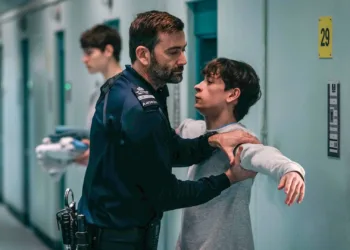




















Night Patrol paints Los Angeles as a place where institutional decay turns physical, with something supernatural pulsing under the pavement. Director Ryan Prows frames the film as a genre hybrid built around an elite LAPD unit that operates like a closed clique with its own rules. The twist lands fast and hard: these officers are vampires, and their hunting ground is the residents of Colonial Courts.
The plot tracks Xavier Carr, a Black officer pushing for status inside the unit, alongside his partner Ethan Hawkins, heir to a police legacy and a name that carries weight in the department. Their city runs on racial tension and competing claims to power, and the personal cost of that system spikes when Xavier’s brother, Wazi Carr, sees the unit commit a murder. From there, the film locks its characters into a scenario where the badge masks something openly predatory.
Prows blends crime-thriller momentum with classic horror styling, using bloodletting as both spectacle and argument about authority, survival, and the way a community gets cornered. The high concept stays tethered to a recognizable world, and the fear it taps comes from a contemporary unease about power that protects itself.
Ambition vs. Ancestry in the Carr Family
The film’s emotional pressure comes from the pull between career hunger and loyalty to the people a character comes from. Xavier Carr, played by Jermaine Fowler, carries that tension in every move. He reads as someone trying to climb inside a structure that treats his neighborhood like open season, and Fowler plays Xavier with controlled drive and a buried sense of who he used to be. The performance leans into quiet strain: Xavier keeps reaching for authority while stepping deeper into a system that has already marked his community as prey.
Justin Long gives Ethan Hawkins a cold, sharp edge, and the character stands as a walking monument to the force’s inherited pride. Ethan’s military background and devotion to his late father shape his choices, and that family myth hangs over him like a command he cannot question. Long’s work here carries a chill that feels firmly planted in the film’s harsh reality.
RJ Cyler, as Wazi Carr, supplies the pulse of ordinary human fear that keeps the supernatural material from floating away into abstraction. Wazi is the vulnerable outsider who sees the truth first, and Cyler leans into shock and panic with an honesty that makes the danger feel immediate. His role matters because his viewpoint puts the stakes back where the film wants them: on people who do not have power, people who get trapped in the gears.
Nicki Micheaux plays Ayanda Carr with force and resolve. Ayanda functions as a mystic and historian, someone who can name what the unit is and where that violence fits in a longer story. She stands as the film’s voice of resistance, bridging Colonial Courts and African tradition in a way that turns heritage into strategy.
The villains arrive with a bluntness that suits the film’s anger. Phil Brooks leads the antagonists as a living embodiment of ruthless police violence, and he does it with an ease that makes the cruelty feel routine. Dermot Mulroney shows up as a figure of history, a reminder that corruption did not start yesterday and does not vanish because a new face takes command. The cast, taken together, turns the film’s supernatural premise into a web of family ties, reputation, and survival math.
The Parasitic Nature of Authority
Night Patrol uses horror language to speak about policing and race in plain terms. It takes the “Thin Blue Line” idea and treats it as a mechanism for authoritarian power. The story points to the way that slogan claims to separate order from chaos, then shows how the same logic can shield the state from scrutiny. In this frame, oversight fades, and violence gains cover.
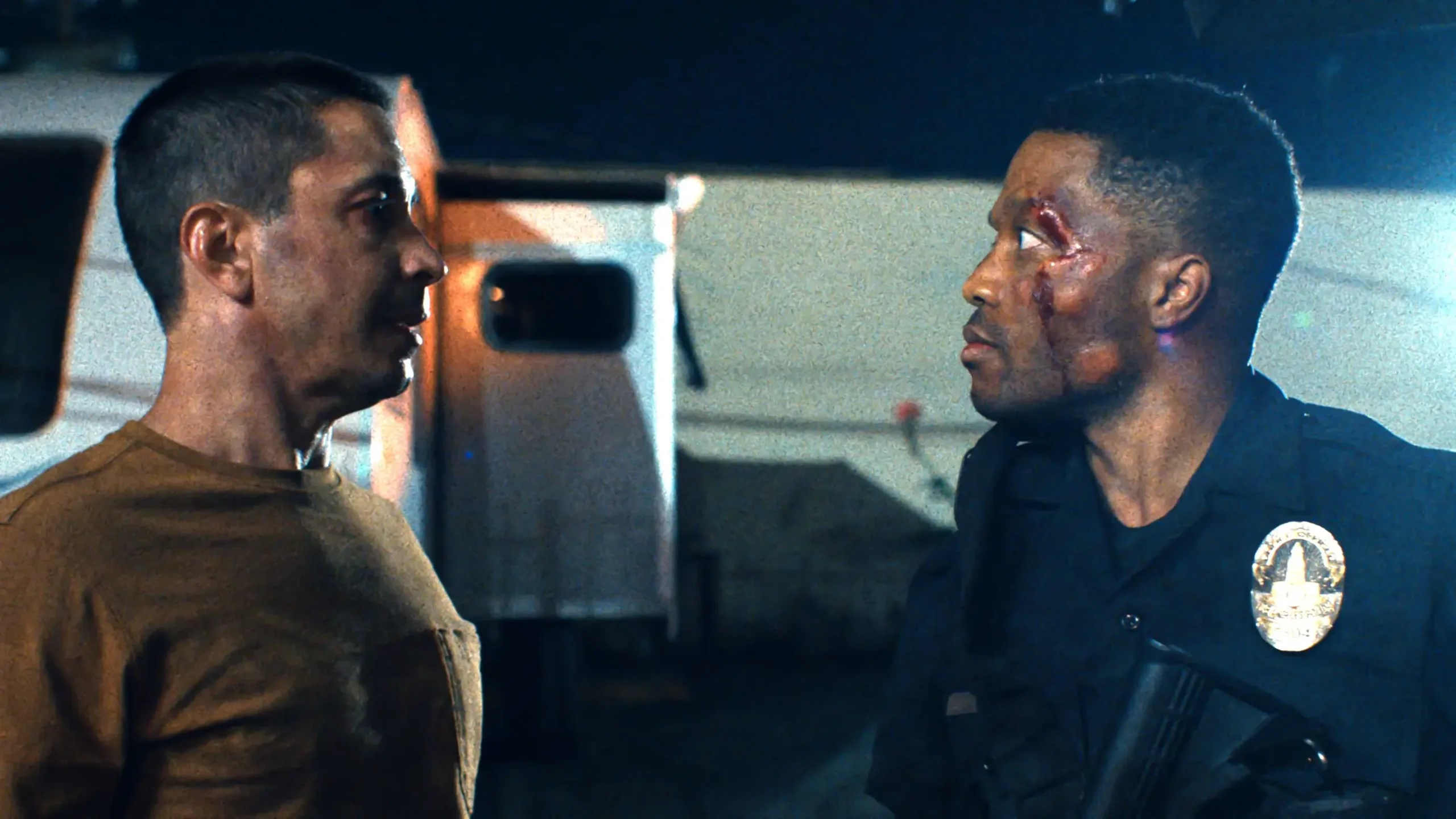
The vampires serve as a literal metaphor for a state that feeds on the people it governs. The unit preys on the Black community while enjoying legal protection, and that choice draws a straight line to a history of neighborhoods being drained of safety, resources, and life. The film’s depiction of the LAPD as a white supremacist gang is not vague. The Night Patrol targets Black residents, and that specificity gives the horror its urgency.
Ayanda’s Zulu magic becomes a form of cultural defense, and the supernatural artifacts signal power that existed long before the city’s institutions claimed ownership of the future. That tension creates a charged collision between inherited tradition and modern firepower.
Colonial Courts, across the runtime, carries the feeling of a neighborhood living under military pressure. The police presence reads as occupation, and the disconnect between the unit and the people in the community stays visible in scene after scene. The film keeps returning to the same grim point: authority can present itself as protection while operating as extraction.
A Gritty Palette of Synth and Shadows
The film’s craft choices shape its mood as much as its plot mechanics. Cinematographer Benjamin Kitchens shoots with grain and a wide frame that echoes a VHS-era texture, and the roughness of the image gives the story a scabbed-over realism. It took me back to the low-budget thrillers I used to spot on the back shelves of video stores, the kind that promised danger in the cover art and followed through with grime and attitude. That look turns Los Angeles into a dusty, sun-bleached sprawl that feels worn down by heat, time, and violence.
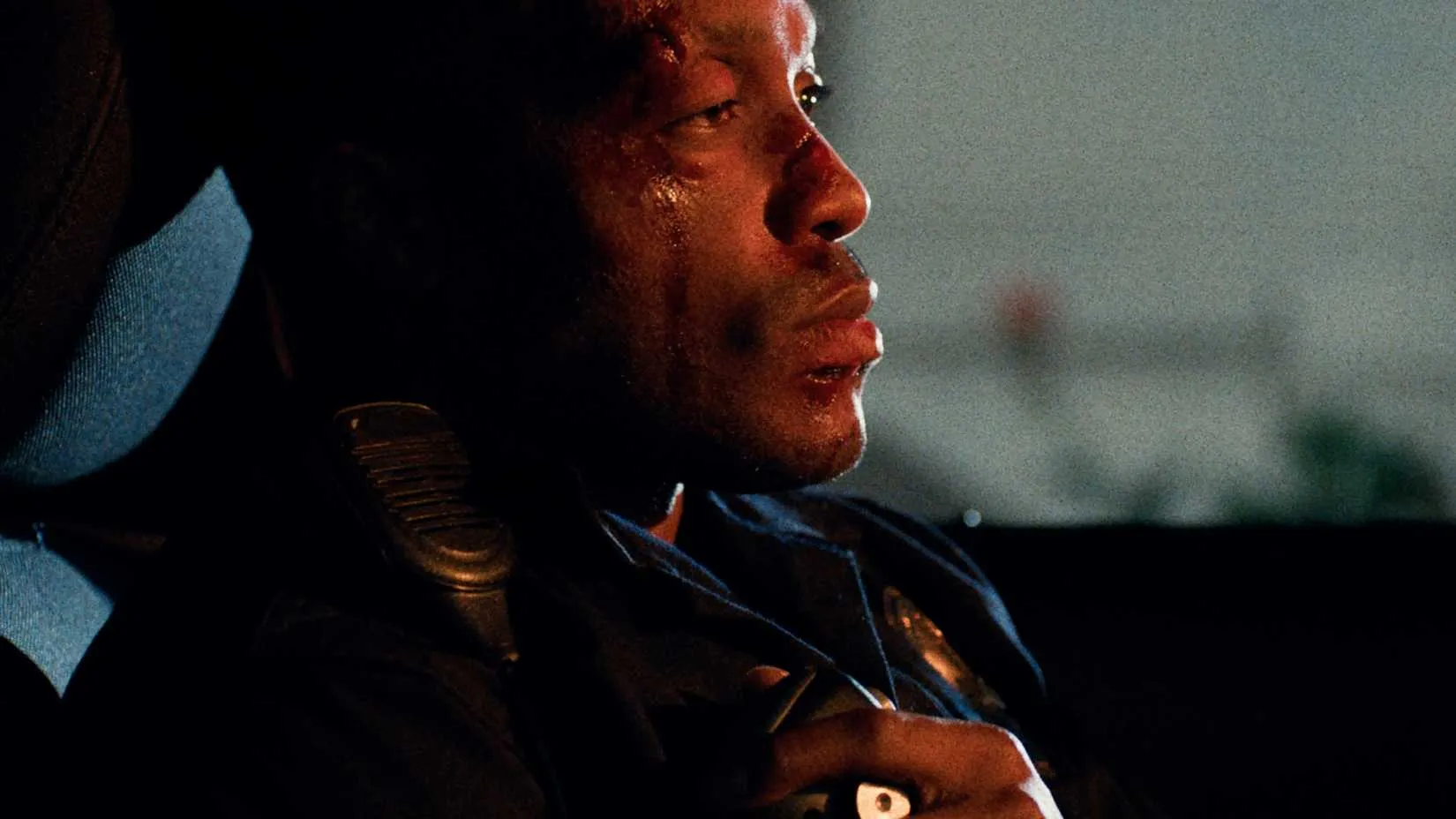
Pepijn Caudron’s score leans into synth with clear John Carpenter echoes, then swings into aggressive hip hop and buzzing rhythmic patterns. The music keeps the film in motion and reinforces the hybrid identity, shifting gears between street-level menace and pulsing genre dread. The soundscape pushes tension forward, and it gives the film a heartbeat that stays audible even in quieter stretches.
Practical effects add weight through gore that feels tactile and immediate. Blood and ichor show up often, and the mess has a blunt physicality that matches the film’s moral ugliness. The neon green glow of the artifacts cuts through the muted city palette, and that color cue marks moments when the story crosses into something older and stranger than the streets around it.
Prows also finds ways to capture the vampires’ perspective through specific camera choices, giving the film a fresh visual angle inside a subgenre that can drift into familiar shapes. The technical work helps the impossible sit right next to the everyday, and that closeness is where the film’s threat really lives.
Slow Burns and Supernatural Sieges
Structurally, the movie moves with a measured shift from police thriller to supernatural assault. The opening stretch plays like crime drama, focused on procedure, hierarchy, and the social temperature of the city. The supernatural elements arrive in stages, giving space for characters to settle into their roles before the story tips into full-blown horror. That gradual approach builds dread through accumulation, letting the viewer feel the walls tightening.
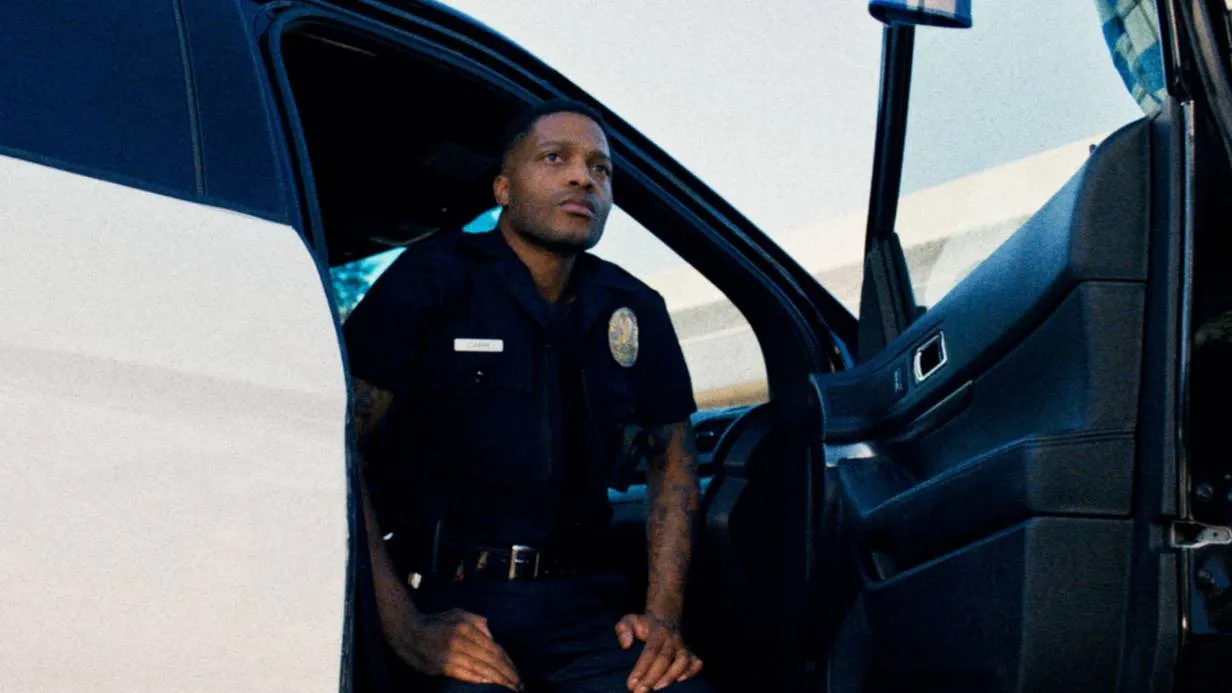
The sharp turn happens once the characters admit the vampire reality out loud, and the tonal change can land with a jolt. The middle act hits stretches where momentum dips, and those pauses can test viewers who came for constant forward drive. The film regains energy in the last forty minutes, which returns to Colonial Courts for a high-stakes clash that mixes magic spears with tactical gear. The staging turns frantic and forceful, with action that feels purposeful inside the setting.
By the end, the film leaves the sense of a world that extends beyond the frame, with humans and monsters locked into a conflict that has roots and history. The immediate fight reaches a stopping point, and the underlying system remains in place, still humming. Night Patrol holds onto its creature-feature pleasures while staying focused on the social argument that powers the premise.
Night Patrol is a gritty, genre-bending horror-thriller that explores the dark underbelly of law enforcement through a supernatural lens. After making its world premiere at Fantastic Fest on September 19, 2025, the film arrived in theaters across the United States on January 16, 2026. Distributed by RLJE Films and Shudder, it provides a visceral experience that blends community-focused drama with intense vampire horror. You can currently watch the film in theaters, with a streaming release scheduled to follow on the Shudder platform later this year.
Full Credits
Title: Night Patrol
Distributor: RLJE Films, Shudder
Release date: January 16, 2026
Rating: R
Running time: 104 minutes
Director: Ryan Prows
Writers: Ryan Prows, Shaye Ogbonna, Tim Cairo, Jake Gibson
Producers and Executive Producers: David S. Goyer, Keith Levine, James Harris, Josh Goldbloom, Narineh Hacopian, Matthew Helderman, Luke Taylor, Grady Craig, Mark Lane, YG, Gracie Wheelan, David Tracy, Brandon Harmer, Mark Ward
Cast: Jermaine Fowler, Justin Long, RJ Cyler, Freddie Gibbs, CM Punk, YG, Nicki Micheaux, Flying Lotus, Dermot Mulroney, Jon Oswald, Zuri Reed, Mike Ferguson, Kim Yarbrough, Evan Shafran
Director of Photography (Cinematographer): Benjamin Kitchens
Editors: Bradinn French
Composer: Pepijn Caudron
The Review
Night Patrol
Night Patrol succeeds as a visceral piece of political horror. It trades subtlety for a raw, blood-soaked look at systemic violence. While the middle act suffers from pacing lulls, the final siege provides a satisfying payoff. The performances from Fowler and Micheaux ground the supernatural chaos in human struggle. This film feels like a gritty relic from a different era. It is a bold effort that values atmosphere over polish. It provides a haunting reflection of modern power dynamics through a classic lens.
PROS
- Gritty, grainy VHS aesthetic that enhances the mood.
- Strong lead performances from Justin Long and Nicki Micheaux.
- Sharp use of literal vampirism as a political metaphor.
- Atmospheric, Carpenter-inspired synth score.
CONS
- Sluggish pacing during the second act transition.
- Some secondary acting feels amateurish.
- A few plot threads feel undercooked or abandoned.