










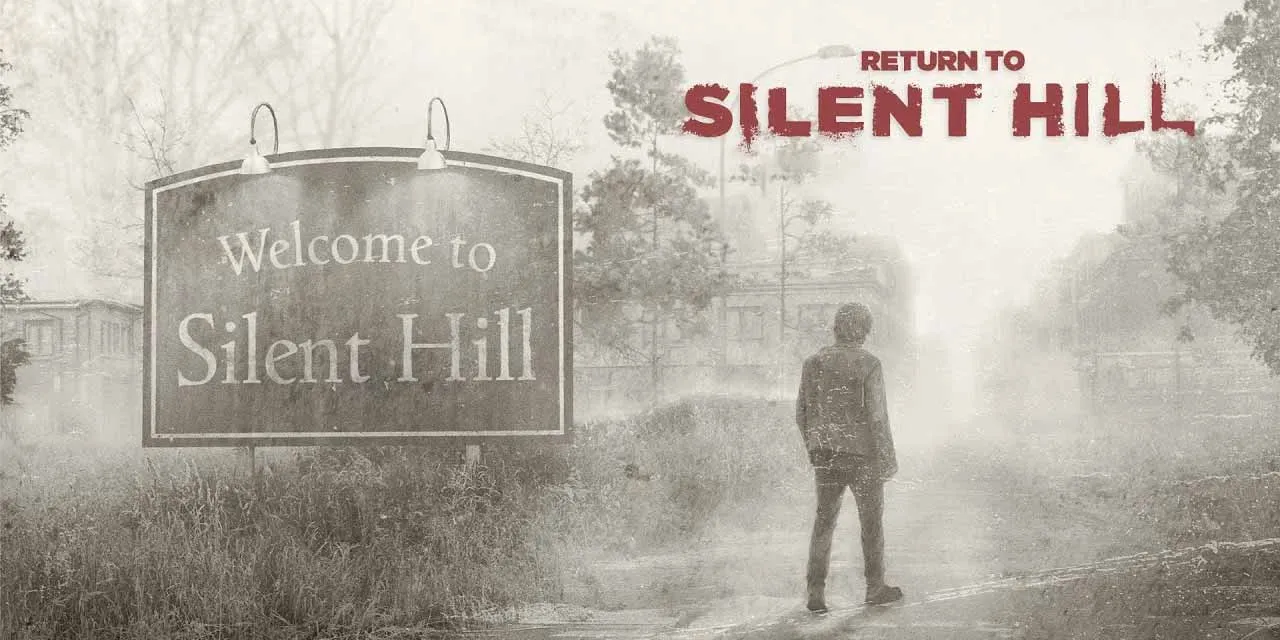

A letter arrives from a dead woman. It describes a place where the fog holds its ground and memory keeps digging up what grief tries to cover. James Sunderland follows that pull to a town that feels erased from the map and preserved in punishment. He is an artist, a man who puts a brush in his hand as if paint can give shape to absence. His sorrow hangs on him like damp fabric.
He carries it into streets the color of ash, into air that tastes like the aftermath of fire. Shapes drift through the mist, bodies bent into silhouettes of suffering. Maria steps out of that haze with Mary’s face. Her gaze carries a daring heat, a kind of invitation Mary never carried.
James passes through hospitals that seem sick with their own rot. He crosses apartments where rust spreads like a wound. The story watches a man clutching a ghost while the world throws his private anguish back at him as scenery. A massive executioner with a pyramid head waits along the way, and James keeps walking toward the moment his history shows its teeth.
The Externalization of the Internal Ghost
Nightmare architecture usually feels like thought made physical, guilt turning into corridors. This version gives the city a different spine. The walls belong to an organized faith. A cult sits behind the fog, devoted to the town’s founder, building terror through ritual and hierarchy.
Horror becomes communal and administrative, shaped by doctrine and obedience. Mary’s father rises as a primary antagonist, a figure of open confrontation whose presence stains each corner of the search. James moves through a conflict that carries ideology, not just emotion. His guilt remains in the room, yet a structure of belief keeps pressing in from the streets.
James and Mary begin with impact. Their relationship ignites after a violent collision, a car accident on a winding road that turns disaster into introduction. Flashbacks frame their past, and those images present James as a painter chasing beauty while sinking into alcohol. The film works to sketch him in detail before the fog claims him. Moral ambiguity marks his behavior. His past carries decisions that leave him difficult to embrace. Damage shows itself early. The letter arrives to a man already cracked.
The cult’s presence plants the fear in ritual and sacrifice. Silent Hill becomes a stage for shared torment, a place where malice gains a face through the father figure. That face changes the emotional temperature of the town. Solitude fades, replaced by the weight of legacy and bloodline. James uses art as shelter, trying to turn confession into composition, trying to keep truth at a distance.
The flashbacks chase explanation. They offer solid reasons for tragedy, tightening the mystery into cause and effect. The approach favors answers, pushing aside the earlier pull of uncertainty. Grief shifts into conspiracy. Mary’s ghost connects to the founder’s history. Her death sits inside a larger plan, and James steps into a web spun long before his marriage began.
A Canvas of Ash and Digital Decay
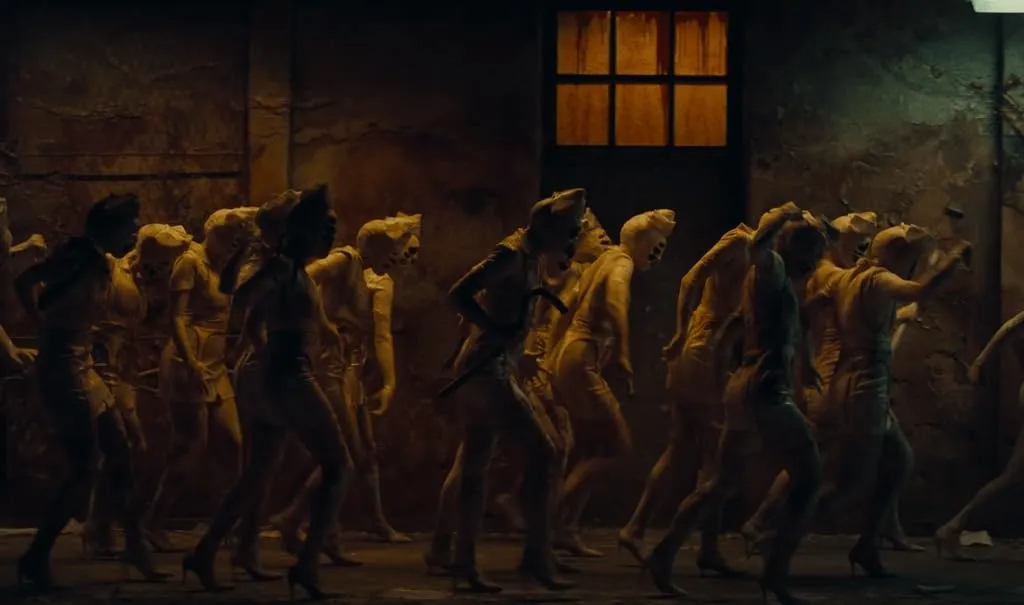
The film’s surface lives between the tactile and the synthetic. Christophe Gans leans on physical suits for the most recognizable threats. The nurses move with twitching, visceral precision. The pyramid-headed executioner carries a sense of mass, like metal and muscle sharing the same breath.
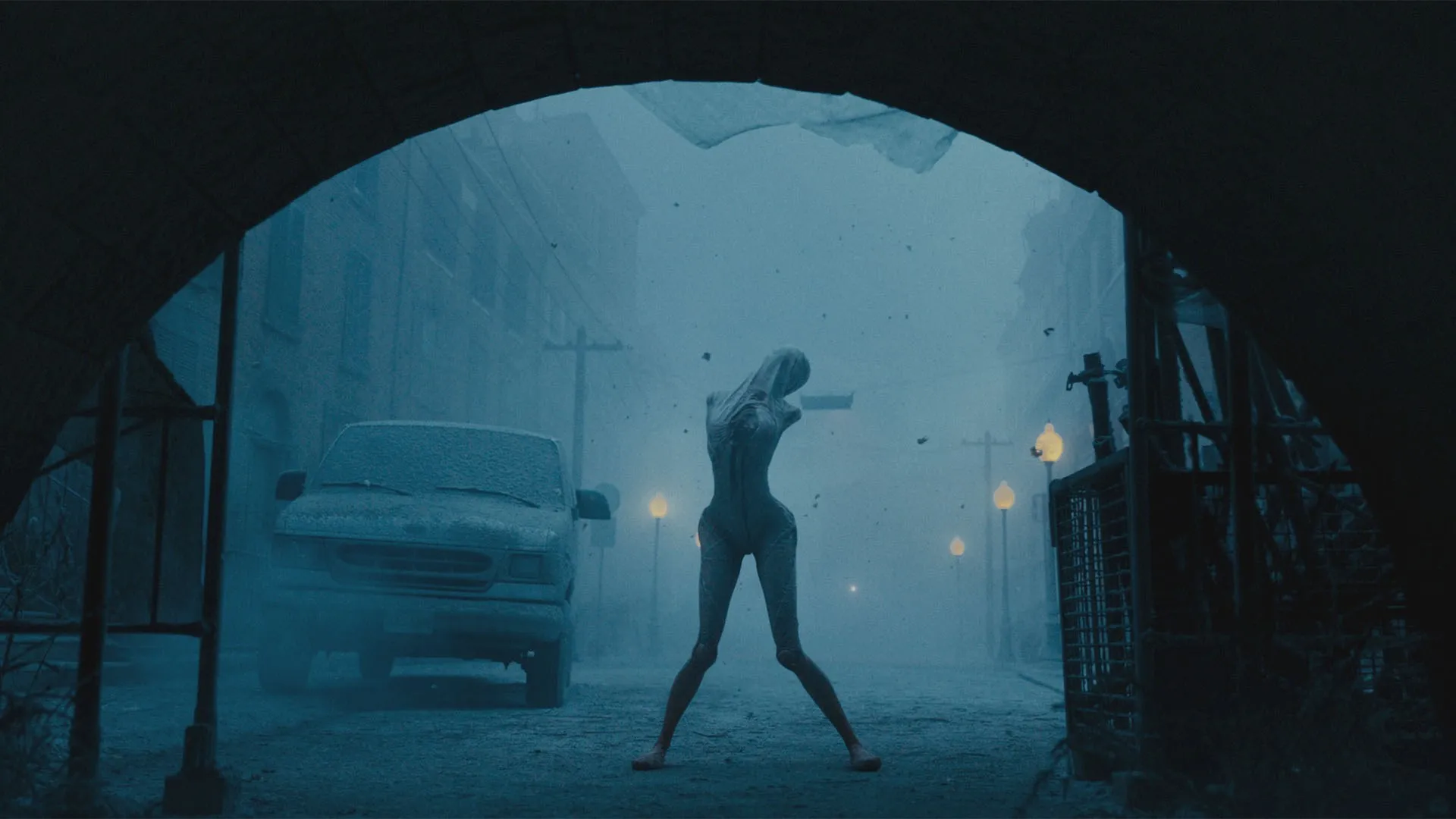
That tangible weight sits beside computer-generated environments that feel flatter, like images pinned behind the actors. The digital backgrounds often miss the grime a place like this demands. The result creates emotional distance. Some computer-made creatures slide through the frame with a smoothness that clashes with a world built from rust, bone, and corrosion.
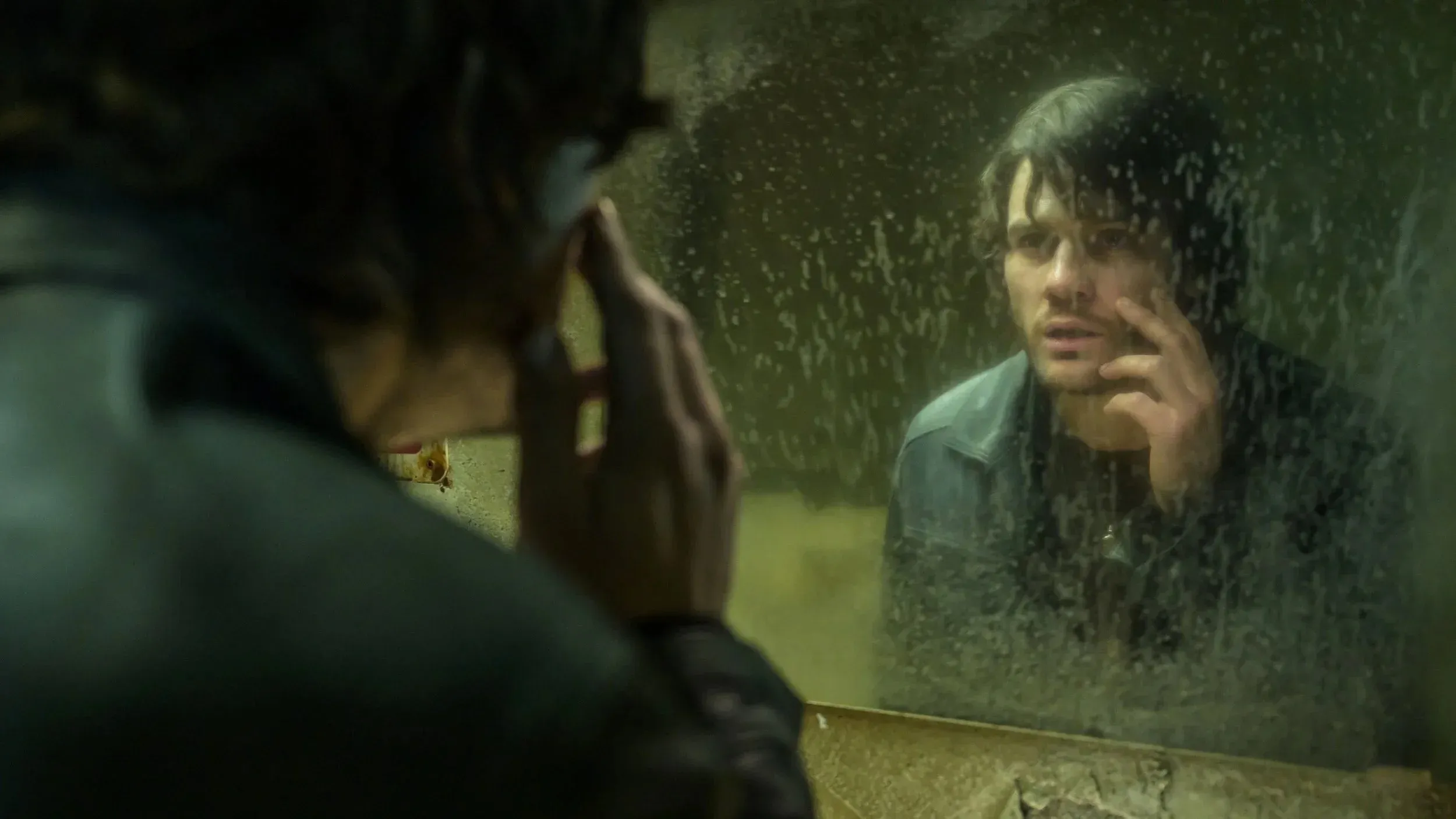
Cinematography slips into first-person perspective shots, a clear salute to the story’s origin point. The camera adopts a player’s gaze and turns it into a film gesture. The choice lands as interruption. It fractures the flow and reminds you of the apparatus. The therapist scenes use fractured mirrors, literalizing a mind splintered into shards. Ash drifts down like a gray veil, steady and funereal, repeating the idea of a world burned into residue. Blue skies appear in certain moments, and that brightness jars against the dread. The light changes the air, loosening the grip the fog has built.
Creature design leans hard into shock. A spider-like thing crawls out of the dark, assembled from mannequin fragments and necrotic flesh, a sculpture of violated humanity. Mary shifts into a moth-like deity, bald and ageless, a gargoyle carved from gray stone. The transformation frames her as an idol, a sacred object for the cult’s hunger. The town’s movement from fog to otherworld appears through peeling walls and the arrival of darkness, shown through digital effects that look clean.
Silent Hill asks for mess, for stain, for texture that feels touched by decay. The polish reads as sterile. The painter’s sensibility shows up in framing, in attention to composition and color, in moments that resemble arranged tableaux. The dependence on digital sets keeps the place from feeling inhabited. The town plays like a constructed stage, striking to look at, hard to believe as a lived nightmare.
The Triple Mirror of Identity
Jeremy Irvine plays James as restless flesh, a man driven by panic into constant movement. He runs hospital corridors with a heavy desperation, a body paying the cost of terror in sweat and breath. The performance emphasizes fear as labor. Sin leaks out of him through exertion. This James lives as an alcoholic artist, hunting a ghost that might hand him a reflection. Maria becomes a temptation with a familiar face, a chance to repaint the past. Irvine performs at high volume, and the character’s inner scream turns outward, thrown into the fog like a flare.
Hannah Emily Anderson carries a triple role, portraying Mary, Maria, and Angela. The decision shapes the narrative’s psychology. It suggests each woman James meets belongs to the same source image, a single identity split into surfaces. That consolidation shrinks their independence. Angela’s presence loses specificity and becomes an extension of Mary’s shadow. Maria plays as a provocative variation of the same figure. The women start to function as interchangeable projections inside James’s turmoil, and the story narrows into a male psychodrama built from reflections.
The supporting characters get little space. Laura appears as a lonely child, played by Evie Templeton, a small note of innocence in a place soaked in filth. Her time on screen stays brief, and she drifts through scenes with a ghostlike quiet. Eddie shows up in reduced form, closer to a shell than a fully felt person, placed to propel James forward. The script often forces these characters into explanation. Motivations arrive directly, delivered toward the camera with a theatrical bluntness that drains mystery from their presence.
The cast pushes against a screenplay that wants clarity in every corner. They reach for humanity inside a world made from symbols. Many of them end up positioned like pieces on a chessboard, moved for plot necessity. Anderson’s triple role reads as a bold experiment, building repetition into the fabric of the film. James keeps finding the same face in different rooms, trapped in a chamber of mirrors where search becomes circling.
The Industrial Dirge of the Self-Portrait
The artist identity threads through the story. James paints as a way to translate experience into image, to turn terror into something framed and contained. The painter motif tracks his slide toward madness. One key scene has him working on a self-portrait. As the brush moves, the image shifts toward the pyramid-headed judge, binding creator and destroyer in the same outline. Punishment takes the shape of self-authorship. Painting becomes confession, guilt pressed onto canvas with each stroke.
Akira Yamaoka’s score forms the emotional foundation. Industrial noise grinds against melancholic piano, a sound like heartbreak echoing through machinery. The music grants weight to scenes where dialogue feels thin. The soundscape carries the town’s history in its texture, in its pulse, in its dread. The familiar radio static returns as warning, a signal that unseen threats have entered the air.
The steel pipe returns as a visual nod, placed in James’s hands as a crude answer to nightmare. Cold metal meets rusted corridors. The object functions as icon, part of a struggle imagined as decades long, repeating through memory and adaptation. The film’s ending follows a different logic, tying resolution to the cult and Mary’s father.
Closure arrives through external conflict, shaped like escape from a trap built by organized belief. James breaks the cult’s cycle and finds a route out of the fog. The final stretch favors bodily survival while the spirit remains unsettled. Light appears as chosen direction, shadow as lingering residue. This James finishes his painting and steps away from the studio. The fog thins. Ash still clings to his clothes.
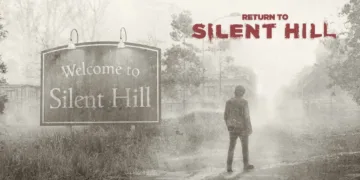
Return to Silent Hill is a psychological horror film that officially premiered in theaters today, January 23, 2026. Directed by Christophe Gans, who returns to the franchise after helming the original 2006 adaptation, the movie serves as a direct adaptation of the critically acclaimed video game Silent Hill 2. The plot follows James Sunderland as he is drawn back to the mysterious, fog-shrouded town of Silent Hill after receiving a cryptic letter from his deceased wife. As of its release today, the film can be watched exclusively in cinemas across the United States and international territories via distributors such as Cineverse and Iconic Events Releasing.
Full Credits
Title: Return to Silent Hill
Distributor: Cineverse, Metropolitan Filmexport, Iconic Events
Release date: January 23, 2026
Rating: R
Running time: 106 minutes
Director: Christophe Gans
Writers: Christophe Gans, Sandra Vo-Anh, William Josef Schneider
Producers and Executive Producers: Victor Hadida, Molly Hassell, David M. Wulf, John Jencks, Alexa Seligman, Jay Taylor
Cast: Jeremy Irvine, Hannah Emily Anderson, Robert Strange, Evie Templeton, Pearse Egan, Eve Macklin, Emily Carding, Nicola Alexis
Director of Photography (Cinematographer): Pablo Rosso
Editors: Sébastien Prangère
Composer: Akira Yamaoka
The Review
Return to Silent Hill
Return to Silent Hill is a film caught between the visceral memory of its origins and a modern desire for narrative clarity. While Christophe Gans recaptures the aesthetic grime and haunting melodies that define this world, the shift toward external cults and consolidated identities strips the story of its jagged, psychological edge. It is a work of high artifice—a beautiful, ashen stage that provides a cinematic visit to a familiar hell, yet ultimately feels more like an echoing reenactment than a new descent into the soul.
PROS
- The music remains the heartbeat of the experience, providing essential emotional gravity.
- The physical suits for the nurses and Pyramid Head maintain a terrifying, tactile presence.
- The constant snowfall of human ash creates a striking and consistent sense of desolation.
CONS
- Adding cult lore and a central antagonist simplifies a story that thrived on internal mystery.
- Reliance on clean CGI backgrounds clashes with the grounded, practical horror elements.
- Merging distinct female roles into one identity diminishes the agency and impact of the supporting cast.